How Did Next Gen NASCAR Cars Change Racing?
Share This Page
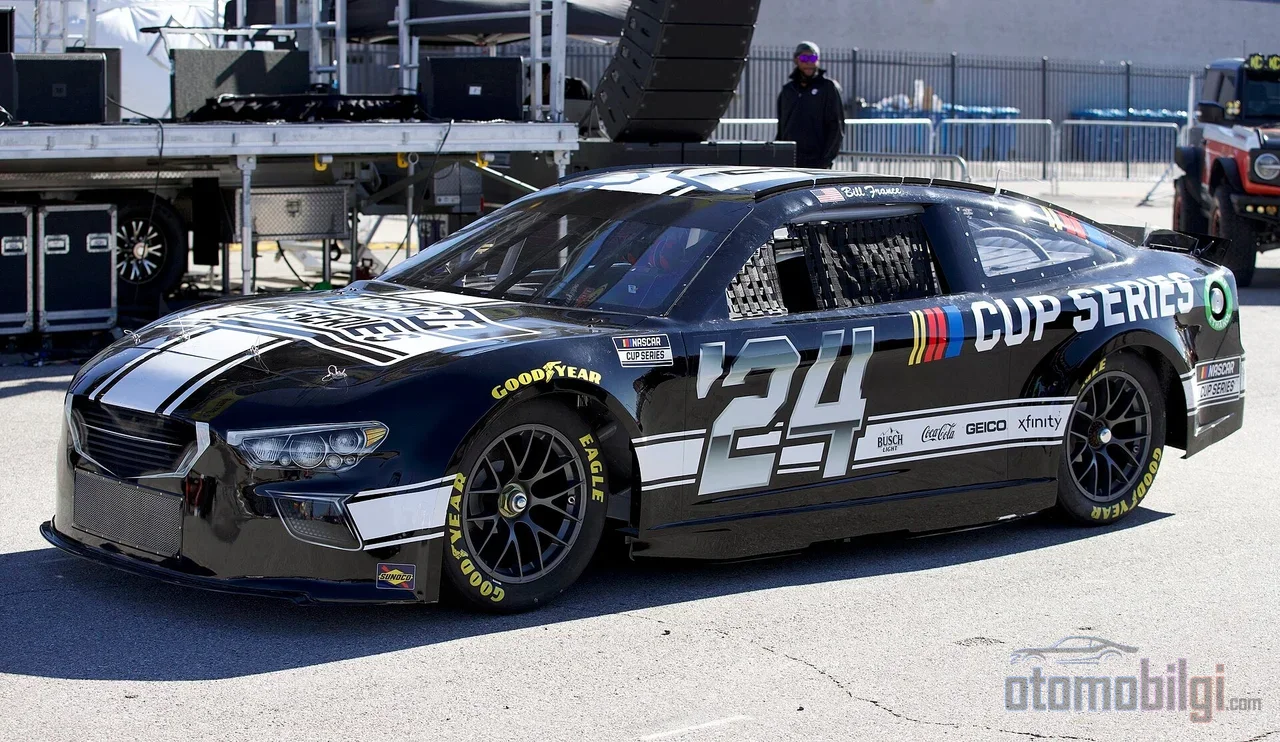
NASCAR's Next Gen car is the seventh-generation stock car that entered the Cup Series in 2022 and rewrote race dynamics, especially superspeedway drafting games, with sweeping innovations like independent rear suspension, 18-inch wheels with a single lug nut, and a composite body. You can lead one lap and drop outside the top 10 the next - the architect of this chaos is exactly this car. So what's going on under it? Let's pop the hood.
Highlights
- First race: February 20, 2022, Daytona 500 - winner Austin Cindric
- 18-inch BBS wheels with a single center nut replaced the old 15-inch steel wheels
- 5.86L naturally aspirated V8 engine, 5-speed + reverse sequential gearbox
- First Next Gen champion: Joey Logano (2022, Phoenix)
- In 2023 Garage 56 competed in the 24 Hours of Le Mans - the first NASCAR entry since 1976
What Is Next Gen and Why Was It Necessary?
Next Gen is also known as Gen-7 in the NASCAR world because it is the Cup Series' seventh-generation race car. Although it looks like an evolution built on the previous Gen-6, it is actually a serious ground-up design. The project was originally supposed to hit the track in the 2021 season, but the COVID-19 pandemic pushed everything back by a year; development was completed on February 1, 2021 and the car finally made its debut at the 2022 Daytona 500.
Why such a radical change? There are two big reasons. The first is cost: NASCAR wanted to protect teams' wallets and lure new manufacturers (OEMs) in. The second is modernity - it was important for the car to resemble road cars so young fans wouldn't say "what is this, bro, is this from the '60s?" The basic recipe is: a steel tube chassis, 110-inch (2,794 mm) wheelbase, a 5.86-liter naturally aspirated V8 (Chevrolet R07, Ford FR9 or TRD Phase-14), a sequential gearbox with 5 forward gears + reverse, and Sunoco Green E15 98-octane fuel. Minimum weight without driver is 3,200 pounds, and with driver 3,400 pounds. The tires, of course, are Goodyear.
Independent Rear Suspension: Farewell to a 60-Year Tradition
Here's my favorite part. Until 2022, NASCAR cars had a solid rear axle - yes, today's race car used a straight rear axle held in place by "truck arms" derived from 1960s Chevrolet/GMC pickups and a track bar. Not bad, but... when 60-year-old technology sits in the showcase of a racing series, it feels a bit strange.
With the Next Gen, each rear wheel now got its own arms, spring, and damper; a double wishbone setup and coil-over springs at each corner. Teams use five-way adjustable Ohlins TTR dampers. The track bar is completely gone; rear setup is now done with shims, i.e. thin plates placed for camber and toe angles. NASCAR itself confirmed this on March 24, 2022: "The Next Gen car now offers independent suspension at the rear; changes on the rear side are made in a similar way."
So why is it so important? Because the calendar changed. COTA entering the schedule as a road course and Road America returning for the first time since 1956 confronted NASCAR with tracks that turn in both directions. A solid axle was entirely the wrong tool for a track where you have to turn both ways. A simple analogy: a bicycle that works for everyone on a straight road betrays you on a twisty circuit.
How Is Race Day Adjustment Done?
Shims are garage work; on race day, teams rely on tire pressure and the weight jackermounted on top of the rear shock, which is turned with a wrench through a window. In other words, you can change the balance even while the car is on the ground. There is also a bonus byproduct: the five-speed Xtrac sequential transaxle was moved to the rear of the car, making the weight distribution more sensible. Clever, right?
Single-Nut 18-Inch Wheels: Courage or Foolishness?
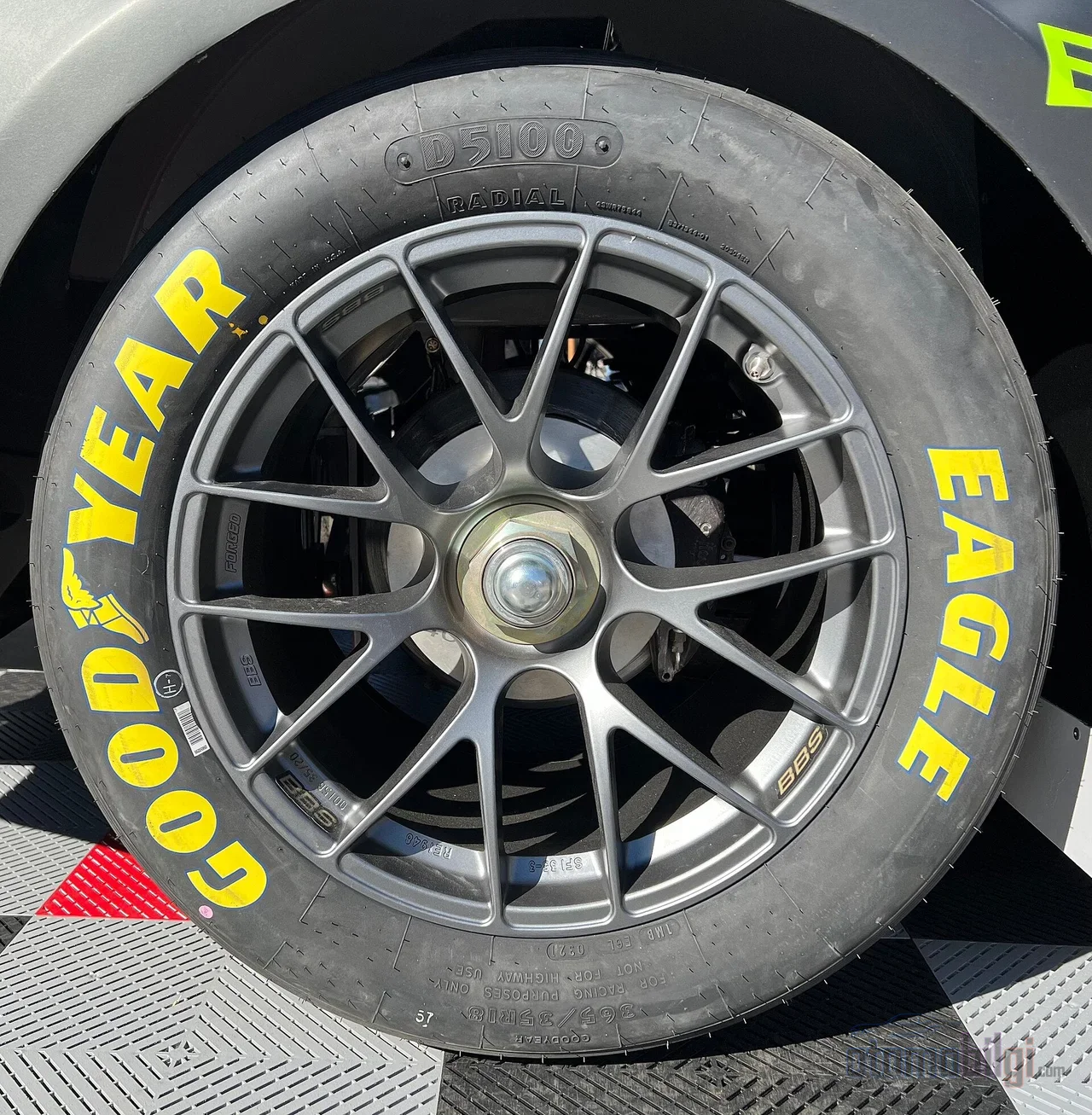
On older cars, each wheel was secured with five separate lug nuts - the ultimate hassle in pit stops, endless fiddling. On the Next Gen, however, there are BBS-branded 18-inch aluminum wheels with a single center lock, replacing the old 15-inch steel wheels. NASCAR officially announced this design on March 2, 2020, and the rationale is clear: for the wider 18-inch wheel, a single nut is more durable and more relevant to today's road cars.
But the early days were not effortless. At the 2022 Daytona 500, teams were observed struggling to fit the center-locking nuts, cars had tire rubber flying off the wheels, and on top of that, even hood flaps flew into the air. In other words, the big Day arrived with big drama. It is still debated today: is the single nut a success or a failure? My answer is somewhere in the middle - pit stop speeds changed drastically, but the failure margin did not drop to zero.
Body and Aerodynamics: The Shift to Symmetry
The Next Gen is the first NASCAR car with fully composite body panels and a fully carbon fiber, aerodynamically guided underbody. The splitter at the front and the wing at the rear are determined by NASCAR - meaning downforce depends not on the teams' imagination but on the rules. On previous cars, you could make the body asymmetric to fit the ovals; the right side was deliberately tilted as a single flat panel. On the Next Gen, symmetry is mandatory: every car has the same form. This means racing without tricks.
Also, for the first time in a NASCAR car, there are modern features like a rearview camera and a semi-automatic gearbox. The driver now looks at a monitor instead of the interior mirror - just like the cars on the street. As for driving dynamics: wide tires and big brakes provide more grip in sharp corners. But a few drivers criticize the aero package: the problem known as "aero push," where nose grip is lost as you get closer to the car ahead, is found to be significant even on medium-speed tracks. Corey LaJoie's description was even clearer: a poorly set up Next Gen drives far worse than the Gen-6.
| Feature | Gen-6 | Next Gen |
|---|---|---|
| Rear suspension | Solid axle + track bar | Independent, double wishbone |
| Wheel | 15-inch steel, 5 nuts | 18-inch BBS aluminum, single nut |
| Body | Steel, can be asymmetric | Composite, fully symmetric |
| Transmission | At the rear except | Xtrac 5-speed transaxle (at the rear) |
| Extra | Classic mirrors | Rear view camera |
Race Dynamics: Draft Chaos and Super Speedway Finals
On superspeedways, drafting - the art of tucking into the low-pressure zone behind the car ahead to gain speed - was taken to a whole new dimension with the Next Gen. In Daytona tests, cars were seen running in large packs, almost hand in hand. You can lead a lap, and the next lap drop out of even the top 10 - this sentence is no longer a cliche, it is a rule of physics. For the viewer it is magnificent: nobody knows who will win in the last 10 laps, and the finals are getting crowded.
But the same air game caused problems on other tracks. Christopher Bell said that at Bristol the race turned into a "momentum style" and that the car's lack of ability to handle pack air - that is, the dirty air trapped in the crowd - made passing difficult. Denny Hamlin, meanwhile, spoke even more harshly on his podcast: the Next Gen carries "hundreds of counts more drag" compared to the Gen-6. NASCAR must have heard this, because 2026 it announced it was considering Hamlin's short spoiler idea and tried a new solution to save superspeedway racing; at Talladega, cars use the slipstream in tight packs. So the debate is not over, it is coming.
There is also an update on the rules side: since 2023, drivers who lose a tire are given a two-lap penalty plus a two-race penalty for a crew member. The price of littering the track with a poorly prepared car is now truly high.
Safety Debate: The Troubles Beneath the Shiny Surface
Now the other side of the coin. The early years of the Next Gen passed with strong driver reactions, especially regarding the severity of impacts during crashes. Crashes that once seemed routine began to feel more violent than normal with this car. Chase Elliott's "Nobody is immune to this" remark came after seeing his teammate Alex Bowman's crashes and sums up the general mood.
NASCAR did not stand idle: it made changes aimed at softening rear impacts, and with the 2023 upgrades announced on October 1, 2022 it introduced a new rear bumper, a redesigned rear chassis clip, and a revised center chassis clip. A notable detail: in May, NASCAR had told drivers that the crash simulations it conducted with the new car showed no problems. So the official simulations were clean, while the drivers' backs hurt - there was a gray area where both sides had a point, and the updates were made exactly in that gray area.
A more concrete example: Kyle Larson shared data from his mouthguard with sensors from the bus stop chicane at Watkins Glen and said "The previous one was not safe for the brain." NASCAR verified the data; the high pyramid tympanums were removed and replaced with flat red stripes. At the Charlotte Roval, in 2024 the 4-inch turtle curbs were replaced with 2.25-inch rumble strips. These seemingly small details mean everything to the person sitting in the car.
Strange Moments of the Early Days
In the first practice sessions of 2022, teams "creatively" exploited the independent rear suspension, bending the cars out of proportion - a wave of tricks emerged that fans nicknamed "Twisted Sister", and NASCAR quickly clamped down on it. In the first Daytona 500, Austin Cindric won, but when his car slid sideways for a long time, the flat underfloor went into ground effect and lifted the car; this recalled the lifting problem in the original design of the old Car of Tomorrow. In other words, every new generation is born with its own childhood diseases.
There was more, too: 2023 the Next Gen Camaro ZL1 1LE entered the 24 Hours of Le Mans with the Garage 56 project - the first entry by a NASCAR stock car since 1976 - and the driver lineup included Jimmie Johnson. And the first Next Gen champion was Joey Logano, 2022 at the Phoenix finale. This car is now a part not only of the racetrack but also of history.
Gen-6 or Next Gen? An Honest Assessment
This debate never ends on fan forums, and there are good reasons for it. The Next Gen is more modern, more relevant to road cars, more economical for teams, and by far the more accurate machine on road courses. With its wider tires and bigger brakes, it offers more grip in sharp corners. But we also need to talk about the aero push problem, the high drag debate on superspeedways, and the crash severity story without taking them off the table. In short: the Next Gen is a revolution, but every revolution carries rough edges in its early years. If NASCAR is still 2026 wrestling with spoiler height and package settings in 2026, that shows how deep those rough edges go, in my opinion.
Ultimately, the Next Gen is a bold move that rescued NASCAR from its 1960s legacy and brought it into the modern automotive world. Headings like independent rear suspension, single lug-nut wheels, and composite body are each a lesson in themselves - and they changed the look of races, the finish-line photos, and even the drivers' safety discussions. If it were up to you, would you want the old solid axle back, or would you join this chaos? I'd say the latter.
Sources
- Next Gen (NASCAR) - Wikipedia
- NASCAR Independent Rear Suspension: Why Curb Riding Changed - Happy Hour Racing
- NASCAR moving to single lug-nut design for Next Gen car - NASCAR.com
- All about NASCAR's Next Gen car - Racer
- Developing NASCAR's Gen 7 Aerodynamics - RaceCar Engineering
- NASCAR Reveals Next Gen Race Car - Car and Driver
- NASCAR considering Hamlin's spoiler idea for superspeedways - NASCAR.com
- Up to Speed: Next Gen, Same Problems in 2025 - Frontstretch
- Bell Says NASCAR's Next Gen Car Changed Bristol - Yahoo Sports
- Is NASCAR's Next Gen car safe? - Fox Sports
- NASCAR Making to Fix Next Gen Race Car Safety Concerns - Road & Track
- NASCAR Driver Outcry and Safety Concerns - Autoweek