How Do Pit Stop Strategies Reverse a Race in NASCAR?
Share This Page
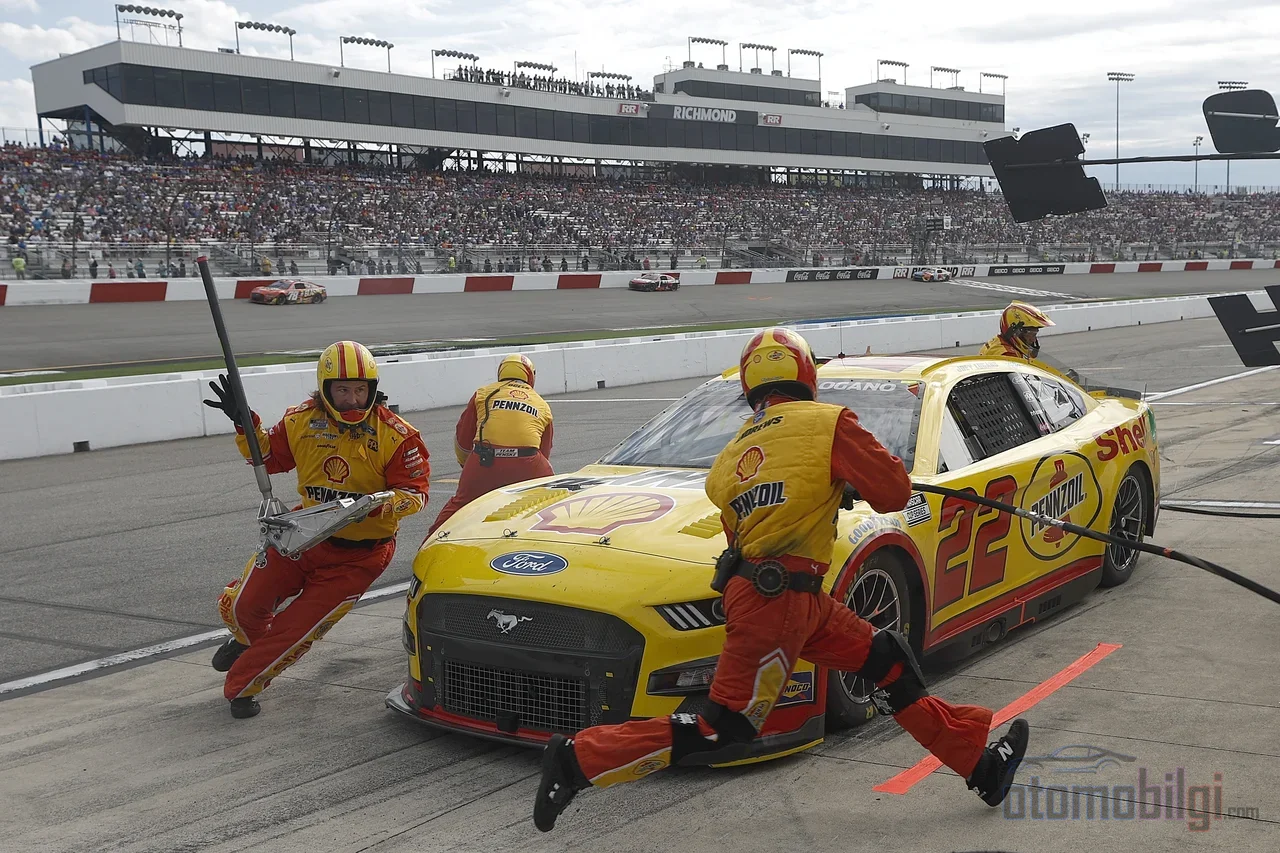
Pit stop strategy in NASCAR is the set of decisions that directly change the race outcome: which lap to pit on, how many tires to change, whether the fuel will last, and whether to pit during a caution period - such choices can determine the winner even when you have the fastest car in hand. An average pit stop lasts only 12 seconds ; but the decisions made in those 12 seconds can write the fate of a race lasting hours. Sounds crazy, right? Let's dive in.
Highlights
- Average pit stop time is about 12 seconds; in the Cup Series, a typical interval is 12-16 seconds
- On the pit wall, 5 people work at the same time: two tire changers, the tire carrier, the jackman and the fuel man
- If a wheel comes off on pit road, the team receives a two-lap penalty
- On pit road there is a 45-55 mph speed limit
- In 2022, the lug nut count went from five to one; pit times shortened significantly
What Exactly Does Pit Stop Strategy Cover?
If pit strategy only makes you think of "fast tire changes," you're missing the big picture. The real question is this: the team has to decide when and how to take service throughout the race. Tire fall-off, the fuel window, track position and caution flag predictions... All of these are considered together. It's like playing chess, except the pieces are 3,400-pound cars.
Think about how expensive a one-second delay can be. Especially on flat, hard-to-pass 1-mile ovals like New Hampshire Motor Speedway, track position is everything. A second lost on pit road means several positions you can't gain back on the track. That's why teams make pit decisions with real-time data: tire wear, fuel level, track temperature and caution flags are all on the table. In recent years, pit strategies are even being simulated with artificial intelligence and machine learning. Considering we still use a forecasting app on our smartphones... I'm a bit jealous, I'll admit.
What Happens in 12 Seconds? The Anatomy of the Pit Crew
Let me emphasize once again how fast a pit stop is: the target is under 12 seconds. And the crew that makes it spectacular is just five people working over the wall. In November 2017, NASCAR reduced this number from six to five; the rationale was safety and the athleticism of the crew members. Because these men are now full-blown athletes: you're not surprised to hear that their salaries can reach $200,000 . Teams are trying to grab the best athletes with gyms, trainers, chefs and even yoga instructors.
- Two tire changers: Each one removes a tire and fits a new one. Each tire weighs 50 pounds, around 22 kilograms.
- Tire carrier: Delivers the new tires into position one by one.
- Jackman: With a 30-pound jack, he lifts the 3,400-pound car with a single pump. NASCAR describes this as "the most demanding position on pit road." Just think about that single pump!
- Fuel man: During a pit stop, the car receives two full cans of race fuel; the fuel filler is on the wall-side of the tank. The fueler cannot perform any other task and must stay near the pit wall.
Rules that changed over time also kept this profession constantly evolving. In 2022 the number of lug nuts was reduced from five to one and pit times shortened considerably. The elimination of the fuel overflow role known as the Catch Can Man forced teams to rethink their strategies from scratch. From 2025 onward, NASCAR distributes standard air wrenches, hoses, regulators and control boxes to teams at every race and collects them back at the end of the weekend. With equipment differences eliminated, it all comes down to human speed and planning. I like that.
The Tire Decision: Two, Four, or None?
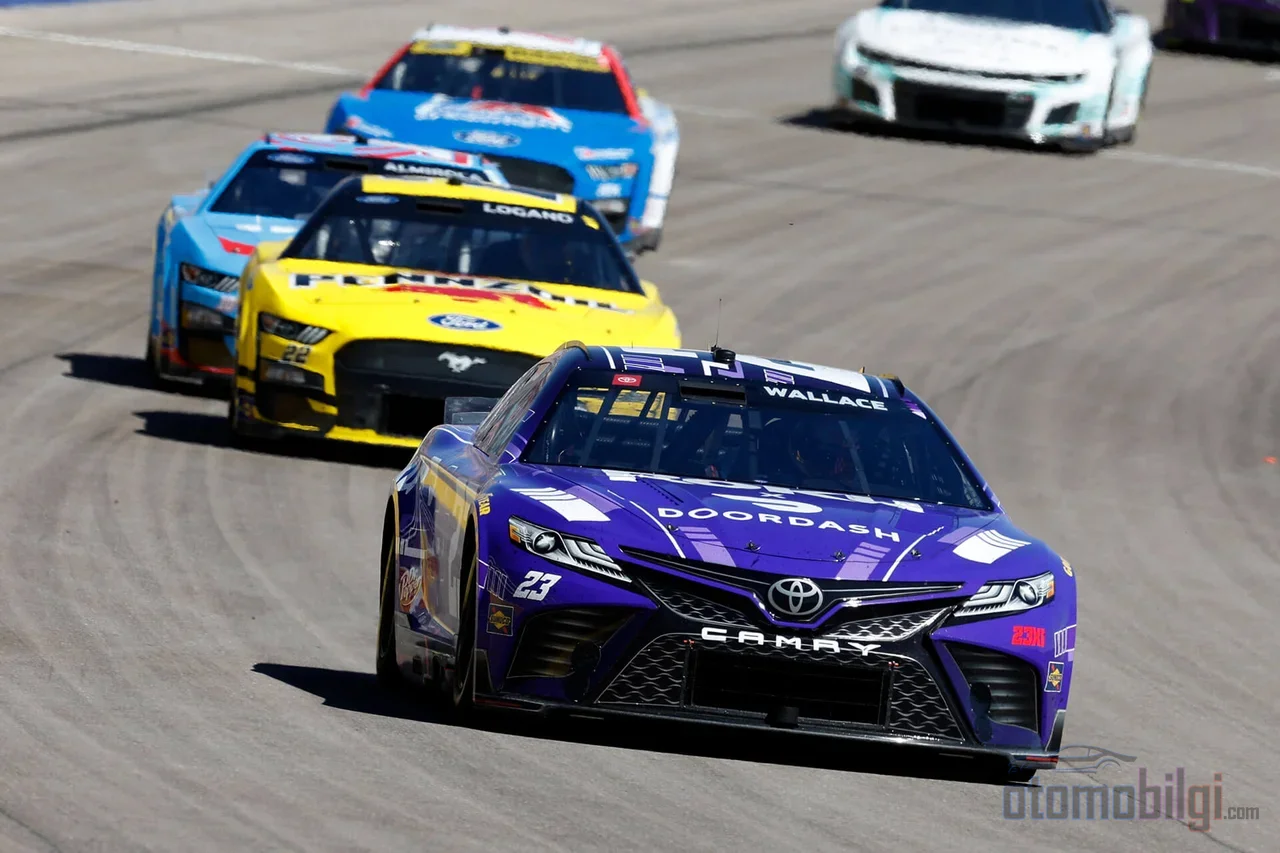
This is where the heart of pit strategy beats. When the yellow flag comes out, the crew chief is handed three options: two tires, four tires or no tire change at all, just taking fuel and getting out. It looks simple but it isn't. Two tires mean a faster pit, so you lose fewer positions on pit road. Four tires mean a longer stop and a faster car; but while you are in the pit, your rivals are gaining positions on the track.
So which is right? The answer: it depends on track position, tire falloff and the number of laps remaining in the race. Track temperature also comes into play; at places like Bristol, extreme tire wear can be a talking point in its own right. Softer compounds offer more grip but wear out faster. A worn tire slows the car down; controlled wear is necessary for tire safety. In other words, the tire decision should also be based not on the question of "how many laps can I dominate with fresh tires," but on "when will wear catch up with me."
Let me give you an analogy from daily life: this decision is like deciding whether to take your umbrella in the rain, except the price of the umbrella changes at every stop and if you're late, you get soaked. While some cars pit early for comfort without taking the risk of drying out, others deliberately stay out for track position. Especially at superspeedways, a short pit stop is advantageous; pit road is even seen as a place to gain a safe position.
The Fuel Window: Is There Enough Fuel or Not?
Now we come to the most nerve-wracking but most exciting part of the subject: the fuel window. Teams calculate the lap range in which the car must pit before its fuel runs out. The window is determined by the ratio of fuel consumption per lap to the amount in the tank. But here's the interesting part: teams are forbiddenfrom monitoring the exact fuel level. So engineers make estimates using data and consumption calculations. Praying with the car's low fuel that "if only it had lasted one more lap" is one of NASCAR's most tense moments.
When it comes to pitting under the green flag, things get even more exciting. In green flag pits, the leader who enters pit road first usually gains an advantage; a driver in the top five tries to enter as soon as the pit window opens. But remember: if you run out of fuel under the green flag, you leave your car in the middle of the track and your race is over. Risk? Absolutely. Reward? Track position. That's why pit strategy is partly a matter of nerve.
The Yellow Flag Gamble: Wave Around, Lucky Dog and the Restart Game
When the yellow flag comes out, whether or not you pit can win you a lot or cost you a lot. Cars that don't pit gain positions by beating the pit stops; whoever wins the race off pit lane restarts behind those who didn't pit. So sometimes even the fastest pit stop loses to "not pitting at all." A crazy game, isn't it?
What Is the Wave Around and Why Is It a Gamble?
The wave around is the boldest move in the strategy playbook. Here's how it works: if everyone on the lead lap pits, cars a lap down can pass the leader without pitting and get their lap back. But it's not free: that car can't pit until the race goes back under the green flag. It gets its lap back but restarts at the very back and races with the fuel risk. If another caution comes out soon, the driver wins; if the green flag run is long and the fuel doesn't last, they're forced to pit under green and lose. Pure gambling. And believe me, our hearts are in our mouths watching it.
Lucky Dog: How Does the Free Lap Work?
The lucky dog, also known as the free pass, is the free lap given to the highest-placed lapped car under yellow. So if you've lost a lap and you're the furthest forward on track when the caution comes out, you get a lap as a gift. Combined with the wave around, you see that NASCAR built two separate mechanisms to give lapped cars a chance to stay in the race. Whether both are necessary is debatable; some fans even argue that the stage system should be removed and tire strategy left in its pure form. I think the debate itself is proof of how rich this strategy is.
Pit Road Mistakes: One Second of Carelessness, A Race-Long Price
Now for the painful truth: pit road is a brutal place, brutal enough to derail a good run. The speed limit is 45–55 mph; those limits were introduced after a tragedy in Atlanta and are today a cornerstone of safety. Speed and you get a penalty, too slow and you lose positions. An uncontrolled rolling tire also results in a penalty. So on pit road there's no such thing as "nobody will see it."
Let's give a concrete example: Chase Elliott's No. 9 team had to pit twice in one race after putting the right-side tires on backwards on lap 40 and lost 7 positions . The same driver, at Las Vegas, entered his pit box too deep during a green flag stop and lost 3 positions . Mistakes like backwards tires create agonizing moments that no amount of thousands of hours of practice can spare you. Sometimes I think crew chiefs monitor heartbeats alongside the clock.
Loose Wheel Penalty: Harsh or Fair?
From 2023 onwards, if a wheel comes off on the pit road, two pit crew members receive a two-race penalty and the team a two-lap penalty. Harsh? Absolutely. But the debate doesn't end there: some argue the penalty isn't the solution, and the problem lies in the single-lug nut wheel setup. NASCAR softened its lug nut penalties in 2023; so the balance between penalty and rule is still being discussed. One of the proposed approaches for a loose wheel is to hold the car for five laps when it returns to the pit box. And there's this too: receiving service in another team's pit stall can result in a lap penalty; NASCAR clarified its pit road rules in 2025 after a car was stopped in Christopher Bell's teammate's stall. The rules are evolving, but the goal is always the same: fairness and safety.
Moments Where Strategy Won: The Split Pit Strategy Example
We also need to see that pit strategy isn't just about hedging risk; it can be a winning weapon. Joe Gibbs Racing split its pit strategies in the final stage at Chicagoland (split pit strategy) and achieved a 1-2-3 finish. In other words, they applied different plans to their different cars and swept the podium entirely. The same team's engineers also cite a good pit decision Martin Truex Jr. made at Kansas as an example: the right decision at the right time can be worth more than speed on the track. Pit strategy can be not only a defense but also an offense.
And there's an event where pit crews become the stars: the Pit Crew Challenge, held on May 16, 2025 at North Wilkesboro Speedway as part of All-Star race week, where the fastest pit crew won $100,000 along with an All-Star qualifying advantage. People only know the drivers, but the silent heroes of this business are the five people behind the wall. Brehanna Daniels becoming the first Black woman on a Cup Series pit crew in 2017 also shows how much this world has changed.
Frequently Asked Questions About Pit Strategy
- How long does a pit stop take? On average 12 seconds; in the Cup Series the typical range is 12-16 seconds.
- Should you take 2 tires or 4 tires? It depends on commitment. Two tires save time on pit road, while four tires provide better grip on the track. Lap count, tire wear, and track position determine the decision.
- What does fuel window mean? It is the range of laps in which a pit stop must be taken before running out of fuel; since teams cannot see the exact fuel level, it is determined by calculation.
- What is the Lucky Dog? It is the free lap given to the lead lap-down car during a yellow flag.
- Is the wave around risky? Yes; you regain your lap but restart from the very back and take on fuel risk.
Final Word: 12 Seconds Can Change Everything
In NASCAR, pit stop strategy is, alongside speed, a game of intelligence, courage, and timing. Every decision, from tire choice to the fuel window, from the wave around gamble to pit road mistakes, can reverse the race result. When you watch the next race, pay attention to who pits and who stays out when the yellow flag comes out; you will see the difference live. So if it were you, would you take two tires, or would you risk everything and hold your track position? Whatever your answer, you will now look at those 12 seconds with completely different eyes.
Sources
- The Science Behind Pit Stops: How Seconds Change the Race
- NASCAR pit stops explained: Roles, rules and strategy
- NASCAR clarifies pit-road rules after Bell penalized
- Two Cup teams penalized for detached wheels at Texas
- NASCAR easing back on wheel nut penalties for 2023 season
- Explaining NASCAR pit stops before the 2023 Chicago Street Race
- Every second counts: How pit-road mistakes derail great runs
- Quick stops: How JGR's pit strategy set up a 1-2-3 finish
- NASCAR Lucky Dog Explained: Free Pass and Wave Around Rules
- What Exactly Is NASCAR Pit Strategy?
- More Than Left Turns: The Science, Strategy, and Technology Behind NASCAR Racing
- Heat and Tire Wear - NASCAR Racing
- When Tragedy in Atlanta Led to Pit Road Speed Limits
- NASCAR Refueling Challenges: The Strategy behind a Pit Stop