How Does a Race Weekend Work in NASCAR?
Share This Page
A NASCAR race weekend runs on a meticulous rhythm spread across three days: Friday brings press conferences, practice sessions, and qualifying laps one after another, Saturday continues with lower-series races, and on Sunday the main Cup race takes to the track. Within this flow, teams fine-tune the car, lock in starting positions with the qualifying lap, and on race day bring pit strategy and draft games onto the stage. So that 400-mile run you see on television is actually just the final act of a structure built throughout the week.
Highlights
- Cup practice became a single session of 50 minutes starting from New Hampshire in 2026; at superspeedway races, there is no practice at all.
- Qualifying order is set by lottery, while pole is determined by the fastest lap time or by the 30% owner ranking + 70% last race result metric.
- The Daytona 500 lineup is distributed into odd and even numbers based on the results of the two Duel races.
- In 2026, the win points increased from 40 to 55 and the championship format returned to the old Chase system.
- When rain canceled qualifying in Atlanta, the pole was awarded to Tyler Reddick based on the metric.
Friday: First Contact with the Track - Practice Sessions
The first scene of the weekend is Friday. The program usually opens with a press conference: drivers step up to the microphones, and reporters fire off questions. At the 2026 spring race in Las Vegas, this meeting was held at 1 p.m., and track work started immediately afterward. So teams were already testing the car on track by 2 o'clock - are you blown away by this pace?
Practice is the only opportunity for teams to test the car in real track conditions. The driver feels the corner entry points, braking distances, and the car's balance; engineers read telemetry data and play with the adjustments. A major change came here in 2026: whereas cars used to be split into two groups and go out for only 25 minutes each, starting from the New Hampshire race, a single combined 50-minute session was introduced. Practice time has thus doubled at most tracks except superspeedways (Daytona, Talladega, Atlanta). Why? Because 25 minutes genuinely was not enough to see whether the tweaks made actually worked on track.
But pay attention: except for the Daytona 500 weekend, there is no practice at all at superspeedway races like Daytona and Talladega. Cars go straight into the race with almost no testing. This compresses the driver's feel for the track entirely into the race itself - an exciting, but risky approach.
Qualifying: Who Sets the Starting Grid?
Practice ends, and it's time for time trials. Qualifying is the segment where each car goes out alone and sets its fastest lap - and this is what draws up the starting grid. On Friday, qualifying for the Cup as well as the lower series can be held in a single day; in the Las Vegas example, the lower-series qualifying was at 1:05, Cup practice at 2:30, and Cup qualifying at 3:40. So three different sessions on the same day.
The Metric System: Formula Instead of Time Trials
Here's the interesting part: in most Cup races, starting positions are no longer determined by a pure speed contest but by a two-variable metric. The metric's composition is as follows: the car's rank in the owner standings 30%, while its finishing position in the most recent race counts 70% in the calculation. In other words, whatever you did the previous week largely draws this week's grid. The order for the qualifying lap, meanwhile, is usually determined by a draw - who goes out on track first is left to chance.
This system is undoubtedly one of the most talked-about topics. Critics question it because it is based on previous results rather than on-track speed that week, and NASCAR itself has announced it is evaluating the possibility of changing the metric for 2027. So don't stop listening - this format could change next season.
How Is Pole Position Awarded?
In time-trial races the answer is simple: the fastest lap takes pole position. In the group format there are two rounds; after the first round, the top 5 drivers from each group advance to the final round, and the fastest lap there decides the pole winner, while the others lock in their positions. In metric-based races, pole goes directly to the top of the metric. If two cars complete at identical speeds, the order is settled according to owner points standings. The first 40 starting positions are assigned to eligible teams based on final ranking results.
If rain intervenes, things change: in Atlanta in 2026, qualifying was completely cancelled and pole was awarded to Tyler Reddick based on the metric. There's also a new rule: on drafting tracks (Daytona, Talladega, Atlanta) it is forbidden to extend your hand out of the window during qualifying laps, use the window net, or exploit the gap ahead to redirect air - violators have their lap time deleted. Noah Gragson was the first driver caught by this rule and had his Daytona 500 qualifying time cancelled.
Daytona 500: A Lineup System Unlike Anyone Else's
At the Daytona 500, the season-opening race, the grid is built unlike any other race. First come single-car qualifying laps: drivers record their best times alone on track, the top 10 advance to a second round, and the two fastest times lock in the front row, that is, positions 1 and 2. In 2026, Kyle Busch took pole in these two spots and Chase Briscoe took second.
But for the remaining dozens of positions, the real stage opens afterward: the two Duel races, that is, the Duel at Daytona. The finishing order of these two races determines the distribution of the remaining grid into odd- and even-numbered positions. Single-car qualifying also draws the Duels' own lineup. In single-car qualifying, the first two "open," that is, non-charter, cars are locked into the race; the other open cars battle for a race spot through a Duel. Although Anthony Alfredo finished as the last open car, the cooling hoses were found unsecured in technical inspection and he was disqualified, giving his spot to B. J. McLeod. So even making the Daytona 500 is a tournament in itself - in my opinion, this system deserves to be heard about much more.
Saturday: Sub-Series and Final Adjustments
Saturday offers Cup teams a bit of breathing room: the schedule highlights press conferences and sub-series races. Series such as the Craftsman Truck Series and Xfinity take the stage on track, and Cup drivers can also take part in these races. This is also a working day for the pit crews: pit crew members prepare with regular training sessions, weight room programs, and team meetings - considering that this job requires more than 37 weekends of travel per year, it is clearly almost an athletic career.
On some race weekends, the schedule is reversed: in the Chase race at Phoenix, practice could be extended until the race day itself, Sunday, until 3 p.m., with the results listed near midnight. So practice and qualifying can be moved closer to race day - not ideal for the teams, but that's what the television window demands.
Race Day: Sunday's Big Stage
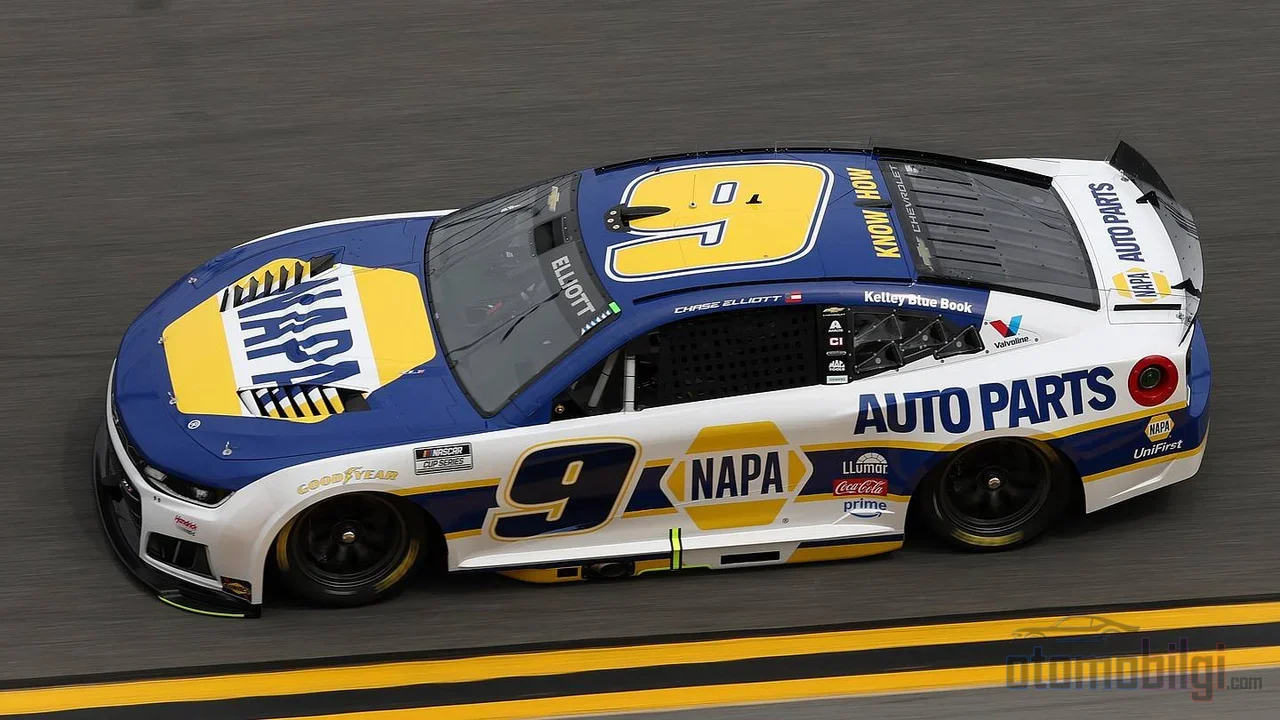
And finally, Sunday. The Cup race - in the Las Vegas example, the Pennzoil 400, starting at 4:00 p.m. Eastern. The grid is set according to the positions from qualifying, and the moment the green flag waves, all the weekend's preparation is put to the test. Pit strategy comes into play right here: for refueling, tire changes, and mid-race adjustments, each car generally makes more than 4 pit stops during the race. Which lap to pit on, how to take advantage of yellow flag opportunities, and pit window calculations are the crew chief's chess game on the pit board.
Drafting is also the invisible hero of race day. A driver who tucks into the air pocket created by the car ahead reduces drag and closes in quickly to create a passing opportunity. At superspeedways, this turns into pack racing. The setups worked on in practice throughout the week, the positions gained in qualifying, and the decisions made on the pit wall - all come down to a single result at the checkered flag.
Even after the race ends, the evening's work is not done: the top three finishers are called to the press conference, and the weekend officially closes.
Rule Changes in 2026: The Chase Is Back
One more thing you need to know while following this flow: the 2026 season brought a fundamental change to the championship system. NASCAR returned to the Chase format used between 2004 and 2013 in all three national series. After the first 26 races, the top 16 in the points standings make the Chase; the popular but controversial "win-and-you're-in" rule was removed. Chase starting points are distributed progressively according to the regular season standings, while playoff points and the regular season championship have completely faded into history. The race win points value was also raised from 40 to 55 - meaning winning a race is now worth far more than it used to be.
The season itself is packed: the 78th Cup season opened on February 4 with the Cook Out Clash at Bowman Gray Stadium (that race was postponed three times due to a snowstorm, squeezed into a single day and set a record with 17 cautions - Ryan Preece won), the 68th Daytona 500 was run on February 15, and the season ends on November 8 at Homestead-Miami. The calendar features 32 ovals, 3 road courses, 1 street course race and 3 non-championship oval races. The reigning champion is Kyle Larson from Hendrick Motorsports.
| Race Weekend Day | What's on the Schedule? |
|---|---|
| Friday | Press conference, practice session, qualifying, and on some weekends a lower-series race |
| Saturday | Press conferences and lower-series races; final preparation for the Cup |
| Sunday | The Cup race and, afterward, the top-three press conference |
| Daytona 500 weekend | A special grid format with single-car qualifying plus two Duel races |
| Superspeedway weekends | No practice except for the Daytona 500 |
In short: the Weekend Is a Structure, the Race Is an Outcome
Now you know what you're looking at when you watch a NASCAR race weekend: the setups built in Friday's 50-minute practice, the grid shaped by the qualifying metric, the positions distributed by the Duels at Daytona, and the decisions made at the pit wall on Sunday. In-race topics like drafting and pit strategy also find their place within this flow. Next time the green flag waves and the camera goes to the back of the grid, you too can read the story of the three days behind it.
Sources
- Weekend schedule for 2026 Las Vegas spring race
- Weekend schedule for 2026 Phoenix Chase race
- Full schedule for 2026 Daytona 500 and Speedweeks
- 2026 NASCAR Cup Series
- NASCAR to implement 50-minute Cup practice sessions
- NASCAR Cup Series 2026 Qualifying Procedures
- NASCAR returns to Chase championship format for 2026
- DAYTONA 500 qualifying explained: How is the starting lineup set
- How 2026 Daytona 500 qualifying, Duel races work
- NASCAR Qualifying 101: questions answered
- NASCAR Qualifying Rules
- How does NASCAR determine qualifying orders? Full 2026 metric breakdown
- How Does NASCAR Qualifying Work?
- NASCAR rules and regulations
- Behind the Wheel: Understanding NASCAR Racing
- The Ultimate 2026 NASCAR Race Day Guide