Why Do NASCAR Teams Re-Tune the Car for Every Track?
Share This Page
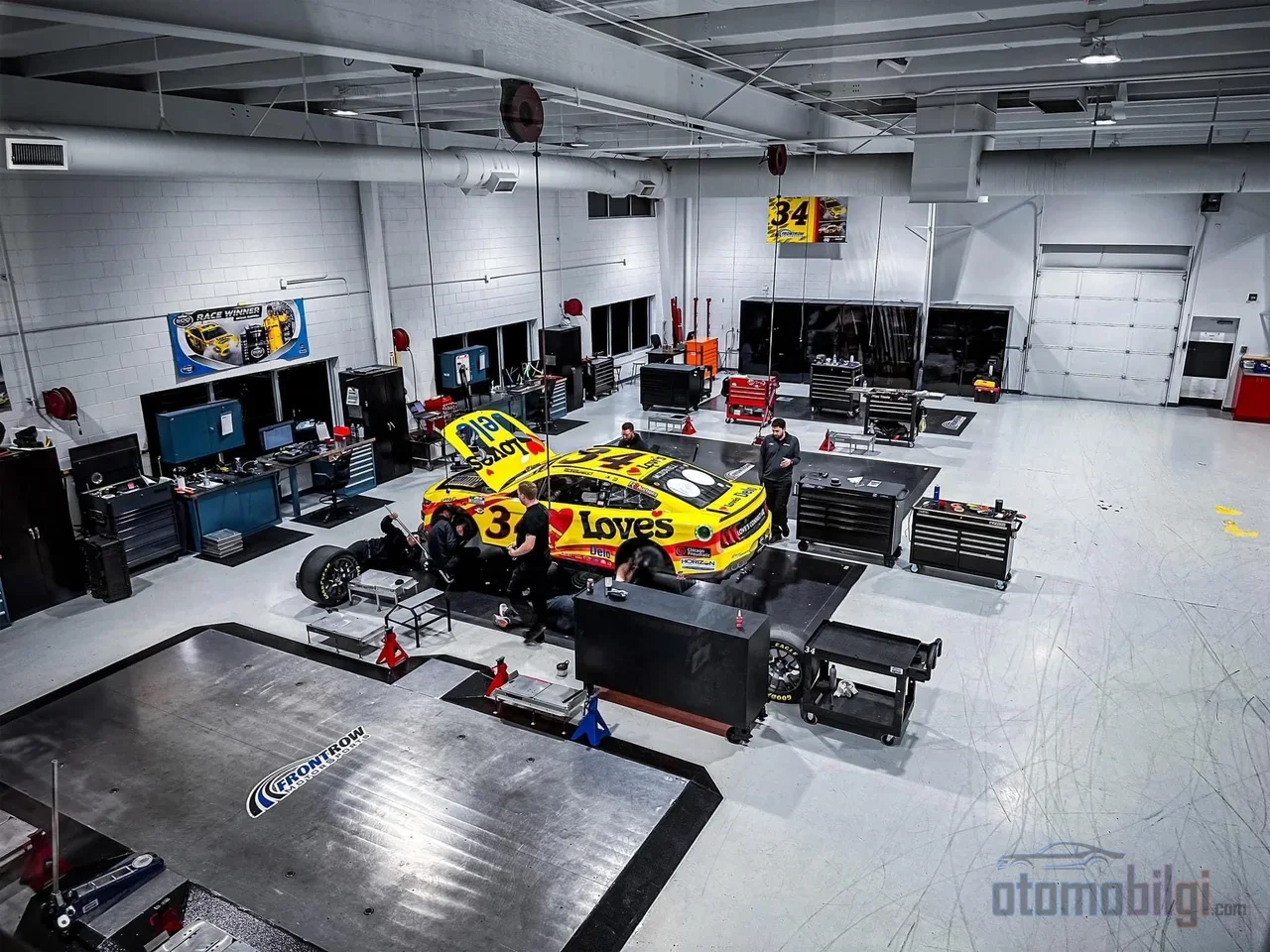
NASCAR teams retune the Next Gen car, which is technically identical in every race, according to the track, because a winning setup is completely different depending on the track type: on short ovals, camber and suspension geometry adapted to left-hand turns; on superspeedways, a closed grille and tall gearing for minimum drag; on road courses, symmetric geometry and wiper equipment for two-way corners are used. So the car is the same, but the engineering underneath it is rewritten from scratch every week.
Highlights
- The Next Gen has been used in the NASCAR Cup Series since the 2022 season, and teams adapt the one-make chassis to each track themselves.
- On ovals, positive camber on the left side and negative camber on the right; on road courses, negative camber is applied on both sides.
- The Next Gen has a 5-speed sequential manual gearbox, and top gear is always in a 1:1 ratio.
- Road course conversion is largely done with bolt-on plate and bracket changes; no welded custom chassis is required.
- The grille band adjusts the balance between cooling and aerodynamics by changing the pressure on the radiator by roughly -10 Pa.
How Realistic Is the "Same Car" Claim?
In the Cup Series, everyone drives a car built to the same spec; it is called the Next Gen, and some refer to it as the Gen-7. It made its race debut with the Daytona 500 on February 20, 2022. A steel tubular chassis, 5.86-liter naturally aspirated V8 engines, Goodyear tires, Sunoco Green E15 fuel... So the Chevrolet, Ford and Toyota bodies look different, but the skeleton underneath and the basic equipment are shared. Even the weight is bound by rule: a minimum of 1,451 kg with driver and no fuel.
But if we say it is the same car, why does the driver who raced at Martinsville say the car "is a completely different thing" compared to the one driven at Daytona? The secret lies in the setup. NASCAR deliberately designed the Next Gen with fewer aerodynamic tricks: a fully symmetric body, a stepped front splitter, and for the first time in NASCAR history, a rear diffuser. The aim was to reduce the airflow's domination of the game and to shift the emphasis back to the team's mechanical skill. The result: the same body, a brand-new engineering package every week. Do you think this is a trick, or the real excitement of the sport?
Camber: How One Wheel Angle Determines the Race
The most striking setup difference between an oval and a road course is wheel camber, that is, how many degrees the wheel tilts from vertical. On ovals, teams run positive camber on the left side and negative camber on the right. Why? Because the car turns counterclockwise, that is, always to the left. When you "lean" the wheels to the left, you get more contact surface in the corner and better grip. Think of it this way: you lean slightly when taking a corner on a bicycle - the same logic.
On a road course, however, there are turns both to the right and to the left. That is why negative camber is applied on both sides; the car is no longer like a one-way cone, but like a cylinder that behaves equally on both sides. Since the right side already uses negative camber on both track types, most of the parts stay shared, and the changes concentrate mainly on the left front corner. This detail makes the teams' lives significantly easier.
Bolted Parts: One Chassis, Many Tracks
One of the Next Gen's smartest design decisions is hidden in the suspension upright. The upright itself is the same for all tracks; a track-specific Ackermann bracket is bolted on top, and a track-specific control arm shear plate is bolted underneath. So instead of throwing away the expensive upright, you can use the same upright at different tracks by simply swapping the brackets and plates.
The control arms and toe links also change depending on the configuration: in oval setup there are different parts from left to right, while in road course setup the same parts are used on both sides. In the rear suspension, the control arms are mirrored for negative camber, and the abutment plates between the shaft and hub are customized according to the suspension angle. In short, in the past a welded custom chassis was required for each track type; now for a road course conversion, bolting on new plates and brackets is usually enough. A tremendous saving from an engineering standpoint, isn't it?
The road course package also has extra equipment: a wiper motor, a misting device, rain lights, and rear flaps that reduce water spray. The wiper blade size is also regulated so it isn't used as an aerodynamic device: a maximum 2.50 inches in height, 1.50 inches in width. When wet weather is declared, closing the driver cooling duct also becomes mandatory.
Spring Rates and Rear Axle Steering: Invisible Balances
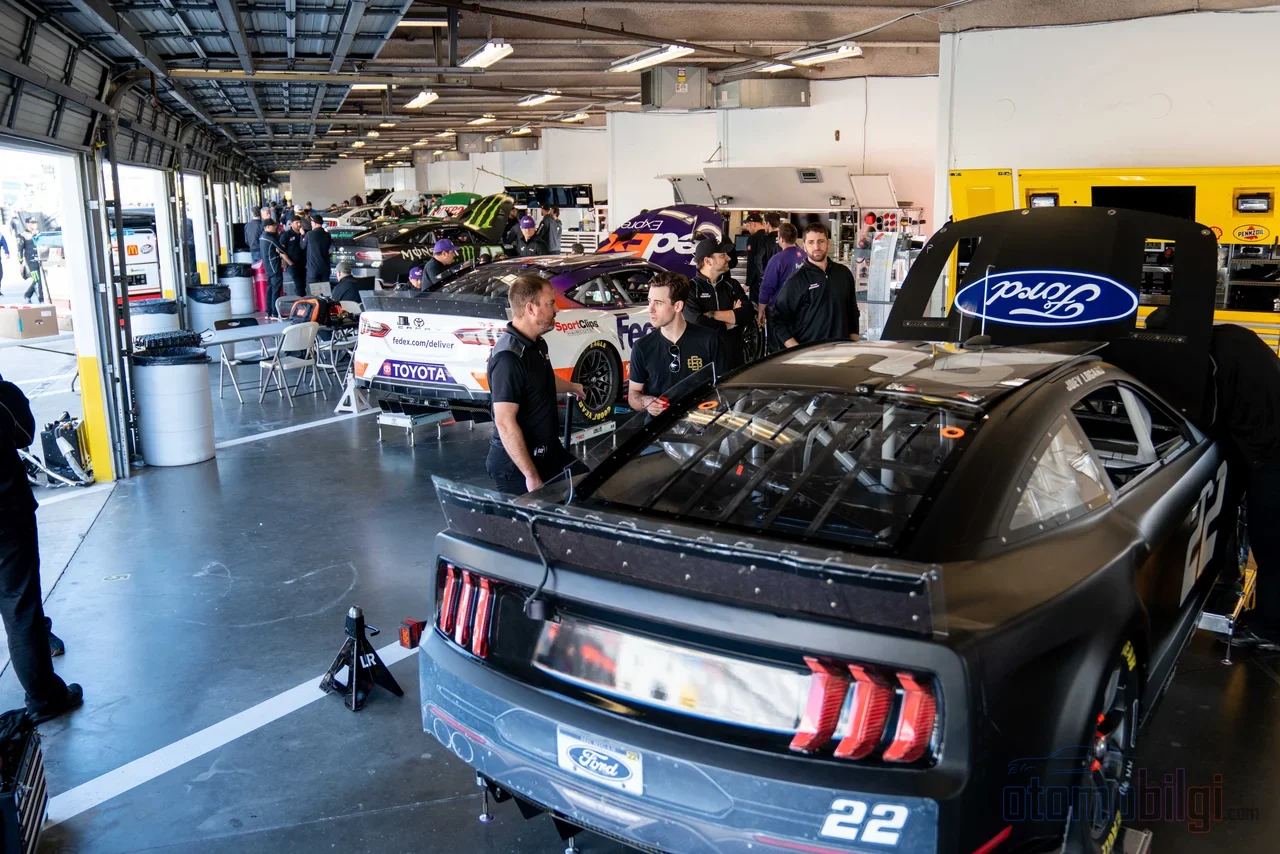
Suspension springs are the parts that literally write how the car will behave coming out of a corner. A stiffer left rear spring keeps the dynamic cross weight high in the car, creating understeer, meaning a front-slide tendency; a soft left rear spring does the opposite. Right rear spring stiffness keeps that wheel up, while large rear springs keep the rear spoiler up in the wind, providing traction out of the corner, meaning forward bite. Because of the spring, damper and linkage combinations adjusted separately for each oval, the Cup car suspension really needs to be thought of as a "hand-built per track" system.
The second fine-tuning is rear axle steering, that is, rear steer. Steering the rear axle centerline to the right turns the thrust angle to the right of center and makes the car more "loose"; a car with a slippery rear rotates faster in the corner but becomes harder to control. This area was such an effective weapon that NASCAR eventually had to tighten it with rules. In the Next Gen's early days, there was a tolerated range of -0.30 to 0.30 degrees for the rear wheel steer angle; this tolerance was tightened to a 0 degree specification. Moreover, a special rule even came out restricting Hendrick Motorsports' developments that provided driver-friendly rear steer. In my view, the clearest proof of how much these details gain is a rule change targeting a single team's development.
Additional note: In the 2022 edition of the Daytona 500, independent rear suspension was used to gain extra yaw effect (skew) by twisting the body, and NASCAR restricted this practice before qualifying. Teams' creativity truly pushes the limits.
Gear Ratio: Same Engine, Different Breathing
The Next Gen has a 5-speed sequential manual gearbox, and in top gear the ratio is always 1:1; meaning the engine spins at direct drive. So where's the difference? In the final drive ratio, that is, the ratio between the driveshaft pinion and the differential ring gear. NASCAR gives teams the flexibility to choose different gear ratios depending on track type: on a short, twisty oval you accelerate instantly out of corners with a short gear, while on a superspeedway you keep revs low with a tall gear and coast at maximum speed.
That's why on short ovals like Martinsville or Bristol and on superspeedways like Daytona and Talladega, teams use different final drive ranges throughout the season. Think about it: same engine, same gearbox, but a completely different gearing setup depending on the character of the track. I love this analogy: on your bicycle you shift to a small gear when climbing a mountain, and to a big gear when accelerating on a flat road. In the NASCAR garage they do the same calculation every week, but with engineering precision.
Aerodynamic Balance: The Fine Art of Taping the Grille
The simplest and most beloved way to adjust aerodynamic balance has been the same for years: taping the front grille. In the old days, the front grille took in airflow directly to the radiator; for years teams have taped over the grille to balance cooling against aerodynamics. Every vent you tape reduces the air entering the car: it has been measured to change the pressure over the lower radiator by approximately -10 Pa. Less air intake means less drag; that means a faster car on the straights, but there's a risk because the engine cools less.
Why Does Single-File Racing Emerge on Superspeedways?
On superspeedways it's not engine power but the air that determines everything. Teams want to reduce drag as much as possible here: the grille opening is taped, the engine is held at an economical rpm in top gear with the 1:1 ratio, and the cars tuck in behind one another, cutting air resistance with the slipstream to accelerate. When everyone chases the same optimization, the cars inevitably line up single file; to make a difference, drivers use the timing of attacks from within the draft and the partnerships they build with teammates. Setup plays an invisible role at this point: those small aerodynamic choices made in the garage determine which car will slip through the pack better.
On short ovals the picture is completely reversed: the front grille opening is larger than on a superspeedway car, and there are extra vents blowing air directly onto the brakes. Because on a short track, the speed you gain on the straights is irrelevant; what matters everything is being able to enter corner after corner without your brakes overheating and fading. In 2023, NASCAR also announced an update package for short tracks: new rear bumper, redesigned rear chassis clip, and a revised mid chassis clip. So even the "same car" changes its program depending on winter and summer, just like athletes do.
Setup Differences by Track Type at a Glance
| Setting | Oval (short/superspeedway) | Road Course |
|---|---|---|
| Hub (camber) | Positive on the left, negative on the right | Negative on both sides |
| Control arms / toe link | Different parts from left to right | Same parts on both sides |
| Spindle (upright) | Same upright + track-specific brackets | Same upright + track-specific brackets |
| Gear ratio (final drive) | Short or long depending on track length | Chosen according to the corner combination |
| Grille opening | Narrow on a superspeedway, wide on a short track | Adjusted according to cooling and balance |
| Extra equipment | None | Wipers, defogger device, rain lights |
In my opinion, this table is the heart of the article: the same base car, three different characters in three columns. It would be hard to find a better summary to show the scale of the transformation teams make from track to track.
The Answer to the Question of What Changed to Make the Same Chassis "Good"
In short, the answer to the question is this: what makes a chassis good is how easily it can adapt to different configurations. Next Gen changed the rules of the game in this regard. Thanks to the symmetric body and reduced aerodynamic aids, the winning team is no longer the one developing the most airflow; it is the team that translates the hub, springs, rear steer angle, and gear ratio most accurately for that day's track. Rule changes like the short track package also show that this balance is continuously recalibrated.
So next time you watch a race, don't think "they're all racing the same car, what's so hard about it?" Under those cars there is an engineering whole rebuilt every week, and the winning team is usually the one that solves exactly those invisible details correctly. In my opinion, this is NASCAR's sweetest secret beneath the visible show. So if it were you, would you choose the brutal corners of the short oval, or the single-file speed of the superspeedway?
Sources
- NASCAR: Next Gen features impact road-course setups
- Next Gen (NASCAR)
- Next Gen analysis: How teams adapt to Tuesday rule change
- NASCAR: Next Gen analysis: Auto Club offers strong data on repairs, adjustments
- NASCAR Next Gen car: Explaining the ins and outs
- The Right Body for the Track - How NASCAR Race Cars Work
- NASCAR Next Gen Cars Manual
- Rear Steer Technology - Circle Track Magazine
- NASCAR rule change puts brakes on Hendrick development
- Big Bar Soft Spring Set Up Secrets
- How NASCAR Teams Spent Millions Complicating A Stock Car
- How Many Gears Does a NASCAR Car Have?
- Modifying Radiator Flow