Why Are NASCAR Races Now Also Taking to the Streets?
Share This Page
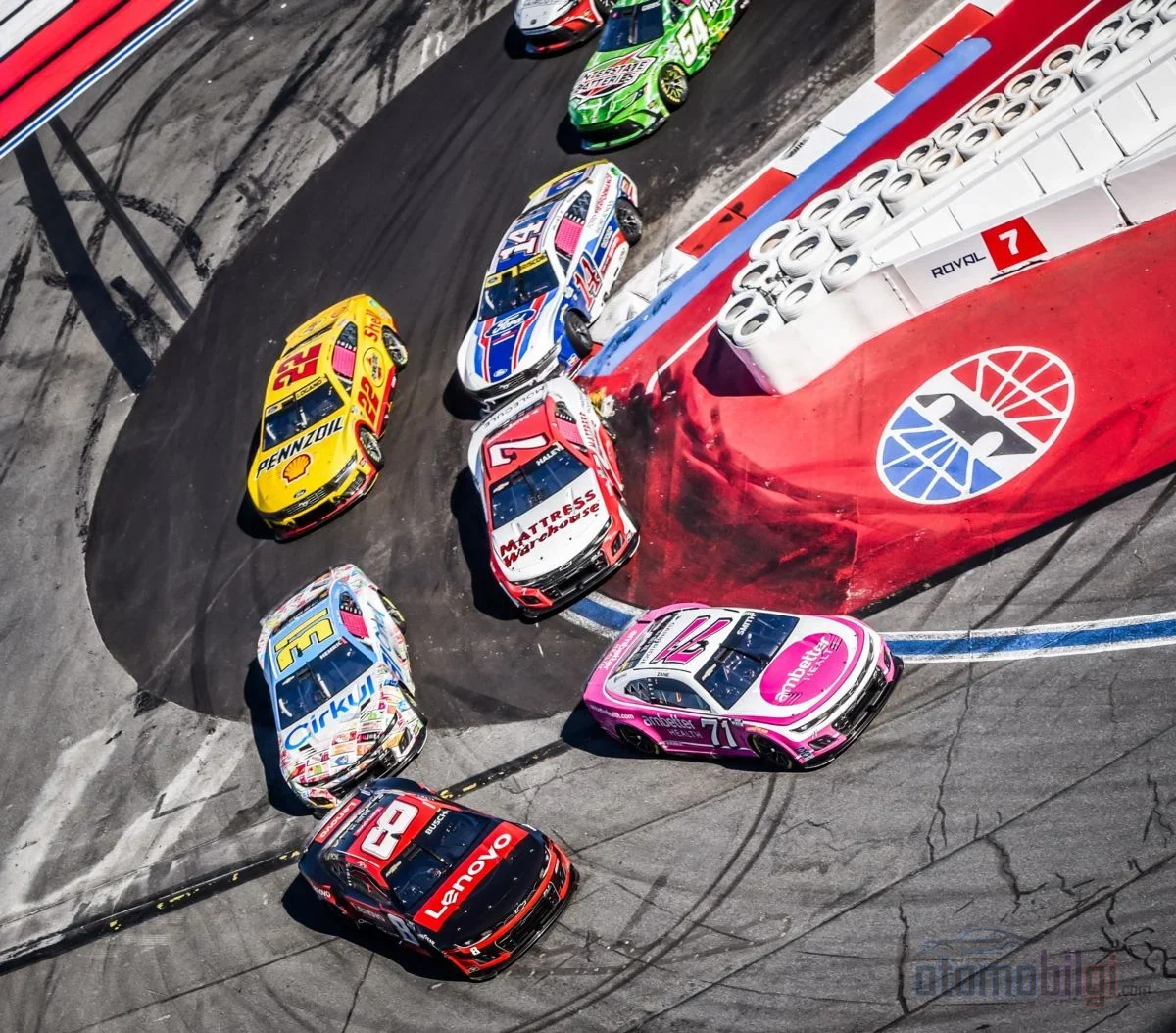
NASCAR is now racing not only on ovals but also on street and road courses; because the series wants to reach a new and younger audience, showcase drivers' different skills, and add variety to its calendar. Although 32 of the 36 races on the 2026 calendar are ovals, three road course events and one street race are the clearest proof of why this series, long identified with ovals, has opened its doors wide.
Highlights
- The 2026 season features 32 ovals, 3 road courses and 1 street race; ovals still make up 88 percent of the calendar.
- The first Chicago street race in 2023 became NBC's most-watched NASCAR race in six years: approximately 4.8 million viewers.
- In 2026, the single street event will be run on a 2.4-mile circuit set up at Naval Base Coronado near San Diego.
- In the Next Gen era, road courses have produced 12 different winners; the races have grown more unpredictable.
- Shane van Gisbergen holds the position of the active Cup Series driver with the most wins on road and street courses.
Why Is NASCAR No Longer Racing Only on Ovals?
Let me explain in one sentence: While preserving the speed and tradition that ovals offer, NASCAR is opening up to new audiences, new cities, and new stories through road courses and city streets. This is not an identity change but a growth strategy. The series knows its roots come from the dirt ovals of the Southeast, but it also knows it must step beyond its roots in order to grow.
The method is very clear: a social media strategy aimed at younger audiences, events that bring racing closer to city centers like street races, and strategic changes to the calendar. The 2025 season saw strong growth in the 18-34 age audience, and NASCAR management is positioning attracting young viewers as an open priority. The street race idea shines precisely at this point: a circuit built into people's workplaces, homes, and daily lives can be someone's first NASCAR experience who has never been to an oval.
Oval, Road Course, and Street Circuit: What's the Difference?
It's very easy to confuse the three circuit types, but they do completely different things to the driver's body and brain. Ovals are elliptical; turning is predominantly to the left, speed almost never drops, and the G-force pushes in the same direction all the time. Road courses, on the other hand, are winding and technical: there are both left and right corners, hard braking and acceleration chase each other, and the G-forces change direction. Street circuits are actually a type of road course, but between concrete walls: the margin for error is almost zero, and the tension is off the charts.
| Feature | Oval | Road course |
|---|---|---|
| Direction of turns | Predominantly left | Left and right mixed |
| Speed profile | Continuous high speed | Brake-accelerate cycle |
| Drafting | Central to strategy | Much more limited |
| G-force | One direction | Changes direction |
| Example | Talladega, Daytona | Watkins Glen, Sonoma, COTA |
The fact that 88% of the season is still ovals is no coincidence: that's where NASCAR's heart beats. But the small number of road courses on the calendar serves to shake up the championship standings. Road courses on weekends force teams that are strong in every area but weak in cornering technique; they give underdogs and strategy games a chance.
Chicago 2023: The Great Experiment of Street Racing
The street course set up in Chicago's Grant Park in July 2023 was one of the boldest experiments in NASCAR history. The result spoke for itself: that race became the most-watched NASCAR race on television in six years, watched by approximately 4.8 million people. Seeing the checkered flag in a city center, in the shadow of skyscrapers, counts as a tangible milestone in the sport reaching a new audience.
The picture is not equally bright every year; the 2025 Chicago event brought more modest viewership numbers and fan reactions are polarizing as well. On one side, traditionalists think street racing goes against NASCAR's spirit; on the other, the energy and media attention these events create in cities aligns with the series' modernization goals. NASCAR is trying to manage this tension, and the 2026 calendar is the best proof of it: as the number of street races drops to one, signals were given of a return to oval layouts at classic venues like Charlotte.
How Did the Next Gen Car Ease This Transition?
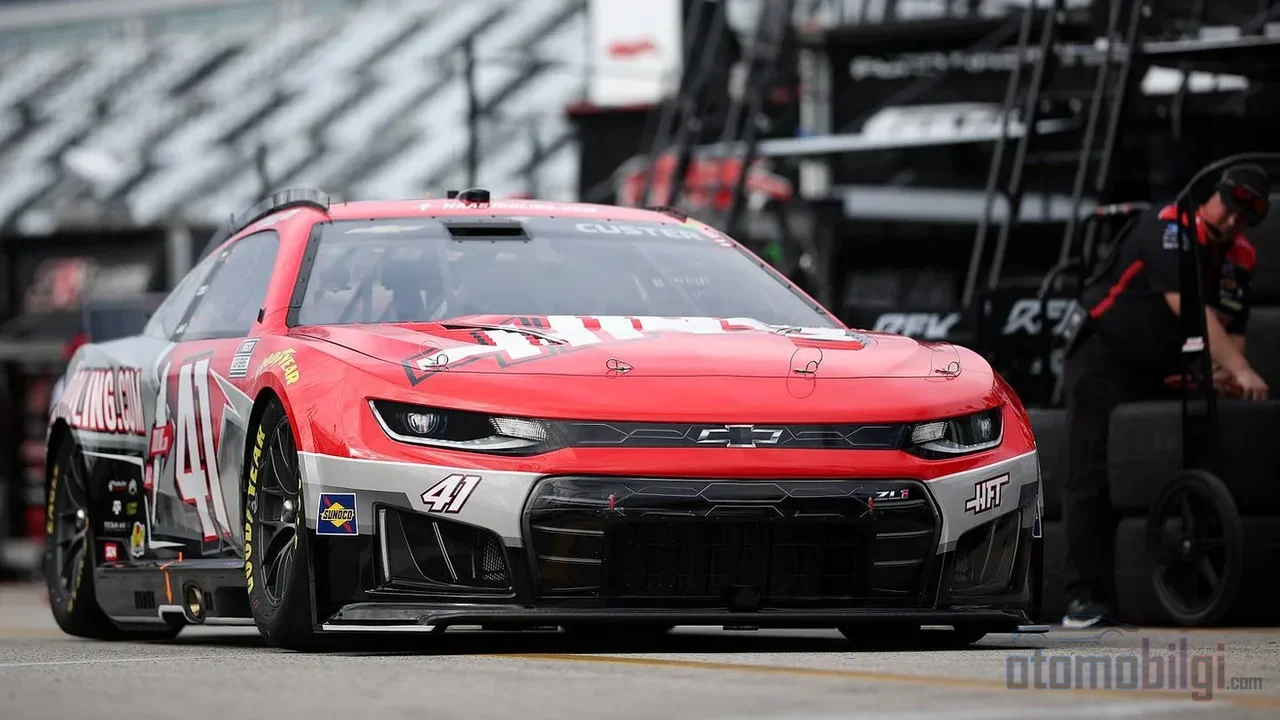
The Next Gen car, which entered the Cup Series with the 2022 Daytona 500, is the technical hero of this transition. Previously, cars were designed with oval logic in mind; the Next Gen, however, came with a more stable chassis and offered noticeably better rollover speed in corners. Let me explain this with a simple analogy: if the old car was like a bike built specifically for ovals, the Next Gen is a multi-bike that performs well on every surface. The same machine does its job both on Talladega's banks and in Sonoma's punishing corners.
The power side is interesting too: the car, limited to 510 horsepower on superspeedways, runs with higher power on road courses, and in 2026 the target power on short ovals and road courses was raised from 670 to 750 horsepower; the aim is to produce busier and more dynamic races. As a result, many different winners emerged on road courses, showing that the series' diversity strategy is working.
Shane van Gisbergen: The King of Street and Road Courses
The most colorful story of this era is Shane van Gisbergen, who came from Australia. With his win at Sonoma, he became the most successful active Cup Series driver on road and street courses, and at Watkins Glen he came from nearly half a minute behind the field and rose to the lead in 18 laps, practically delivering a road course masterclass. His braking technique, gentle throttle that doesn't chew up the tires, and track mastery carry him to practically an adaptation class of his own on this type of track.
But here is the interesting part: for the same driver, ovals are a completely different discipline. In other words, road course expertise is still a special skill in NASCAR. Isn't that exactly what NASCAR wants? As the calendar diversifies, different drivers can become stars; this turns the championship into a talent musical rather than a one-note speed race.
What Do Fans Think: Tradition or Innovation?
There is no clear answer to this question, and that is actually exactly why it is interesting. One group believes NASCAR's roots are in ovals and that every new road course takes it further away from its soul. Others argue that diversity enriches the sport and that events like Chicago bring in new audiences. NASCAR's own moves also show it is searching for this balance: after the road course expansion, the return to Charlotte's oval layout in 2026 and the removal of some tracks from the calendar prove the series is facing the reality that "we cannot do everything at once."
My reading is this: NASCAR is not abandoning ovals; it is placing them at the center of a sea of diversity. The overwhelming majority of the season is still run on ovals, but the calendar now includes both a technical challenge and an urban showcase. If a racing series can look at both its past and its future at the same time, then this calendar, moving between ovals and streets, is its most honest mirror.
Sources
- 2026 NASCAR Cup Series - Wikipedia
- NASCAR Oval vs Road Course: What's the Difference?
- 2026 schedule announced - NASCAR.com
- NASCAR's Chicago Street Race Delivers Huge Rating For NBC - Forbes
- All about NASCAR's Next Gen car - Racer.com
- Next Gen (NASCAR) - Wikipedia
- Shane van Gisbergen road course record - Fox Sports
- Chicago TV ratings - Jayski
- How NASCAR grew its 18-34 audience - LiveLike
- Van Gisbergen masterclass at Watkins Glen - Racer.com