Chevrolet, Ford, and Toyota: The Manufacturer Wars in NASCAR
Share This Page
Cars racing in NASCAR are labeled as Chevrolet, Ford, and Toyota, but what's actually brand-specific under that hood? The short answer: far less than it appears. Body panels and the engine supplier are manufacturer-specific; the chassis, most of the cars, and the rules are the same for everyone. So the 'manufacturers' battle' is a real battle, but what determines the winner is engineering, strategy, and marketing more than engine power.
Highlights
- Competing in the Cup Series 3 manufacturers there are: Chevrolet, Ford, and Toyota
- Chevrolet, since 1949, 889 Cup wins and 44 manufacturer championships is clearly in the lead with
- Next Gen car February 20, 2022 made its debut with the Daytona 500
- A race win is worth 40 points in manufacturer points
- Chevrolet, between 2003 and 2015, 13 times in a row, was the manufacturer champion
What Actually Makes a Race Car a Brand?
Think of it like building a computer: everyone buys the same case and motherboard, but the sticker on the case and the processor you put inside are yours. It's roughly like that in NASCAR too. The manufacturer-specific parts are limited: bumper, side panels, hood, and trunk lid. In other words, the parts that let you look at the car from outside and say 'that's a Camaro.'
The engine side is an interesting balance. According to the rules, engines are of the same specification; what differs is who engineers them and how. Each manufacturer has its own engine supplier:
- Chevrolet: ECR Engines and Hendrick Motorsports
- Ford: Roush-Yates Engines
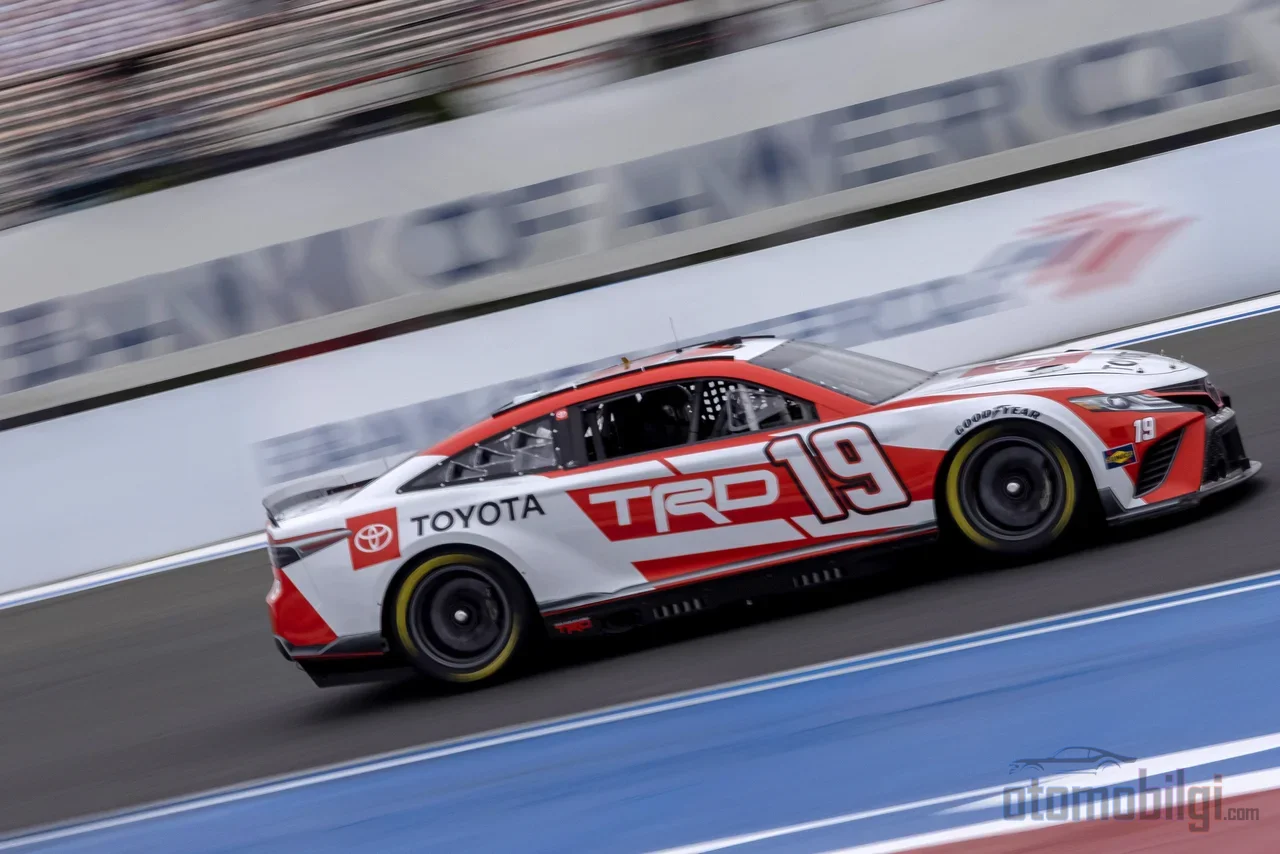
- Toyota: Toyota Racing Development (TRD)
So don't think the emblem on the engine block tells you much; what it actually tells you is which shop is cooking the same recipe with different hands. That's what the veterans say anyway: the three manufacturers compete against each other on paper, but in reality they fund the sport together.
The 'Stock Car' Myth: From Street Car to Prototype
When NASCAR was founded in 1948, the idea was a very pure and very beautiful one: cars taken from dealership showrooms raced, only lightly modified for safety. The first-generation cars used completely stock chassis and bodies; doors were closed with belts, and the seat belt was considered a big innovation. When you consider that the first races were run on the sand of Daytona Beach, you understand why the 'win on Sunday, sell on Monday' marketing was so convincing.
Then time moved on, speeds increased, and the cars drifted away from the street. In short, the journey progressed like this:
- Gen 2 (1967-1980): The stock body is preserved but the chassis begins to be modified; companies specializing in chassis manufacturing emerge.
- Gen 3 (1981-1991): The wheelbase drops to 110 inches; body panels are still purchased from the manufacturers.
- Gen 4 (1992-2006): Heavily modified bodies in the wind tunnel, fiberglass bumpers. The concept of 'stock' becomes almost entirely symbolic.
- Gen 5 (2007-2012): With a common body and chassis, all brands enter nearly the same shell.
- Gen 6 (2013-2021): Manufacturer-specific body panels return on the existing chassis; the 'stock' feel partially returns.
- Gen 7 / Next Gen (2022-): Today's car. Symmetrical body, 18-inch aluminum wheels, one-piece lug nut, sequential shifter, independent rear suspension, five-speed semi-automatic gearbox, and flat carbon underbody.
So the term 'stock car' is now a historical legacy; its true meaning was left behind with the first generations. The Next Gen is the seventh generation since NASCAR's 'Strictly Stock' era, and according to NASCAR officials it is 'nearly identical' to the Ford Mustang, Chevrolet Camaro, and Toyota Camry sold at dealerships. The opposing view is clear: independent rear suspension and the carbon underbody are a radical break from tradition. My take? Both are right; what is now stock is the parts decorating the body, not the soul of the car.
How Do Manufacturer Points Work, and Why Do They Matter?
While drivers battle for their own championship, manufacturers also compete on their own leaderboard. The system is simple: a race win is 40 points, second place 35, third 34 - dropping one point per position. The subtlety is this: only the highest-finishing car of each manufacturer scores points in a race. So even if three Chevrolets finish 2nd, 3rd, and 4th, Toyota takes the points because it won. In this table, winning means everything.
So how important are these points? Honestly, less than they used to be. The big championship still lies with the driver and team; the manufacturer table is more like a brands' pride ledger. The Truck and Xfinity series attach more meaning to this contest. But looking at history, the table is impressive:
| Manufacturer | Cup Wins | Manufacturer Championships | Last Championship |
|---|---|---|---|
| Chevrolet | 889 | 44 | 2025 |
| Ford | 755 | 17 | 2020 |
| Toyota | 220 | 3 | 2019 |
A note about the numbers: brands like Dodge (217), Plymouth (191), and Pontiac (154) also share in Chevrolet's total wins, but the three-way leadership stands as it is today. The dates of the first victories are also a nice detail: Ford won in 1950, Chevrolet in 1955; Toyota, having entered Cup late, only took its first win in 2008 at Atlanta with Kyle Busch. The Monte Carlo is Chevrolet's most winning model - 396 wins! So much so that even though the road version of the Camaro is no longer sold, on the track the Camaro ZL1 still races.
Chevrolet's Sacrificial Heir and the Next Gen Era
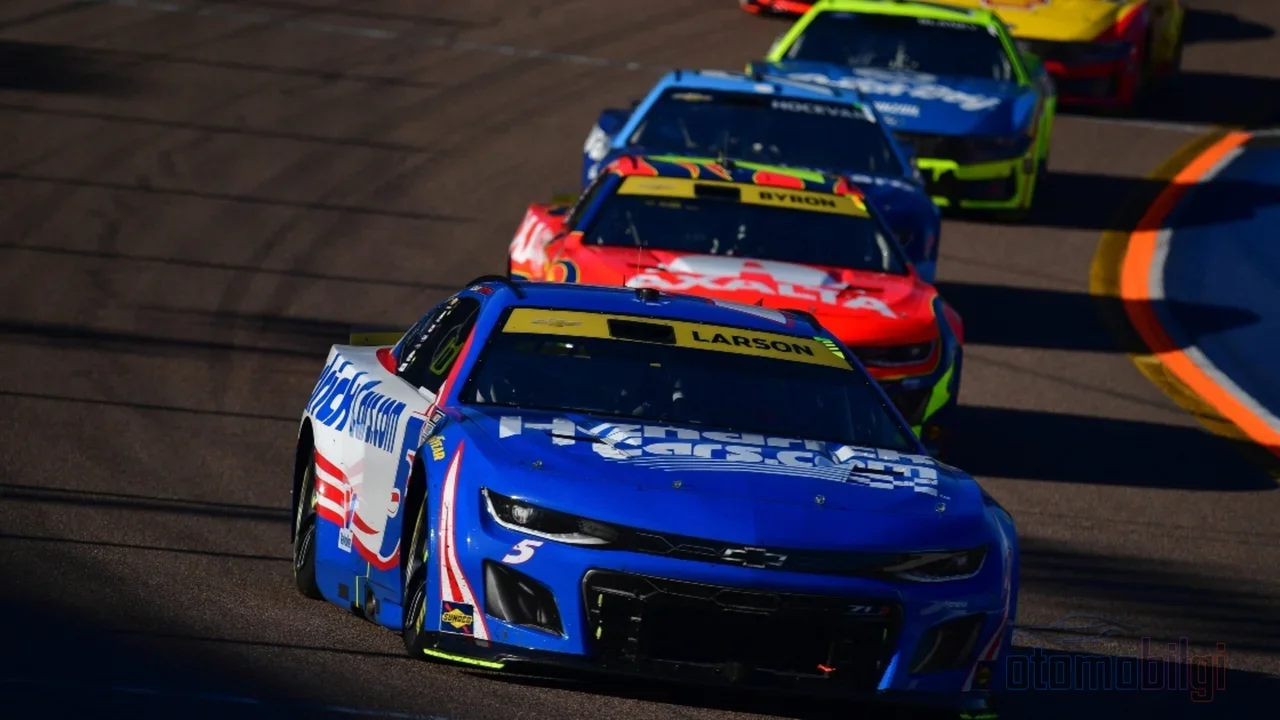
Chevrolet stands in a completely different place in this sport. From 2003 to 2015 it won 13 consecutive manufacturer championships; in the first five seasons of the Next Gen era (2022-2025) it has never lost the manufacturer championship. In 2025 it took both Kyle Larson's 34th driver championship and its 44th manufacturer championship, 'sweeping' the two in the same season for the 29th time. 34 driver championships since 1955 - no other brand has even come close to that mark.
The overall Next Gen era table points in a similar direction: in the first 175 races the Camaro won 75, the Camry 58, the Mustang 43. But there is this: Ford in 2024 with the Mustang Dark Horse body, and Toyota with the Camry XSE and seriously challenged Chevy, and things are changing now. In fact, the 2026 season looks like a nightmare scenario: Toyota is halfway through the season well out in front with 17 wins - having done more than all of its rivals combined.
Brad Keselowski summed up nicely what is going on in this community: According to him, Toyota is beating everyone not just on the track but behind the scenes too, and Ford needs to build a similar structure. Dale Earnhardt Jr., on the other hand, wants a more transparent solution: he argues that NASCAR should make the engine dyno data of the three manufacturers public; he is among those who believe Toyota has a significant advantage. Meanwhile, let's add that the 'NASCAR gave Toyota an advantage' claims circulating in fan forums have not been verified.
Why Are Manufacturers Investing Millions of Dollars in This Sport?
Because this is the oldest marketing formula in the automobile world: 'Win on Sunday, sell on Monday.' Manufacturers spend in racing to strengthen the image of the cars they sell. Testing new technology on the track, keeping the brand in the spotlight and telling young people 'we are fast' - all of these are among the justifications for this massive budget.
But is the money really paying off? NASCAR is at the top among major US sports in sponsor and brand loyalty; above the NFL, NBA, MLB and NHL. NASCAR fans are far more likely to shop from sponsor brands compared to the average American adult. So sponsorship here is not just a sticker on the hood, but a connection that directly touches sales.
Money is taking over our sport.
This warning is not for nothing. The fact that the three manufacturers are rivals on paper but in reality co-funders of the sport keeps alive an old debate about the identity of the sport. On one side are those who say 'without manufacturers there would be no such budget and no such charisma,' and on the other are those who worry that 'money rules the sport.' Both seem right; moreover, it is also being said that among fans the bond has now shifted from the brand to the driver and the team. Brand loyalty has not died, but it does not look like the old loyalty.
So What Does This War Win?
Let me be honest with you: in NASCAR, the answer to the question 'Which car is better?' has turned from 'which engine is more powerful' into 'which organization manages every detail better.' Chevrolet's historical dominance, Toyota's rise in 2026 and Ford's struggle to keep up with it are proof of this. If the cars are 90% the same, how much effort you put into the remaining 10% means everything. And that is exactly why the war among these three brands here - however symbolic it may be - is still so important.
If it were you, which brand would you cling to: the historic legacy of 889 wins, or the new power that's overturning everyone behind the scenes? Let's discuss in the comments!
Sources
- NASCAR Cup Series Manufacturer Stats & Records
- Next Gen (NASCAR)
- NASCAR - Wikipedia
- NASCAR engines - Wikipedia
- List of NASCAR Manufacturers' champions
- New-look Fords, Toyotas challenge Chevy in automaker race - NASCAR.com
- NASCAR simplifies manufacturer points system - NASCAR.com
- NASCAR says its 'Next Gen' car puts the 'stock' back in stock car - ABC News
- NASCAR's long-awaited Next Gen race car is a radical departure - Hagerty
- NASCAR Cars Through The Generations - NASCAR Hall of Fame
- NASCAR Cup Series Manufacturer Standings - TobyChristie.com
- NASCAR Historic Manufacturer Standings - NASCAR Reference
- "Money is overtaking our sport" - Yahoo Sports
- Why Toyota teams are mopping up Ford & Chevy - AutoRacing1
- What makes a car a Ford, Chevy or Toyota now? : r/NASCAR
- And all big-time racing is meant to sell you a car - Detroit Free Press
- Auto Racing Is Still about the Money - Car and Driver
- NASCAR Demographics - AMG Sport
- Top 5 NASCAR Sponsorship Agencies - Yonkers Times