The Rungs Below the Cup Series: Xfinity and Truck Series
Share This Page
In NASCAR, below the Cup Series, there are two national series established for drivers to climb to the top: the second tier, the O'Reilly Auto Parts Series (known as the Xfinity Series until 2025), and the third tier, the Craftsman Truck Series. For the vast majority, the path to the top runs from Trucks to Xfinity, and from there to Cup; but there is no user's manual for the ladder - some drivers skip steps, and some change stations without using any step at all. For the curious: this system is compared to the F2/F3 ladder in European motorsport, but it is far more flexible and far messier.
Highlights
- From 2026, the Xfinity Series NASCAR O'Reilly Auto Parts Series bears the name.
- Cup drivers can enter at most 10 races per season in the lower series.
- Kyle Busch, with a total of 234 wins in the national series, is the all-time leader.
- In the Truck Series, 22 different drivers have become champion; Ron Hornaday Jr. sits at the top with 4 titles.
- In 2026, all three series returned to the new Chase format; a race win is now worth 55 points.
How Does NASCAR's National Trio Work?
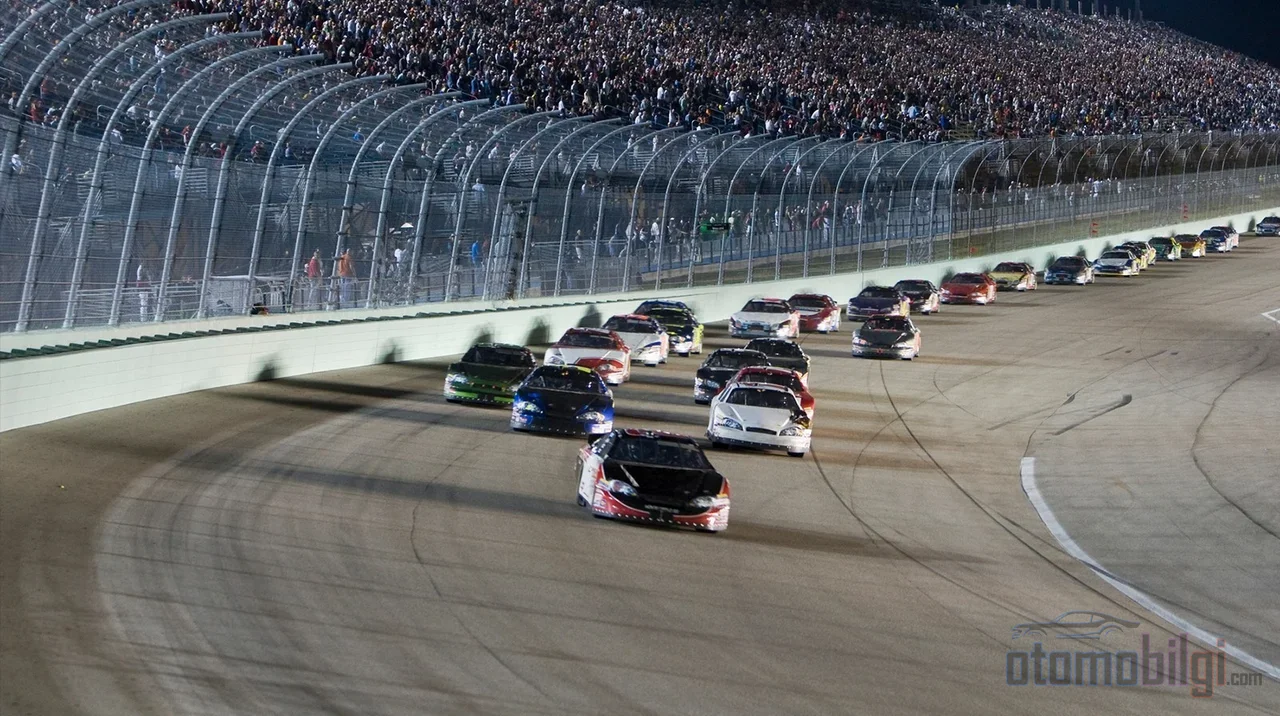
At the top of the pyramid is everyone's familiar Cup Series. Right below it comes the O'Reilly Auto Parts Series, which usually runs a day before the Cup race on the same weekend and forms the second national division with its supporting races. At the very bottom is the third national series, the Craftsman Truck Series. Think of it like playing on the school's JV team before the varsity teams: same club, same spirit, one tier down.
But this ladder is not as rigid as football's youth academy system. There is nothing in the rulebook that forces you to move from one step to another. A driver can jump straight from Truck to Cup, spend years in Xfinity without ever managing to move up, or try Cup and come back down. The only certain rule is this: since 2011, a driver can choose only one national series to compete for a championship.
The O'Reilly Auto Parts Series: The Second Tier We Knew as Xfinity
This series is a place that has seen a great deal of change. It was founded in 1982 with Budweiser sponsorship, and its roots stretch back to 1950 and the NASCAR Sportsman division. As sponsors changed, so did the name: Busch Grand National, Busch Series, Nationwide Series, and from 2015 until the end of 2025, Xfinity Series. From 2026 onward, the name became NASCAR O'Reilly Auto Parts Series; Xfinity had renewed the sponsorship in February 2025 but withdrew from the series sponsorship at the end of the year to focus on its Premier Partner role in Cup, and O'Reilly Auto Parts took its place.
How Does an Xfinity Car Differ from a Cup Car?
Although they may look the same at first glance, the machines are different. Xfinity cars are about 11 inches longer, 1 inch taller but 4 inches narrower. The body and aero package also differ from the Cup car. It moved to series-spec V8s in 2015; with a compression ratio of 9:1, while Cup used 14:1 at the time, meaning the top series engines breathe a bit more aggressively. Vehicle weight with driver is 3,300 pounds; in Cup it is 3,400 pounds. In short, the Xfinity car is a slightly slimmer, slightly lighter and slightly less brutish sibling of the Cup car.
Why Do Cup Drivers Race in the Lower Series?
This is where the most debated issue on the ladder begins. Cup drivers dropping down to the lower series used to be called "Buschwhacking," and the winner of the series' first race was Dale Earnhardt. Kyle Busch, meanwhile, holds the position of the winningest driver in the series' history. From 2017 onward, NASCAR clamped down on this flow: drivers with at least 5 years of Cup experience can enter at most 10 races per season, and they are banned from entering the regular season finale, playoff and Dash 4 Cash races. The fact that all Xfinity champions between 2006-2010 were full-time Cup drivers had fueled this debate; critics say young drivers' opportunities are being stolen, while the other side argues that without the attention the stars bring, the series could not reach this weight, and that novices get a chance to race against veterans.
Craftsman Truck Series: Rising with Pickup Trucks
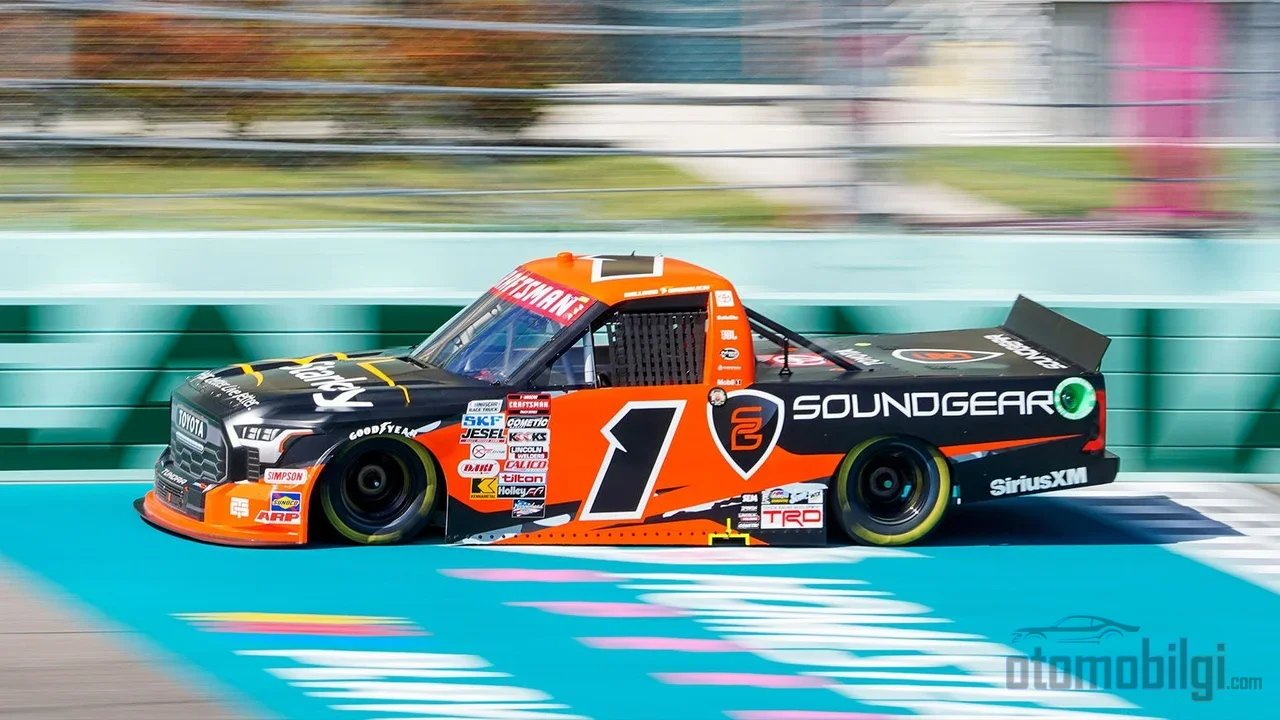
The third step of the ladder is a slightly different animal: here the races are run with trucks, that is, modified pickup-bodied vehicles. The series was born in 1995 under the name SuperTruck Series by Craftsman; the seed of the idea was planted in the four-truck-race "Winter Heat" mini season run on TNN in the winter of 1994-95. It still carries the Craftsman name even today.
The Truck Series' character is markedly different from Cup. The calendar consists mostly of mid-sized oval tracks and a few superspeedways; Cup's road course mix is largely absent here. Race distances are also short: Trucks run roughly half of Cup's race distance on the same tracks. In qualifying, a single truck, single lap is used in most races, with separate rules for tracks over 1.25 miles. The 2026 calendar has also changed: St. Petersburg, Dover and San Diego enter the calendar while Las Vegas, spring Martinsville and Pocono exit. Ram is also returning to the Truck Series for the first time since 2016, meaning there is movement on the manufacturer front too. Meanwhile a small rules note: from January 16, 2026 onward, drivers who enter the garage during a race are not eligible for the season's fast lap award.
What Do We See When We Put the Two Series Side by Side?
| Feature | O'Reilly Auto Parts (Xfinity) | Craftsman Truck |
|---|---|---|
| Founded | 1982 | 1995 |
| Vehicle type | Stock car (V8) | Truck (pickup body) |
| Size difference vs. Cup | 11 inches longer, 4 inches narrower | Different platform and rules |
| Cup driver limit | At most 10 races per season | Similar restrictions |
| 2026 Chase | 9 races, 12 drivers | 7 races, 10 drivers |
| 2026 finale | Season finale | Homestead-Miami, 134 laps / 201 miles |
How Does the 2026 Chase Format Work in the Lower Series?
In 2016, the Xfinity and Truck series also adopted a playoff system similar to the Cup; in 2026, all three series returned to the new "Chase" championship format. The essence of this format is: a race victory is now worth not 40 but 55 points which means winning officially became more important. Moreover, in the Truck Series, a race victory no longer grants automatic guaranteed entry to the finale.
On the Xfinity side, the Chase runs over 9 races in three rounds with the top 12 drivers after the 24th race of the season: Round of 12, Round of 8, and the final. Points are determined according to regular season order; the leader starts with 2,100 points, second with 2,075, third with 2,065, and each subsequent position starts 5 points lower. In the Truck Series, 10 drivers compete over three rounds in the last 7 races of the season; the 2026 Chase begins at Bristol and ends at Homestead-Miami.
Who Has Climbed These Rungs?
Now let's get to the really fun part: do these series actually develop drivers for Cup? The short answer: yes, and the very best came through this ladder. The Xfinity list, stretching from Jack Ingram, the first champion in 1982, to 2025 champion Jesse Love, features names that would later make their mark in Cup: Brad Keselowski in 2010, Ricky Stenhouse Jr. in 2011-12, Austin Dillon in 2013, Chase Elliott in 2014. There are six drivers who won both Cup and Xfinity championships.
Perhaps the most dramatic example is Kevin Harvick. He won the 2001 Xfinity championship and unexpectedly rose to Cup after Dale Earnhardt's death; he also won his first Cup race that same year. Denny Hamlin and Brad Keselowski were among those who climbed this ladder in the 2000s; entering the 2020s, Tyler Reddick, Cole Custer, and Christopher Bell moved up from Xfinity to Cup. Names like Carson Hocevar, Todd Gilliland, and Zane Smith today represent the new generation that has come through this path. On the truck side, Ron Hornaday Jr. holds the record with 4 championships, and Matt Crafton is one of the most consistent names in the series.
The most comprehensive statistic of all time belongs to Kyle Busch: a total of 234 wins in the national series - 63 Cup, 102 Xfinity/NOAPS, and 69 Truck wins - plus 2 Cup and 1 Xfinity championships. Compare that with an interesting contrast: all of Richard Petty's 200 wins came in Cup, because the ladder in its current form didn't exist in his era. Which do you think is the greater career? That's exactly the debate the existence of the ladder creates.
Is the Ladder Perfect?
Honestly, no. NASCAR is working on a youth ladder system that clarifies the path to the top for young drivers and their families, and the Drive for Diversity program aims to reach talent from the earliest entry point. But the biggest criticism of the ladder says this: there is no definitive path. Some drivers go from karting to trucks, others jump from regional series straight to Xfinity. This flexibility is both the system's beauty and its greatest source of confusion.
Broadcast and Following: Where Do You Watch the Races?
The broadcast front also changed for the second series: Xfinity/NOAPS races will be on The CW channel from 2025 onward under a 7-year deal; the transition had actually started with the last 8 races of 2024. Things are not bad in Europe either, with channels broadcasting in England and Portugal. The Truck Series finale, meanwhile, is on FS1 screens at Homestead-Miami. So for a fan who wants to follow the lower series, the door is much more open than before.
Final Word: The Road to the Top Goes Through Here
If the Cup Series is the shining showcase, the Xfinity and Truck series are the workshop behind it. Names change, rules change, even the cars' dimensions are different; but the essence is the same: learning to win races, learning to stay calm under pressure, and being the one who hugs the checkered flag most often. One day when you watch a new star in the Cup, remember this: that driver most likely gained that power behind the wheel of a truck or in the seat of a compact Xfinity car. Follow who is on the next rung of the ladder - that's when you'll watch the races with a completely different eye.
Sources
- NASCAR O'Reilly Auto Parts Series
- NASCAR Craftsman Truck Series
- List of NASCAR Truck Series champions
- NASCAR returns to Chase championship format for 2026
- The Chase 101: How the new championship format works
- 2026 NASCAR CRAFTSMAN Truck Series Standings & Stats
- 2026 NASCAR CRAFTSMAN Truck Series Schedule
- All-Time NASCAR National Series Wins
- 2026 Truck Series Chase
- NASCAR Xfinity Series to have a new name in 2026
- How NASCAR Cup Series and Xfinity Series Cars Differ
- Ram Racing - NASCAR Craftsman Truck Series
- NASCAR moves to limit Cup Series drivers in Xfinity and Truck Series