From Petty to Earnhardt, NASCAR's Legendary Drivers
Share This Page
Who are the greatest drivers in NASCAR history? Richard Petty, Dale Earnhardt and Jimmie Johnson: each holds 7 Cup Series championships, but all three made history in completely different eras with completely different styles. While Petty remains untouchable with 200 wins, Earnhardt's fearless driving turned him into the legend of the "Intimidator," and Johnson signed a unique streak with five consecutive championships. Here are the three icons of American racing, with their eras, cars and stories of unrivaled dominance.
Highlights
- Richard Petty: 200 wins, 123 poles, 27 victories in a single season - the all-time record
- Dale Earnhardt: 7 championships, the jet-black No. 3, the nickname "The Intimidator"
- Jimmie Johnson: 5 consecutive championships between 2006-2010, the only instance in series history
- All three names hold exactly 7 Cup Series championships holder of
- Daytona 500, since 1982 the season opener and "The Great American Race"
Why Exactly These Three Names? The Story of 7 Championships Each
In NASCAR Cup Series history, only three drivers have reached 7 championships: Richard Petty, Dale Earnhardt and Jimmie Johnson. This is no coincidence - the number itself is a legendary threshold. One reached this summit with 200 wins, one with his fearless style, and one with a streak his rivals simply could not break. But here's the interesting part: all three raced in different formats, with different cars, under different rules. That's why there's no clear answer to "which one is the best?" - looking at all three together means seeing how American racing evolved.
Let's briefly outline the context: NASCAR owes its origins to the speed races of vehicles running bootleg liquor during the Prohibition era. Over time, these street races turned into an organized series, and today the Cup Series is the sport's top tier. This business is won on oval tracks by drafting, planning pit strategy and managing tires flawlessly. Now let's look at the three legends one by one.
Richard Petty: 200 Wins and the "The King" Legend
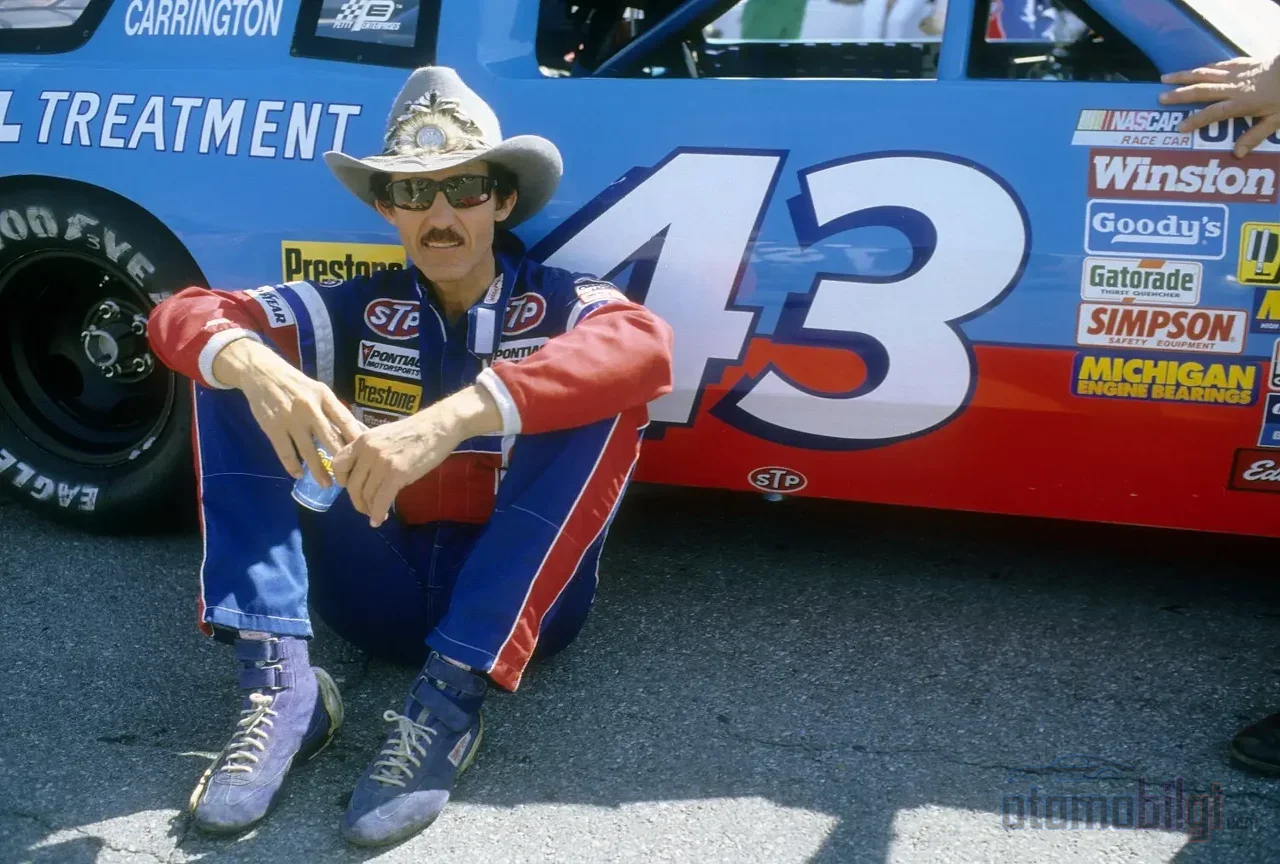
NASCAR history cannot be written without mentioning Petty. "The King," born on July 2, 1937, had a career stretching from 1958 to 1992, sitting behind the wheel of the No. 43 Plymouths and Pontiacs of the family team Petty Enterprises. The numbers are truly insane: 200 wins, 7 Daytona 500 victories, 712 top-10 finishes and close to 1,184 starts. Think of it this way: his record of 18 consecutive seasons (1960-1977) winning at least one race could only be surpassed by Kyle Busch in 2023.
1967: 27 Victories in a Single Season
Petty's legendary season was 1967. He won 27 of the 48 races, and moreover, he finished 10 races in a row between August 12 and October 1. The nickname "King Richard" stuck after this season - before that, he was called "the Randleman Rocket." The distribution by track type is also interesting: while 55 wins came from superspeedways, a full 139 wins came from short tracks . And there's also the lap leadership stat: a total of 51,514 laps led, far above his closest follower (Cale Yarborough, 31,556). This means "someone who doesn't just like taking the lead, but staying in front."
1984: A Final Victory in the Florida Summer
Petty's 200th and final victory was a scene straight out of a movie. July 4, 1984 at the Firecracker 400 in Daytona, he passed Cale Yarborough within a fender's length of the finish. The best detail of the race is this: In the grandstands, as the first sitting US president to attend a race, was Ronald Reagan. The car from this victory is on display today at the Smithsonian. Petty said farewell at the end of the 1992 season with the Hooters 500 in Atlanta - that race also marked the beginning of young Jeff Gordon's career and is remembered as the "greatest race" in NASCAR history. In 2010, he was inducted into the first class of the NASCAR Hall of Fame; he also voiced "The King" in Pixar's Cars films.
Dale Earnhardt: How Was "The Intimidator" Born?
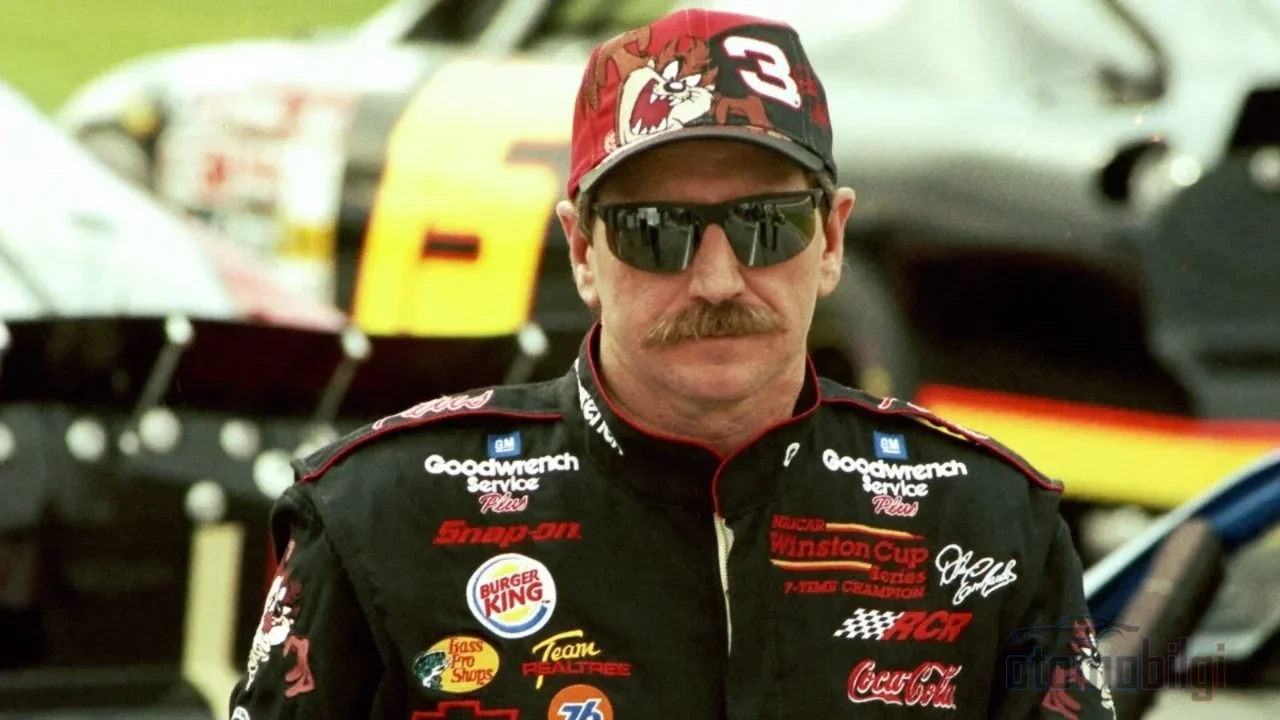
If Petty is the king of NASCAR, Earnhardt is its shadow knight. His tough and aggressive driving style earned him the "the Intimidator" nickname: when he closed in on rivals, he knew all the ways to pass them or slip past them. He was always described as a fearless passing master who could drive his cars beyond their limits. His jet-black No. 3 car became synonymous with him - everyone who saw that number knew who was coming.
Earnhardt, racing for Richard Childress Racing, won 7 Winston Cup championships and, in a manner befitting Petty, joined him in that record. His career was relatively shorter but his performance is beyond dispute: he signed off with 428 top-10 finishes in just 676 starts . (Petty's 712 top-10s came over 1,184 starts; proportionally, Earnhardt's short career carried a far more intense output.)
The bitter end of the story is remembered by everyone: On February 18, 2001, he lost his life in a crash on the final lap of the Daytona 500. The sport lost one of its greatest icons right on the track he loved most - and the No. 3 still holds its meaning today.
Jimmie Johnson: Five Consecutive Championships in a Row
And the series continues with the name who answered the question of how championships are won in the modern era: Jimmie Johnson. With his No. 48 Chevrolet, from 2006 to 2010 he was Cup Series champion five seasons in a row - the only such case in NASCAR history. When he reached his fourth consecutive championship in 2009, something unprecedented in professional sports history had already happened. Imagine: you run 36 races every season, millions of details are trying to break you down, and for five years you never let anyone take the championship from you. That means not winning a race, but building an empire.
Johnson, with a total of 7 championships, caught up with Petty and Earnhardt and collected 83 wins in his career. His streak was broken in 2011; he finished that season sixth. But the five-race streak still leaves a question debated today: can anyone surpass it? For now, the answer doesn't look very clear - because even the championship format has changed several times since that era.
Side by Side: What Do We See When We Compare the Three Legends?
When we bring the three together in a single table, the story becomes clear:
| Driver | Nickname / Car | Championships | Notable Record |
|---|---|---|---|
| Richard Petty | The King, No. 43 Plymouth/Pontiac | 7 | 200 wins, 27 victories in a single season in 1967 |
| Dale Earnhardt | The Intimidator, No. 3 | 7 | 428 top-10s in 676 starts, 7 Winston Cups with RCR |
| Jimmie Johnson | No. 48 Chevrolet | 7 | 5 consecutive championships from 2006-2010, 83 wins |
So what about the GOAT debate? Frankly speaking, these three cannot be fairly compared. Petty won under different rules, sometimes racing forty-eight races in a single season; Earnhardt amassed championships in a shorter but intense career; Johnson dominated the modern playoff era for five years. Since championship formats changed from era to era, some fans argue that the Winston Cup era championships cannot be compared one-to-one with Johnson's. In forums, the names David Pearson and Jeff Gordon are also added to the conversation. My take: these three are the peaks of three different NASCAR eras. Choosing one is like declaring one era superior to another.
Daytona 500: Why Is "The Great American Race" So Special?
There is one shared stage in the story of these three: Daytona International Speedway. The first Daytona 500 was run on February 22, 1959 at this 2.5-mile oval in front of more than 41,000 spectators, and guess who won? Lee Petty - Richard's father, that is. Bill France Sr., seeing in 1953 that the beach races were coming to an end, started this massive project with the idea of building the first true superspeedway to rival Indy. Since 1982 it has been run as the season opener and is known as "The Great American Race" or "the Super Bowl of stock car racing"; the biggest prize purse of the year is also here.
Petty's bond with Daytona is a romance of its own: he took his first Daytona 500 in 1964 with a Hemi-powered Plymouth, and the "Famous Finish" of 1979 became the moment that made NASCAR a national phenomenon - the fight between Donnie Allison and Cale Yarborough in the final laps was broadcast live to a massive audience stuck at home thanks to a snowstorm, and that race was the first in NASCAR history to be televised from start to finish. For Earnhardt, Daytona was destiny: despite all the championships he won over the years, he lost his life in a crash on the very final lap without ever winning this race in his lifetime.
The Science Behind It: Drafting, Pits and Next Gen
Legends are not created alone; NASCAR races have their own science. Drafting means a car sticking behind the car ahead to reduce air resistance - think of riding behind the peloton on a bicycle, but at 300 kilometers per hour. On superspeedways, teamwork becomes critical here; blocking tactics (aero-blocking), tire management on long runs, and precision on banked corners are also part of the game. In pit strategy, pit road closes during caution (yellow flag) periods and opens once the order becomes clear - pitting at the right moment can single-handedly win some races.
The cars have also constantly evolved. Used since 2022, the Next Gen vehicle; it comes with independent front-rear suspension, a sequential gearbox, a modular chassis, composite body panels, a rear-view camera, and larger yet lighter wheels. In other words, the cars Johnson won with are so different from today's that they can't even be compared. The championship format has also changed: NASCAR abandoned the elimination-style playoff system it had used for more than a decade and returned to "The Chase" format based on points standings. The new format in the Cup Series works a 10-race postseason, and the system of automatic berths through single-race bonuses was removed. So the championships of the Johnson era and the championships after 2026 can't be weighed on exactly the same scale - it's no coincidence the GOAT debate is so ongoing.
Final Word: Three Eras, Three Legends
Petty is the king of numbers, Earnhardt the icon of character, and Johnson the genius of consistency. The wall of 200 wins still hasn't been scaled, the "Intimidator" nickname still sends chills, and five consecutive championships still haven't fallen to anyone. My question to you: which of these three would you declare the "greatest" - or would you celebrate all three at once as champions of their own eras?
Sources
- Richard Petty - Wikipedia
- Dale Earnhardt - Wikipedia
- Jimmie Johnson - Wikipedia
- Daytona 500 - Wikipedia
- About Us - Daytona International Speedway
- Next Gen (NASCAR) - Wikipedia
- NASCAR returns to Chase championship format for 2026 - NASCAR.com
- The Chase 101: How new championship format works - NASCAR.com
- Why comparing Jimmie Johnson, Richard Petty and Dale Earnhardt isn't fair - Fox Sports
- Jimmie Johnson Driver Bio - MRN
- Richard Petty's 200th Victory Car - Smithsonian
- How NASCAR Drafting Works - HowStuffWorks