How Different Are NASCAR's Oval Tracks From One Another?
Share This Page
NASCAR's oval tracks are divided into three major categories: superspeedway (giant ovals of 2 miles and above), intermediate (longer than 1 mile, mostly 1.5-mile mid-size tracks) and short oval (under 1 mile, i.e. the so-called "bullrings"). This distinction is not just a matter of size; the track type determines the entire character of the race, from the car's setup to tire strategy, from draft battles to contact-based paybacks. If you want to see why one week of the same championship feels like a survival test and the next week two drivers are left feuding with each other, you are in the right place.
Highlights
- 2.66 miles - with this, Talladega holds NASCAR's fastest stock car speed record.
- The banking in the corners at Daytona and Talladega is between 28°-33° ; at Martinsville it is only 7.5°-14°.
- The draft reduces the drag resistance of the trailing car by 20-30% .
- Excessive tire wear at Bristol set a record of 54 lead changes in a single race.
- Pit stops typically take ~12 seconds .
How Are Track Types Classified?
NASCAR's official definition is quite clear: every track longer than 1 mile except Daytona and Talladega counts as intermediate, and those shorter than 1 mile are short ovals. The superspeedway label is given to ovals of 2 miles and above. So between Martinsville's 0.526-mile mini laps and Talladega's giant 2.66-mile ring, there is practically a different universe.
| Track Type | Examples | Key Feature |
|---|---|---|
| Superspeedway | Daytona (2.5 miles), Talladega (2.66 miles) | 28°-33° banking, pack draft racing |
| Intermediate | 1.5-mile ovals | Balanced pace, focused on pit strategy |
| Short oval | Martinsville (0.526 miles), Bristol (0.533 miles), Richmond (0.75 miles) | Reflexes, aggression, contact |
And the sweetest part of the show: in the 2027 calendar, exactly 22 of the 36 points races are intermediate, 6 are short ovals, and 4 are superspeedways. So understanding the track type means understanding almost the entire season.
How Does Banking Change Speed?
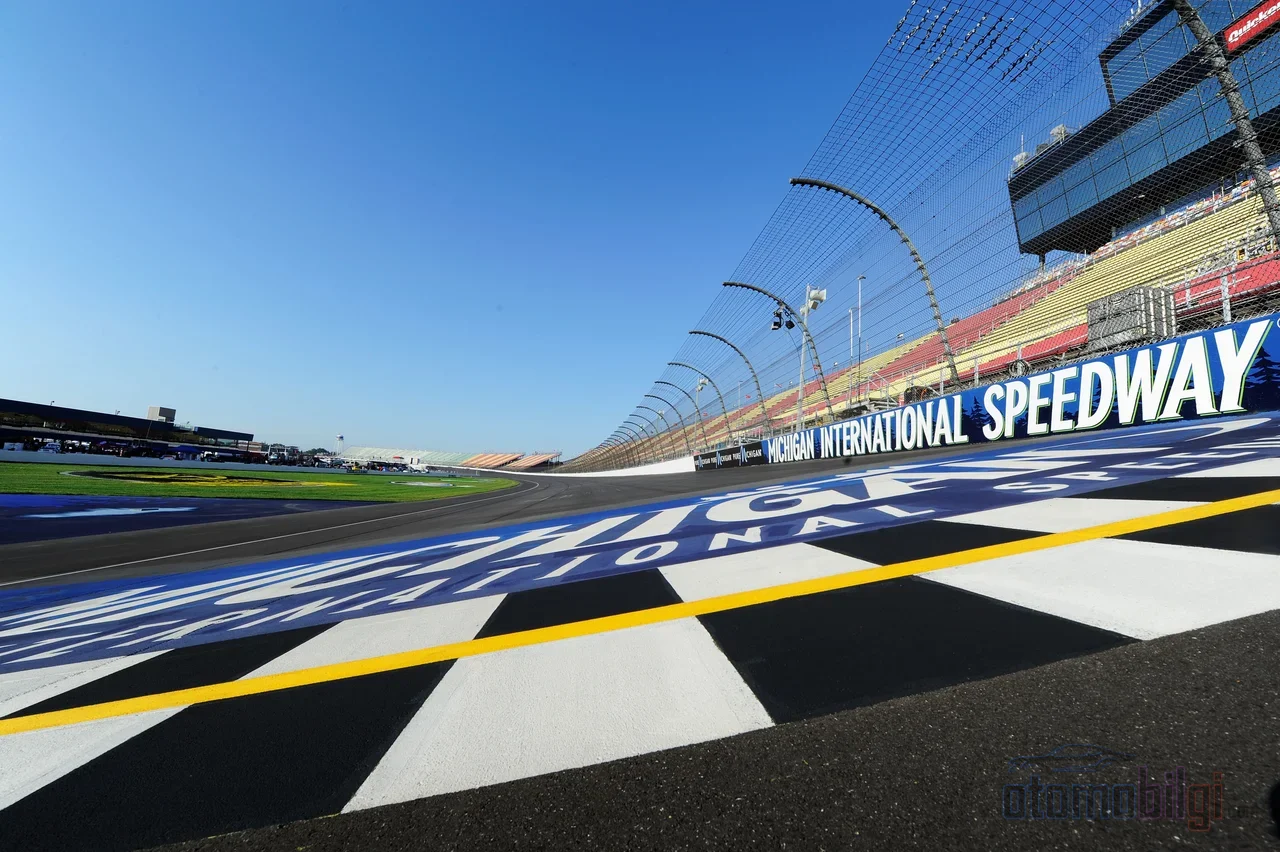
Corner banking is the most subtle yet most effective ingredient that defines a track's character. The corners at Daytona and Talladega are banked between 28° and 33° ; this makes a huge difference compared to the 0°-5° range seen on the straights. Banking works like a load pressing the car into the corner: it allows the tires to turn at much higher speeds without slipping. By contrast, at steeply banked tracks like Bristol, Dover and Darlington, the corners fall in the 18°-30° band; at flat tracks like Martinsville, Phoenix and Richmond, you have to make do with 7.5°-14°.
The effect on the outcome is tangible: on flat-cornered short ovals, braking distances shorten, passing moves become harsher, and the tires wear out more. On steeply banked giant ovals, drivers lap almost without braking at all, keeping the throttle pinned to the floor. Of course, every medal has a dark side; the corners are where accidents most frequently happen.
The track shape also comes into play. The tri-oval that Bill France Sr. designed for Daytona offers spectators a superior viewing angle, but modern similarly shaped tracks get mocked as "cookie cutters." Darlington, on the other hand, is a complete oddity: it was built like half an egg so as not to damage an existing carp pond during construction, and for this reason it produces a driving character similar to a road course.
Superspeedway: Why Is Everyone Obsessed with a Continuous Slide?
At Daytona and Talladega, engine power is restricted; that's why teams look for the advantage in aerodynamics. What determines the order is the draft: a car tucking in behind the car ahead loses 20–30% of its drag and catches up with the leader. With the Next Gen cars, the big pack after a restart at Daytona can still sustain a draft battle throughout the lap.
But here the real skill is not speed, it's patience. In the words of veteran commentators, a superspeedway race is less about raw speed and more about the survival instinct: drivers spend hundreds of laps in tight packs, read moves several cars ahead, and try to prevent a single wrong move from sweeping the entire field. The lead chart can flip within minutes on these tracks; frequent lead changes are the signature of these ovals.
Think of the draft with an analogy: hiding behind a friend on a bicycle to go faster without getting tired. The same physics at 320 km/h. Stick to the car acting like the friend pulling you before the climb, then pass it with the move known as the slingshot.
Short Oval: Why Are the Tires Becoming the Star of the Story?
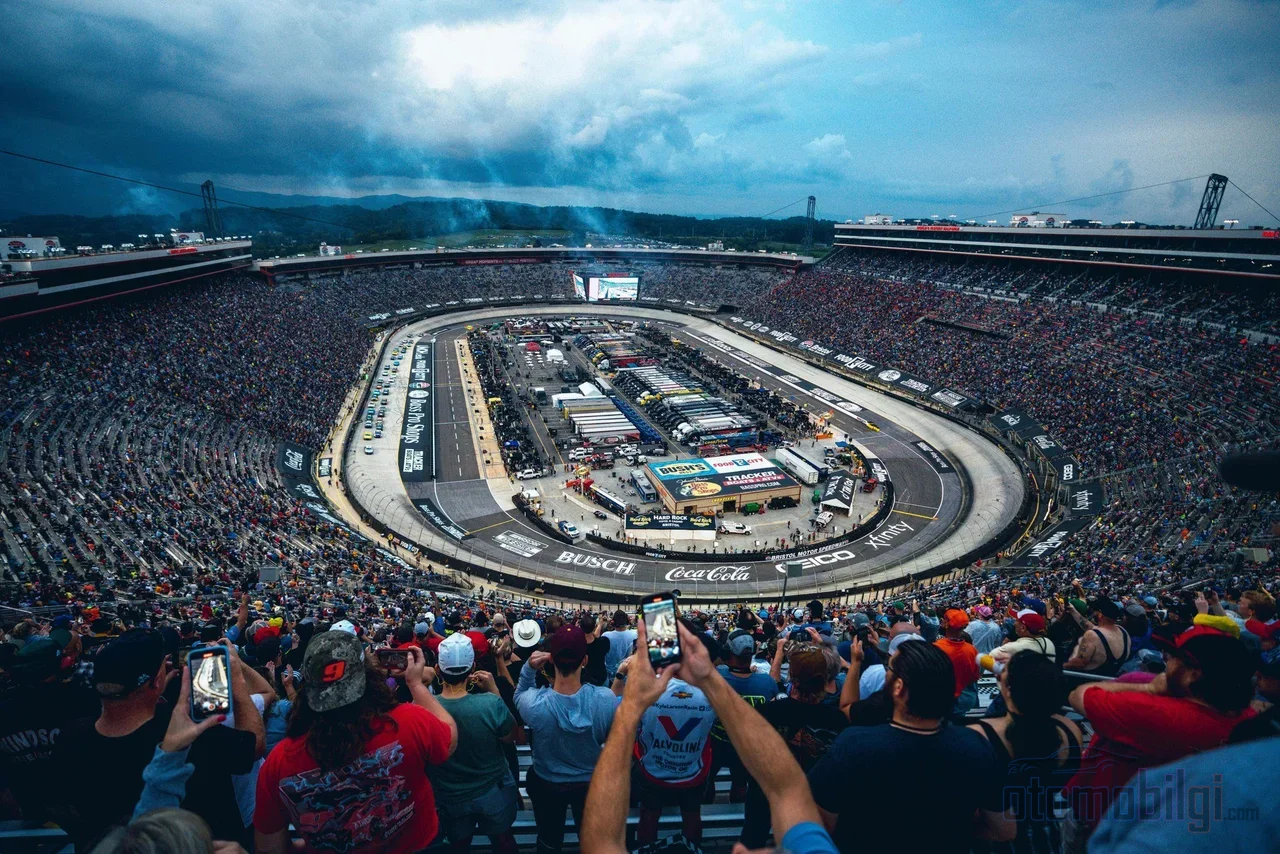
Short ovals are the "bullring" tracks where drivers start their careers. There are three in the Cup Series: Bristol, Martinsville and Richmond. Here the space is tight, the pace is brutal, and every corner is a compromise. Reflexes and aggression are rewarded, but impatience gets punished instantly.
The most talked-about example of recent years is Bristol's tire fiasco: in the 2024 race, Goodyear's unexpectedly hard and unevenly wearing tire combination threw the teams into a challenge that had not been tested for a long time. The result? A record-breaking 54 lead changes and winner Denny Hamlin. With wear this high, the race turns into a strategy game: the driver has to choose between using up a set of tires early and saving them for the end.
There are developments on the Martinsville front as well: after a year of short oval tire experiments, NASCAR made changes before the race, and teams are debating how the increased horsepower will affect tire strategy. In short, short ovals are no longer just contact tracks; whoever reads the tire better wins.
Intermediate Tracks: The 1.5-Mile Balance Question
Until 1990, there were only five intermediate tracks on the NASCAR calendar; most were built after 1994 and, due to their similar shapes, drew "cookie cutter" criticism. Today they form the backbone of the calendar. Racing here is a balance between the two extremes: braking is light compared to short ovals, but high speeds cause cars to spread out and lead to the dirty air problem.
Strategy here is won at the pit box. Front runners who can hold clean air stand out and collect "dominator" points; the fate of a race is decided by seconds. A typical pit stop ~12 seconds long, with tire changers, fuelers, and jack men working in complete choreography. A good box can carry you forward a few positions; a bad box ruins hours of work in a second.
The debate continues on the fan front: one camp argues that the intermediate package should be changed to have less downforce and more horsepower (the 700-750 hp range is suggested). In other words, track type fuels both car development and rule debates.
How Is the Next Gen Car Adjusted According to Track Type?
The Next Gen is the newest car, evolved from the Gen-6, bringing a five-speed semi-automatic gearbox and advanced aero packages. Its body is completely symmetrical; in older generations the right side was deliberately offset, but that panel is now history. Adaptation to ovals and road courses is achieved with a unique bolt-on Ackermann bracket and control arm.
But the critical point is this: since different chassis and body configurations are used on different track types, the setup always needs to be loaded from the same track. According to driver Corey LaJoie, a poorly set up Next Gen drives "much worse" than the previous generation. In other words, bringing the wrong setup for a track type costs far more than before.
How Does the Winning Strategy Change Depending on the Track?
Let's draw a summary map:
- Superspeedway: Survival and draft timing. Making the final lap move at exactly the right moment without sweeping through the field.
- Intermediate: Clean air, pit stop discipline, and long-run consistency. The car that takes on the dominator role usually wins.
- Short oval: Tire management, patience, and hard contact when necessary. Revenge is planned here.
The 2026 season is a fine example of this: Tyler Reddick started the season with two consecutive wins, Denny Hamlin is seeded number 1 in the playoffs, and Kyle Larson leads as the reigning champion. In other words, the driver who reads the track type gets the job done right every week of the season.
So which is harder? Superspeedways reward nerves and draft instincts; short ovals demand patience and mechanical precision. This debate never ends, and that is exactly what makes it great. Which do you find more exciting; a 300 km/h pack race, or a bumper-to-bumper mini brawl?
Sources
- List of NASCAR Tracks - Official Site Of NASCAR
- NASCAR Tracks: Types, Groupings & Data-Driven Insights
- NASCAR Track Types Explained: Every Cup Track by Type
- Viewer's guide: Fast facts for pack racing at Talladega
- How NASCAR Drafting Works
- NASCAR Drafting Techniques
- Superspeedway Racing vs. Short Track Racing - Frontstretch
- Bristol tire wear pushes NASCAR: 'It's supposed to be hard'
- Sunday Setup: How horsepower affects Martinsville tires
- Sunday Setup: 1.5-mile track returns with unknowns
- The Science Behind Pit Stops
- NASCAR: Next Gen features impact road-course setups
- Next Gen (NASCAR)
- NASCAR race tracks: Iconic venues and their unique features
- 2026 NASCAR Cup Series