Richard Petty: The Story of a Career Stretching to Seven Victories
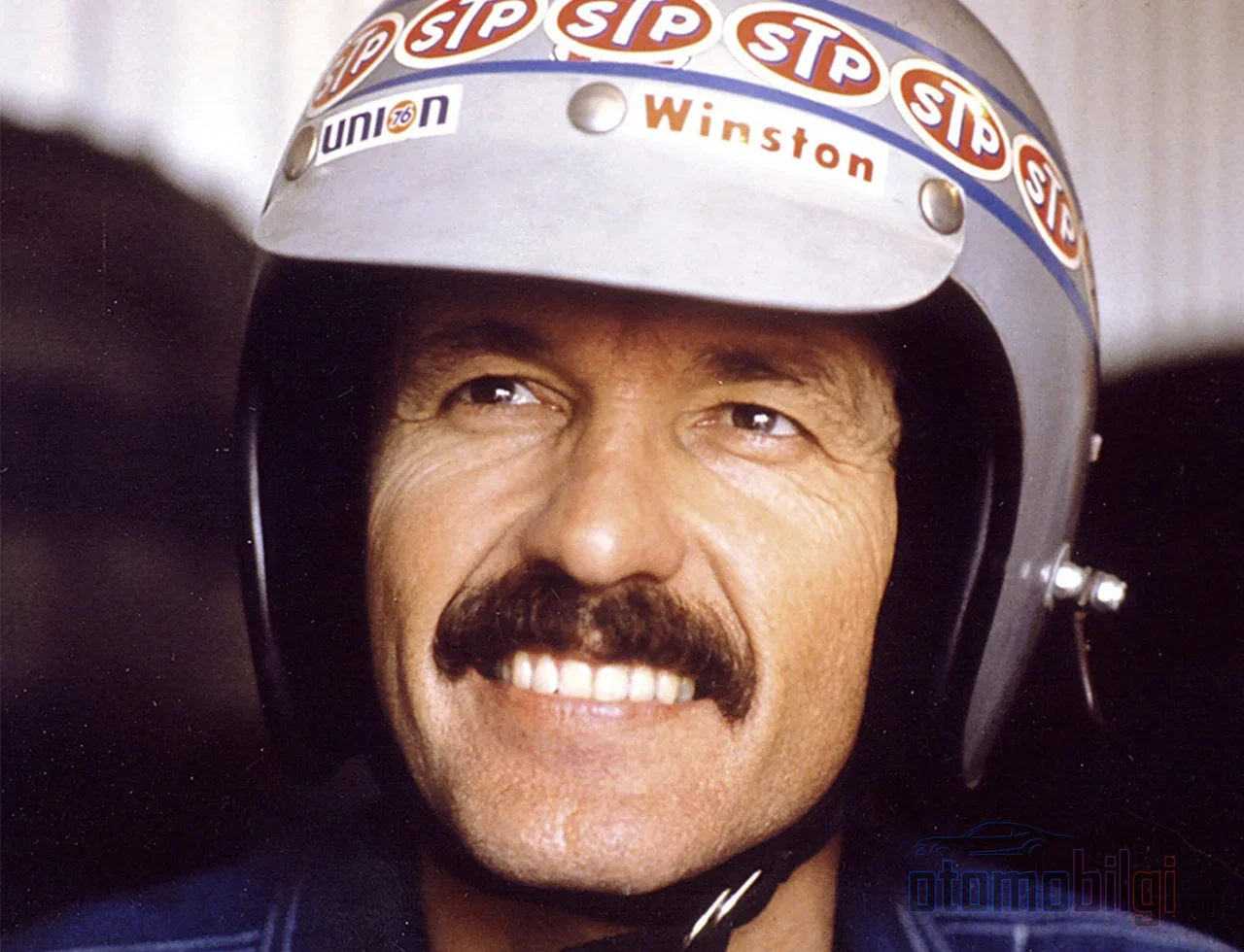
Suppose a friend asks you: Who is the greatest driver in NASCAR history? Whatever your answer may be, at some point in the discussion a single name will come up: Richard Petty. 200 wins. Yes, two hundred. Let's put that into perspective: it's like a driver racing every week and winning nearly half of them - and Petty did that for years. Over the course of his career he started 1,185 races, won 200 of them, became champion seven times, and won the Daytona 500 exactly seven times. Behind these still-unbroken numbers stands a man with a cowboy hat, sunglasses, and a smile: The King.
So how were these records built? Petty's story is far bigger than one driver's career; it is the story of a family, an era, and NASCAR's journey into American culture. If you're ready, let's head to the starting line.
The Petty Dynasty: Racing as an Inherited Legacy
Richard Petty's story begins even before his own birth. His father Lee Petty was one of the most important figures of NASCAR's founding era; he was the man who won the first Daytona 500, held in 1959, the series' inaugural year. Richard and his brother Maurice apprenticed beside their father from an early age; they grew up in the middle of it all, from engine repair to changing tires. So when Richard stepped onto the racetrack, he was no stranger - he already came home smelling of gasoline.
The dynasty later spread across three generations: Richard's son Kyle Petty also raced, and the Petty family became NASCAR's true royal family. In 2026, the family is celebrating its 75th year in racing - seeing the same surname under the checkered flag for three-quarters of a century is something no other motorsport has ever witnessed.
Highlights
- 200 wins, still the unbroken record of NASCAR's premier series
- 7 Cup Series championships: 1964, 1967, 1971, 1972, 1974, 1975, 1979
- 7 Daytona 500 victories - the record for the most wins at this track
- 27 wins in the single 1967 season, including 10 consecutive victories
- 123 pole positions, the series' all-time pole position record
From First Win to the 200th: Petty's Career in Numbers
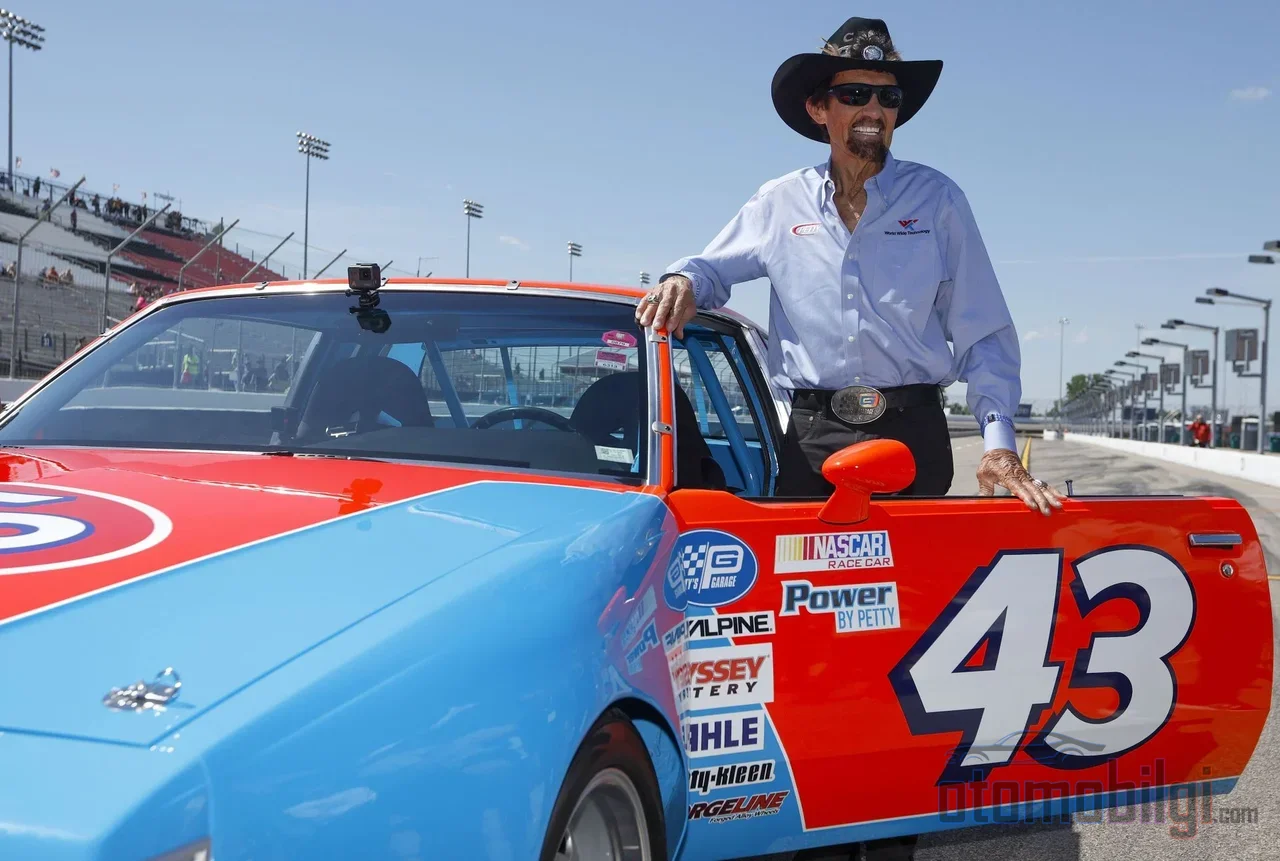
Richard Petty was born on July 2, 1937, in the town of Randleman, North Carolina, and began racing in NASCAR's top series in 1958. His first win took a while to come: in his 35th race, on February 28, 1960, at Charlotte, he saw the checkered flag for the first time and took home $800 in prize money. No one could have known that day, but it was the first step of a two-hundred-win journey.
His career came to a close in 1992 with his final race at Atlanta. The running total? 1,185 starts, 200 wins, 123 pole positions, 555 top-five finishes, and more than 700 top-ten finishes. If we try to translate these statistics to today's NASCAR, things get out of hand: the modern calendar features roughly 36 races a year. Even today's best driver, even if he won everything - which is impossible - would need more than six years and a flawless streak to reach 200 wins. That is why the number 200 is not just a record, but proof of another era.
1967: The Impossible Season
Remember when we said 27 wins in a single season - well, that needs to sink in properly too. The 1967 calendar included 47-48 races, and Petty won more than half of them. On top of that, he won 10 races in a row, seizing the consecutive wins record as well. Let's make an analogy from everyday life: this is like a football team playing every match of the season and winning two-thirds of them - except the matches are played at 300 km/h. 1967 brought Petty his second of seven championships and turned him into an undisputed star.
Daytona 500: The Hall of the King's Throne
The Daytona 500 is NASCAR's Super Bowl. Petty won this event a full seven times - in 1964, 1966, 1971, 1973, 1974, 1979 and 1981. Even as of 2026, no one threatens that record; all active drivers, including the most recent winner William Byron, are far behind Petty.
1964: The Birth of the Hemi Engine
Petty's first Daytona 500 victory came in 1964 with the new Hemi-powered Plymouth. He led 184 of the race's 200 laps, and Plymouth swept the front three grid positions in front of a sold-out crowd of about 70,000. Petty, who also won his first national championship that same year, truly ascended the throne that season. An interesting detail: When NASCAR banned the Hemi engine in 1965, Petty missed most of the season - meaning even the king could clash with the rules.
1974: The Years of Dominance
The 1974 victory was Petty's fifth, and second consecutive, Daytona 500 win. In his STP-sponsored Dodge, he led 74 of the 200 laps and managed to finish a full 47 seconds ahead of second place. At Daytona, 47 seconds means nearly a full lap on the oval; meaning Petty left his rivals a gap that would not allow them to come back.
Plymouth, Ford and the Famous No. 43
Petty's brand history also adds color to the story. After working with Plymouth for many years, Petty switched to Ford in 1969 and took his first Ford win that same year at the Motor Trend 500 in Riverside. In 1970 he returned to Plymouth - and with the legendary No. 43 Superbird, no less. That winged machine, resembling an aircraft fuselage, is today one of the most iconic race cars in automotive history. He took his first win with the Superbird at the Carolina 500.
At the 1971 Daytona 500, he delivered one of the most unforgettable comebacks in NASCAR history: because the engine sat one inch too far back on the chassis in violation of the rules, he started from the very back of the 30-car field, but with a restrictor-plate-equipped car he led 348 of the 500 laps and won the race. Starting from the very back and passing everyone - a scene worthy of the King.
Petty squeezed four of his championships into the 1971-1975 span and won his seventh and final championship in 1979. He was also the first figure in stock-car racing whose earnings exceeded 1 million dollars - in his era, that meant crossing a threshold equivalent to today's tens of millions of dollars in contracts.
The Hat, the Sunglasses and the Symbol of the King: Petty in American Culture
When Richard Petty comes to mind, it is not just statistics; it is that image. Thinking of Petty without the cowboy hat, dark sunglasses, and that famous smile is considered nearly impossible among fans. The hat became such a part of his identity that one of his 2002 hats is on display in the Smithsonian collection - meaning it is now a cultural artifact preserved in a museum. The NASCAR Hall of Fame also opened a giant hat installation called The King's Hat; illuminated in iconic Petty blue, this structure has become a symbol of the legend.
The nickname "The King" was not given in vain. Petty was the first to hold the record of seven championships; only Dale Earnhardt and Jimmie Johnson later reached the same number. So Petty is the driver who first claimed the throne and set the benchmark for those who came after. He was honored in the inaugural class of the NASCAR Hall of Fame in 2010 - his father Lee (2011), his brother Maurice (2014), and Dale Inman, one of the architects of his success, were also inducted into the Hall of Fame. Four members of one family on the same honor roll speaks for itself about the magnitude of the dynasty.
In retirement, Petty lives in Level Cross, North Carolina, but is still active in the field today: he serves as an ambassador for the LEGACY MOTOR CLUB team, and the team runs not only the legendary number 43 but also the number 42 on the tracks. The checkered flag never came down for him.
Why Has the 200-Win Record Still Not Been Broken?
The clear answer to the frequently asked question is this: Richard Petty's 200 wins, as of 2026, still stand as a valid record, and under today's conditions breaking it is almost unthinkable. There are two simple reasons for this. First, the calendar was much more crowded in Petty's racing era - there were nearly 50 races in 1967, versus about 36 today. Second, the level of competition back then was so uneven that it cannot be compared with today; in modern NASCAR, 30-40 competitive cars finish every race with a hope of winning.
This is not to diminish Petty's achievement - quite the opposite, it shows that he played the game of his era far better than anyone else. Each of the 200 wins has been cataloged; the list includes the date, track, and story of every victory one by one. An interesting detail: most of his early victories came at small short tracks that don't even have a surviving photograph. The King was crowned not in the palace, but among the people.
Closing: The King Is Not Dead, He Lives On Through His Records
Richard Petty's career is a 34-year legend stretching from his first $800 win in 1960 to his farewell in Atlanta in 1992. Seven championships, seven Daytona 500s, 200 wins, 123 pole positions, and a dozen more unbreakable records. But perhaps most importantly, the man behind all these numbers: the figure who, with his hat, his sunglasses, and the legacy of a family that never stopped racing, transformed NASCAR from an ordinary sport into part of American culture.
So do you think the 200-win record will ever be broken? I personally can't see it happening - but if anyone keeps waving that checkered flag, they'd better know they'll be racing in The King's shadow.