Who Is Tony Stewart? The Career of the NASCAR Legend
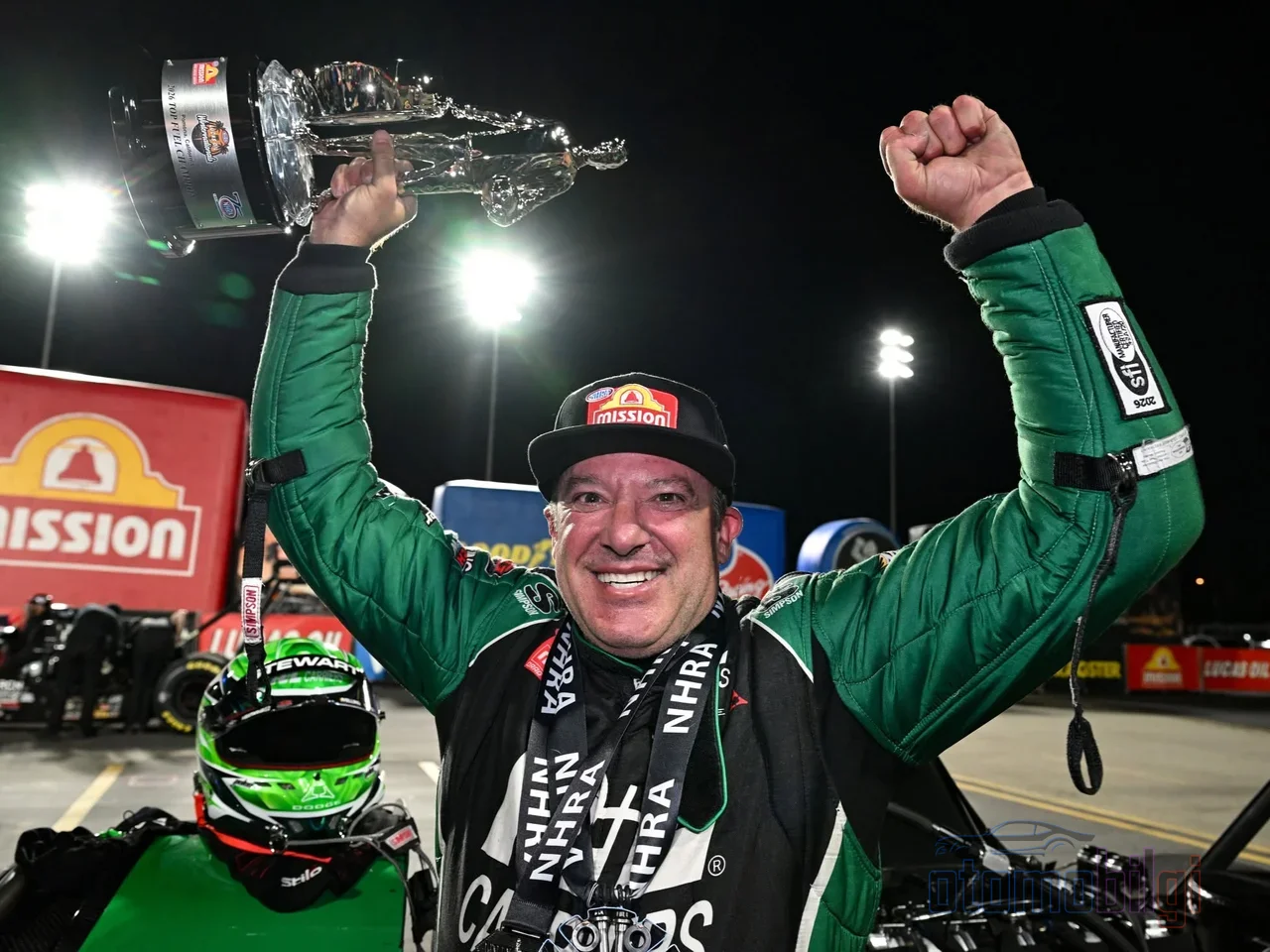
Suppose you're a racer and two different worlds stand before you: on one side the open-wheel, Indiana-born speed obsession of IndyCar, on the other the heavy, bulky American stock cars. Most drivers settle into one over a lifetime, and the other always remains an "or." Tony Stewart, however, left his mark on both: he became IndyCar champion in 1997, then moved to the NASCAR Cup Series and lifted the trophy in 2002, 2005 and 2011. So how did these three championships come about - moreover with two different teams, in two different roles, and in two different eras of the series? The story is like a full speed circuit: it starts slow, then finishes smoking hot.
Entry into the Cup Series: The Rookie Season That Began Like a Storm in 1999
Stewart stepped into the Cup Series in 1999 with Joe Gibbs Racing. He finished 28th in his first race, the Daytona 500; he did; looks like an ordinary start, doesn't it? But as the season progressed, the picture changed. Unbelievable numbers for a rookie season: 3 wins, 12 top-5s, 21 top-10s and a fourth place in the championship. Let's pause here and make clear just how extraordinary a transition we witnessed.
Let us stop here and clarify what an exceptional transition we have witnessed. Stewart was not merely a driver who switched series; He won the USAC Triple Crown in 1995 and the IndyCar (IRL) championship in 1997, and came to NASCAR after a career that stretched from dirt tracks to open-wheel racing. By the end of his first six seasons, he had already amassed 24 wins in the Cup. This is also the period when his nickname stuck to him: Smoke.
Highlights
- Three Cup Series driver championships: 2002, 2005, 2011
- The only name to win championships in both IndyCar and NASCAR
- Champion in 2011 with a points tie against Carl Edwards, prevailing on a 5-1 wins tiebreaker
- The first driver-team owner champion since 1992
- 49 Cup wins in his career, 15th all-time. in line
A driver's nickname is usually a marketing product;
Stewart's was born on the asphalt itself. Stewart's, on the other hand, was born on the asphalt itself. In his USAC and IRL years, he would slide the rear right on dirt tracks, leaving a trail of smoke behind him; In the 1997 championship run, his engine kept blowing up one after another, and the name fit perfectly. rivals had no trouble recognizing the No. 20 car with tires smoking in the corners. The most accurate description of his style would probably be "aggressive but calculated."
He was a character who would chew you out one day and hug you the next; He was a character who would scold you one day and hug you the next; Moments like shoving a photographer in the Indianapolis garage in 2002 or his clash with Joey Logano at Bristol in 2013 may be considered the shadows of his career, but the same fiery temperament was also the source of his fastest cornering moves. Let's make an analogy: Smoke was like a chess player who never lets off the brake until the very last meter but has already calculated the exit of the corner in his head.
The 2002 Championship: The Minimalist Victory of the Winston Cup Era
The first cup came in 2002, and contrary to popular belief, it was not considered a particularly brilliant season. Stewart won the championship with 4,800 points; the lowest point total for a champion since 1997, and the gap to Mark Martin was just 38 points. In other words, a one-race upset could have snatched the whole crown from his hands. One of the season's signature races was the MBNA America 500 at Atlanta on March 10, 2002: a victory taken by a 0.376-second margin. Closing out a season that tight showed just how reliable Stewart's nervous system was.
During this era, the partnership he built with the No. 20 Home Depot car (first Pontiac, then Chevrolet) and crew chief Greg Zipadelli was at the center of everything. Together, the duo produced 33 wins and 2 championships; they are counted among the greatest driver-crew chief combinations of all time. This harmony on both sides of the pit wall would also pay off in 2005.
The 2005 Championship: From the Worst Start to the Best Season
Anyone watching the first 14 races of the 2005 season would have needed to be a prophet to call Stewart a champion. After finishing 29th at Pocono in June, he was 10th in the standings, 380 points behind. Then a switch flipped: Then a switch flipped: he was carried to the top for the rest of the season, took his second cup with 5 wins, and the gap to Greg Biffle again came down to a hair: Indianapolis:
Victory in His Home Soil Victory in His Home Soil
The emotional peak of 2005 was the Allstate 400 at The Brickyard on August 7. Indianapolis Motor Speedway was no ordinary track for Stewart; It was the destination of a dream for a boy born and raised in Indiana. This victory meant so much to Stewart that he had such an exuberant day he said he would even trade his championship to win this race. In the end, he claimed both of them.
Stewart-Haas Era and 2011: A Tiebreaker That Went Down in History
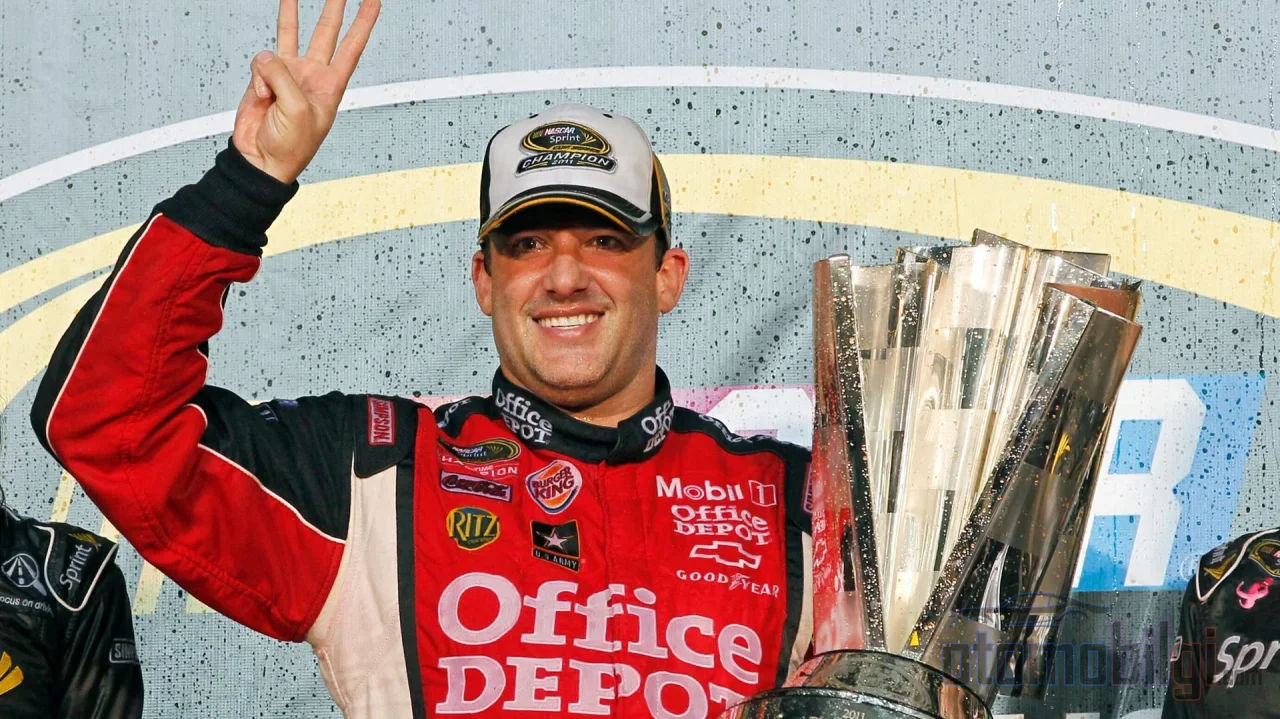
In 2009, his career took a radical turn: From then on, he wasn't just gripping the steering wheel; he was running the team. he was managing the team. In 2011, one of the most dramatic season finales in NASCAR history took place. Stewart collected exactly 5 wins across the 10-race playoff (Chase), and by winning the finale at Homestead he finished the season tied with Carl Edwards at exactly the same points. the 5-1 advantage was Stewart's. This cup carried one more significance:
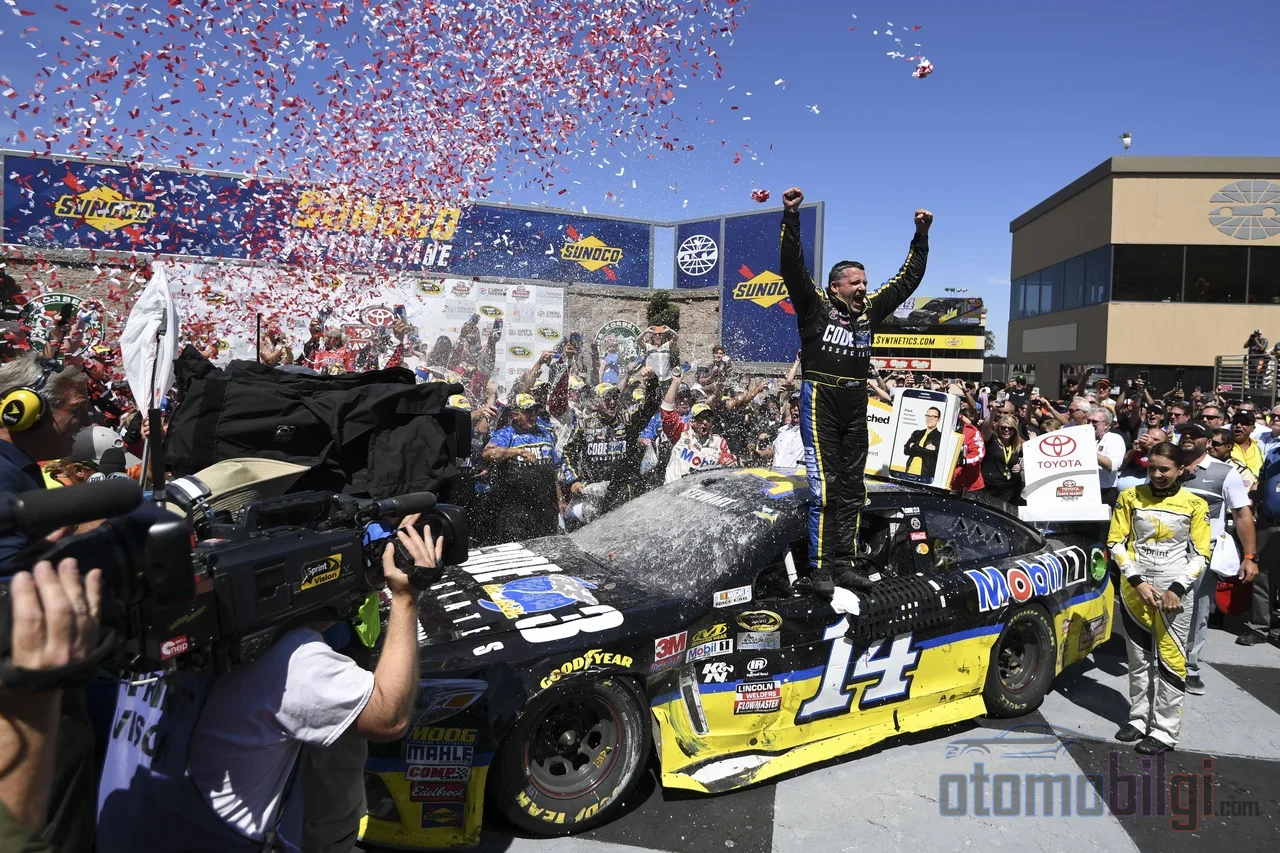
This cup had one more significance: No driver had won a championship with their own team since Alan Kulwicki in 1992. Stewart went down in history as the one who achieved it both behind the wheel and in the owner's seat. His 16 total wins at SHR make up nearly half of the team's 36 Cup victories. His last win came at the 2016 Toyota/Save Mart 350 at Sonoma; Champion in Two Different Playoff Eras:
Why Does It Matter So Much? Let's break down the situation here, because this is Stewart's least talked-about record.
Let's take a closer look at the situation here, because this is Stewart's least talked-about record. Until 2004, NASCAR declared its champion based on points accumulated throughout the entire season. In 2004, a 10-race playoff system called the Chase was introduced, and in 2014 an elimination format was adopted, bringing the system to its current form. The points system also changed: In 2011, the range 1-43 was introduced, awarding 1 point for last place and 43 points for the winner.
Stewart is the only driver to lift the trophy both in the old full-season format (2002) and in the Chase era (2005, 2011). What's more, he won his championships across three different series sponsorships: Winston Cup (2002), Nextel Cup (2005) and Sprint Cup (2011). Making the playoffs in 9 of 13 seasons shows just how consistent he was despite the system's variability; the years he missed were 2006, 2013, 2014 and 2015.
What Sets Him Apart from Petty, Earnhardt and Johnson
There are three legends at the top of the Cup Series: Richard Petty, Dale Earnhardt and Jimmie Johnson share the record with seven championships each. Petty's titles are spread across 1964-1979, while Johnson won five in a row between 2006-2010. In terms of numbers, Stewart cannot approach this trio; he settled for three trophies.
| Name | Championships | Distinction |
|---|---|---|
| Richard Petty | 7 | 1964-1979, a different era |
| Dale Earnhardt | 7 | Shares the Cup Series record |
| Jimmie Johnson | 7 | 5 consecutive championships (2006-2010) |
| Tony Stewart | 3 | Two teams, two roles, two formats, three sponsor eras |
But numbers are not everything. What makes Stewart unique is this profile: he reached the top with two different teams (Joe Gibbs Racing and Stewart-Haas), in two different roles (driver and driver-owner), across three different sponsorship eras and under two different championship formats. Not to mention that he is the only person to win championships in both IndyCar and NASCAR. His 2020 induction into the NASCAR Hall of Fame became the official seal on this versatile career.
Smoke in Career Numbers
As of his retirement moment, Stewart's stats are as follows: 717 NASCAR starts (617 of them in Cup), 62 total wins (49 in Cup), 21 pole positions (15 in Cup). His 49 Cup victories place him 15th on the all-time list. He finished in the top 10 in the point standings in 13 of 15 full Cup seasons; his only runner-up finish came in 2001, 344 points behind Jeff Gordon. He has 19 wins at Daytona across all categories; that ranks second, behind Dale Earnhardt's 34. From February 1999 to August 2013, he did not miss 521 consecutive Cup races. He officially earned $122,231,607 in his Cup career. There were also tracks he could not win at: he failed to succeed at Darlington in 24 attempts and at Kentucky in 6 attempts.
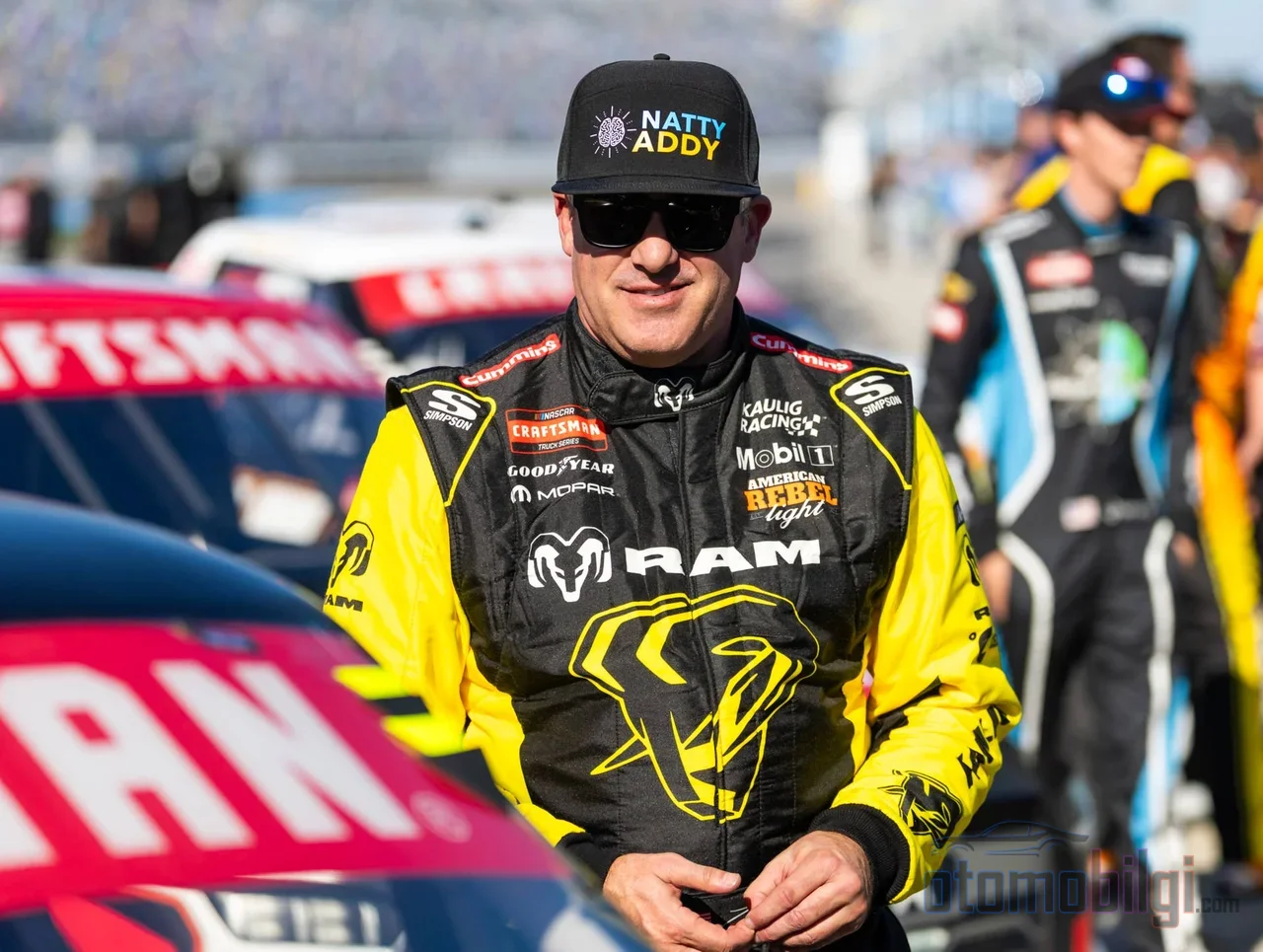
And the story is not entirely over: In 2026, Kaulig Racing announced that Stewart will race in the Truck Series at Daytona and Talladega in the No. 25 Ram 1500. So Smoke still cannot resist the pull of the tracks, even after retirement.
How Did Tony Stewart Win His Three Championships? The Short Answer
In summary: Stewart took his three championships in three different styles. In 2002, with minimal points, by narrow margins and with patience; in 2005, by sprinting back from a terrible start with 5 wins; And in 2011, he collected 5 wins throughout the playoffs and won the Homestead finale, tying Carl Edwards on points and winning the tiebreaker to carry the trophy to his own team, Stewart-Haas. All three were the product of a different format, a different team structure, and a different Stewart. That is exactly why these three trophies, though dim next to the seven-title winners, tell one of the most colorful careers in NASCAR history.
Frequently Asked Questions
- How many NASCAR championships did Tony Stewart win? Three driver championships (2002, 2005, 2011) and one championship as a team owner in 2014.
- Did he also become champion in IndyCar? Yes, in 1997; the only name to reach the top in both disciplines.
- Which tracks did he never win at? Darlington, Kentucky and Rockingham.
- Why is 2011 so special? The wins tiebreaker on a points tie, and the first driver-owner championship since 1992.
Sources
- By the numbers: Tony Stewart set the bar high in NASCAR career
- All of Tony Stewart's NASCAR Cup Series wins
- Tony Stewart's love of racing will be treasured in NASCAR Hall of Fame
- Tony Stewart Wins Third Nascar Title With Daring
- Tony Stewart On The Business Of Nascar, Danica And Being The Champ
- Tony Stewart and Joe Gibbs Racing will part ways
- Stewart Wins Homestead Thriller