Dale Earnhardt: The Story of The Intimidator
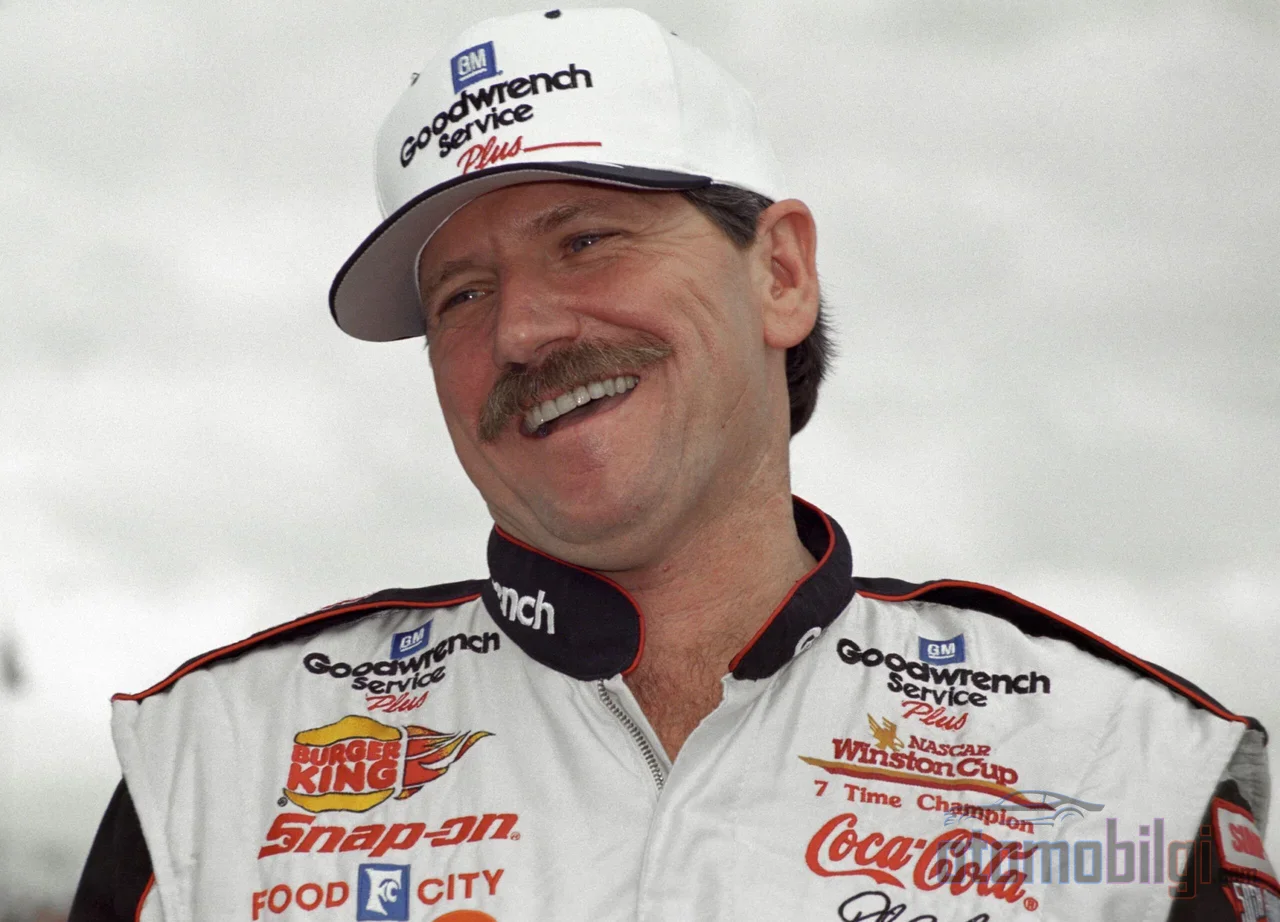
February 2001, the final lap at Daytona. A black Chevrolet crashes into its fate entering turn four, and NASCAR's biggest star never sits in a race car again. But the real part of the Dale Earnhardt story wasn't written that day, but in the 25 years before it: seven championships, a fearless racing style, and a legend who carried NASCAR, as we know it, onto the world stage. So why is this man from Kannapolis still remembered as "The Intimidator"? Let's tell the story.
From Kannapolis to the Winston Cup: Son of a Factory Town
Ralph Dale Earnhardt was born on April 29, 1951, in the town of Kannapolis, North Carolina. This region is the heart of American racing culture: factory workers raced on short oval tracks on weekends, and the neighborhood kids grew up in the pits. Dale grew up that way too. His father Ralph Earnhardt was one of North Carolina's best short-track drivers and won the NASCAR Sportsman Championship in 1956. So we can say that what flowed through Dale's veins wasn't gasoline, but motor oil.
But the painful side of the story came early: his father Ralph died of a heart attack in 1973, at only 45 years of age. When Dale entered his first points race in 1975, in the World 600 at Charlotte Motor Speedway, all he had was a single goal and a massive determination. He was married three times over his career; his son Kerry was born to Latane Brown, daughter Kelley and Dale Jr. to Brenda Gee, and daughter Taylor Nicole to Teresa Houston. That name, Dale Jr., will cross our path again in this story.
Seven Championships: Anatomy of a Record
Here's the striking part: After being named Rookie of the Year in 1979, Earnhardt became the only driver to win the championship the very next season. He won his first title with Rod Osterlund Racing in 1980, acting as if he had promised his name would be mentioned from his very first years. Then in 1986 he moved to Richard Childress Racing, and the numbers fell into a pattern: he collected his championships in pairs. 1986-87, 1990-91, 1993-94. As if he had said to himself, "I'll take them two at a time, it's more impressive that way."
None of these championships were coincidence. Consider that in 1987 he took 4 consecutive wins, a record for the modern NASCAR era, and won 5 of the first 7 races of the season - and he finished the championship with a 489-point margin. In 1990 he collected 9 wins while edging Mark Martin by just 26 points; in 1991 he finished 195 points ahead of Ricky Rudd. In 1994 he matched Richard Petty's record, closed the season with 4 wins, passed Mark Martin with a margin of over 400 points, and sealed the title with a victory at Rockingham. Okay, that's plenty of numbers, but it's worth it:
| Year | Opponent / Margin | Wins that season |
|---|---|---|
| 1980 | First title with Rod Osterlund Racing | - |
| 1986 | First championship with RCR | - |
| 1987 | 489-point margin | Record of 4 consecutive wins |
| 1990 | Mark Martin, 26-point margin | 9 |
| 1991 | Ricky Rudd, 195-point margin | 4 |
| 1993 | Rusty Wallace, 80-point margin | 6 |
| 1994 | Petty's record matched | 4 |
The overall picture of his career is just as impressive as his titles: 76 wins and 428 top-10 finishes in 676 point races. Adding his 24 victories in exhibition races brings the total to 100. His wins spanned four different and consecutive decades: his first victory came in 1979 in the Southeastern 500 at Bristol, he won 38 times in the 1980s and 35 times in the 1990s, and took his last two wins in 2000. If that is not consistency, what is?
Highlights
- 7-time Winston Cup champion - a record shared with Richard Petty and Jimmie Johnson
- 76 wins in 676 races, 428 top-10 finishes
- A record 10 wins at Talladega
- Won the Daytona 500 on his 20th attempt, in 1998
- Inducted into the inaugural class of the NASCAR Hall of Fame in 2010
Why "The Intimidator"? The Birth of an Intimidating Style
The answer to that question comes down to one word: aggression. Earnhardt was not a driver who politely asked the car alongside for room; he considered moving in as his right. I imagine his rivals felt that familiar, gut-settling sensation whenever they saw him on the track. The nickname officially stuck in 1987, especially after the "Pass in the Grass" maneuver in that year's Winston All-Star Race. In that moment Earnhardt slid onto the grass - but kept the lead without ever losing control of the car. The funny part is, he did not actually pass anyone in that maneuver; not giving way to his rival even on the grass was enough.
There was a price to this style, too. In 1987, NASCAR began imposing garage-area penalties against dangerous racing styles, and Earnhardt frequently made headlines for his hard-fought battles with rivals. That year, when a fan threatened to kill him at Pocono, Watkins Glen and Dover, the FBI even had to provide security. In 1999 at Bristol, he spun Terry Labonte on the final lap to win and taunted the booing crowd; Earnhardt explained that his move was not intentional, and that he only wanted to rattle his rival's cage. As we said: you either love him or you love him... sorry, you either love him or you hate him. A newspaper review written in 1997 summed it up: no driver evokes such powerful emotions.
The Black No. 3: How Was NASCAR's Most Iconic Car Born?
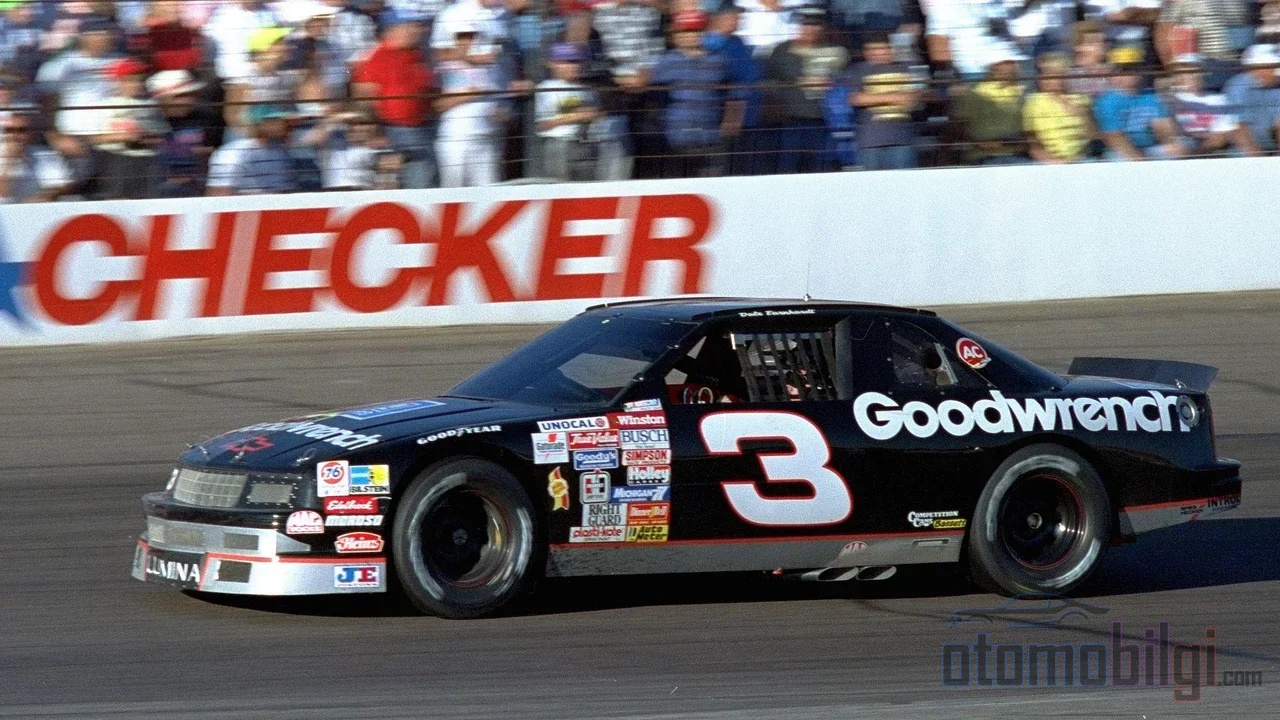
Early in his career, Earnhardt's cars were in shades of blue and yellow, under Wrangler sponsorship. When he switched to GM Goodwrench in 1988, the sponsor actually wanted the car to be blue. But Earnhardt and Richard Childress had a different idea: pure black. And that day, NASCAR history's most instantly recognizable paint scheme was born. Black body, white No. 3, with Earnhardt's silhouette in the middle. Seeing that black shadow in rivals' mirrors gave the same feeling as a bad-movie scare.
The nickname "The Man in Black" was added to this signature; one of his other nicknames, "Ironhead", was a nod to his hard-headed, unyielding nature. The black No. 3 RCR Chevrolet, over time, became more than just a race car - it became a symbol of the American working class racing culture. Earnhardt's roots, representing the sport's "blue-collar" spirit, also played a part in NASCAR becoming a national TV product. Do you think a car's color could become this legendary? Earnhardt had given the answer hundreds of times.
Daytona 500: Who Brought Home the Trophy After 19 Years of Waiting?
Here is the most human part of the Earnhardt story. Seven championships, 76 wins, a record 10 victories at Talladega - but the Daytona 500 just wouldn't come for years. In 1990 he nearly had it: He led 155 of the 200-lap race, but on the final lap his tire blew after hitting a bell housing piece, and he lost the victory to Derrike Cope. Hanging that blown tire on the workshop wall is the bittersweet part of the story. Then in 1993 and 1996 he also lost to Dale Jarrett on final-lap passes.
The trophy finally came on February 15, 1998, on his 20th attempt - and that moment became one of the most emotional scenes in NASCAR history: rival teams lined up on pit road and everyone queued up to congratulate Earnhardt. Diving onto the grass during the victory lap and leaving tracks in the shape of the No. 3 was like a signature that told the whole story in a single frame. For a man who described his 1995 Brickyard 400 victory as the biggest of his career, Daytona was finally the last missing piece of the puzzle.
February 18, 2001: His Tragedy and NASCAR's Safety Revolution
Now we come to the hard part. On the final lap of the 2001 Daytona 500, Earnhardt lost control of his car after contact with Sterling Marlin, collided with Ken Schrader, and hit the outside wall head-on in turn four. His death was announced the same day at Halifax Medical Center at 5:16 p.m.: basilar skull fracture. He also had a broken ankle, broken ribs, and a broken sternum. Michael Waltrip won the race in his own car, with Dale Jr. finishing second - such irony could not be written. Both Waltrip and Dale Jr. explained.
But the most important part is this: after that day, a cultural change took place in NASCAR. In October 2001, NASCAR made the HANS (head and neck support) device mandatory in all three national series - Earnhardt himself had refused to use the device, finding it restrictive and uncomfortable; this is the most bitter detail of the tragedy. Before his death, another precedent had occurred: In 1996 at Talladega he hit the wall at about 200 mph and continued racing with a broken collarbone, sternum, and shoulder blade; that crash led to the mandatory windshield center support bar, known as the "Earnhardt Bar." After 2001, NASCAR also launched an independent investigation into the crash, and the seat arch discussions led to the resignation of seatbelt manufacturer Bill Simpson.
The result? There has been no driver death in NASCAR since that crash in 2001. It is estimated that the industry's subsequent safety revolution has saved hundreds of lives. A one-second corner error completely changed the safety philosophy of an entire sport. Richard Childress publicly promised that the No. 3 would never be used again; the car number was changed to #29, and Kevin Harvick replaced Earnhardt starting from the 2001 Dura Lube 400 - let's also add that Harvick's car carried Earnhardt's stylized 3 on its B-pillars. The heaviest legacy is the one carried in silence.
Earnhardt, Petty, or Johnson: Who Is NASCAR's Greatest?
We've come to the fans' favorite debate. Earnhardt, Richard Petty, and Jimmie Johnson are tied at 7 championships; this trio is NASCAR's summit club. But which one is a step ahead? Petty's 200 wins and 555 top-5 finishes are unrivaled; even on the road to just the first 7 titles, Petty's 190 wins between 1960-79 is a nearly impossible figure to reach. The other side's argument is strong too: Earnhardt had a higher top-10 rate, and in 415 shared races, Earnhardt finished ahead of Petty 274 times. Johnson, meanwhile, entered the same club and added a third dimension to the debate. Our take? The numbers can be chosen to support whichever driver you love, but Earnhardt's impact on the track, his cultural footprint, and his touch on racing fans' emotions are unquestionably his alone. Indeed, he was selected for NASCAR's 50 Greatest Drivers list in 1998 and entered the Hall of Fame's inaugural class in 2010.
The Legacy of a Number: What Does The Intimidator Mean Today?
Earnhardt's death sparked a reckoning beyond the track, and his memory lives on more than just in the statistics pages. A factory worker's son from Kannapolis becoming the face of an entire sport with a black car is an inspiring story even today. The sound of engines humming around oval tracks on weekends carries a bit of his memory each time. The No. 3 is still seen in the grandstands, on jackets, on hoods, and today's level of NASCAR safety standards is a gain purchased with the price of that loss every single week.
Seven championships, a black Chevrolet, and an unshakable character. To summarize Dale Earnhardt's legacy in one sentence: a legend who was feared on the track, loved off it, and who made his sport better after he was gone. So, the nickname "The Intimidator" describes a style; the word "legacy" covers the rest. Which do you think is the greater achievement - 7 titles, or turning a number into a legend?
Sources
- Dale Earnhardt - Wikipedia
- Dale Earnhardt | NASCAR Hall of Fame Inductee
- Dale Earnhardt - IMS Museum
- Statistics - Dale Earnhardt Inc.
- Dale Earnhardt through the years | NASCAR
- Dale Earnhardt's 76 NASCAR Cup Series victories | NASCAR
- Death of Dale Earnhardt - ESPN
- Earnhardt's Death Helped Launch Safety Revolution - Autoweek