Cale Yarborough's 1976-1978 Championship Streak
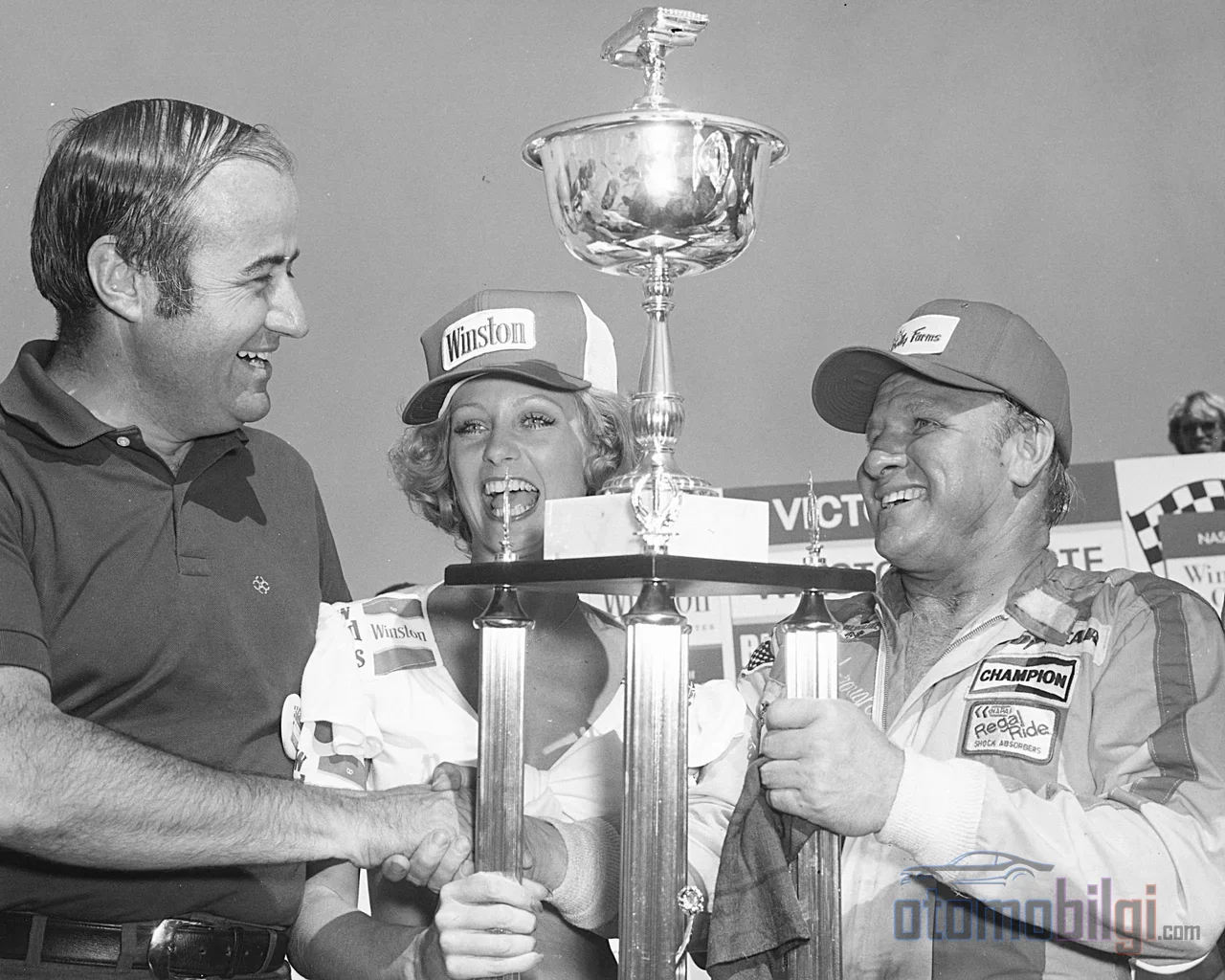
Let's say I ask you about one of the hardest records in NASCAR history: three consecutive Cup championships. Who did it first? Most people say Richard Petty, some say Dale Earnhardt. Both are wrong, because those two legends never managed it. The correct answer is Cale Yarborough: the first driver to pull it off, winning the 1976, 1977 and 1978 Winston Cup championships back to back. So how did he do it? And even more interesting: if he's such a legend, why is he the name left in the shadow of Petty and Earnhardt? Let's find out.
From Timmonsville to the Tracks: Who Is Cale Yarborough?
William Caleb Yarborough was born on March 27, 1939, in Sardis, South Carolina, near the town of Timmonsville. He was the son of a tobacco farmer and lost his father in a private plane crash when he was 12. So this was never an easy story from the start. He was a football star in high school, played semi-professional football for four seasons in Columbia, and also stepped into the ring for a while as a Golden Gloves boxer. You'll remember the boxing background later, because in 1979 that past will come in handy.
As for NASCAR, things sped up: His career, which began with the Southern 500 at Darlington in 1957, lasted 31 years, until the 1988 Atlanta Journal 500. In total, 560 Cup races, 83 wins, 69 pole positions and 319 top-five finishes. With 83 wins, he shares sixth place on the all-time list with Jimmie Johnson; the names behind them include Bobby Allison (85) and Darrell Waltrip (84). Yarborough reached his 83rd win in 524 races, while it took Johnson 556 races to reach the same number. So the man didn't just win - he won fast.
How Did the Three Consecutive Championships Come About? The 1976-1978 Account
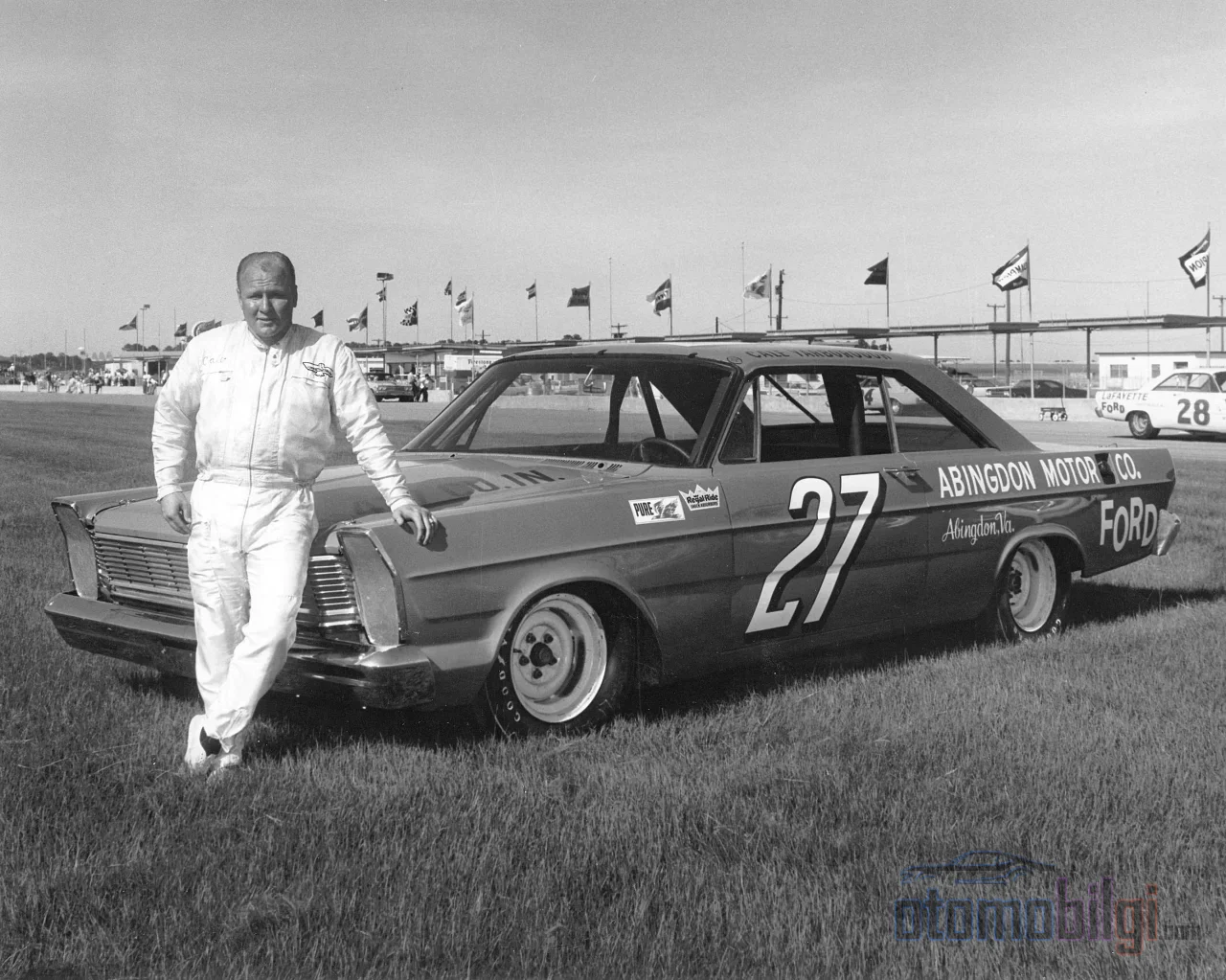
Now let's get to the main issue. Yarborough's three-year run from 1976 to 1978 was the first instance in NASCAR history of winning three consecutive championships, and this record belonged to him alone for a long time. Until Jimmie Johnson won five championships in a row between 2006 and 2010 - nearly thirty years - he was the only member of that club.
1976: The First Championship
Taking his place in Junior Johnson's team, Yarborough took 9 wins in 1976 and, winning four races in a row in the later part of the season, captured his first Winston Cup championship. If I need to make a comparison: four consecutive victories in a single season is a move that puts distance between you and the leader even in today's NASCAR. 1976 was the first act of exactly that move.
1977: The Peak Season of His Career
1977 is the year Yarborough's career peaked. 9 wins in a 30-race calendar, 5000 points, and the championship with a full 386-point lead over Richard Petty. But what's really interesting is this: that season he never failed to finish a single race - not even one DNF. Only two drivers in NASCAR history have achieved this and won the championship; the other is Bobby Labonte's 2000 season. He is also the only driver in history who never let go of the points lead throughout an entire season. (After the first race of the season, there was a technical tie of 180 points apiece with David Pearson and NASCAR listed both drivers as leaders; a situation with historical precedent.) The 1977 Daytona 500 victory also put the sport on the cover of Sports Illustrated, making him only the second NASCAR driver to achieve this.
1978: The Season of Preferring the Hat
In 1978 the team switched to Oldsmobile, the sponsorship was transferred to First National City Travelers Checks, and Yarborough capped off his three-year streak with 10 wins. In the Music City USA 420 he led every lap, took his fourth Southern 500 and his first Winston 500 victory at Talladega; he clinched the championship at the American 500 with two races left in the season. The total for three years: 28 wins, three championships.
Highlights
- The first driver in NASCAR history to win three consecutive championships (1976-1978)
- Career totals: 83 wins, 69 pole positions, 4 Daytona 500s, 5 Southern 500s
- 1977: 5000 points, champion with a 386-point lead over Petty, not a single DNF all season
- 55 wins with the Junior Johnson team between 1973-1980
- Inducted into the NASCAR Hall of Fame in 2012; passed away on December 31, 2023, at the age of 84
Wood Brothers and Junior Johnson: The Right Team, The Right Time
Yarborough's career was shaped by two major stops. The first stop was Wood Brothers: he scored three wins in the 1967 and 1968 Daytona events, and in 1968 won both the Daytona 500 and the Firecracker 400, becoming the second driver in history to sweep both major Daytona races in a single year. That same year he closed the season with a total of 6 wins, including the Atlanta 500 and his first Southern 500 victory. He started and won the 1968 Daytona 500 from the pole position. His success was so firmly established that Ford produced a special version of the Mercury Cyclone Spoiler II bearing his name in 1969; this homologation model with a 351 cubic inch Windsor engine is one of the rare examples of a road car carrying a driver's name.
The second stop was where he had his true explosion: the Junior Johnson team. In 1974 he took a career-record 10 wins but missed the championship by roughly a 600-point margin; mid-season the team had been bought by Johnson with Carling Brewery sponsorship. Then came a total of 55 wins between 1973-1980 and a win rate of 26.57 percent. In other words, he won one out of every four races he entered with the team. I put on my thinking cap: could a driver winning one out of four races even be conceivable in today's NASCAR? That's the level of collaboration this was.
And in 1980 came the most painful footnote of the story: he set the modern-era record with 14 pole positions and won 6 races, but lost the championship to Dale Earnhardt by exactly 19 points. The fourth championship slipped right past his nose.
Daytona 500 and 1979: A Winning Final Lap in Our Cultural History
Yarborough won the Daytona 500 a total of four times: 1968 (with the Wood Brothers Mercury), 1977 (with Junior Johnson), and back to back in 1983 and 1984 (with Ranier-Lundy's Hardee's Chevrolet). In 1984 he became the second driver to accomplish this back to back. He also won the Southern 500 five times; he ranks second all time in both events.
But the moment that comes to mind when you think of Daytona is not one where he won. February 18, 1979: while battling for the lead with Donnie Allison on the final lap, both cars collided and slammed into the wall. Yarborough started trading punches with both Allison brothers in the pit area. And here is the real kicker: this race was the first NASCAR 500-mile race to be broadcast live on TV from start to finish. Yes, viewers watched a real physical brawl unfold trackside, live, on a snowy Sunday.
So who won? Richard Petty, who was half a lap behind the leaders, got ahead thanks to his team's fast pit work and claimed his sixth Daytona 500 victory. But although Petty won the race, it was NASCAR that won that day: the broadcast and the events that followed are remembered as the turning point that started the series' mass growth. Yarborough's never-give-up attitude that day remains one of the most told images of the legend even today.
The Hard Driver: A "Take No Prisoners" Style and the Shadow of Petty and Earnhardt
What kind of driver was Yarborough? The short answer: someone who floored it all the way and yielded to no one. The words describing him always point the same way: intense, fearless, take-no-prisoners, tough as nails. The term the Hall of Fame uses for him can be translated directly as "tough as nails". This lead-foot style also earned him the Most Popular Driver award in 1967; moreover, he was a three-time NMPA Driver of the Year (1977, 1978, 1979) and was named American Driver of the Year in 1977. He is a name with no ties whatsoever to Turkiye or Turkish drivers, coming entirely from within American motorsport culture; on the IndyCar side, he entered the Indianapolis 500 four times (best finish 10th in 1972), raced in the 24 Hours of Le Mans in 1981, and became the IROC champion in 1984.
So why isn't he mentioned as much as Petty and Earnhardt? Let's be honest here: there is no single settled answer to this question, but the data we have says the following. Petty and Earnhardt are each remembered with seven championships; Yarborough has three, but those three were consecutive, which is a challenge of a completely different kind. Also, Johnson's five consecutive championships from 2006 to 2010 ended the "one and only" status of Yarborough's streak and, interestingly, made Johnson a new focal point in comparisons among the legends. He remains a name on whom there was consensus regarding his driving style and character; he was inducted into the NASCAR Hall of Fame in 2012 and passed away on December 31, 2023, at the age of 84, in his hometown of Florence.
Conclusion: Why Should You Know Cale Yarborough?
Let's sum it up: Cale Yarborough is the first driver to manage three consecutive Cup championships in NASCAR; he did it in 1976, 1977 and 1978, with a total of 28 wins across three years, and he carried this streak alone for thirty years. Four Daytona 500s, five Southern 500s, 83 wins, and that final lap in 1979 that has since become part of cultural history. The shadow cast by Petty and Earnhardt may be large, but a shadow means there is light, and Yarborough's own light shines brightly in every stamped lap of the series. The next time someone asks "who is the greatest NASCAR driver?", don't forget to add the first name to win three championships in a row to the answer.
Sources
- Cale Yarborough - Wikipedia
- Cale Yarborough's Three-Peat | Curators' Corner - NASCAR Hall of Fame
- Cale Yarborough | Class of 2012 NASCAR Hall of Fame
- 1979 Daytona 500 - Wikipedia
- Cale Yarborough, three-time Cup champion, dies at 84 - NASCAR.com
- Cale Yarborough, NASCAR legend who won 3 straight titles, dies at age 84 - Fox Sports
- Cale Yarborough, Winner of 3 Consecutive NASCAR Cup Championships, dies at 84 - Autoweek
- Cale Yarborough's Style Shaped a Career That Included 3 Straight Titles - Frontstretch
- Cale Yarborough - Driver - Racing-Reference
- Cale Yarborough, three-time NASCAR champion in '70s, dies at 84 - ABC News