How Does Tire Management Win Races in NASCAR?
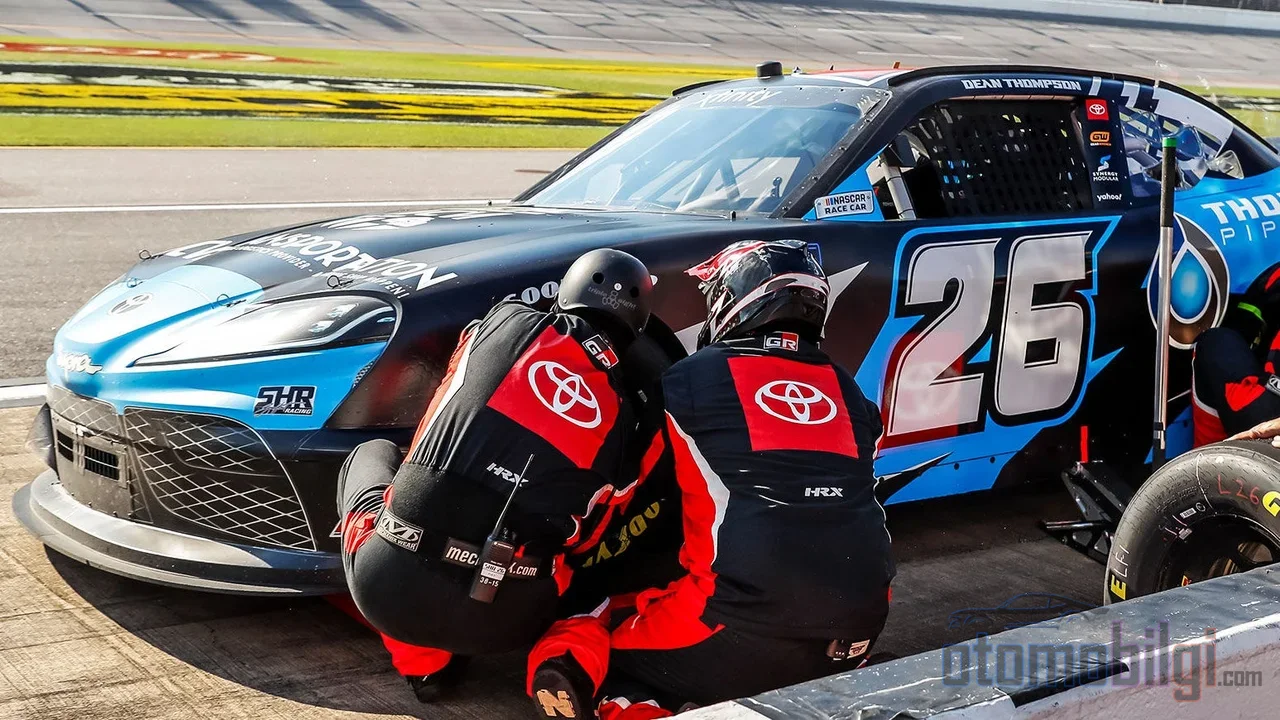
While watching a NASCAR race, most eyes get stuck on pit stops and drafting duels. But the real story lies in the car's four tires getting a little slower every lap. How does a tire deform over 30 laps, why does it hopelessly drop off on a short track, and what does the driver do to preserve it? Here is the race's unsung hero: tire management.
NASCAR Tires Are Already Slick, So How Do They Wear Out?
The first surprising fact is this: NASCAR tires do not carry tread like road car tires. These are completely slick racing tires, meaning "slicks." So if you're saying "the tire is bald, that's why they change it," you're mistaken - the tire is bald by birth. Wear comes from the tire heating up and deforming under constant friction. Since the car turns the same direction on the oval at all times, the tire is crushed by enormous lateral load every lap; over time this load distorts the tire's contact patch and reduces grip.
All these tires are supplied by a single company, and it has been doing so since 1954. Every tire is made by hand at the facility in Akron, Ohio, USA; for a typical race, about 4,000 tires are waiting at the track, and in total more than 100,000 tires per year are shipped to the teams. A tire, along with the NASCAR-specific safety liner inside it, weighs roughly 11-13 kilograms.
So what size are these tires? Here's a brief technical profile:
| Specification | Detail |
|---|---|
| Rim diameter | 18 inches (since 2022; previously 15 inches, used from 1997) |
| Sidewall structure | Shortened sidewall, designed to withstand the oval race's constant load cycle |
| Type | Slick radial |
| Compound types | Speedway, intermediate, road course and short track |
| Sets per race | 9-14 sets |
| Planned pit interval | Usually every 30-50 laps |
The compound selection is no coincidence either: each type is designed according to a specific track surface's temperature distribution and maximum lateral load. If you like, pause for a second and think - it looks like the same tire, doesn't it? But when the type of track changes, the tire's personality changes too.
Highlights
- NASCAR tires are slick from birth; wear comes from heat and deformation, not from "going bald"
- In a race, teams use 9-14 sets of tires, and the pit interval is typically 30-50 laps
- Four tires and a fuel fill take an average of 12-14 seconds in the pits
- The extreme tire wear at Bristol led to a record 54 lead changes
- The 18-inch tire was designed together with the Next Gen car
What Is Tire Fall-Off: How Does Tire Drop Turn a Race Upside Down?
In the sport's own words, this is called "tire fall-off." The logic is simple: the first laps of a run are the fastest laps, because the tires are fresh. As the run goes on, lap times stretch by seconds and the cars slow down with an invisible brake. That's when most of NASCAR's passes happen - someone who seems never to touch the car ahead is actually catching a rival whose tires are gone.
Tire fall-off is also intertwined with track temperature. The more track temperature rises from sun and friction, the more grip the tires lose. That's why the same track shows a completely different character in a daytime race and in an evening race. And this is exactly where analysts' favorite debate takes place: how predictable should tire wear be? The Bristol Night Race is a good example - extreme tire wear in that race produced a record-breaking 54 lead changes and it was spectacular to watch. But on the other hand, it was unpredictable; as one analyst put it, if you want tire wear, you have to be willing to see more of it. There is no free excitement.
The Difference Between Short Tracks and Long Tracks: Why Is Bristol Tougher Than Anywhere Else?
On short tracks, tires fall off much faster. Here, cars constantly squirm through tight corners, and the tires never get a rest. The result? A driver who takes good care of his tires accelerates in the later stages of the run as if he were driving a different car, and picks off rivals whose pace has faded one by one. That's always why, toward the end of short-track races, a car suddenly starts to "fly."
The trade-off between a long run and a short run is a strategist's nightmare:
- Either you are super fast on restarts and short runs, but lose seconds over a long run
- Or you are slow on restarts but very fast over a long run with almost no tire falloff
When wear is high, the move called the "undercut" becomes more powerful: while the rival ahead slows in the pits, you pit first, and with the time you gain per lap on fresh tires, you pass him and return to the track ahead. But here's the interesting part: According to some drivers, NASCAR's stage lengths limit how much tire wear can affect the race at intermediate tracks. By the time the stages end, the tires have not yet fully fallen off, which contributes to the lack of passing. In other words, while the format searches for excitement, it keeps tire strategy on a low flame.
Soft or Hard: How Does Compound Choice Change Race Strategy?
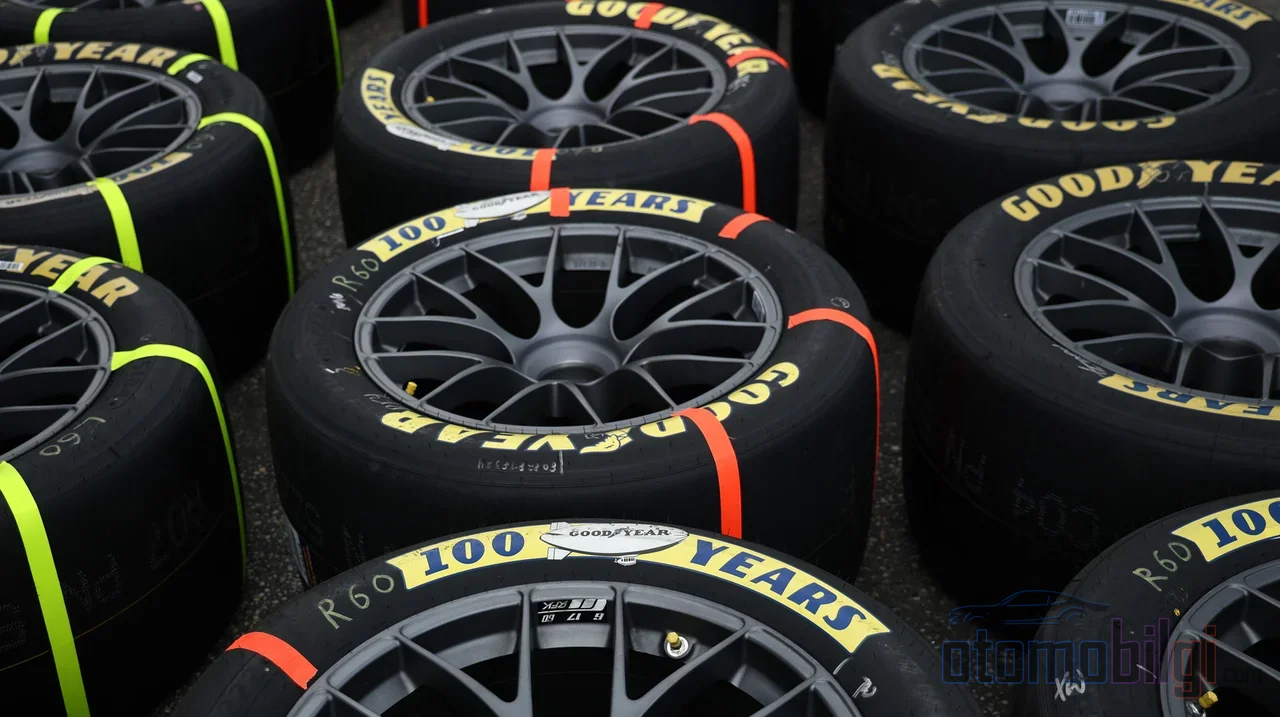
The general rule is simple: the more abrasive the track surface, the harder the compound preferred. Although NASCAR is classically thought of as a single-compound series, experiments continue. At Phoenix, a two-compound "option tire" trial was carried out: the option tire with the red letter was softer and faster - but it wore out far more quickly. Drivers could use a maximum of two sets of this tire. Whether the experiment will become permanent at short tracks is still being debated; while some envy Formula 1's soft/medium/hard system, whether multiple compounds are suitable for oval racing remains an open question in the community.
And there is an interesting detail: Until a rule change made in 2023, wet-weather tires could only be used on road courses; now they can also come into play on oval tracks. Racing no longer has to be postponed when it rains - at least in theory.
How Does a Driver Protect the Tires? The Secrets of the Art of Tire Management
Now we come to the most enjoyable part of the job: driving. What we call tire conservation is a driver's quietest yet most valuable skill. The principle works like this:
- Be as gentle as possible on the throttle; stabbing and lifting off the throttle suddenly burns the tire
- Instead of jerking the steering wheel in corners, steer smoothly; lock-ups and sliding are the tire's biggest enemy
- Avoid hard braking, because hard braking loads more heat onto the front axle
- Use the planned pre-race "lift and coast" zones, easing off the throttle to rest the tire almost without losing lap time
- Don't spin excessively, don't go onto the grass or cut too much
If you want to liken this to everyday life: compare the tire life of a driver who floors it at every red light with one who eases onto the throttle gently. The same difference multiplies exponentially in a NASCAR pilot cornering at 300 km/h every lap. A good tire conservationist, running laps as calm as a generator at the end of a race, may be gaining half a second per lap-or more-while rivals lose it.
Among the legends, there are examples of this skill. Seven-time Cup champion Jimmie Johnson is described as having a methodical and conservative driving style, and it is said that he prioritized tire conservation and strategic pit planning. Since this claim rests mostly on fan discussions, it should be read with some caution-but Johnson's record speaks for itself: He shares the series record of seven championships with Richard Petty and Dale Earnhardt, five of them consecutive. He entered the NASCAR Hall of Fame in 2024 and is one of only two names, along with Earnhardt, to win championships in three different generations of cars. Fortunately, that experience carried over to the next generation of cars as well: In the Next Gen era, when tire drop-off combined with high speeds on short tracks, pressure mounted on pit crews and record pit stops became the expectation. A four-tire change and fuel fill already takes an average of 12-14 seconds - tire strategy is worked out in one-second calculations.
How Does Tire Management Really Win a Race?
Let's bring it all together. In NASCAR, tire management is the invisible planning that wins the race: the team picks the right compound for the track type, the driver rests a screeching tire in the early laps with smooth driving, the strategist monitors lap-time loss with real-time data, and the pit window is timed to the exact moment of drop-off. It is not the fastest car, but the car that stays fast on its tires the longest that sees the checkered flag first. From the record lead changes at Bristol to Phoenix's soft option tire experiments, everything is proof of this balance. Next time you watch a NASCAR race, do this: look at the lap times in the middle of the race. That slowing car up front may not actually be losing-it may be talking strategy.
Sources
- Goodyear's NASCAR Next Gen Tire Makes Regular Season Debut at Daytona 500
- The Ultimate Guide to NASCAR Tires
- Heat and Tire Wear - NASCAR
- Inside the Race: Tire wear is hard to predict, but good for racing
- Inside the art of tire management, and what 'saving' really means
- Next Gen: Record pit stops and tire fall-off expected for Richmond
- 'Tire fall-off' explained
- Short Tracks vs Superspeedways in NASCAR
- NASCAR puts multiple tire compounds to the test for Phoenix
- Is it time for NASCAR's option tire experiment to become a short-track fixture?
- How Tyre Degradation Impacts Race Strategy
- Tire Management – How to Get the Most out of Your Race Tires
- Jimmie Johnson – NASCAR Hall of Fame
- The Science Behind Pit Stops