What Is the NASCAR Stage System? How Are Points Distributed?
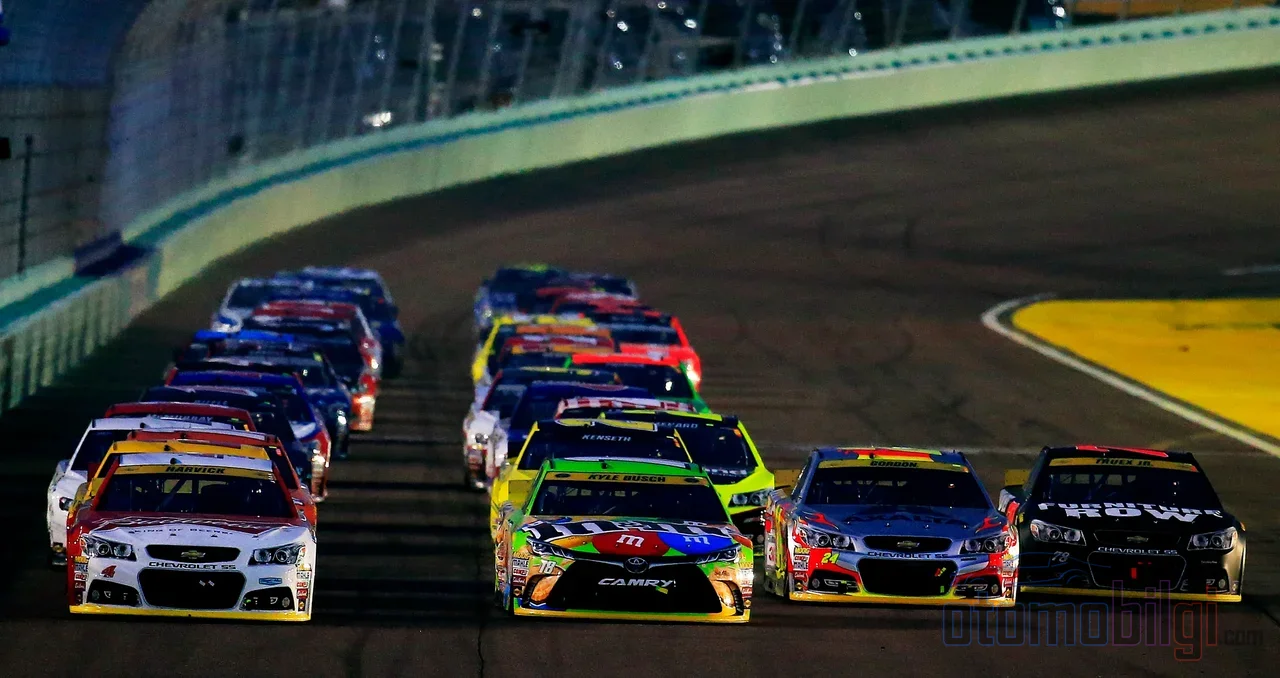
Just imagine: You are in the middle of a 500-mile race, going at speed, and suddenly a message appears in the corner of your screen - Stage 1 is ending. The four cars ahead of you suddenly start battling each other, because from now on every position means points. You are watching not so much a race as three mini-finals lined up one after another. So why did NASCAR split a race into three parts? What is this stage system for, and how do these points change the championship calculation? If you are ready, grab your pen; because this format has completely rewritten our NASCAR viewing habits since 2017 - and in 2026 it underwent another rule change.
How Exactly Does the Stage System Work?
Let me explain briefly: Starting with the 2017 season, NASCAR divided the races in its three national series (Cup, Xfinity, Truck) into stages. Think of a race, say a 400-mile points race. This race is no longer a single long marathon; it consists of three separate segments, each with its own checkered flag. All points races consist of three stages, except the Coca-Cola 600; the Daytona 500 and Coca-Cola 600 are run with four stages, meaning these two classics have one more segment than the others.
Stage lengths vary from track to track, but the general logic is the same: the first two stages make up about 60% of the race (usually 30% per stage), and the final stage makes up the remaining 40%. So the final segment is almost always the longest - the true final segment, where the winner is decided.
At the end of each stage, things become official: a green-white checkered flag is waved for the stage winner, followed by a mandatory caution (yellow flag) period. The running order is frozen at that moment, points are distributed, and teams get a comfortable opportunity to pit. This yellow flag period is the heart of the system; I will explain shortly why it is always there.
The Highlights
- NASCAR races have been divided into three segments (stages) since 2017; the Daytona 500 and Coca-Cola 600 have four stages.
- The first 10 drivers in the first two stages are awarded points from 10 down to 1; the race winner gets 40 points (in 2026 this figure rose to 55 with the Chase format).
- Each stage winner used to earn 1 playoff point, and the race winner 5; in the 2026 format this bonus system was abolished.
- From August 2026 onwards, a natural caution in the last 10 laps of the first two stages ends the stage immediately.
How Are Stage Points Distributed?
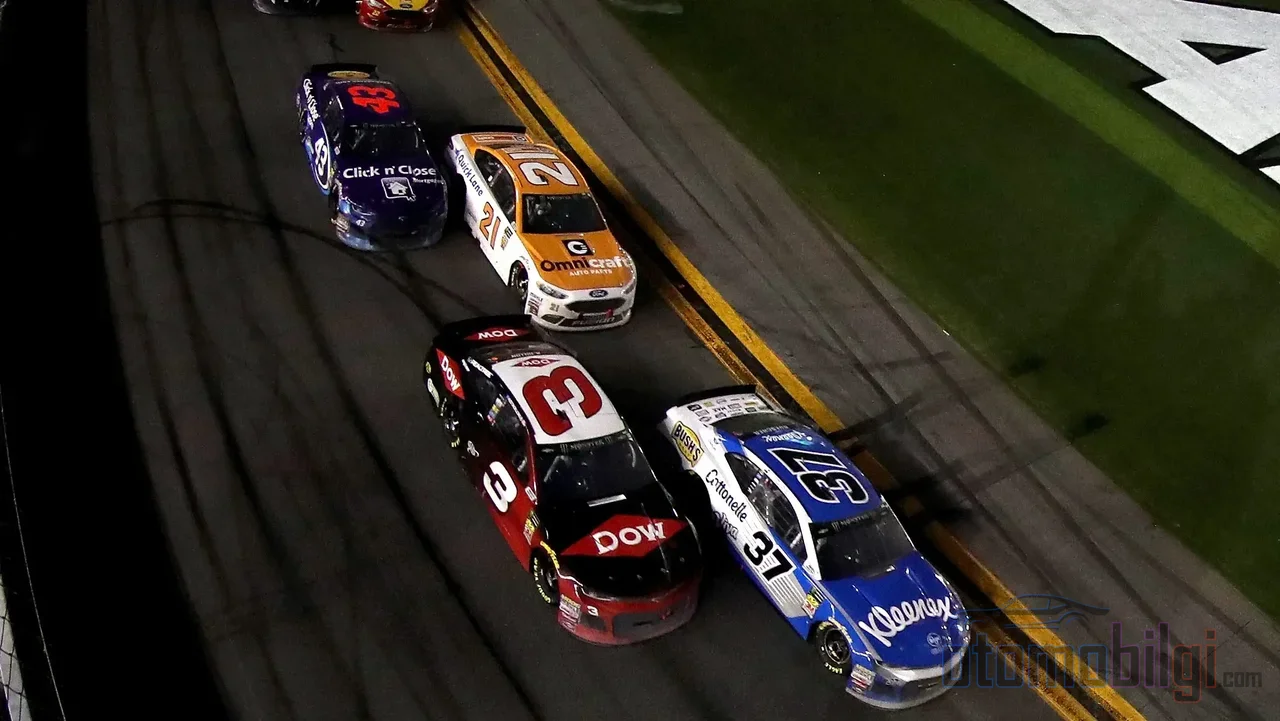
This is the sweetest part of the system, because the points table looks like an Excel file but gives meaning to every second within the race. Let's count together.
Stage points: Top 10 get points from 10 down to 1
At the end of Stage 1 and Stage 2, the top 10 drivers earn points: the stage winner gets 10 points, second place 9, third place 8... the tenth driver gets 1 point. So the points bank starts filling up from the very first third of the race. There are no extra stage points for the final stage; there, the race finishing points come into play.
Race finishing points: The winner gets 40 (55 in 2026)
At the end of the race, the classic points distribution is made: the winner gets 40 points, second place 35, third place 34, fourth place 33... and down to 36th. through 40th place. the next drivers are settling for 1 point apiece. But here's the thing: in 2026 things changed: NASCAR returned to a new championship system similar to the Chase format of 2004-2013, and the race winner's points were raised from 40 to 55. Stage points, meanwhile, were kept exactly the same - a stage win is still worth 10 points.
Let me give you a concrete example so the math clicks in your head: A driver won Stage 1 for 10 points, finished Stage 2 in fifth place for 6 points, and completed the race in eighth for 29 points. Total: 45 points. So a name that didn't win the race but made good use of two stages pockets a nice points haul by evening. This is exactly where the biggest controversy created by the stage system begins - but be patient, we'll get there.
| Achievement | Points Earned |
|---|---|
| Stage win (1st and 2nd stage) | 10 points + 1 playoff point* |
| Race win (2017-2025) | 40 points + 5 playoff points* |
| Race win (2026 Chase format) | 55 points |
| Race runner-up | 35 points |
| Race third place | 34 points |
| Positions 36-40 finish | 1 point each |
*The playoff point bonus was in effect between 2017-2025; in the 2026 Chase format, playoff point distribution came to an end.
How Were Playoff Points Used in the Championship Calculation?
From 2017 to 2025, the real spoiler power of the stage system was the playoff points. The rule was simple: each stage winner earned 1 playoff point, and the race winner earned 5 playoff points. These points, accumulated throughout the regular season, only took on value in the playoffs, just as their name suggests: at the start of each playoff round, points were reset, and then everyone's accumulated playoff points were added to the table. So the stage wins you collected throughout the season could carry you a few points ahead of your rivals in October.
But beware: this advantage was not unlimited. When the Championship 4 - the championship finals - was reached, playoff points could no longer be used - the final four left everything to that single race, the final stage. Stage points were like an investment that paved a lasting path to the playoffs and determined the seeding.
In 2026, that system became history. In the new Chase format, playoff point distribution was removed; instead, the regular season leader starts the playoffs with a 25-point advantage over the second-place name. With the weight of a win in the regular season also raised to 55 points, the culture of winning was pushed back into the spotlight.
Why Does a Yellow Flag Come Out at the End of Every Stage?
If you're a new NASCAR viewer, this is probably the thing puzzling you the most. Why does everything slow down at the most exciting moment of the race? The answer is both sporting and practical.
The sporting side: freezing the order ensures that stage points are distributed fairly and clearly. The practical side: the pit window. During the mandatory caution period, all teams can change tires and refuel without risking their track position; crew chiefs can also split their pit strategies into two, using the stages as a reference. Teams can even save fuel on drafting tracks because they know when the caution will come.
And there is also the broadcast side, which is one of the smartest details behind the birth of this system: stage breaks give the broadcast partner the opportunity to air commercial breaks under green flag without cutting any racing action. So you don't miss the most critical moments on screen, and the commercials get their own time. Everyone is happy.
The new stage break rule of 2026
In August 2026, NASCAR added a fresh page to its rulebook: if a natural caution comes out within the last 10 laps of Stage 1 or Stage 2, the stage is considered finished at that moment and that caution is accepted as the stage break. The remaining laps are added to the next stage. This shortens the boring minutes spent under yellow flag. This rule does not apply to the final stage - overtime rules are in effect there. Cup drivers welcomed the new procedure positively since it trims the time spent under yellow flag.
Stage or Race Win? The Drivers' Preference
Here is the most interesting tactical dilemma the format creates. Suppose there are 5 laps left until the end of Stage 1 and you are in the lead. Either you will defend the last 5 laps and pocket 10 points + playoff points, or your team will call you to pit early and try to build track position for the next segment. Which one is more valuable?
The answer changes depending on the track type and the situation. Especially on road courses and some short ovals where no laps are lost under green flag pit stops, drivers may see pitting before the stage ends and gaining track position as more valuable than stage points. This is called the short-pit tactic. On the other hand, drivers struggling for points or unable to fight at the front prefer to stay out and collect stage points.
Let me explain this with an analogy from daily life: it is like deciding whether to secure the last question in an exam, or to submit early and study for the next exam. The balance of risk and reward is reset for every race, every track, every points situation. That is why crew chiefs have to think like chess masters in this format.
Why Did They Introduce the System and Why Is It Criticized?
Behind NASCAR introducing this format in 2017, there were clear goals: splitting races that last 3-4 hours into watchable segments, keeping competition tight from start to finish, reducing the moments when a driver running away locks the race early, encouraging aggressive driving even in the early parts of the race, and opening an uninterrupted commercial window for the broadcast partner. So it is a design that is both viewer-oriented, sporting, and commercial. In fact, the system's impact became so concrete that it has become commonplace to see drivers fighting for every position and crashing even at moments when they would normally preserve their equipment.
But the smiling face does not always smile. The debate continues over whether the format is an artificial intervention in the natural flow of the race; some fans think that knowing when a caution is coming weakens the endurance dimension of the race. Points weighting is also controversial: a stage winner can collect more points than some drivers who finish the race up front, so the system's fairness is being questioned. That was exactly one of the reasons for raising the race win to 55 points in 2026 - the view that the race-winning driver should always be the highest scorer of the day despite stage-point collectors had long been voiced.
Short Answer: How Does the Stage System Split a Race?
Let's wrap up, because we have seen both sides of the coin. Since 2017, NASCAR has divided every points race into three or four segments (four at the Daytona 500 and Coca-Cola 600). At the end of the first two stages, points from 10 down to 1 are awarded to the top 10 drivers, then a mandatory caution freezes the running order and opens the pit window. Between 2017 and 2025, stage winners also earned playoff points, while in the 2026 Chase format this reward was removed and the race winner's points were raised to 55. The essence of the format is this: splitting the race, turning each segment into its own little finale, and leaving not a single minute of a 4-hour race meaningless.
Let me also add a historical footnote: the first national series race win under the stage format was taken by Kaz Grala in February 2017, at the Truck Series season opener at Daytona. From that day to today, the system became the most radical link in the chain of scoring history that has changed countless times since 1975 (the journey from 175 points to the 40-point system). Love it or hate it, NASCAR now means stage. And honestly, the fact that we are glued to the screen waiting for the end of a segment is precisely due to the format.
Sources
- What are stages and how do they work in NASCAR?
- The Chase 101: How new championship format works
- NASCAR returns to Chase championship format for 2026
- How NASCAR driver points are awarded per race
- Cup drivers universally praise new stage-break procedure
- NASCAR scoring explained: Points, stages and playoffs
- Race stage
- 2026 NASCAR Cup Series
- Explaining NASCAR's new championship format for 2026