European Car of the Year Candidates Are Fully Electric
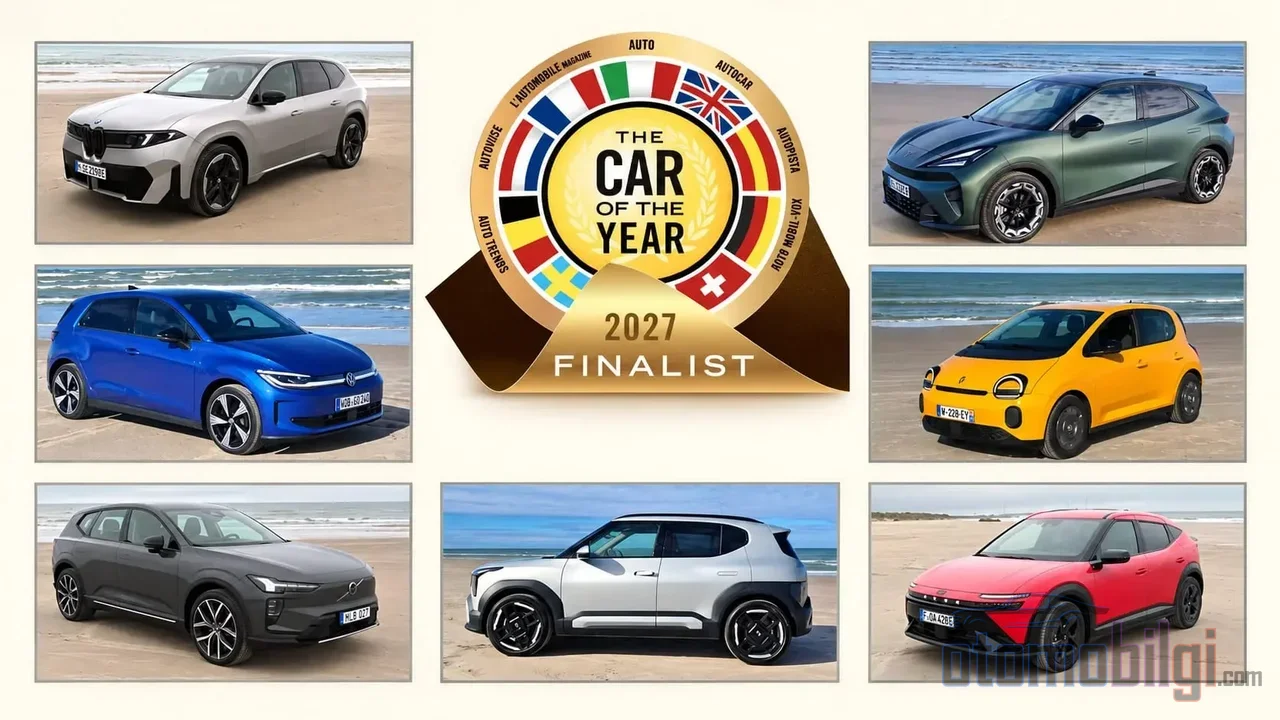
At a turning point in its sixty-three-year history, the European Car of the Year jury has announced its shortlist, and there is not a single internal combustion engine, a single hybrid system, or a single Chinese brand on the list. All seven candidates are fully electric. For anyone following this industry closely, this picture goes beyond being an award ceremony story and becomes a compass pointing to the industry's direction. So who exactly is on this list, why couldn't Chinese manufacturers get through the door, and when will the winner be revealed?
The Seven Finalists and the Interesting Balance on the List
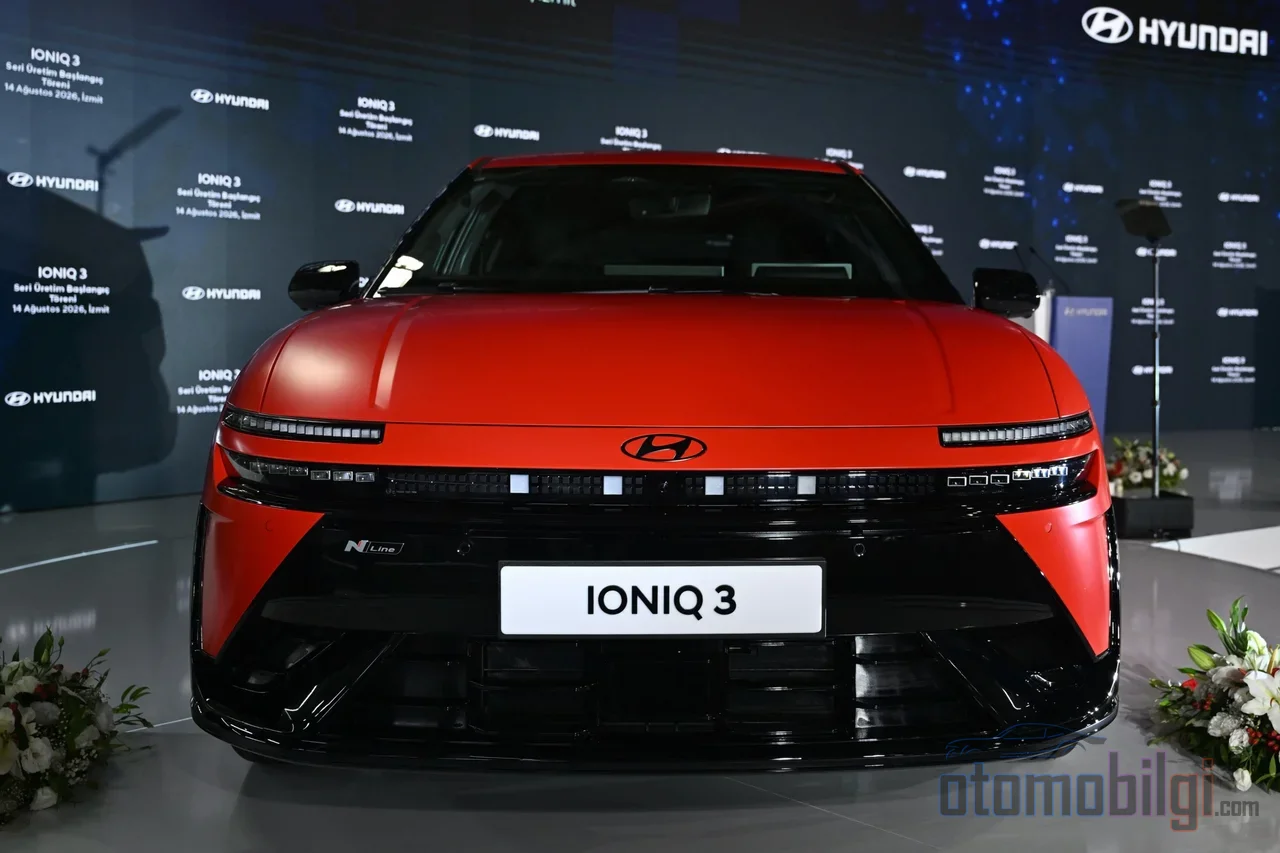
The shortlist, announced on October 30, is as follows in alphabetical order: BMW iX3, Cupra Raval, Hyundai Ioniq 3, Kia EV2, Renault Twingo, Volkswagen ID. Polo, and Volvo EX60. For the first time in the award's history dating back to 1964, all candidates are fully electric; there is not a single hybrid or internal combustion model on the list. The current holder of the award is the Mercedes-Benz CLA; the 2026 winner will hand over the throne to the model to be revealed on January 8, 2027.
Highlights
- For the first time in the award's 63-year history, the shortlist is fully electric
- The jury consists of journalists from 64 countries; the joint tests will be held in Balocco on November 25-26, 2026
- The winner will be announced on January 8, 2027, on the first day of the Brussels Motor Show
- The Volkswagen Group is represented by two finalists sharing the same platform
- Kia is in the final for the sixth consecutive time; a first for an Asian manufacturer
The lock-in within the list is also striking. The Cupra Raval and the Volkswagen ID. Polo share the group's front-wheel-drive MEB+ platform; the two are competing as two different interpretations of the same technical foundation. For many years, it was rare to see two sibling models in the final of these awards at the same time; now they stand before us as a natural consequence of the maturing of group strategies.
Which Segments Do the Finalists Come From?
The list splits into two wings, and the weight, interestingly, lies on the affordable side. The Renault Twingo, Cupra Raval, VW ID. Polo, along with the Korean duo Hyundai Ioniq 3 and Kia EV2, come from the relatively affordable segment. The Ioniq 3, with its hatchback body, and the EV2, with its crossover form, target similar buyer groups; so the real competition in the final will most likely take place among these five models.
The premium wing has two names, and both are technically the most ambitious representatives on the list. The BMW iX3, as the first model to emerge from the brand's Neue Klasse architecture, heralds a new era. The Volvo EX60, meanwhile, introduces the new SPA3 architecture, which uses megacasting production and cell-to-body battery technology. Some versions of both models claim a range of over 800 km; this figure shows that ranges once considered a fantasy when the shortlist was first introduced have now become ordinary.
Kia EV2 and the Asian Manufacturers' Streak
Another notable detail on the list is that Kia has reached the final for the sixth consecutive time; this is a first for an Asian manufacturer. The streak began with the EV6, the first South Korean vehicle to win European Car of the Year in 2022. Then came the Niro (2023), EV9 (2024) and EV3 (2025); The EV3 had managed to come second with Kia's highest score up to that point. In 2026 the EV4 made it to the finals, and now it was the EV2's turn.
The EV2 is also Kia's ninth model to make the shortlist. The vehicle is produced at the Žilina factory in Slovakia and is the second fully electric model produced exclusively for the European market, after the EV4 Hatchback. There is a similar European connection on the Hyundai side: It is stated that the Ioniq 3 was designed and developed in Europe. The fact that the two Korean brands are no longer just selling vehicles to Europe but developing vehicles for it largely explains the identity of the list.
The available data on the EV2's real-world performance is also promising. In independent range tests conducted under summer conditions, the Standard Range version covered 325 km; a result five percent above the WLTP figure. The Long Range GT-Line prototype went even further with 428 km. In winter conditions, at minus 21 degrees, the same vehicle managed to maintain a range of 310.6 km; a remarkable endurance for an electric compact vehicle.
How Does the Jury Work and What Does the Calendar Say?
The award is given by an independent jury made up of automotive journalists from across Europe; the jury has members from 64 countries, and these members represent 25 countries. Evaluation is not based on powertrain type; general merit criteria such as value, design, practicality, quality, technology, engineering, performance, equipment and price/performance are taken into account. In other words, being electric does not earn a vehicle points; its presence on the list simply because it is electric is now taken for granted.
The process proceeds in three stages:
- November 25-26, 2026: All jury members will test the seven finalists at the Balocco track in Italy. This joint test day is a rare opportunity for journalists from different countries to drive the same vehicles under the same conditions.
- End of December: Jury members will cast their votes by distributing 25 points among the finalists; they can award a maximum of 10 points per round and must mark one model as the winner.
- January 8, 2027: The winner will be announced on the first day of the Brussels Motor Show. The award has been hosted at the same venue for the last three editions; Brussels is now considered the home of this ceremony.
Why Are Chinese Brands Missing from the List?
One of the most striking absences from the shortlist is the lack of Chinese brands. Yet Chinese manufacturers continue to grow in European markets; it is calculated that in the United Kingdom, Chinese brands' sales reached 23.3 percent in September 2026. Brands that occupy such a prominent place on the sales side being entirely unrepresented in the final of Europe's most prestigious automotive award seems contradictory at first glance.
There is not yet a detailed official explanation for this situation; publications covering the story have only noted that the exclusion has drawn attention. To be honest, when you dig into the details of how the judging conditions work and which models were nominated, the information at hand contains no definitive rule explaining why something missed the shortlist. The award's nomination and evaluation mechanism will become clearer over time; for now, what is certain is that sales success and the jury's appreciation have not yet aligned.
What This List Means for Europe's EV Transition
The award's recent years were in fact a preparation for this point. The Renault Scenic won in 2024, the Renault 5 E-Tech in 2025; in other words, electric models were at the top in each of the last two years. In 2026, the Mercedes-Benz CLA completed the trio, carrying a premium brand sold with both electric and internal combustion engines to the summit. Now the entire shortlist is electric; the data side of the transition supports this too. The award organization points out that the recent fuel crisis has increased the number of electric vehicle users.
The real message, however, lies in the shifting focus. In the past, when evaluating an electric vehicle, range anxiety and comparisons with internal combustion engines took center stage; now the discussion has shifted to affordability, design, practicality, and driving pleasure. A jury evaluating the cars like ordinary nominees, without once emphasizing that the list is fully electric, shows that electric vehicles in Europe have ceased to be the exception and become the norm. For someone who has been steeped in this business, this is precisely the real turning point: the excitement is over, and things have gotten serious.
In summary: Who Is Competing, and When Will the Winner Be Announced?
All seven finalists of the European Car of the Year 2027 are fully electric: BMW iX3, Cupra Raval, Hyundai Ioniq 3, Kia EV2, Renault Twingo, Volkswagen ID. Polo, and Volvo EX60. No Chinese brand and no hybrid or internal combustion model appears on the list. The independent journalist jury will conduct joint tests in Balocco at the end of November, cast their votes at the end of December, and the winner will be announced on the first day of the Brussels Motor Show on January 8, 2027. The current holder is the Mercedes-Benz CLA. The weight of the final rests on the five affordable models; but the iX3's technical payload from Neue Klasse and the EX60's range claims on the SPA3 architecture did not keep the premium wing on the list in vain.
A small note: The World Car of the Year award, whose shortlist was announced recently, is a separate organization; its winners will be announced at the New York Auto Show on March 24, 2027. It should not be confused with the European award.
Sources
- The "shortlist" for The Car of the Year 2027 award: Historic! The all-electric car revolution has arrived
- Seven finalists for Europe's Car of the Year 2027 named (The Irish Times)
- Kia EV2 Named Finalist for 2027 Car of the Year Award (Kia)
- Hyundai IONIQ 3 Named European Car of the Year 2027 Finalist (Hyundai Press Europe)
- Car of the Year 2027, the finalists (Auto&Design)
- Car of the Year 2027: Seven cars in the running are EVs (Autocar)
- Car of the Year 2027: here are the seven finalists (Il Sole 24 Ore)
- Car of the Year 2027: The road to the final has begun