Faraday Future Spins Off Its Robotics Business as FFR
Share This Page
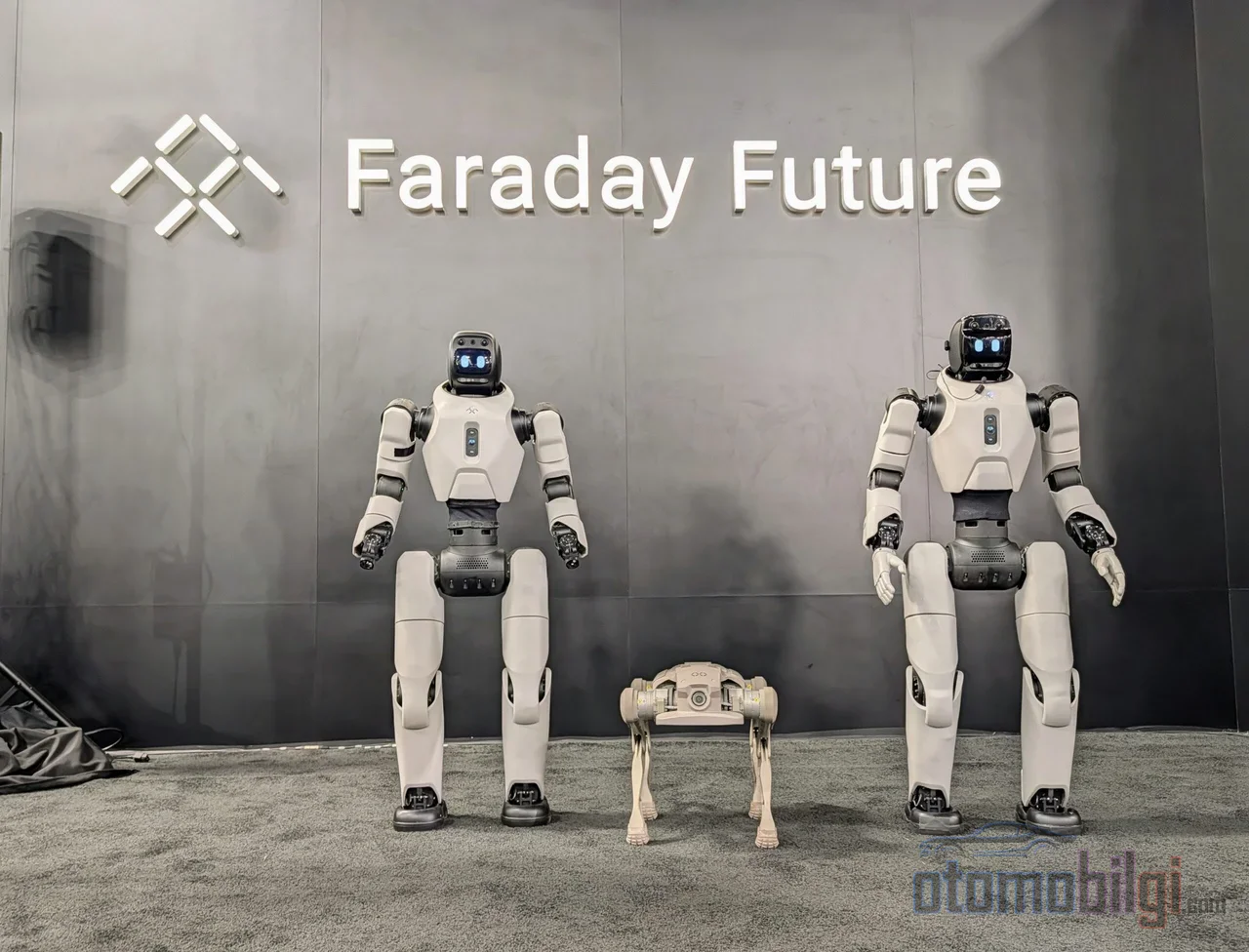
Faraday Future, known on Nasdaq for its FFAI shares, now has a robotics business that stands on its own as a ticket. FF EAI Robotics Ecosystem Inc., which carries the company's humanoid and bionic robot efforts, took the stage today as an independent publicly traded company with a listing ceremony held at the Nasdaq MarketSite in New York; trading began under the ticker FFR. So what exactly does this spin-off change, who kept how many shares, and what does FFR really represent in investors' eyes?
FFR on Nasdaq: Today's Listing Ceremony

FF EAI Robotics Ecosystem Inc. held its listing ceremony today, October 26, at the Nasdaq Tower's New York MarketSite building. The event was not merely a symbolic bell-ringing ceremony; the company also held its first Investor Day the same day, and its management presented its strategy to investors along with full-year guidance. The company plans to publish a summary video of the event on its official website at 4:30 PM local time.
Highlights
- The robotics business was transferred to FFR at a valuation of approximately $200 million; the transaction was carried out entirely in stock.
- FFR will give FFAI shareholders $2.246 per share; that is a premium of roughly 50% compared to the October 12 close.
- Following the close, FFAI will own approximately 65.7% of FFR, remaining the controlling shareholder.
- Management's target: $1.98 billion in cumulative revenue by 2030 and 60,000 robots shipped per year.
Timeline of a Months-Long Process: From Announcement to Ceremony
This picture did not come together overnight. On September 29, Faraday Future announced its intention to spin off its robotics business into a Nasdaq-traded vehicle. On October 1, the two parties published a joint response to frequently asked investor questions; definitive agreements were signed on October 12, and this step was announced two days later. Just one day after that, on October 15, the companies unveiled their FF Nova and FF Nova Mini products. On October 20, details of the listing ceremony and Investor Day were shared. So today's ceremony is the final link in a carefully orchestrated sequence spanning roughly a month.
How Was the Deal Structured? Valuation, Premium and Share Distribution
The transaction was set up entirely through stock. Faraday Future's robotics assets and business were transferred to FFR at a valuation of approximately $200 million, while FFR's value on a fully diluted basis was set at approximately $60 million. FFR will issue shares to FFAI shareholders at $2.246 per share; that price represents a premium of roughly 50% compared to the $1.50 close on October 12, and roughly 55% compared to the $1.45 close on October 13. Those who follow automotive news know that in such "stock-for-stock" transfers the premium is often largely cosmetic; here, however, the premium is part of a setup aimed at valuing the robotics business higher than the parent company's vehicle business.
The closing was expected to be completed by the end of October, and the company's official statements did not directly confirm an October 23 completion; with today's listing, it appears the process has effectively been completed. There are also details about the financing: FFR provided an initial PIPE financing of up to 10 million dollars at the market price, with no discount or warrants. PIPE investors cannot dispose of their shares for six months or until the resale registration becomes effective. The post-closing share distribution (on a fully diluted, converted basis) looks like this:
| Shareholder Group | Share (approx.) | Note |
|---|---|---|
| Faraday Future (FFAI) | 65.7% | Controlling shareholder |
| FFR management and employees | 18.2% | New shares locked for 18 months |
| Other FFR shareholders | 10.7% | Free float of ~13 million shares |
| PIPE investors | 5.5% | Round of up to 10 million dollars |
The transaction was approved by special committees composed of independent directors at both companies; FFR's committee's independent financial advisor provided a fairness opinion. Such arrangements are standard practice to protect minority shareholders in transactions between a parent company and a related party; but as far as I have observed over the years, the existence of a fairness opinion file does not close out all the questions.
What Company Was FFR a Month Ago? From AIxCrypto to Robotics
Digging into the details, an interesting layer emerges: FFR, which is listed today as a robotics company, will trade under AIxCrypto Holdings Inc. until September 30, 2026. with the symbol AIXC until September 30, 2026. The structure's transformation from a digital-asset-focused shell into an Embodied AI company owning humanoid robots is the familiar pattern of recent years. By changing its name and symbol, the company became a vehicle preparing to take the robotics operation public. This name and symbol change was explicitly announced in the official investor relations bulletin. This history, of course, is also part of the risk file: FFR's own statements list the risks arising from the transition from a digital asset strategy to robotics.
The Product Strategy That Came With the FF Nova Launch
The listing was built not on an empty shell but on a concrete product claim. The FF Nova, unveiled on October 15, was positioned as the first entry-level EAI humanoid robot to drop below 2,500 dollars in the US; the device is priced at 2,490 dollars, and the Developer Skills Package is priced at 390 dollars. Its little brother, the FF Nova Mini, sells for 299 dollars for basic Physical AI training, and its curriculum for 499 dollars. With the launch, the company's FF EAI Robot World 2.0 catalog covers more than 20 EAI devices across 11 models, 7 series, and 3 robot forms; in addition, training programs and developer community initiatives have been launched.
This product lineup is the tangible form of the company's philosophy summarized as "one brain, many forms, many capabilities." The four-layer ecosystem consisting of the EAI Brain and developer platform, EAI devices, sector productivity solutions, and the EAI Data Factory, along with the RoboShare service based on robot sharing, are the building blocks of FFR's plan to generate high margins from software and data revenues.
The Management's Numbers: How Convincing Are the 2030 Targets?
FFR's five-year business plan is ambitious: $1.98 billion in cumulative revenue by 2030, annual shipments of approximately 60,000 units, and a 54% gross margin. By contrast, the 2026 estimate is the almost ironic baseline of the same plan: approximately $7 million in revenue, around 2,000 units, and a 10% gross margin. The revenue journey extends from $1.14 million in the first half of 2026 to $45.2 million in 2027 and a cumulative $1.98 billion as of 2030. The target for positive quarterly operating cash flow is dated for the third quarter of 2028.
On the valuation side, management argues that the 2027 forward price/sales multiple is approximately 4.4x and remains relatively conservative compared to sector peers. There is an important nuance here: These projections were prepared by FFAI management and FFR has not independently verified them; nor has it adopted them as guidance. As someone who has been following this sector for over thirty years, let me say this: the rate at which growth charts presented before a spin-off materialize into reality is inversely proportional to the steepness of the graphs in the presentation room. It would be wise for the reader to treat these figures as a scenario, not a promise.
What Does the Split Do to Faraday Future's Vehicle Business?
The transaction is not merely about boxing off robotics; it also redefines the identity of the parent company. After divesting the robotics business, FFAI aims to move from EAI vehicle manufacturing to operating the Robotaxi Sharing Network and AI VisiCabin technology, and to establish a lighter-asset shared mobility model through RoboShare. The company's rationale is also simple: the robotics business is not fully reflected in FFR's current valuation, the corporate structure needs to be streamlined, and the parent company's capital needs should be reduced. Following the closing, FFAI, as the majority and controlling shareholder of FFR, will continue to participate in the value creation of the robotics business and expects to consolidate FFR's financial statements.
Which Risks Should Investors Take Seriously?
On the other side, the risk file is not light. FFAI's statements highlight dependence on a single China-based OEM for robotic products, the possibility of import bans on robotic products from China, and tariff uncertainty; it is also reported that the company's filings include going-concern doubt, i.e., doubts about its ability to continue operations. On FFR's own side, limited cash, dependence on a small number of customers, early-stage RoboShare, and conflicts of interest due to the controlling shareholder also being the counterparty are among the risks listed. In short, FFR was greeted today with trader enthusiasm, but those who will make the buy or sell decision will want to see the full picture behind these labels.
Conclusion: What Is FFR Actually a Share Of?
To sum up, FFR is a structure in which Faraday Future's humanoid and bionic robotics business is spun off at a valuation of approximately 200 million dollars, FFAI remains the controlling shareholder with 65.7%, and it becomes one of the first companies listed on the US stock exchange focused on the humanoid robot field. Meeting institutional investors' demand for robotics-focused exposure, opening a direct capital channel to the robotics business, and simplifying the parent company are the stated rationales of the transaction. On the product side, the 2,490-dollar FF Nova is an entry point; on the financial side, the 1.98 billion dollar 2030 target is management's independently unverified scenario. Let us close with a note from an earlier observation: Automotive companies spinning off their robotics business on the stock exchange does not make the business itself successful; FFR's story will only be written with shipment, revenue and cash flow figures. Today's opening curtain was the first page of the story.
Sources
- FF EAI Robotics Ecosystem Inc. Announces Details for Its Listing Ceremony and Nasdaq Investor Day
- Faraday Future Announces Definitive Agreement with FFR at ~$200 Million Valuation
- FFR and FFAI Jointly Address Key Investor Questions
- Faraday Future and FFR Jointly Launch FF Nova
- AIxCrypto Holdings, Inc. Announces Name Change to FF EAI Robotics Ecosystem Inc.
- Faraday Future to spin off robotics unit into Nasdaq-listed vehicle