Honda Recalls 635,808 Vehicles Over Steering Fault
Honda announced that it is recalling 635,808 vehicles in the United States due to a fault in the electric power steering software. The announcement was formalized with a notification filed to the National Highway Traffic Safety Administration (NHTSA) on November 10, 2026. The models covered include the Honda Pilot as well as Acura's MDX and TLX; meaning a broad segment of the brand's highest-volume SUVs and mid-range sedan in the US is affected by this process.
The size of the number is striking at first glance, but the real issue is not the number, it is the nature of the fault. A defect in the control software of the electric power steering (EPS) system can lead to a loss of steering assist while driving; this suddenly increases the effort required to turn the steering wheel and raises the risk of a collision. The fact that a problem that could be fixed with a software update has spread to as many as 636,000 vehicles once again shows that quality control in today's automotive manufacturing requires managing software and mechanical parts together.
Scope of the Recall: Which Models, Which Years?
The recall in question covers three models and four model years. This means a much wider window than a specific production run of a single model; suggesting that the fault points not to a particular parts batch of a model, but to a shared software used across multiple models over the years.
Highlights
- A total of 635,808 vehicles are being recalled in the US (November 10, 2026 filing)
- Coverage: 2023-2025 Honda Pilot, 2022-2024 Acura MDX, 2021-2025 Acura TLX
- The problem is an EPS software fault that can lead to a loss of electric power steering assist
- Solution: free reprogramming of the EPS control unit with updated software at dealers
- Pilot units alone are 383,110, MDX units 177,100
Looking at the numbers, the Pilot makes up the bulk of the picture: 383,110 Honda Pilot units produced between the 2023-2025 model years constitute the largest slice of the recall. It is followed by 177,100 Acura MDX units from the 2022-2024 model years. The remaining portion is made up of the Acura TLX from the 2021-2025 model years. Although different ranges are mentioned in some posts regarding the MDX's model years, the 2022-2024 range in the official filing should be taken as the basis.
The Nature of the Fault and the Safety Risk
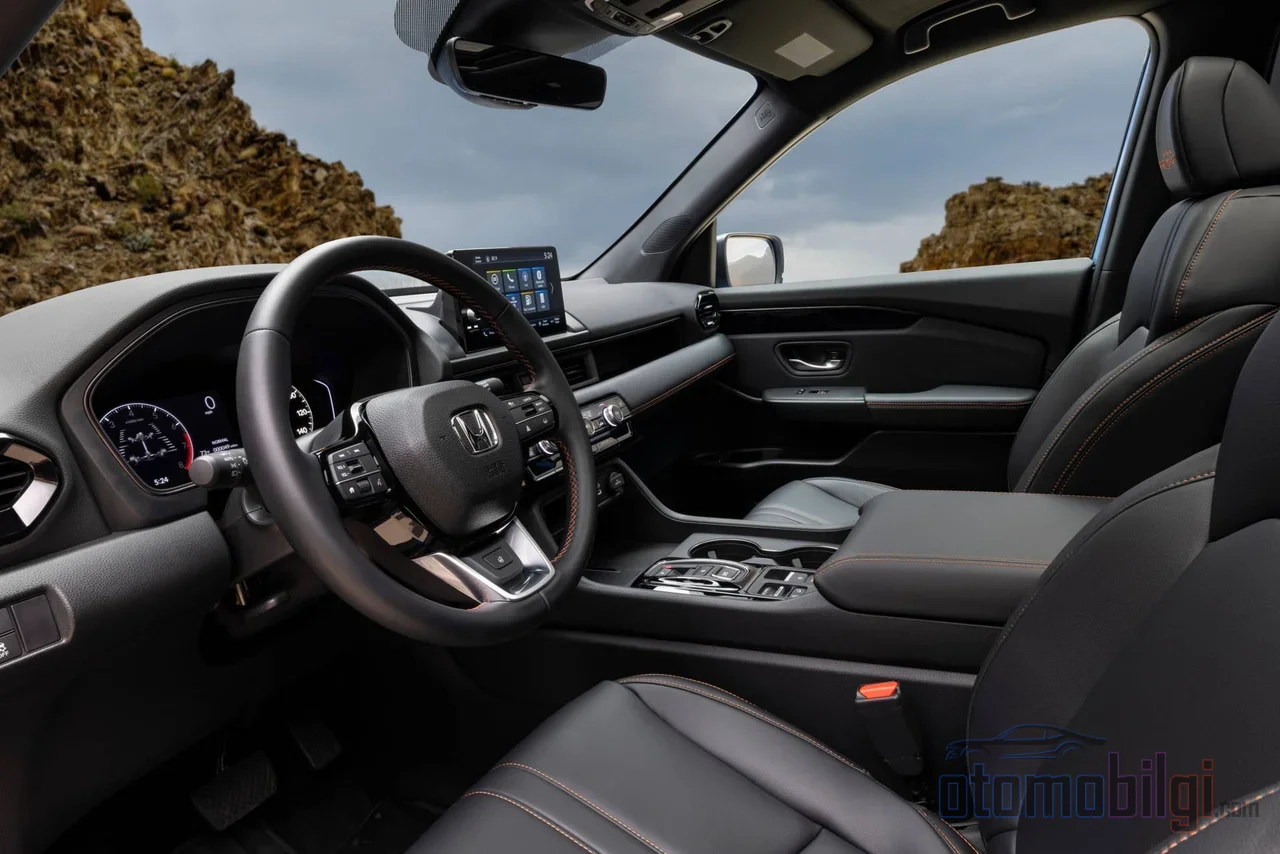
In modern cars, steering assist was once provided by a hydraulic pump; assist decreased when engine speed dropped, but the system was not fully electronic. Today, the dominant architecture is what is called EPS (Electric Power Steering), which operates with an electric motor and control software. The most critical aspect of this structure is this: What manages steering feel and the amount of assist is now software, and that software's decisions turn into a physical outcome within milliseconds.
In the fault in question, a software defect in the EPS control unit can cause a sudden loss of power steering assist. The driver experiences this as the steering suddenly becoming heavier; maintaining directional control becomes seriously difficult, especially when maneuvering at low speed or parking. The loss of assist being felt not at high speed but typically at the moments when the steering is turned most amplifies the risk. The report filed with NHTSA explicitly states that the problem increases the risk of a collision.
An important distinction must be made here: This recall is software-based. The recall Honda previously announced, covering approximately 1.7 million vehicles, stemmed from an entirely mechanical problem - a faulty part in the steering gearbox - and could cause drivers to experience a sticky steering feel. While both processes appear steering-related, their roots and solutions differ. The software fault is resolved with an update developed at a desk; the mechanical fault, on the other hand, is fixed by physically replacing the EPS rack when necessary.
Honda's Solution Plan: A Simple But Comprehensive Intervention
The solution Honda announced is simple, in line with the nature of the fault: Dealers will reprogram the EPS control unit of affected vehicles with updated software. This is not a scenario requiring part replacement; the duration and cost of the procedure are low compared to mechanical repairs, but the operational scale should not be underestimated, since 636,000 vehicles must pass through dealer service queues.
The intervention is free of charge for owners. Honda will send ownership notification letters as part of the process; but there is no need to wait for the letter to arrive. Anyone who owns a vehicle covered by the recall can contact a Honda or Acura dealer to expedite the process. An official campaign code for this recall has not yet been announced by Honda; the code will be included in the official notifications sent to owners.
What Should Owners Do? Step-by-Step Process
The process follows a well-known template from start to finish, and the path owners should take is clear. Following the order shortens the path to the fastest solution:
- Check the VIN: Use your vehicle identification number with Honda's official recall lookup tool or the NHTSA website to verify whether your vehicle is included in this campaign.
- Make a dealer appointment: If your vehicle is covered, contact a Honda or Acura dealer; schedule an appointment for the reprogramming of the EPS control unit.
- Have the procedure done free of charge: Since the software update is covered by the recall, you do not pay any fee.
- Don't wait for the notification: You can start the process before the ownership letter arrives; the letter serves only as official confirmation.
Although headlines carry warnings about whether vehicle use is restricted until the letter arrives, the concrete advice is simple: If you feel unexpected heaviness in the steering, pull the vehicle over to a safe place and decide your course of action by talking to the dealer. In a software-related fault, the vehicle's behavior can never be predicted in advance; caution is what pays off here.
Context: Honda's US Recall Timeline
Reading this campaign on its own shows only one frame of the bigger picture. Honda and Acura have signed off on a series of wide-ranging recalls in the US market over the past two years. The largest was a steering gearbox repair covering approximately 1.7 million vehicles. It was followed by a corrosion recall affecting nearly 900,000 vehicles, an airbag sensor campaign covering around 100,000 vehicles, and an engine failure recall caused by rod bearings affecting the TLX and MDX. Within this year, a tire repair kit recall covering 2023-2026 models and a safety campaign concerning the rear lower control arm bolt on the Pilot and Passport were also announced.
This timeline does not, on its own, mean that the brand's quality has collapsed; for a manufacturer selling millions of vehicles per year in the US market, recall volume is a natural function of sales volume. However, the stacking of campaigns related to the steering system raises questions about the engineering and software validation processes in this area. In the past, the source of a fault was mostly a bushing, a seal, or a pump; today, a single wrong line of software can produce the same fault in hundreds of thousands of vehicles at the same time. The scale has grown, detection has accelerated; but the breadth of scope has grown at the same rate.
Summary: A Serious But Manageable Process
The essence of this news is as follows: Honda is recalling 635,808 vehicles in the US - the 2021-2025 Acura TLX, 2022-2024 Acura MDX and 2023-2025 Honda Pilot - due to an EPS software fault that can lead to a loss of electric steering assist. The fix is the free reprogramming of the EPS control unit at dealers with updated software; what owners need to do is check their vehicles with a VIN lookup and make an appointment with the dealer. The problem carries a serious safety risk, but fixing it is a technically simple procedure. For owners of affected vehicles, the smartest move is to run the lookup today rather than wait for the letter.
Sources
- 2022-2025 Acura/Honda Multi-model Electronic Power Steering (EPS) Software Recall - Honda Newsroom
- Honda to recall more than 600,000 US vehicles over issues with steering assist - Reuters
- Honda recalls more than 635,000 vehicles over steering defect, increases crash risk - Fox Business
- Honda recalls over 635K vehicles. See the affected models - USA Today
- Honda and Acura vehicles recalled to fix steering problem - Consumer Reports
- American Honda Recalls Approximately 1.7 Million Vehicles to Repair Steering Gearboxes - Honda Newsroom