How Do the F2 and F3 Points Systems Work?
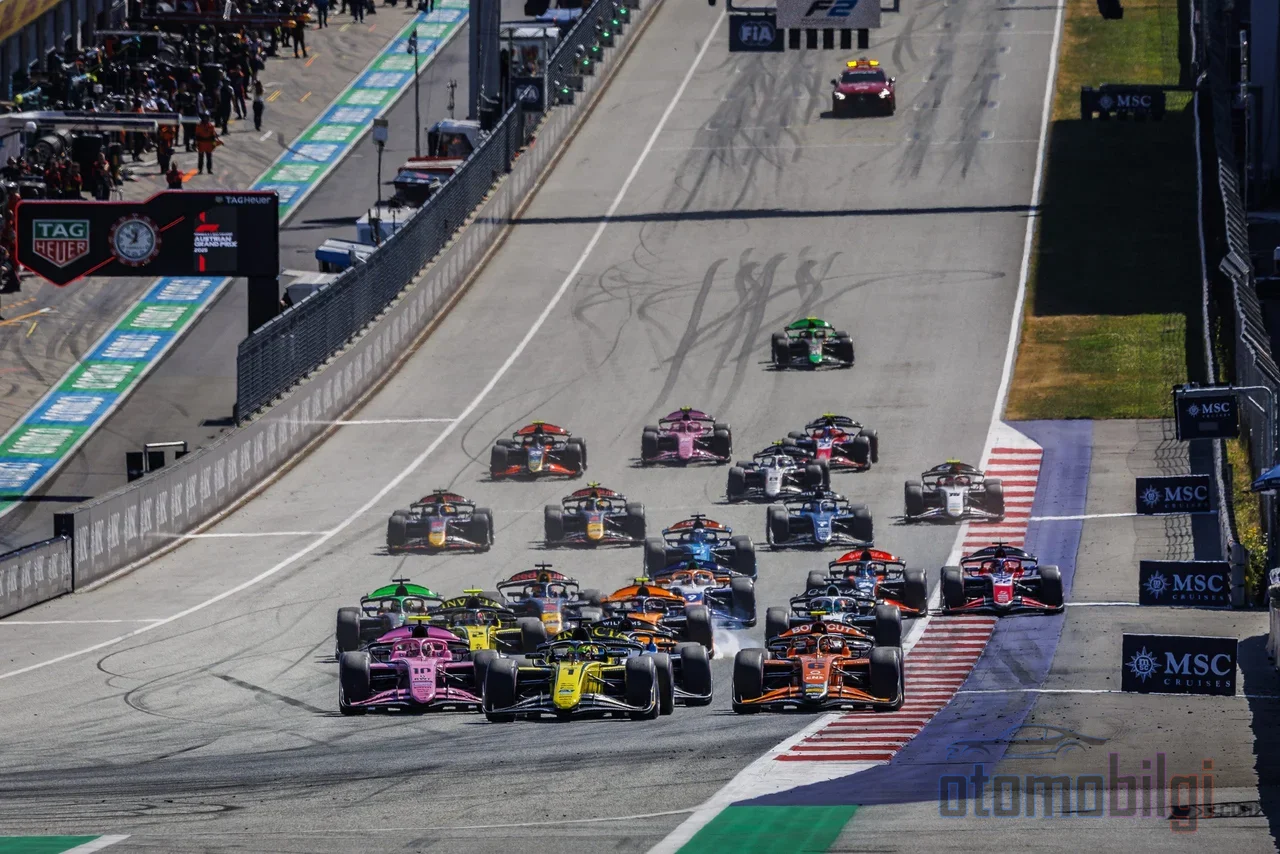
On Sunday the checkered flag falls, everyone celebrates the winner, but pause for a second: what is the championship actually decided on? How many points are there in the sprint race, why is it different in the main race, and how many points are pole position and the fastest lap worth? Most people who watch F1 confuse the Formula 2 and Formula 3 points systems with F1's in their heads - which is perfectly normal, because the systems are almost identical but differ in a few critical details. And those details can determine the name of the champion at the end of the season. Let's solve this points labyrinth together.
How Does a Race Weekend Work?
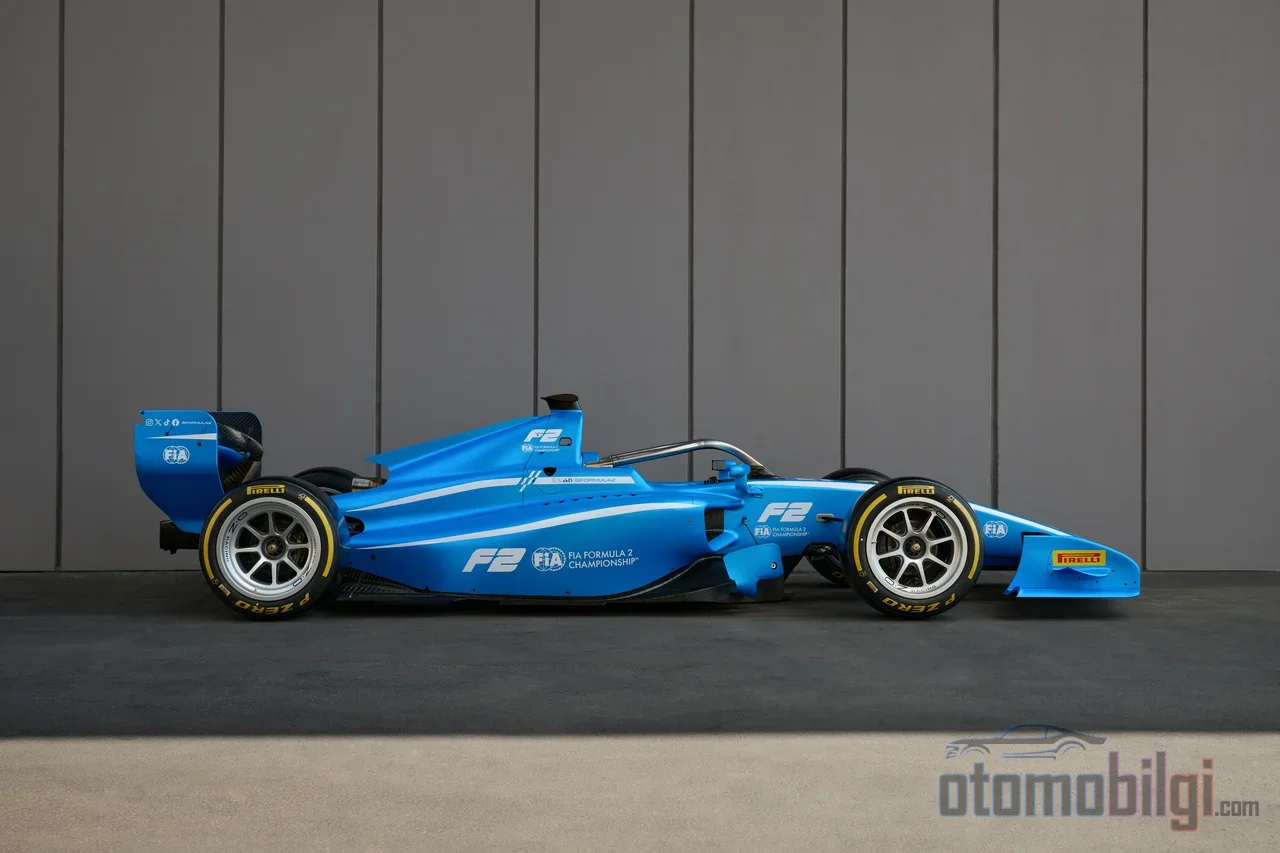
To understand the points, you first need to know the rhythm of the weekend. In F2, Friday features a 45-minute free practice session and 30 minutes of qualifying. The result of qualifying determines two things at once: the grid for the main race and the pole bonus. Then on Saturday, the Sprint Race takes the stage - 120 kilometers or 45 minutes, whichever comes first. And on Sunday comes the big finale: the Main Race, lasting 170 kilometers or 60 minutes, is run right before the F1 Grand Prix.
There is one more detail that makes the Main Race special: a mandatory pit stop. All four tires must be changed, meaning tire strategy is a full game of chess in F2 as well. Over the weekend, drivers can use 5 sets of dry tires (3 prime + 2 option) and 3 sets of wet tires. There are no stops in the Sprint, while tire management comes into play in the main race - you can think of them as two completely different games.
How Many Points Are Awarded Per Race in F2?
Here is the heart of the system. In F2, two races award points on two different scales, and this difference is no coincidence:
| Race | Number of Points Scorers | Distribution |
|---|---|---|
| Sprint Race | Top 8 | 10-8-6-5-4-3-2-1 |
| Main Race | Top 10 | 25-18-15-12-10-8-6-4-2-1 |
The Main Race's distribution is an exact replica of the F1 format. The Sprint is smaller but still valuable: the leader gets 10 points. So if there are two races in a weekend, the real prize is the performance shown in the main race. But that doesn't mean you can ignore the sprint, of course - every point can be worth its weight in gold at the end of the season.
Key Takeaways
- In the F2 Main Race, the top 10 drivers score points, and in the Sprint, the top 8.
- Pole position is worth 2 points, and the fastest lap is worth 1 point.
- The fastest lap point was removed in F1, but in F2 and F3 it is still valid.
- The theoretical weekend record: 39 points for a single driver.
- In F3, the Sprint now awards points to the top 10: 10-9-8-7-6-5-4-3-2-1.
Pole Position and Fastest Lap: Small But Deadly Bonuses
Now let's get to the spice of the matter. The driver who wins Friday qualifying, and thus starts the Main Race from pole, pockets 2 points. What about sprint pole? Here's the interesting part: the sprint grid is determined by reversing the top 10 from qualifying. So the driver who is 1st on Friday starts Saturday's sprint from 10th on the grid. The reverse grid system's most beloved and most debated feature in this sense - that's why the pole bonus is only tied to the main race, starting the sprint from pole is no longer considered a reward in itself.
The second bonus is the fastest lap: in both races, the driver who sets the fastest lap gets 1 more point if they finish in the top 10 in the final classification. That "finishing in the top 10" condition is very important - starting 20th and setting a lap record on fresh tires in the final laps doesn't work in this system. The bonuses may seem small on their own, but we'll get to that next year: they play a huge role in how the standings take shape.
When the bonuses are included, a driver can theoretically collect a maximum of 39 points in a weekend: 2 for pole, 11 for the sprint win and fastest lap, and 26 for the main race win and fastest lap. Of course, that means winning both races and having an almost flawless weekend - a scenario rarely seen in practice.
Is the System Different in F3?
Short answer: basically the same logic but with a few important differences. In F3, the Main Race again follows the F1 format, 2 points are awarded for pole, and 1 point is added for the fastest lap of anyone finishing in the top 10 in each race. So on the main race side, they're almost sibling systems with F2.
The sprint side is where F3 diverges: under the current points system, the Sprint Race now awards points not to the top 8 but to the top 10 drivers, with the distribution working as 10-9-8-7-6-5-4-3-2-1. Compared to the F2 sprint, the points-scoring pool is a bit wider and the gaps between positions are more regular. So in F3, even finishing 10th in the sprint earns a point, while the same result in F2 leaves you empty-handed. If you're following both series, don't forget this distinction; it will come in handy when interpreting the standings.
How Is the Teams' Championship Determined?
It's not only the drivers who collect points - teams also compete in their own championship, and the points their drivers earn in each race go into the team's pot. When the points collected by both cars are combined, the team that leaves its mark on the season emerges. That's why the teams' championship, beyond the drivers' individual form, is a compound of entire weekends.
The 2026 season was like a living textbook of this. Durksen's double win at Monza brought maximum points to Invicta Racing and closed the gap with Campos. Campos Racing, meanwhile, had settled at the top of the teams' standings after the Red Bull Ring. And to top it off, Invicta, which entered the grid as last year's champion, won the title in the final race in Abu Dhabi - the clearest proof that single-race, even single-point, differences can decide the championship. Think about the cumulative effect of bonus points (pole + fastest laps) on the teams' standings: a few fastest laps over the course of the season could ultimately mean a championship.
How Does It Differ from F1? The Fastest Lap Puzzle
If everything so far has sounded familiar, I might surprise you a little: even though the F1 and F2/F3 points systems are the same, their paths diverged at one point in 2025. Formula 1 removed the fastest lap bonus point after it was deemed controversial; but in the junior categories, that 1 point is still up for grabs. So while watching a race in F2 and F3, the fastest lap has value; in F1, it no longer does. Someone who watches F1 and then switches to F2 needs to know this difference - so they don't get confused when reading the standings.
The debate is also current: some argue the fastest lap point is problematic because it disrupts rhythm and encourages unnecessary risk-taking; others see it as the perfect reward for keeping the pace high until the end of the race. Even bolder proposals are circulating on social media - for example, ideas such as awarding extra points to the driver who delivers the most impressive performance on race day are being discussed. For now, the system remains as it is, but it would come as no surprise if this balance (simplicity or reward?) is brought back to the table from time to time.
What Price Is Paid for a Single Point? The Impact on Careers
This is where things get truly exciting: points don't just shape the season standings - they also shape the drivers' careers. The Super Licence system, which is the key to reaching F1, works on points - success in a series like F2 earns the points that bring a driver closer to an F1 cockpit. What's more, with the 2026 rules, new paths have also been defined for those applying for practice rights, such as completing 6 F2 race weekends.
Recent examples show clearly how the system works: F2 champion Leonardo Fornaroli became a reserve driver at McLaren; 2025 F3 champion Rafael Camara moved directly to F2 with Invicta; Arvid Lindblad stepped up from F2 to F1 with Racing Bulls; and Jak Crawford became Aston Martin's third driver. The fact that former F3 champions like Victor Martins also open different doors after F2 shows that these series are not just a step but a crossroads.
And those famous small margins: after this season's opener, Tsolov led Camara by exactly 7 points. After Miami, however, the lead had changed hands - Minì was just 1 point behind Tsolov. A single pole bonus or a single fastest lap - that's how much these standings can change. If we ask you: the name declared champion at the end of the season may well owe that spot to a single beautiful lap set in qualifying on Friday. That's why every race, every lap, and every point truly counts.
In summary: How Does the F2 and F3 Points System Work?
Let's wrap it up briefly. In F2, the Sprint Race awards points to the top 8 drivers at 10-8-6-5-4-3-2-1, while the Feature Race awards points to the top 10 drivers in F1 format: 25-18-15-12-10-8-6-4-2-1. The driver who wins Friday qualifying receives 2 bonus points; the driver who sets the fastest lap and finishes in the top 10 earns 1 bonus point in both races. In F3, the feature race and bonuses work on the same logic, while the sprint awards points to the top 10 with a 10-9-8-7-6-5-4-3-2-1 distribution. Drivers' points also determine the teams' championship, and in a system where the gap at season's end can be one or two points, those small bonuses draw the fine line between the championship and second place. The next time you watch an F2 weekend, you'll read the chart in the corner of the screen very differently - enjoy the race!
Sources
- The Rules and Regulations - Formula 2
- The Rules and Regulations - Formula 3
- FAQ - FIA Formula 3
- Recapping F3's new-points system and overhauled weekend format
- The beginner's guide to Formula 2
- The beginner's guide to Formula 3
- Formula 2 in 2026: Everything You Need to Know
- 2026 Formula 2 Championship