Oscar Piastri and Back-to-Back F3 and F2 Championships
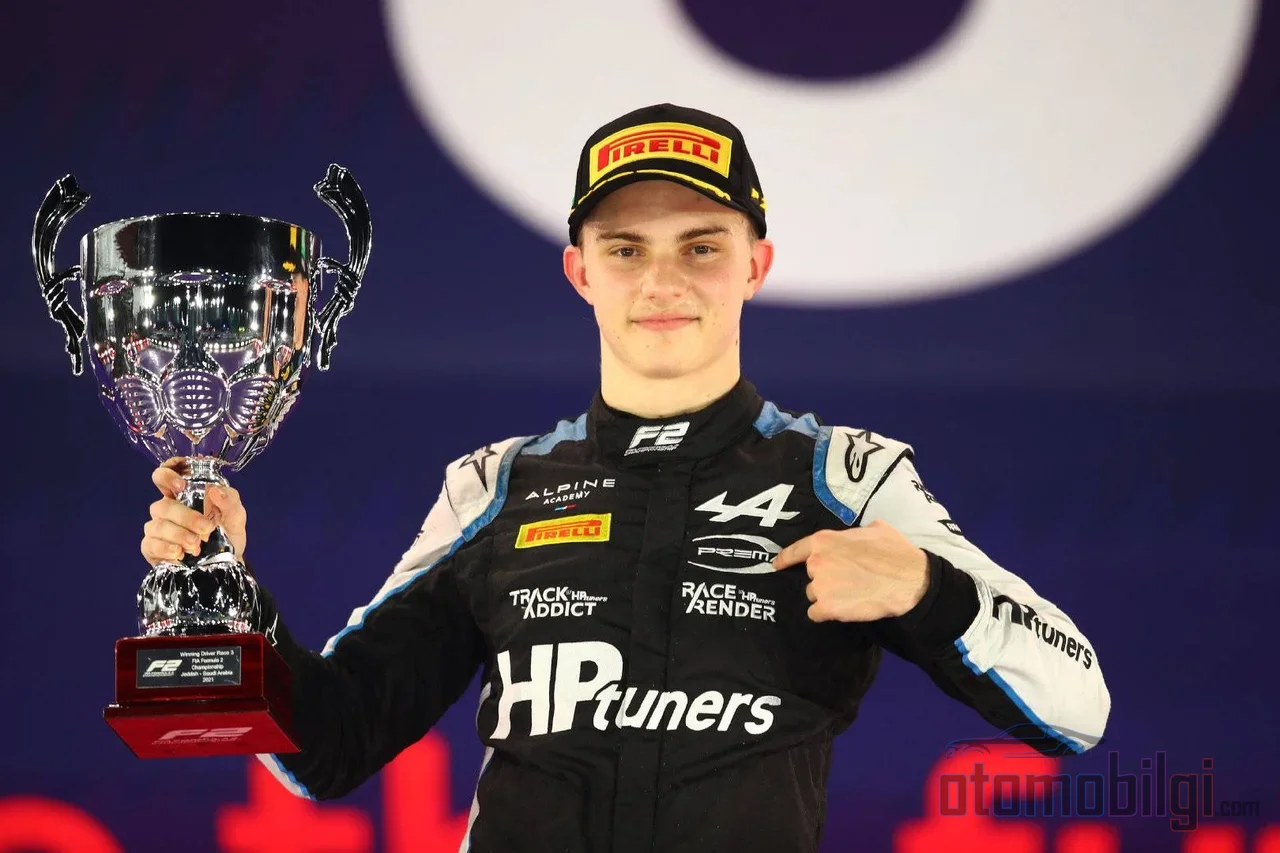
Imagine one rung on the ladder to Formula 1: Formula 3 champion one year, Formula 2 champion the next. Who was the first name to do it? The answer is Oscar Piastri. So how did this 20-year-old Australian win those two championships back to back?
Who Is Oscar Piastri, and Where Did He Come From?
Oscar Piastri is an Australian driver who achieved something extraordinary on his climb up the Formula 1 ladder. He took the Formula Renault Eurocup title in 2019, then won FIA Formula 3 in 2020 and FIA Formula 2 in 2021. It may not sound like an ordinary success story, but the striking part is this: He is the first driver to complete F3 and F2 back to back. We should also point out that he won all three championships (Formula Renault, F3 and F2) consecutively; it is like skipping every rung on the drivers' ladder in one year.
He won both championships with the same team, Prema Racing. That team is practically a talent factory in F1 feeder series; and that is where the seniority story that carries over to the next season begins. In January 2020, at the age of 18, he joined the Renault Sport Academy and became part of Prema's F3 line-up. In fact, he was on track with Prema in the F3 post-season tests in October 2019; he was the fastest in one of the four sessions he took part in. In other words, he had shown his speed before even getting started.
Highlights
- Won both the 2020 FIA Formula 3 and 2021 FIA Formula 2 championships with Prema Racing
- The first driver to complete F3 + F2 back to back; the sixth driver in history to win GP2/F2
- The 2020 F3 title was sealed at Mugello on 13 September 2020, and the 2021 F2 title at Yas Marina on 11 December 2021
- An F2 champion earns 40 points toward a Super Licence, an F3 champion earns 30 points
- After the championship, he became a reserve driver at Alpine in 2022
The 2020 F3 Season: The Victory in Austria That Set the Tone
Piastri was one of the favorites before the season started, but even he did not fully expect the season to be so dominant. The season opener came with a victory in Austria, and that win was more than just a race victory; it was the moment that set the tone for the entire championship and brought back his self-confidence. The Hungary round was also among the standout races of the season. Monza, on the other hand, was a different story; a weekend he remembers with bad memories.
Prema's 2020 F3 line-up is an interesting story in itself: Alongside Piastri were Logan Sargeant and Frederik Vesti. In other words, he fought the championship battle largely against his own teammates. Team boss Rene Rosin knew when building the line-up that filling the gap left by the 2019 drivers would not be easy; in the short term, the line-up dispelled every concern, because Prema won both the Drivers' and Teams' championships that year.
The Mugello Finale: Tied Points and a Chaotic Race
The championship battle dragged on painfully until the final lap. The finale at Mugello came with Piastri and his rival, who was also his teammate, Sargeant level on points. Dead even! The final race was chaotic; an incident involving Sargeant occurred on the very first lap, and the tie was broken. Piastri finished the race in seventh place and claimed the championship. A championship is not always won by running toward victory; it can also be won by keeping your cool in the middle of the chaos; Piastri learned that lesson at Mugello.
The nice part of the story is this: Piastri and Sargeant had been friends for four or five years, so managing this rivalry was not difficult. In fact, it played a part in the mature team's double championship. If it were you, you could race your best friend for the championship, but when heading into the final lap with points tied, be sure to keep your heart in check.
Stepping Up to F2 with Prema: Step by Step
Only months after the F3 championship, the good news arrived on December 1, 2020: Prema announced that Piastri had joined its lineup for the 2021 Formula 2 season. Piastri was only 19 years old, and this is exactly how the classic F1 ladder works: win a championship in one series, then continue in the series above with the same confidence. F2 is F1's official feeder series; the car there is equipped with a carbon fiber monocoque Dallara chassis used by all teams and a turbocharged, direct-injection Mecachrome engine. So everyone races with the same equipment; it is the driver's skill that makes the difference.
F2's format is also more demanding than F3's: a race weekend features multiple races throughout the weekend, with the main race, the Feature Race, being a separate test of strategy. To put it with a figure provided by Red Bull, the maximum points you can earn in a single-race F2 weekend is 39. So you can think of every weekend as a small championship battle. Piastri took his first F2 Feature Race victory by converting from pole position; pole-to-victory is one of the most beloved sights in the junior series.
The 2021 F2 Season: Battling Zhou and Shwartzman
Piastri's rivals in 2021 were no pushovers. Throughout the season, he battled mainly with Zhou Guanyu and his Prema teammate Robert Shwartzman. Imagine two drivers on the same team racing for the championship; Prema's second year was also an exciting one. His form in the final stretch of the season was what determined his fate; recovering at critical moments is a common trait of champions.
With two rounds remaining, the picture was clear: Piastri led with 178 points and was pursuing back-to-back championships after George Russell. And he achieved it. On December 11, 2021, at the Abu Dhabi round at Yas Marina, he secured the F2 championship by finishing third in the first Sprint Race. The previous year's champion had been Mick Schumacher; the name inheriting the seat was now Piastri, and Prema also won the Teams' championship that year, achieving another double victory.
Super License: The Key to an F1 Seat
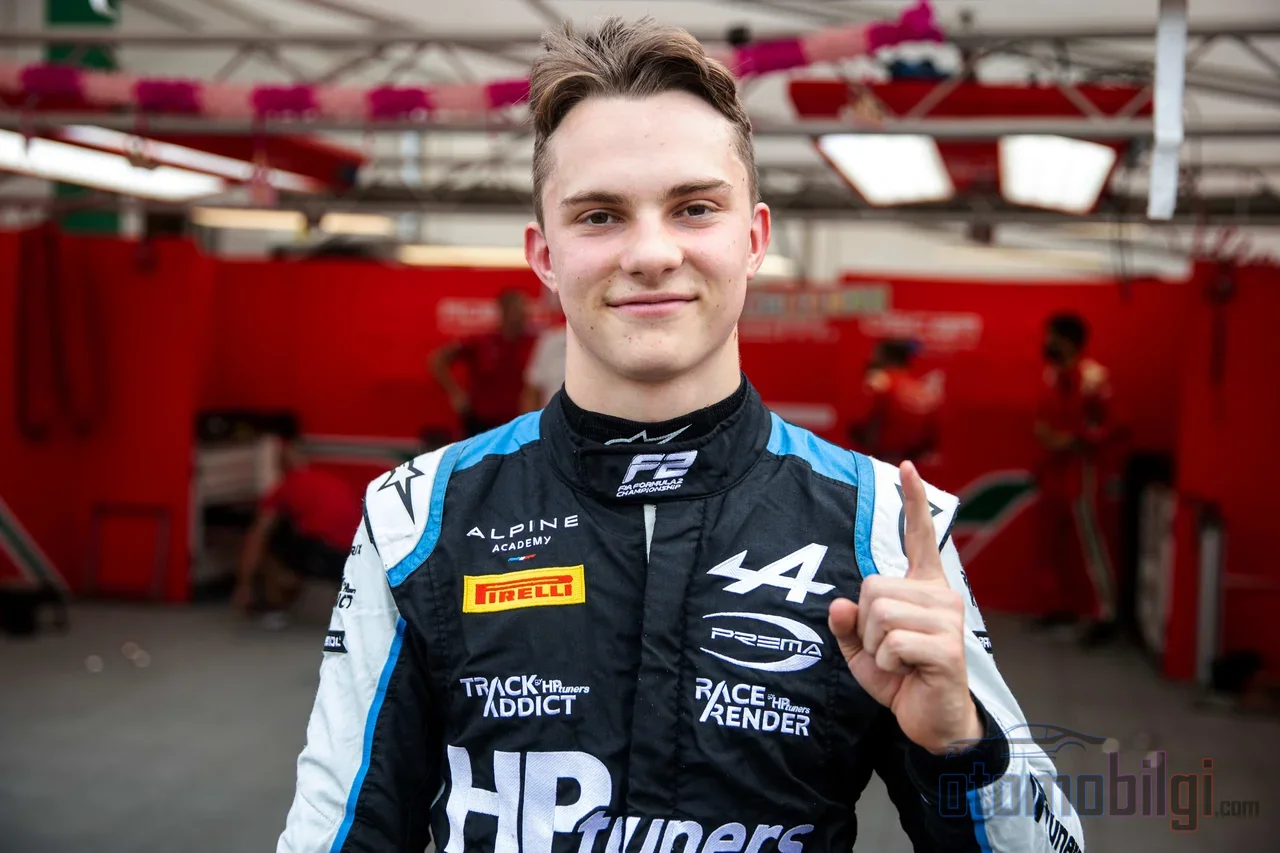
Now let's get to a slightly technical but super important part. To race in Formula 1, you need a qualification called the FIA Super Licence, and one of the most reliable ways to obtain it goes through winning championships in junior formula series. The points system works like this:
| Result | FIA Formula 2 | FIA Formula 3 |
|---|---|---|
| Champion | 40 points | 30 points |
| Runner-up | 40 points | 25 points |
In other words, the F2 championship alone more than covers the points required for the Super Licence. That's why F1 teams follow F2 champions so closely; because a championship is a key that effectively hands the pilot the license to race in F1. F3, on the other hand, is like a school focused on maturing raw driving skills with standard parts; F2 adds injector and strategy lessons on top of that. We can say that Piastri completed this education with flying colors, with two championships in two years.
The F1 Door: Alpine Reserve Driver Role and the Intriguing Yet Complicated 2023 Story
After the F2 championship, the natural next step came: From 2022 onward, Piastri was introduced as a reserve driver at Alpine F1 Team. Being a reserve driver is, in a way, a product of the F1 paddock, meaning waiting ready to jump into the car on race day; a warm-up period for young drivers getting used to the F1 world. But there was also a development that showed how quickly things can change.
Alpine announced that, in line with the promises made to the young Australian driver, it would promote him to a race seat and put him in Fernando Alonso's car. Even the official FIA F2 website published the headline "Oscar Piastri will race for Alpine in 2023." However, a strange update was soon added to the same page: Piastri denied the news of his F1 promotion with Alpine for 2023. So the announcement was made, and then the driver personally rejected it; here a door opens to one of the most striking contract dramas in F1 history. The subject of this page is not the details of that tension, but we can say this clearly: The F2 championship carried Piastri to the door of F1, but the story of the seat behind that door is a completely different chapter.
What Does Piastri's Roadmap Teach Young Drivers?
The real lesson of Piastri's story is this: If there is an F1 ladder and you climb every rung in first place, doors open for you. Formula Renault Eurocup, F3, and F2... Three championships, two years, one team. Winning two series with the same team (Prema) shows how important a driver's environment and habits are. And thanks to the Super Licence points system, these championships are not just trophy cabinet decorations, but the official route directly to an F1 racing license.
If it were you, would you dare to climb every rung in one year? Piastri's story offers a concrete roadmap for young people who want to make it to F1: After karting, join the right academy, enter F3 with the right team, win the championship, move up to F2 with the same confidence, and win there too. The rest is the job of the F1 ecosystem. But does this formula work for everyone? That is a question still waiting to be tested on the tracks.
Sources
- F3 - Thoughts of a Champion - Oscar Piastri - FIA
- F2 - Thoughts of a Champion - Oscar Piastri - FIA
- Formula 2 in 2021: Oscar Piastri sets new standard with familiar names in the fray - FIA F2
- PREMA promote Piastri to Formula 2 for 2021 - FIA Formula 3
- Oscar Piastri becomes Renault junior, joins Prema in FIA F3 - Formula Scout
- How the Formula 2 standings look with two rounds to go - Formula1.com
- Oscar Piastri - Wikipedia
- FIA Super Licence - Wikipedia
- The beginner's guide to the F1 Super Licence - Formula1.com
- Oscar Piastri to race for Alpine F1 Team in 2023 - FIA F2