What Is the Reverse Grid Rule in F2 and What Is It Used For
Share This Page
The reversed grid rule in F2 means that the top 10 results from Friday's Qualifying are reversed for Saturday's Sprint race: the fastest driver starts from P10, the driver who qualified 10th starts from P1. The aim is to add excitement to the Sprint race and give young drivers a chance to showcase their ability to race from the front and overtake. The rule is also the most debated part of the series; its impact on the championship, its mission as preparation for F1 and the criticisms are the subject of this article.
Highlights
- In the Sprint race, the fastest driver starts from P10, and the 10th fastest driver starts from P1.
- Feature Race pole position is worth 2 points; reversed grid pole awards no points.
- In the Sprint, the top 8 drivers are rewarded with a 10-8-6-5-4-3-2-1 points distribution.
- Over one weekend, a driver can score a maximum of 39 points, and a team 65 points.
- Since the first season in 2017, 21 drivers have been promoted from F2 to F1.
How Is the Reversed Grid Rule Applied?
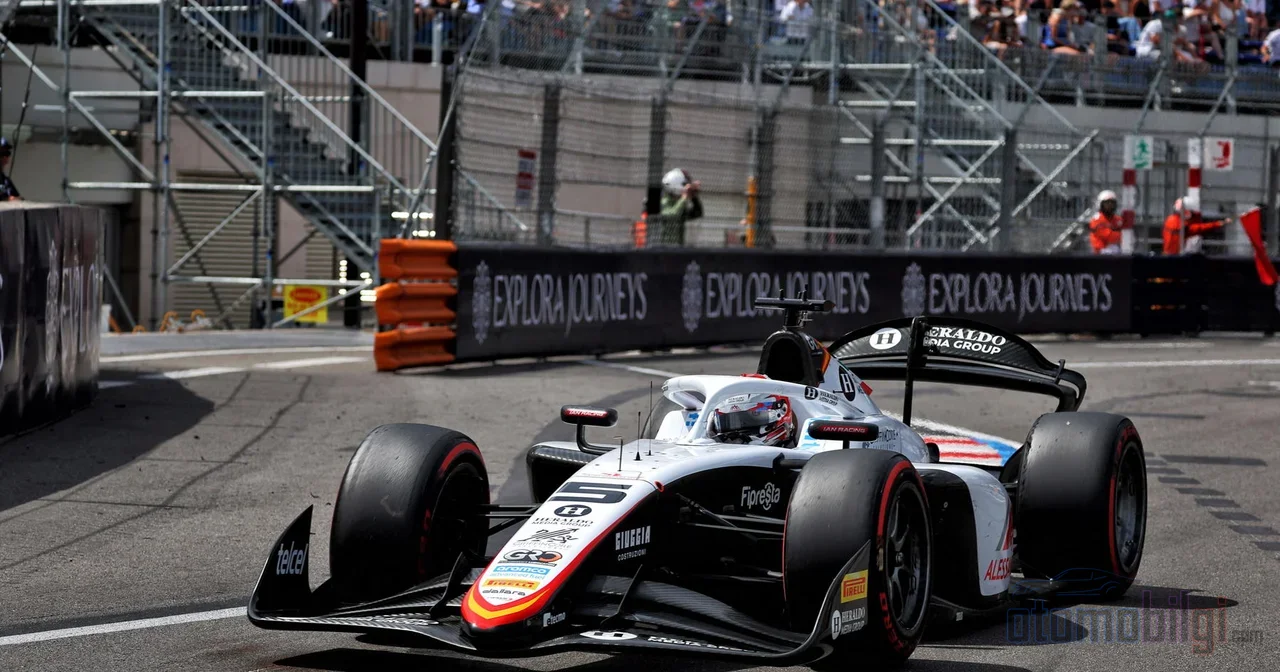
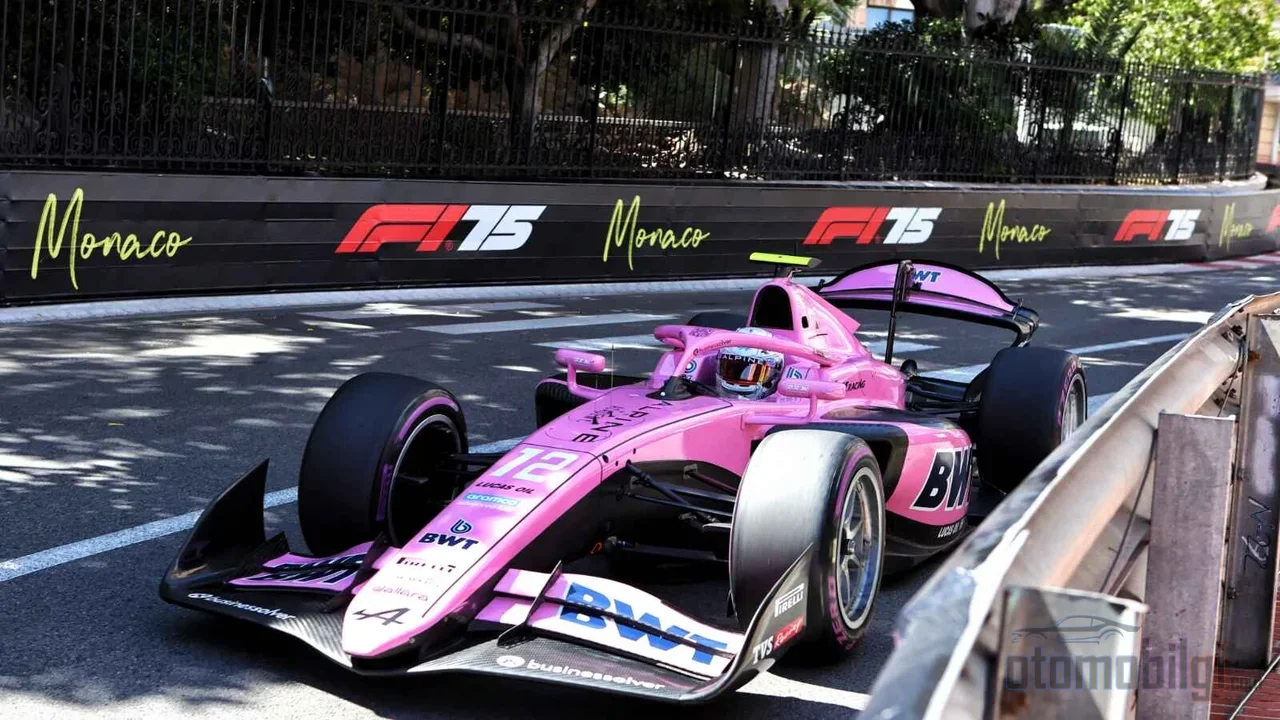
The rhythm of an F2 weekend is quite clear. On Friday, after a 45-minute practice session, a 30-minute qualifying session is run. Saturday features a 120-kilometre or 45-minute Sprint race, while Sunday has a 170-kilometre or 60-minute Feature Race. Within this schedule, the reversed grid sits right in the middle, on Saturday.
The mechanism is simple: the order of the drivers finishing in the top 10 in qualifying is reversed for the Sprint race grid. The driver who set the fastest lap on Friday starts the Saturday race from tenth from the back, while the driver who finished exactly 10th in qualifying starts the Sprint from the very front. Drivers behind 11th place line up as per the qualifying results, unchanged. The grid for Sunday's Feature Race also comes directly from Friday's qualifying; meaning everyone starts the weekend's main race from where they deserve.
Now let me briefly explain how the qualifying order reacts. The driver who is first in qualifying is indeed the fastest of that weekend. But overtaking that person in the Sprint, meaning finishing ahead of 10 cars, is like climbing a very steep ramp. That is where the entire tension of the rule lies.
Why Does the Points System Keep the Reversed Grid Fair?
The secret to why the reversed grid does not upend the championship lies in the points distribution. In the Sprint race, the points pool is deliberately kept small: the top 8 drivers receive 10, 8, 6, 5, 4, 3, 2 and 1 points. In the Feature Race, the picture is completely different; the top 10 drivers are rewarded with a 25-18-15-12-10-8-6-4-2-1 distribution. In other words, the weekend's big points come from Sunday's race, where genuine qualifying performance is rewarded.
Another interesting detail: the driver who takes pole position in qualifying earns 2 points, but starting at the front in the Sprint race thanks to the reversed grid, the so-called reversed grid pole, awards no points at all. Additionally, in both races, the driver finishing in the top 10 with the fastest lap is awarded 1 point each. Add all of this up and here is what you get: a driver can score a maximum of 39 points over a weekend, while a team can collect 65 points.
| Feature | Sprint Race | Feature Race |
|---|---|---|
| Day | Saturday | Sunday |
| Grid | Top 10 of qualifying reversed | Based on qualifying results |
| Length | 120 km or 45 min | 170 km or 60 min |
| Points | 10-8-6-5-4-3-2-1 | 25-18-15-12-10-8-6-4-2-1 |
| Mandatory pit stop | No | Yes, two tire compounds are used |
| Pole points | No points | 2 points |
The series' official approach is along these lines: Since the points distributed on Saturday are limited, the reversed grid does not determine the final championship outcome; the best-prepared and most consistent driver ends up at the top. In other words, the rule adds flavor to the weekend without taking control of the kitchen away.
Why Does the Rule Exist? What Does It Give Young Drivers?
Although starting the fastest car from the back may seem odd at first glance, there are serious reasons behind this idea. First of all, F2 is the final rung of the FIA's single-seater ladder, and all rounds are run on F1 race weekends. This series' mission is not just to lap quickly, but to train drivers who are ready for F1.
Overtaking Skill Is a Real Test
Rather than shining in qualifying and getting locked between four walls, learning to make your way through traffic is one of the most critical skills in a driver's career. Reversed-grid races test exactly this: the driver starting from the back has to overtake every car ahead, and this is a challenging but highly valuable experience. Drivers who usually finish between 5th and 8th in qualifying get the chance to race from the front and reach the podium; a name who would normally have a low chance of seeing the podium might lift perhaps the first trophy of their career on Saturday.
The beautiful part of it is this: F2 is a single-make, that is, a spec series. All teams use the same Dallara chassis and Mecachrome's 3.4-liter V6 turbo engine. Even on a reversed grid, there is no technological advantage gap; you have to rely solely on your own talent and your team's preparation. This is the strongest shield protecting the rule against accusations of unfairness.
The Picture Is Different in Other Series
While F2 reverses the top 10, in its sister series Formula 3 the qualifying order of the fastest 12 drivers is reversed. What's more, this idea continues to spread: the Formula Regional European Championship also switched to the reversed-grid format from 2026; there, the top 12 of qualifying is reversed, and the rationale given is to accustom drivers to the format they will use later on. F1 Academy, in turn, returned to reversed grids from 2025. In short, at the lower levels of F1 this format is now seen as a training tool.
The Criticisms: Fairness, the DRS Train, and the 2021 Trial
If the rule is so beneficial, why doesn't everyone like it? This is where the painful part begins. The most frequently heard criticism is the dilution of the importance of qualifying. To throw away, for Saturday, the reward of a driver who did everything perfectly on Friday seems like a gamble to some. There are similar reactions on social media: It may be fun for spectators, but from a driver's point of view everything looks a bit random.
George Russell, a name you know from F1, experienced the reversed grid in both F3 and F2 and argues that this rule should not be carried over to F1. His argument goes like this: if you reverse the top 10 fastest cars, every car focuses on passing the one ahead, and the result is not a real race, just a DRS train. In other words, everyone follows along, and no one can really make a move. Russell also points out that good sprint races are ones with tire wear or different strategies, citing the examples of Qatar and Brazil. The general attitude of F1 drivers is similar: Lewis Hamilton stated that he saw the reversed grid idea as an excuse for bad rules, and many names, including Nico Hulkenberg, approach the idea with skepticism.
The Short-Lived Experiment of 2021
F2 and F3 tried an even more ambitious format in 2021: that season, the top 10 of the first Sprint race was reversed to form the grid for the second Sprint. In other words, the fast lap set on Friday determined the fate of two separate races on Saturday. Drivers evaluated this system as stressful but strategically valuable, and the format sparked debate. One of the most interesting reactions came from Oscar Piastri: he said that deliberately aiming for the reversed-grid pole in the new format, i.e. starting the Sprint at the front, was unsporting. The series revisited the format in response to these criticisms and moved to today's more balanced structure. My take is this: The 2021 experiment showed just how important the dosage of the reversed grid is. A little spice saves the dish, but too much ruins it.
The Spill-Over Debate to F1: Is the Reversed Grid Coming to F1?
This is the real hot topic. F1 is seriously considering the reversed grid formula for sprint races; the basic idea is to reverse the top 10 cars. More ambitious plans are also on the table: introducing the reversed grid system from 2027 onwards and doubling the number of sprint races are being discussed. In some scenarios, there is even a desire to try a new weekend format where qualifying is replaced by Saturday's sprint race and the grid is set in reversed order. However, since opposition from drivers and teams is growing, the future of these plans remains uncertain.
F2's role in this debate is important, because this is exactly the laboratory where the format is tested in the field. The rule works in F2 because the cars are equal and the points are balanced. In F1, on the other hand, with performance gaps worth millions of dollars, the same rule could produce completely different results. Russell's DRS train argument stems precisely from this inequality.
The Place of the Reversed Grid in the Context of Preparation for F1
Seeing F2's mission of preparing drivers for F1 in numbers is striking: since its first season in 2017, 21 drivers have moved from F2 to F1. Charles Leclerc, Lando Norris, George Russell, Oscar Piastri, Yuki Tsunoda and Alexander Albon are on this list. In 2025, however, a single-season record was broken and five F2 rookies entered the F1 grid at the same time: Gabriel Bortoleto, Isack Hadjar, Oliver Bearman, Kimi Antonelli and Jack Doohan.
The Super Licence formula also makes the series indispensable. At least 40 points are required within a three-year period for F1, and the F2 champion completes these points in a single season; the F3 champion is awarded 30 points. Drivers must hold a Grade A or B racing licence for F2 and be at least 17 years old. In this picture, the function of the reverse grid becomes clear: Drivers who will have to make their way in mixed conditions, in traffic and under pressure in F1 take this exam in advance on Saturdays. There is even a small example from the 2026 season: Noel León used the front-row advantage in the reverse-grid Sprint to snatch the lead at Sainte Dévote. Starting from the front row is not enough; you also have to keep it; the reverse grid measures both skills.
The 2026 format and points are the same as 2025; there are 11 teams and 22 cars on the grid. The Baku round of the season was run with an extended schedule, and the last two rounds, Doha and Yas Marina, continue in the normal format. In other words, the reverse-grid debate has settled into a stable home in F2; the real question mark awaits at F1's door.
Spectacle or Fairness? My Answer
Think of the reverse-grid rule as the scale of a shop counter: on one pan there is show, on the other, fairness. F2 has tuned this scale quite well by balancing its points system with small Sprint pools. The championship still goes to the Friday speedster and the Sunday consistent one; but Saturday survives as a day that builds a bridge between mid-grid and the lower orders, rewarding overtaking. I like this balance; but as we also see from the 2021 trial, the rule works only with a fixed format and small points. If F1 wants to copy it, it first has to establish its own balance. What do you think - does starting the fastest car from the back feel like an injustice to you, or like a promise of better racing?
Sources
- FAQ - FIA Formula 2
- The Rules and Regulations - FIA Formula 2
- The beginner's guide to Formula 2 - Formula1.com
- The FIA Formula 2 Championship celebrates a decade of success - fiaformula2.com
- George Russell explains why reverse grids will not work for Sprint races in F1 - Motorsinside
- F2 and F3 rethink format after contentious 2021 changes - The Race
- Drivers review "stressful" and "strategic" new F2 format - Autosport
- Aiming for reversed-grid pole in new F2 format "unsportsmanlike" - Piastri - FormulaScout
- F1's reverse-grid plan in doubt as opposition increases - The Race
- Sprints doubled and reverse grid from 2027 - AutoHebdoF1
- F1 Considers Reverse Grids Ahead of 2026: The Key Details - FanAmp
- F1 ACADEMY announces the return of reverse grids from 2025 - f1academy.com
- How Reverse Grid Races Work and Why They Make Better Drivers - Eurocup3
- FREC set to introduce reversed-grid races in 2026 - FormulaScout
- F1 is considering the "reverse grid" formula for sprint races - Motorsport.com Türkiye
- FIA announces new points system for the super licence - Motorsport.com Türkiye
- How Does a Race Weekend in Formula 3 Work Differently from F2? - Otomobilgi
- Formula 2 in 2026: Everything You Need to Know - The Paddock Chronicle
- 2026 Formula 2 Championship - Wikipedia
- FIA Formula 2 announce supersized Baku Round - fiaformula2.com