The Battle at the F2 Wheel: A Test of the Drivers' Physical Endurance
Share This Page
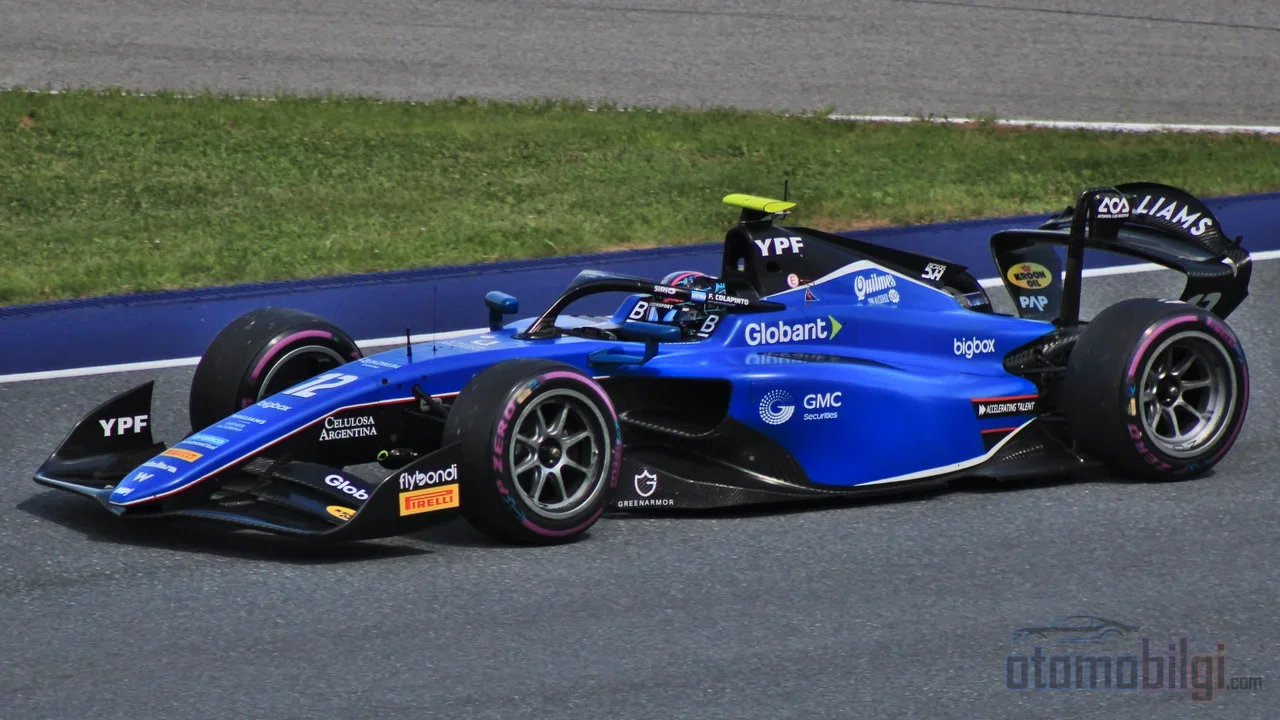
Why is the F2 steering wheel so hard? Because there is no hydraulic assistance: the driver counters cornering resistance entirely with his own neck, shoulder and arm strength. Although steering and brake assistance are also banned in F1, F2 cars race with even fewer aids, under the same principle, and put young drivers through their first big physical test. In this article, we dive into the details of that test.
Highlights
- In F2 and F3 cars there is no hydraulic steering at all; all steering force comes from the driver's muscles.
- In corners drivers feel up to 5G of force; for a 60 kg driver, that means a 360 kg load on the neck area.
- Cockpit temperature 50-60°C can rise to; drivers can lose 3-4 kg of water in a single race.
- F2 engines 620 hp produce; F3 cars lag clearly behind with 380 hp .
- Drivers do neck training all year round, at least 5 days a week.
What Does Steering Without Hydraulic Assistance Mean?
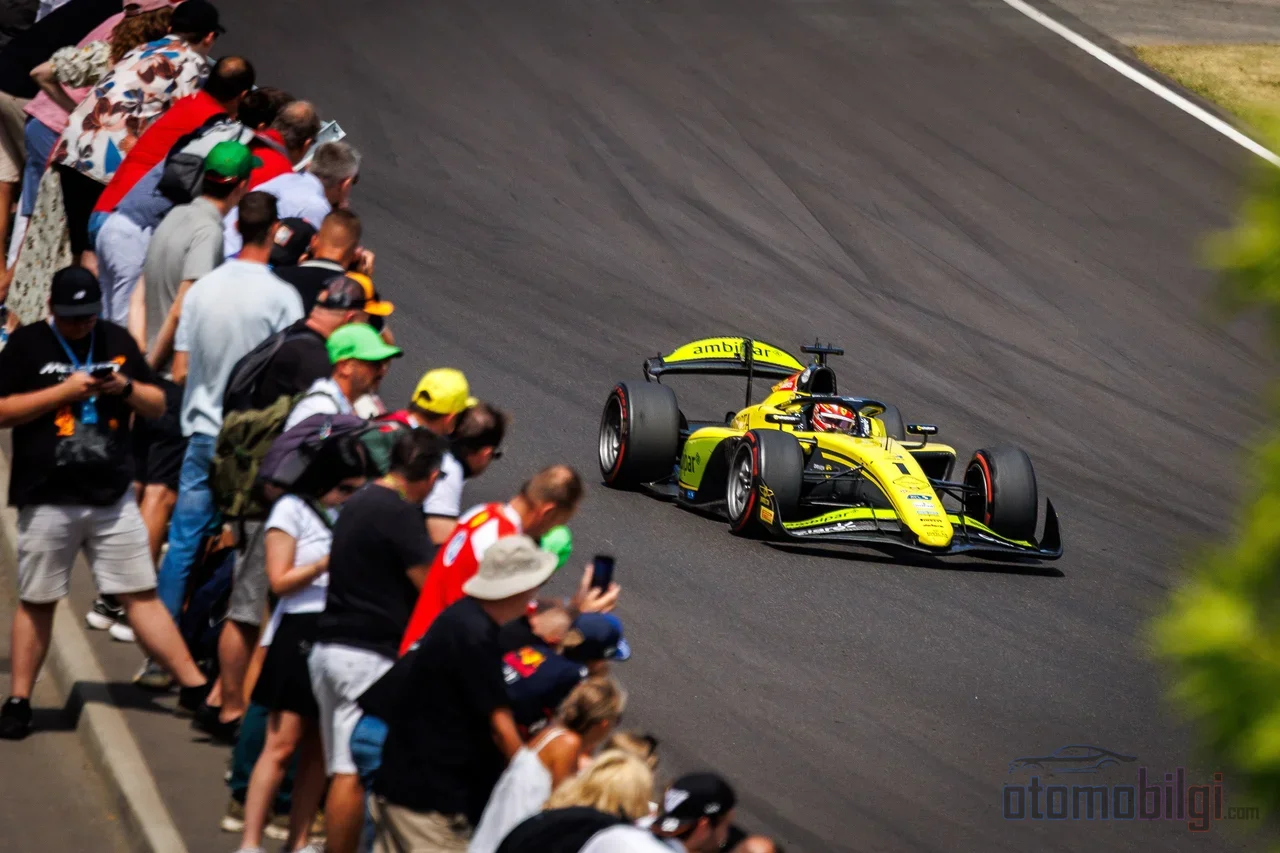
Have you ever wondered why turning the steering wheel is so easy in a normal car? The answer is simple: a hydraulic or electric system does part of the work for you. You apply only a small force, and the system amplifies the rest. Now throw that assistance out and think about what remains. That is exactly what F2 steering is.
F2 and F3 cars are designed without hydraulic steering. When the driver wants to turn the wheels, especially in low-speed, tight corners, he has to overcome the tires' resistance against the road directly with his hands. At high speed the steering feels lighter, but then another enemy comes into play: G forces. The head of a driver whose body is strapped to the seat with belts is pulled sideways in corners, like a pendulum together with his helmet. In a high-speed turn, the perceived weight of the helmet can rise to about 5 times normal. Even lifting an arm, during a race, feels like having a bowling ball tied to your neck.
Stop, don't immediately think of F1 and say "if they don't have it either, what's the difference." True, steering assistance is banned in F1 too; there's no brake assistance either. But since F1 cars are much faster and more complex, the overall difficulty is still a notch higher. The difference is this: F1 drivers adapted to this life years ago, and most of them were prepared for it in F2. The young ones in F2 are the students of this physical school.
F1, F2 and F3: How Big Is the Difference in Numbers?
To understand the physical load, we first need to look at how powerful and fast the cars are. Because G force is not something magical; it is a concrete physical phenomenon that emerges when you mention speed and aerodynamics. Here is a side-by-side comparison of the three series:
| Feature | Formula 1 | Formula 2 | Formula 3 |
|---|---|---|---|
| Power | Approx. 1,000 hp | Approx. 620 hp | Approx. 380 hp |
| Top speed | Over 370 km/h | Usually below 320 km/h | Significantly lower than F2 |
| Hydraulic steering | No | No | No |
| Weight | - | 795 kg | - |
Now look at this picture through the eyes of a young driver. Managing the car while racing in F3 is hard enough, but a 380 hp machine is still at a physically manageable level. When you move up to F2, you suddenly face roughly 240 hp of extra power, noticeably higher speeds, and the much harsher cornering forces that come with them. The new-generation F3 car is closer to F2 than ever before, since both series use the same steering wheel; but the gap in physical demand is still there.
Another interesting detail: all 52 F2 and F3 cars use the same custom carbon fiber steering wheel made by the French manufacturer. So the driver does not have a special F1-only wheel at the controls; functions like buttons, DRS activation and the pit limiter are all at their fingertips. For DRS you need to get within one second of the car ahead, and the F2 driver tracks this via an on-screen symbol - there is no such luxury as an audible warning.
What Do G-Forces Do to the Body?
Let's make it concrete. Picture a 60-kilo driver. When 5G is reached in a corner, the total force their body feels shoots up to 360 kg. Since the harness straps the driver into the seat, most of this pressure piles onto the neck and upper torso. So in every corner, you resist first to the left, then to the right again, as if a huge weight had been placed on top of your head. You do this for 45 minutes, piling hundreds of kilograms of cumulative load onto your neck and shoulders.
You can think of this G-force sensation in formula cars with an analogy close to what an experienced F2 driver described: it is like carrying hundreds of kilos for almost the entire race. Now add the brakes on top of that. In F1, the brake pedal demands a force of around 600-700 newtons with every press; so if your legs are not trained, the pedal feels like an anvil by the end of the race. Remembering that there is no brake assistance in F2 either, the picture becomes clear.
These sound like a joke, don't they? But there is a serious side: in crashes, drivers can be subjected to deceleration forces of up to 100G. Even during a race, in very hard corners the edges of the image can fade - this is called gray-out, and it means the temporary loss of peripheral vision. Neck and back pain, meanwhile, are the most ordinary, almost daily part of the job. So the debate over whether drivers are athletes is, in my opinion, long settled; with the Drive to Survive generation, everyone now sees what these bodies are dealing with.
An Oven of a Cockpit: The Test of Heat and Dehydration
The steering load never ends, and heat is added on top of it. Cockpit temperatures can exceed 50°C; if it is already hot outside, it can reach 60 degrees inside. Even waiting in a closed-window queue on a hot summer day is hard for you - imagine drivers doing what amounts to weight training in that same heat. The fireproof inner and outer clothing, balaclava, gloves, boots and helmet mandated by the FIA do not make things easier either; these garments block the body's cooling pathways of evaporation and convection.
The result? Drivers can lose 3-4 kg in a race, that's more than three percent of their body weight. Almost all of this loss is water. Some experienced F2 drivers start every race day by drinking about 3.5 liters of water. The strategy is built accordingly: taking physical endurance to a level that will fit the top category perfectly, never struggling behind the wheel. Clever, isn't it?
There is also the mental side. Most F2 drivers say the real fatigue is experienced in the head, not the body; while the body gets used to it, back-to-back race weekends wear down the mind. But be careful: physical strength and mental resilience are not independent of each other. As long as the body endures, the head tires later too. That's why gym training is not a luxury, it is the very essence of a mental investment.
How Is Neck Training Done? The Drivers' Kitchen
Now let's come to the most curious part: how do they build that neck? The answer is provocatively old-school: elastic bands, weighted harnesses, weights attached to the head. F1 drivers can lift up to 40 kg using only their neck muscles at the end of training. Those famous thick necks are not a genetic gift; they are the product of years of a program repeated at least 5 days a week, lasting almost all year round.
Where to Start: Mobility, Flexion, Extension
Training opens with warming up: joint mobility is prepared with neck rotations and tilts. The main movement is flexion and extension - that is, pushing the head forward and backward against resistance. The side region, that is the lateralis muscles, covers only 20 percent of the program because in corners the main load is not gathered front-to-back but in constant one-directional pressure, and the primary need is to strengthen the entire neck as a whole. The recommendation of experienced drivers' osteopaths is also clear: the most effective method against G-forces is heavy weight and resistance training; the programs have a total volume of hundreds of kilos each session, and a constant load on the neck.
Let's give a bonus exercise example, because some can be applied even at home: lie on your back, lift your head slightly and slowly turn from left to right; aim for 75 repetitions, then repeat the same movement forward. If you work at a desk and your neck aches in the evenings, you should know that these exercises may also work for you; sports physicians say these routines can relieve office-related neck and back pain. The drivers' 15-minute neck routines really can be a training idea for everyone.
The Transition from F3 to F2: Why Is It a Physical Leap As Much As a Technical One?
While each step of the formula ladder adds speed, it also multiplies the physical demand; but the transition from F3 to F2 represents a separate threshold. While F3 teaches you to cope with speed, F2 puts the ability to manage performance at almost F1 level to the test. Remember the numbers: moving from 380 hp to 620 hp means grappling with much heavier cornering forces with the same hydraulic support (that is, no support). Although a quantitative neck load comparison has not been published specifically for this level, the indirect picture is clear enough.
That's why F2 is considered the ultimate training ground simulating F1's physical and technical challenges. While advanced hardware like DRS prepares drivers for F1's technical world, the body simultaneously adapts to that life through sheer sweat. By a rough calculation, less than one percent of the tens of thousands of drivers registered with the FIA - roughly 100 people - can hold the super licence required for F1. Everyone who reaches that elite level has, at some point, paid the physical toll of the steering wheel.
If you look carefully on race weekends, this body language is noticeable: an F2 driver's neck and shoulders after climbing out of the cockpit post-race look like someone leaving the gym after an intense workout. Because that's exactly what it is. Next time you watch a race, take a look at that; then tell us, which part do you think is the hardest - the 60-degree cockpit or your 360-gram neck? In my view, both at once. And that's precisely why this sport is so impressive.
Sources
- F1 vs F2: what's the difference?
- F1 vs F2 vs F3: Key Differences Explained
- Effects of car racing: Weight loss and other factors
- What happens to F1 drivers' bodies, and what sort of training do they do?
- The ultimate guide to the Formula 2 and Formula 3 steering wheel
- Do F1 cars have hydraulic steering?
- Neck workouts, cardio sessions and mental exercises
- Speed, power and precision: Comparing F2 and F3 racing cars
- F3 Explained: How the new car is closer to F2 than ever
- What's the Real Difference? F1 vs F2
- Beauty in Motion: Formula 1 Drivers
- The neck-training routines of race car drivers
- How F2 and F3 are providing the tools for F1 success