The Prema Legend: How a Team Shapes the Drivers It Raises?
Share This Page
If all the cars are the same in Formula 2 and Formula 3, where does the difference between teams come from? Here is the most brilliant example of the answer: Prema. Founded in 1983, this Italian team has carried more than ten of its drivers to Formula 1, nurturing the stars of F1 from Leclerc to Piastri through championship after championship without mercy - a true driver factory. In this article, we explain how Prema works, why it is so effective, and the shake-up it experienced in 2025-2026.
Highlights
- Prema was founded in 1983; its headquarters are in the Veneto region of Italy.
- More than 10 pilots from the team's roster have reached Formula 1.
- Charles Leclerc, Mick Schumacher and Oscar Piastri became champions with Prema.
- It won the FIA F3 teams' championship 5 times: 2019, 2020, 2022, 2023, 2024.
- In February 2026, a new boss took over the team: Stephen Mitas.
What Is Prema Racing and How Did It Come to Be as a Team?
Let me ask you a quick question: Why do you support a team? Is it its car, its driver, or just because it wins? In F2 and F3 this question gets even more interesting, because in these series everyone races with the same car. The only difference between teams is how well they prepare that same car and how well they develop the driver. And here is the most legendary name in this game: Prema Racing, founded in 1983 by Angelo Rosin and Giorgio Piccolo.
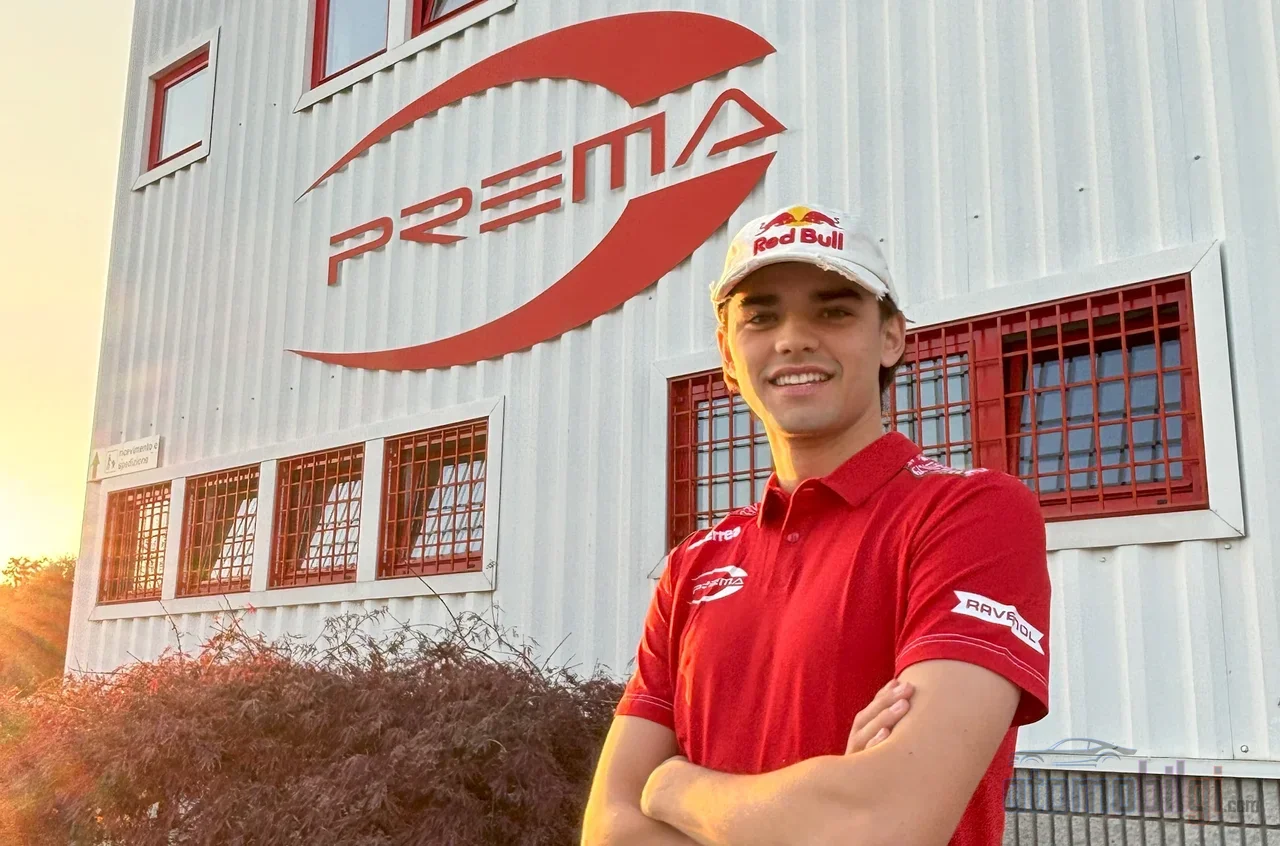
Its headquarters are in the town of Grisignano di Zocco, in the Veneto region of Italy. Formerly known as Prema Powerteam, the team is today run through its parent company DC Racing Solutions. It is also the sister team of the hybrid teams Iron Lynx and Iron Dames; so it is not an outfit sitting in a single category. It stepped into the world of endurance racing in 2022 with the WEC and European Le Mans Series, and in 2025 it jumped into IndyCar with Chevrolet engines. On its own Instagram page it is described as "the most decorated junior formula team in motorsport history," and its claims are not empty: they race in F2, F3, FREC, F4 and the F1 Academy.
Milestones of a Legend: From Italian F3 to the World Stage
Every legend has a beginning, and Prema's is a story told in pure Italian style. The team entered Italian F3 in 1984 and won its first championship in 1990 with Roberto Colciago. After that, trophies kept coming with Donny Crevels in 1998 and Peter Sundberg in 1999. Among its early alumni are names like Jacques Villeneuve, Fabrizio Giovanardi and Rinaldo Capello - so the factory has been working for a very long time.
Its international debut came in 1988 with the Macau GP; the first Macau victory, however, only arrived in 2011 with Daniel Juncadella. Then everything accelerated: the first F3 Euro Series championship in 2003 with Ryan Briscoe, followed by the 2011-2012 championships with Merhi and Juncadella. What is truly fascinating is this: in the FIA F3 European Championship they won every teams' championship from 2011 to 2018. In a word: monopoly.
Entering F2: A One-Two in the First Race
Prema stepped up to GP2 in 2016 and finished 1-2 with Pierre Gasly and Antonio Giovinazzi in its debut race. Think about it: a new team, a one-two at the top in its very first race! When the series became FIA F2 in 2017, Charles Leclerc became champion with 7 wins and 7 poles. In 2019, the first season of the FIA F3 Championship, they were both teams' champion and swept the top three of the drivers' standings with Robert Shwartzman, Marcus Armstrong and Jehan Daruvala. In 2020, Mick Schumacher became champion in F2 and Oscar Piastri in F3; in 2021, Dennis Hauger rose to the top in F3. This pace is a consistency that seems nearly impossible for a team.
Where Does the Team Difference Come From When the Cars Are the Same?
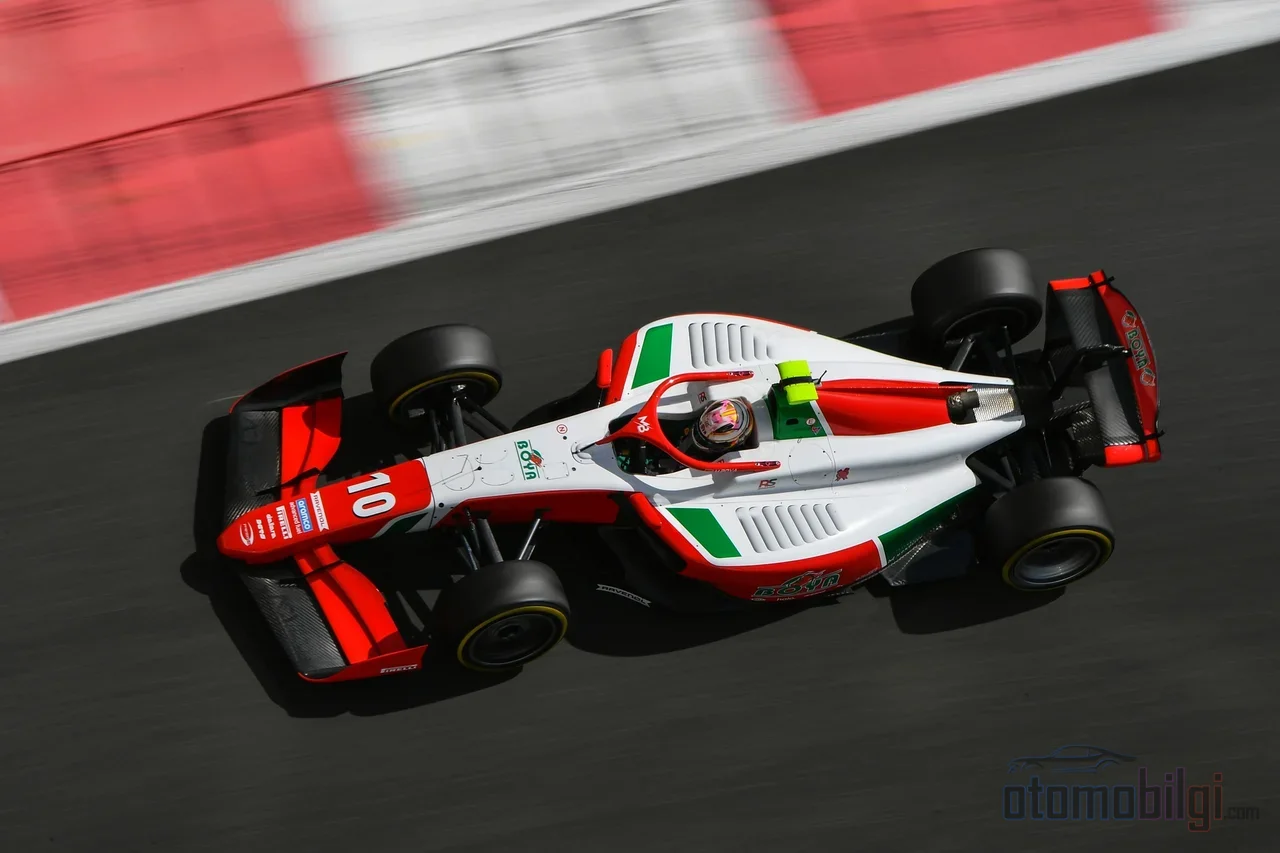
This is a frequently asked question, and the answer can be somewhat disappointing: the difference is not hidden inside the car, but around the car. F2 is the second-tier single-seater championship organized by the FIA and is a spec series; meaning everyone uses the same Dallara chassis. Engine, chassis, tires... all the same. So why are some teams always ahead? The answer lies in engineering, setup adjustments, data analysis, pit communication, and every detail of operations.
Think of it this way: The whole class uses the same textbook, but some students do better on the exam. Why? Because they know how to study, keep their notes organized, and analyze their mistakes. Prema's success in spec series is exactly this. Even in the F2 world, there is talk of which team is fast; for example, in recent times it has become a general perception that Invicta and Campos are faster than the rest. In other words, even if you race in the same car, your team can carry you to a different level - Prema is the biggest proof of this.
From Prema to F1: Which Stars Traveled on This Train?
Here is the list of factory products. Among the names who passed through Prema's ranks and reached Formula 1 are Charles Leclerc, Oscar Piastri, Esteban Ocon, Mick Schumacher, Pierre Gasly, Lance Stroll, Antonio Giovinazzi, Guanyu Zhou, Logan Sargeant, Frederik Vesti, Oliver Bearman and Andrea Kimi Antonelli. Even George Russell signed with Prema for Formula Renault Alps in 2014. Formula1.com emphasizes that Schumacher and Leclerc won the F2 championship with Prema as Ferrari juniors; it was clearly stated that the same was expected for Shwartzman.
Prema served as a talent pool for F1 junior programs: Toyota, Renault, Ferrari Driver Academy, Mercedes Junior Team, Red Bull Junior Team and Williams Driver Academy - all worked with this Italian team. In the words of The Race, Prema was probably F2's most famous team, and in the year it ran Bearman and Antonelli, it had two presumed future F1 drivers on its roster at the same time. This is a reference worth its weight in gold for a driver's career.
The Super License Connection: Why Are Championships So Important?
A driver needs 40 super licence points to make it to F1, and the minimum age is 18. The F2 champion gets the full 40 points required in a single season; the F3 champion receives 30 points. Only five series grant a driver enough to reach those 40 points as champion. In other words, winning the title with Prema can open the door to F1 directly for a driver. That's why joining the Prema squad is considered one of the most critical moves of a junior career.
Partnerships with F1 Academies and Power in F1 Academy
Prema essentially operates as an external laboratory for F1's major academies: it carries Ferrari Driver Academy drivers to F2 championship glory and takes in Mercedes and Red Bull juniors into its squad. This partnership benefits both sides: the academies test their drivers in the best possible environment, while Prema keeps the most talented youngsters on its roster.
There's also the women's side: Launched from 2023 onward, the F1 Academy is a women-only Formula 4-level spec championship established by Formula One Group. In its first season, five teams run by existing F2 and F3 teams fielded three cars each, creating a 15-car grid. Prema is an undisputed center of power here; it won the Teams' Championship of the first three seasons. In 2026 the series has six teams: MP Motorsport, Hitech, Rodin, PREMA, Campos and ART Grand Prix. This year Prema is on the grid with three cars, running Mathilda Paatz, Payton Westcott and Natalia Granada. Engineering careers shine within the team too: race engineer Eimear O'Connor says she experienced her first race engineering role in the F1 Academy in Jeddah, and she has a humorous motto - pressure is for tires!
2025-2026: The Legend's Tough Spell, or a Temporary Dip?
Let's be honest: the recent Prema picture isn't what it used to be. In 2024 a new generation of car arrived in F2, and this turned the pecking order between teams upside down. Although Prema finished second in the teams' championship that year, it couldn't be more competitive than usual afterwards; in 2025 it could only rise to 7th place in F3, and the 2026 season began with a similar picture. So the question is: is Prema in decline, or is it simply struggling to adapt to the new-generation car? Both possibilities are on the table.
Add to this a change in management: On January 14, 2026 it was reported that the Rosin family had left the team. On February 6, 2026 it was announced that Australian engineer Stephen Mitas had become the new team principal and CEO. On the IndyCar side, the story is even more painful: In the 2025 Indianapolis 500 pole position was taken with Robert Shwartzman - the first rookie pole since 1983 - but from November 2025 onward, financial stability claims and the Rosin family's exit left the program's continuation in question; as of February 1, 2026, Prema is not on the official IndyCar entry list. So despite its legendary status, the discussion of institutional fragility is a real issue.
2026 Line-ups and the Türkiye Connection
The 2026 F2 line-up consists of Sebastián Montoya and Mari Boya; Montoya was announced alongside Gabriele Minì for 2025. In F3, Alex Powell, James Wharton and José Garfias are racing; at mid-season Wharton is 17th, Powell 23rd, and Garfias 29th, while the team sits in 7th place. In F1 Academy they are racing with three cars and the three names we listed above.
There is also news from Türkiye, and I find it very valuable: Alp Aksoy will race with Prema in the Italian F4 and E4 Championship in 2026 with car number 10. A Turkish driver being at this factory shows that the doors are open. The reasons we cannot see Turkish drivers on the F2 and F3 grids are already pointed to as cost, karting infrastructure and the super license path - the cost of a career reaching F2 can climb to about 14.8 million euro; while the junior career up to F3 cost about 3.5 million euro in 2010, today it reaches about 7.5 million euro. That is why names like Alp Aksoy being on a team like Prema is a hopeful signal for Turkish motorsport.
How Does Changing Teams Change a Driver's Career?
Prema's story shows us one thing clearly: in F2 and F3, choosing the right team is as critical as choosing the right engine. The same driver on a different team might never have reached F1 at all. As seen in the examples of Bearman and Antonelli, two promising drivers working at the same team at the same time is not just a coincidence; it points to an infrastructure that develops talent and catches the eye of F1 teams. Leaving Prema as a champion can be the strongest line on a junior driver's resume. That is why the address in every young driver's dreams is still found in the same Italian town.
What about you? Do you think Prema will recover in this new era, or is a new balance of power being established in F2? We are watching with curiosity to see what Montoya and Boya will do in the 2026 F2 season. Don't forget to share your opinion in the comments - motorsport is one of the best topics to discuss!
Sources
- Prema Racing - Wikipedia
- Working to get back to their best: PREMA Racing Season Preview - FIA Formula 2
- PREMA Racing complete 2025 line-up with Sebastián Montoya - FIA Formula 2
- Prema's rise from domestic success to international dominance - FormulaScout
- The beginner's guide to Formula 2 - Formula 1
- What's really going on in the F2 team everyone is watching - The Race
- Career Spotlight: Meet Eimear O'Connor, Race Engineer at PREMA Racing - F1 Academy
- The Real Cost of Reaching Formula 2 - DriveLine
- Why Is It So Hard to See a Turkish Driver in F2 and F3? - OtomobilGi