Is Winning the F3 Championship a Guarantee for F1?
Share This Page
Winning the F3 championship is not an F1 guarantee; very few of the FIA Formula 3 champions to date have managed to secure a permanent F1 seat. Some of the names who lifted the trophy get stuck in F2, while others turn to other series. The championship earns super license points but does not earn a seat; the real deciding factors are team academies and performance in subsequent seasons.
Highlights
- Since 2019, only Oscar Piastri and Gabriel Bortoleto have made it to the F1 grid among the FIA F3 champions.
- The cost of an F3 season is around 1.2 million dollars; roughly half of F2's cost.
- There is an interesting detail in the champions table: Leonardo Fornaroli is the first name to become champion without winning a single race.
- The F3 car 380 hp of power, reaching a maximum 300 km/h speed; about 14 seconds slower per lap than F1.
How Many F3 Champions Have Made It to F1?
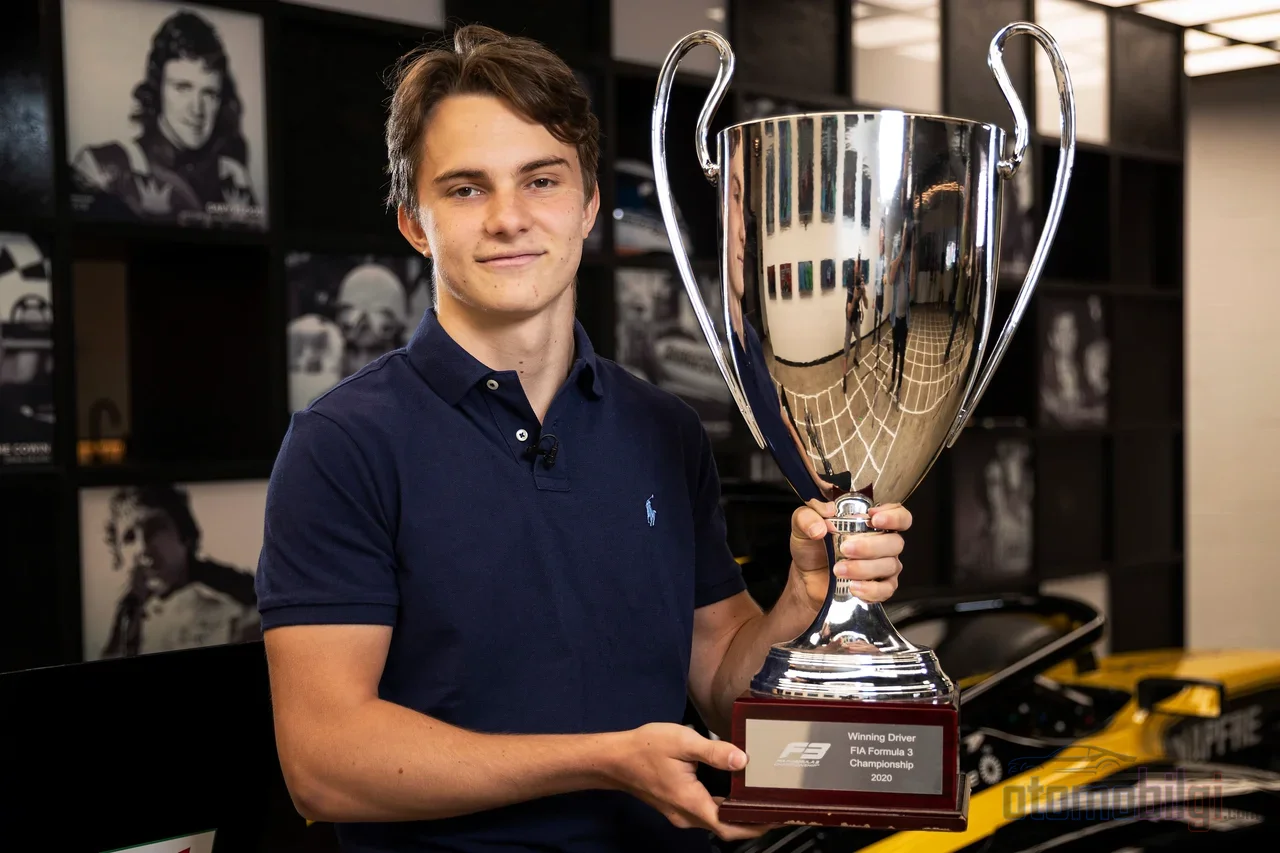
The most honest answer to the question lies in the table. FIA Formula 3 was founded in 2019 through the merger of the GP3 Series and European F3, and when we follow the career paths of the champions since that year, the picture is not as bright as we might think. There have been eight champions so far; two of them have reached F1.
| Year | Champion | Team | F1 Status |
|---|---|---|---|
| 2019 | Robert Shwartzman | Prema | No permanent seat |
| 2020 | Oscar Piastri | Prema | McLaren, since 2023 |
| 2021 | Dennis Hauger | Prema | No permanent seat |
| 2022 | Victor Martins | ART | No permanent seat |
| 2023 | Gabriel Bortoleto | Trident | The most recent champion to reach the F1 grid |
| 2024 | Leonardo Fornaroli | Trident | No F1 record |
| 2025 | Rafael Câmara | Trident | Moved to F2 |
| 2026 | Ugo Ugochukwu | Campos Racing | Immediately after the championship |
So, two names: Piastri and Bortoleto. The rest? For Shwartzman, Hauger and Martins, there is no F1 record in the champions table. Fornaroli and Câmara are still on the ladder, but have not yet landed the big seat. This ratio shows how fragile the "championship = F1" equation is.
Piastri and Bortoleto: What Did the Exceptions Manage to Do?
Oscar Piastri won the 2020 championship by a 3-point margin; that is, he proved he belonged at the top despite a narrow victory. Since taking the McLaren seat in 2023, he has amassed 85 races, 9 wins, 28 podiums and 937 points . Bortoleto, meanwhile, went down in history in 2023 as the first South American F3 champion and became the most recent F3 champion to reach F1.
What do the two have in common? Beyond the championship, strong academy backing and being at the right team at the right time. The champion lifts the trophy; but what carries him to F1 is the team academies and the management plan. Let's think of it with an analogy: winning the F3 championship is like graduating high school at the top of your class. It opens the doors of university, but which door opens and how wide it opens is determined not by your grades, but by the promotions the school makes on your behalf.
Super License: Points Are Automatic, But a Seat Is Not
To race in F1 you need the super licence issued by the FIA, and the condition of this licence is to collect a minimum of 40 points over a two- or three-year period. The points come from results in approved series; each championship brings a package of points.
And here is a critical nuance: a championship grants points automatically, but it does not grant a seat. Moreover, a single championship may not provide all 40 points on its own; that is why drivers can end up having to accumulate points in different series. Also, one of the colorful details of the system: the winner of the FIA F3 World Cup earns an additional 5 points on top of their sporting result. And there are edge cases too; in the Colton Herta example, even a successful IndyCar driver reaching enough points for F1 showed how delicate the balance is.
So the super licence is like a software update: the rules can be revised every year, and the point values between series can change. For example, the points given to the Formula Renault Eurocup champion were reduced at the end of a period. Today's rule may change tomorrow; that is why drivers' managers play the points table like a chessboard.
Getting Stuck in F2 or Shining in the Shop Window
The natural next step after an F3 championship is F2. But F2 has its own story: across its nine seasons, 22 drivers made it to F1; the first being the 2017 champion Charles Leclerc. So F2 is actually quite an effective stepping stone. So where is the problem?
The problem is that F3 champions cannot repeat the same success in F2. When many names find themselves on the same plane as their rivals in F2, the championship sparkle fades. Even in the GP3 era the picture was mixed; of the nine GP3 champions, some found their way to F2, others went straight to F1. Names like Bottas, Ocon and Stroll were able to jump directly to F1 from GP3 or similar steps.
Why Doesn't Becoming an F2 Champion Translate into an F1 Championship?
The cruel part is this: since 2017, no F2 champion has become an F1 world champion. Looking from a wider window, among the F3000/GP2/F2 champions since 1985, only Alonso, Hamilton and Rosberg managed to become F1 champions. This does not mean the feeder series have failed; the rate of GP2/F2 champions entering F1 the following year is in better shape than in the F3000 era. But there is no mechanism that guarantees one championship will turn into another.
Even Verstappen criticizing the 2026 power units by comparing them to an F3 engine is an interesting detail; even in F1, the hierarchy and perception of performance are constantly debated. The differences between the steps are not always clear.
Money, Team Academies and the Real Deciding Factor
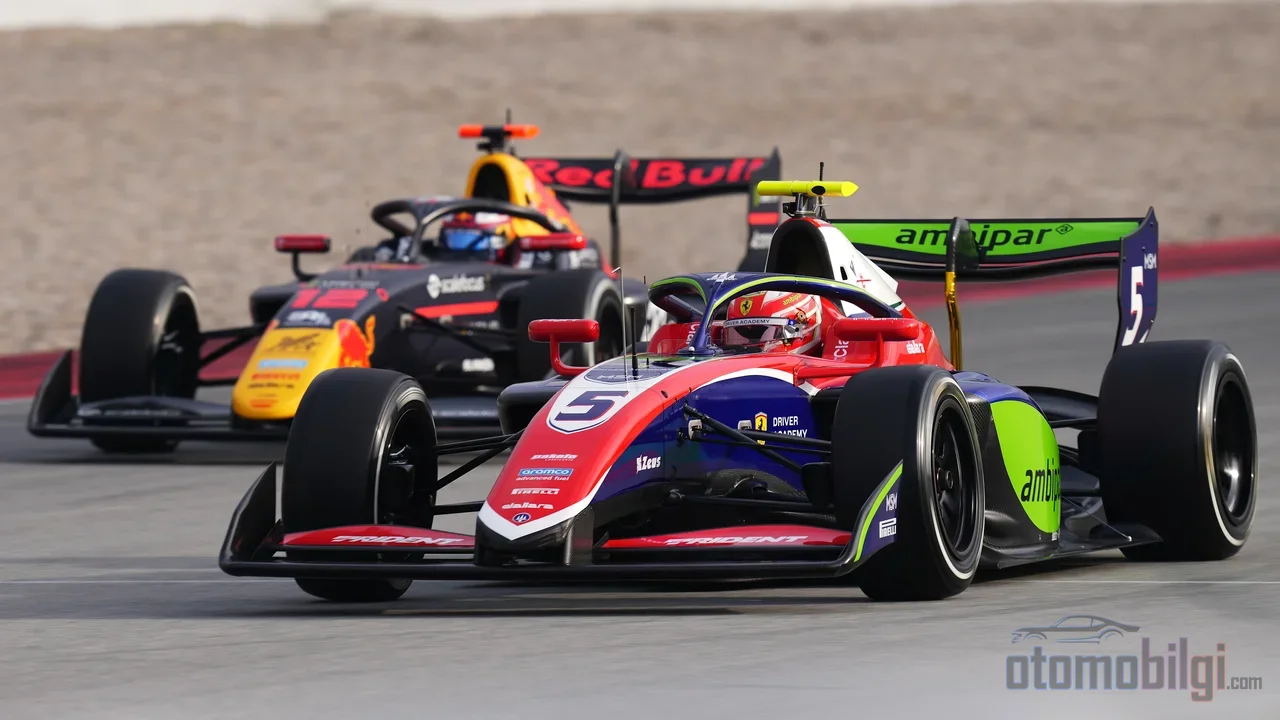
F3 is a one-make series: everyone uses a Dallara carbon-fiber monocoque chassis and a Mecachrome 3.4-litre naturally aspirated V6 engine; roughly 380 hp of power, 673 kg total weight, Pirelli tyres, a 6-speed gearbox and DRS. So there is no difference between the cars; the difference lies in the driver's ability, the team, and the budget.
When it comes to budget, things get tough. An F3 season costs approximately 1.2 million dollars believed to be ill; that's about half of F2. This amount is far beyond the individual means of an average family; the costs mostly fall on the driver. In 2021 the FIA introduced some cost-control measures, but the floor is still high. Even a championship doesn't change this financial reality; a champion who doesn't belong to a wealthy academy still has to search for sponsors to knock on F1's door.
That's why team academies are where the real game is played. Mick Schumacher's move to GP3 after his European F3 championship was described as a "natural progression"; Mercedes junior Esteban Ocon followed a similar path. Academies are the real force shaping a driver's career beyond the championship. A good junior career may not guarantee success in F1, but the chances of a champion without an academy are even more uncertain.
Notable Season Stories of Recent Years
Recent championships prove how competitive the series is. In 2024, Leonardo Fornaroli became the first name to win the championship without winning a single race; yes, he lifted the trophy with zero wins. Consistency can be more valuable than one-off brilliance. In 2025, Rafael Câmara mathematically clinched the championship in Hungary and completed the series in which Trident produced its third champion in a row; he now aims to win two consecutive championships in F2 with Invicta Racing.
In the 2026 season, Ugo Ugochukwu played for the top with Campos Racing and won the championship; Campos claimed the teams' championship for the second time. The series is running with 31 drivers with the Dallara F3 2025 chassis entering its second year; Jenzer Motorsport, long on the grid, gave way to DAMS. The season began on March 7 in Australia and ended on September 13 at the new Madring circuit; Madring was added in place of the Bahrain round.
Stepping Stone or Shop Window? Conclusion
The F3 championship is a stepping stone; but not an automatic elevator. Earning the Super Licence points is necessary to unlock the door; to take the seat, academy backing, the right team choice and performance in F2 are required. Only two of eight champions reaching F1 shows why the shop window part actually weighs heavier.
In my view, the most honest summary is this: the F3 championship proves your potential; an F1 seat depends on whether someone is ready to invest in that potential. If it were you, which championship would you work on; catching the title, or getting into an academy? My answer would be both; because you are not alone on this ladder.
Sources
- FIA Formula 3 Championship
- The beginner's guide to Formula 3
- F1 EXPLAINED: How does the Super Licence system work
- What is a super licence in Formula 1?
- The FIA Formula 2 Championship celebrates a decade of success
- Formula 3000: In defence of F1's unloved feeder series
- Formula 3: Who's going where in 2026?
- FIA Formula 3 2026 season preview
- Snakes and Ladders: Climbing the Rungs in Formula 1
- The Stars of Tomorrow: Introducing F1's Feeder Series