Have F1 Academies Gotten Their Hands on F2 and F3?
Share This Page
Short answer: partially yes - a significant portion of the F2 and F3 grids now comes from the academies of major F1 teams, but it is still too early to say they have 'taken over'. These series are F1's official feeder steps, and academies are the strongest driving force carrying young drivers up this ladder; still, every season we see independent names shining without academy backing. Here is that balance explained, with the numbers and the names.
Highlights
- For the F1 Super Licence, over the last three years 40 points are required; the F2 champion receives these points in one go
- The total cost of a credible junior career stretching from karting to F3 can reach up to 14.84 million euros can reach up to
- In 2026, academy graduates such as Fornaroli, Browning, Vesti, Crawford and Iwasa are sitting in reserve driver seats at F1 teams
- It is estimated that F2 drivers earn around 50,000-150,000 euros per season
- The minimum age in F1 is 18; since most drivers start around age 6, the journey takes more than 10 years
What Exactly Is an F1 Academy?
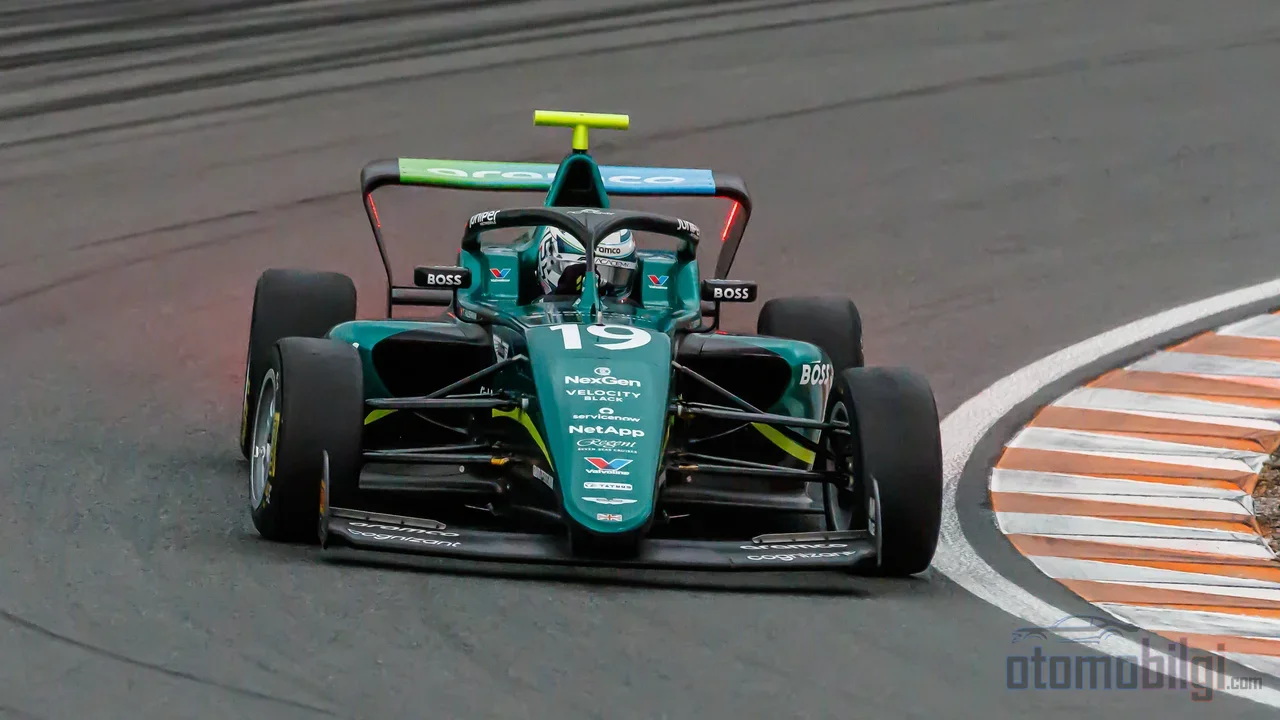
Think of it this way: F1 teams discover the talent closest to their cockpits years in advance and include them in a 'corporate family'. We call these structures junior programs or academies, and the logic is simple - financial support, regular training and simulator time are provided; in return, the team both gets to know and shapes the future F1 driver. Formula1.com describes these structures as a 'shoe mold' for getting a young driver into an F1 cockpit, which I think is a very apt analogy.
In recent years the situation has changed: being part of an F1 academy has now become a fundamental factor for young talents dreaming of F1. In programs like the Red Bull Junior Team, drivers can compete simultaneously in F2, F3, Super Formula, various F4 series and top-level karting; academy heads watch their performances one by one every weekend. Ferrari Driver Academy, Mercedes, Alpine, McLaren, Williams - every major team has its own list.
How Much Weight Do Academies Carry on the 2026 F2 and F3 Grids?
The 2026 F2 season started with 22 drivers, and almost all of the names on the grid are in some way attached to an F1 program. On the Red Bull side, Nikola Tsolov is in F2; Ferrari Driver Academy's F2 bet is Brazil's Rafael Câmara. Mercedes is associated with Joshua Dürksen; names like Toyota-linked Ritomo Miyata and Cadillac-backed Colton Herta are also on the grid. In F3, academy drivers such as Tim Tramnitz (Red Bull) and Mari Boya (Aston Martin) stand out.
Honestly, this picture always reminds me of a school classroom: most of the class are students of the same 'college', while a few are scholarship holders or came from outside. The class is still a whole - everyone races in the same car, on the same track, for the same flag. But when you look behind the scenes at who is paying whose insurance, the weight of the academies is clearly visible.
Rising Names from the Academy: Is the Reserve Driver Seat a Reward?
The most concrete rung connecting the academy system to F1 is the reserve driver appointments. Look at those occupying these seats on the 2026 grid: Leonardo Fornaroli, as one of the few drivers to win the F3 and F2 championships back to back, was taken into the McLaren program and became McLaren's reserve. Luke Browning, after his first full F2 season, was promoted from the Williams academy to the 2026 reserve driver role. Fred Vesti has been a Mercedes junior since 2021 and the team's sole reserve. Jak Crawford lost the 2025 F2 championship to Fornaroli but secured the Aston Martin reserve seat. Ayumu Iwasa has been in the Red Bull family for 5 years and, as Super Formula champion, serves as Racing Bulls' reserve.
- Leonardo Fornaroli - back-to-back F3 and F2 champion, McLaren reserve driver
- Luke Browning - promoted from the Williams academy to the 2026 reserve driver role
- Fred Vesti - member of the Mercedes Junior Team since 2021, Mercedes' sole reserve
- Jak Crawford - Aston Martin reserve
- Paul Aron and Kush Maini - part of the Alpine family; Maini is in his fourth F2 season with ART in 2026
- Ayumu Iwasa - Red Bull junior, Racing Bulls reserve
But the other side of the coin is pressure. Everyone knows Yuki Tsunoda's story: after collecting only 33 points in 2025, his seat was handed to Isack Hadjar for 2026 and he was demoted to test/reserve driver duty. Red Bull chose to keep him in the family, yes - but what this example shows is this: an academy seat is not a guarantee, it is a lease agreement dependent on performance. Living with a constant 'we're watching you' feeling is not easy.
The Super Licence and the Official Path to F1
What exactly is the role of F2 and F3 in the F1 ecosystem? Formula1.com says it plainly: these two series are the path to tomorrow's F1 drivers. On the mechanical side there is the FIA Super Licence. You need to accumulate 40 points over the last three years; the F2 champion receives these 40 points in one go, while F3 forms the next rung down. Alternatively, there are also conditions such as accumulating 25 points over 3 years in eligible championships, or completing at least 6 races in F2. Additionally, a driver holding a super licence can earn extra points through free practice sessions at each F1 event.
Let's put it in concrete numbers: a driver arriving with 35 points who finishes any F2 season in the top 8 secures the 40-point threshold for 2027. In other words, a good season in F2 can be the official key to the dream of the world stage. This is precisely why academies try to place their drivers on this exact rung - getting them to the door and holding the key on their side is their job.
The True Face of Money: Why Do Independent Drivers Struggle?
Now let's move on to the most painful part. Spanning from karting to F3, the total cost of a convincing junior career is calculated at approximately 14.84 million Euros. An alternative calculation says it is reasonable for total spending on a path starting in F4 at age 15 and going up to a second F2 season around age 21 to exceed 16 million dollars. A competitive karting season alone can cost up to 300,000 pounds. These are the figures that answer the question 'talent or funding' - and the answer is brutal.
There are only 20 seats; countless drivers see their dreams under threat when the funding dries up.
The strange part is that even F2 is not a place where you make money. F2 drivers are estimated to earn around 50,000-150,000 Euro per season, and most of that income comes from personal sponsorships. So you pay to sit in the cockpit, and on top of that you go looking for sponsors. This is exactly where the academies' advantage comes in: easing the financial burden and securing training and simulator access. For a driver without an academy, however, those same rungs turn into a climb decorated with the stress of finding funding. At this point, Tatiana Calderon's story comes to mind - a concrete example of how a lack of funding ended her F2 career.
Don't Confuse Them! F1 Academy Is Not the Same Thing
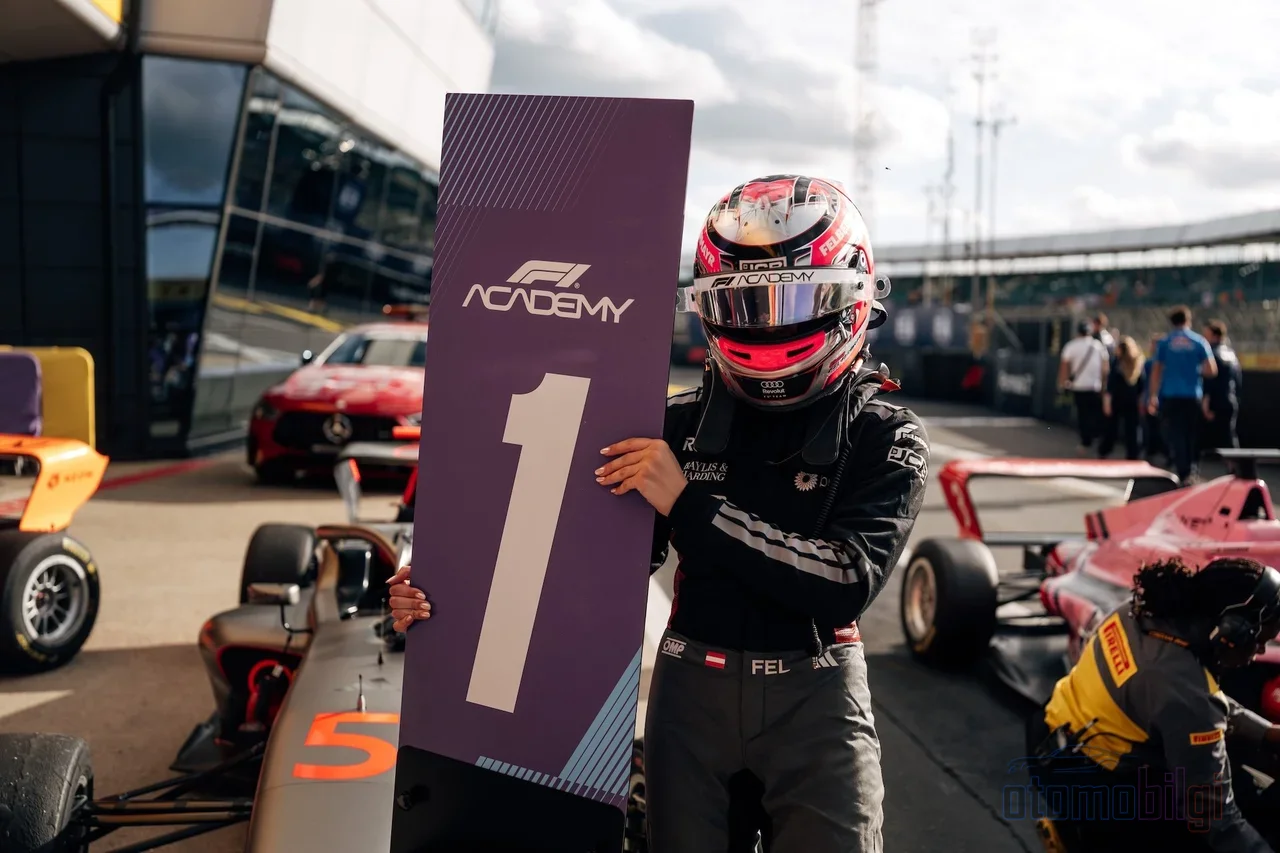
A small but important distinction: 'F1 teams' academies' and the 'F1 Academy' series are not the same thing. F1 Academy is a series at Formula 4 level, entirely for women, established in 2023. The 2026 season has 6 rounds, all of them accompanying F1 Grand Prix weekends; each round features 17 full-time drivers plus 1 wild card, across 6 teams with 3 cars each. The Tatuus T421-F1A chassis with its 1.4-liter turbo Autotecnica engine produces around 165-174 horsepower, with speeds reaching up to 150 mph.
The interesting connection is this: 10 of the 18 cars on the grid carry liveries backed by 11 F1 teams - including Mercedes, Ferrari, Red Bull, McLaren, Williams, Aston Martin, Haas, Alpine and now Audi. Audi, having bought Sauber, entered as a constructor in 2026 and announced 17-year-old Freddie Slater as the first member of its Driver Development Programme; shortly after, F1 Academy driver Emma Felbermayr became the second member. So the big teams have embraced this series as well. Looking at the series' former champions, the system clearly works: Marta Garcia (2023), Abbi Pulling (2024, 9 wins), Doriane Pin (2025) - Pin subsequently became a Development Driver at Mercedes F1 and completed her first F1 test in April, 76 laps in the W12. Of course, there are criticisms too: it is pointed out that the series races with modified F4 cars rather than true F3-level machinery, and that progression to the higher rungs of the ladder is difficult; the view that those wanting to advance on the F1 ladder at 15-16 years old should have stood out earlier is frequently debated.
So Is This System Killing the Competition Among Feeder Series?
I think that's the question that really needs to be asked. If we remember that GP2 started in 2005 with the motto of a 'level playing field', today's picture contains an interesting irony: the cars are still the same, the conditions no longer are. Scientific studies show that the distribution of resources between teams directly affects the balance of competition; in F2 and F3, its version is the difference in resources behind drivers racing the same car.
Still, there's no need to give up. Academy support is not a speed tool but a backbone - the driver is still the one pushing the piston. Even before becoming champion, Fornaroli was the fastest on track; McLaren simply made what came after easier for him. On the other hand, since the minimum age in F1 is 18 and most drivers start at age 6, the journey takes more than 10 years. On this long road, an academy is like a treadmill: it moves you forward with less effort, but you set the pace. My prediction is this - academies will hold most of F2 and F3 for a long time, but the concept of 'taking over' will never fully buy the track itself. Isn't the most beautiful part of the story that everyone on track wears the same yellow band?
Sources
- What it's really like to be in an F1 team's driver academy – Formula1.com
- Who are the reserve drivers for each F1 team in 2026? – Formula1.com
- How F2 and F3 provide a pathway for the F1 drivers of tomorrow – Formula1.com
- The beginner's guide to the F1 Super Licence – Formula1.com
- How does F1 driver academy support shift as drivers rise on the ladder? – Feederseries.net
- Formula 2 2026 season preview – FormulaScout
- F1 junior teams in F2 & F3 – Grid and Formula
- Red Bull Junior Team Drivers – Red Bull
- 2026 Teams – FIA Formula 2
- How much F1 drivers will pay for their 2026 F1 Super Licence – Kym Illman
- The Real Cost of Reaching Formula 2 – DriveLine
- A Career In Motorsports: Why Funding Matters – The Paddock Chronicle
- BEGINNER'S GUIDE: 2026 F1 Academy season – F1 Academy
- 2026 F1 Academy season – Wikipedia
- Tatiana Calderon Profile – Motorsport.com Turkish