Why Are Drivers Bringing Budget to Teams in F2 and F3?
Share This Page
In F2 and F3, drivers bring budgets to the teams, because in these series the teams' main income comes directly from the drivers themselves: a competitive F3 seat costs roughly $1.5 million, while a season in F2 is $2-3 million , and this money is brought to the team by the driver's family, sponsors, or the F1 academy they belong to. In other words, the driver here is not a salaried employee but often works like a partner who finances their own seat. On this page, I explain how this inverted economy works, where the money comes from, and the impact of this system on careers.
Highlights
- A competitive F3 season costs about $1.5 million, and an F2 season $2-3 million (industry estimates).
- The total cost of the path from karting to an F2 seat is calculated in analyses at around 14.84 million euros .
- Drivers generally do not receive a salary from the team; the money comes from family, sponsors, and F1 academies.
- Starting in 2025, F3 introduced a 1 million euro prize fund distributed to the top five drivers.
- F2 and F3 races will be run at Istanbul Park in 2027 on the same weekend as the F1 Türkiye Grand Prix.
How Much Does a Seat Cost in F2 and F3?
First, let's put the numbers on the table, because it is impossible to understand driver budgets without understanding the economics of these series. The commonly discussed figure for a full F3 season is around $1.5 million . When moving up to F2, the picture accelerates: a competitive seat costs $2-3 million per season, and according to some estimates can go up to $3-4 million . These figures do not come from an official price list; let me say upfront that they are estimates circulating within the industry. But the order of magnitude is the same for everyone: we are talking about millions.
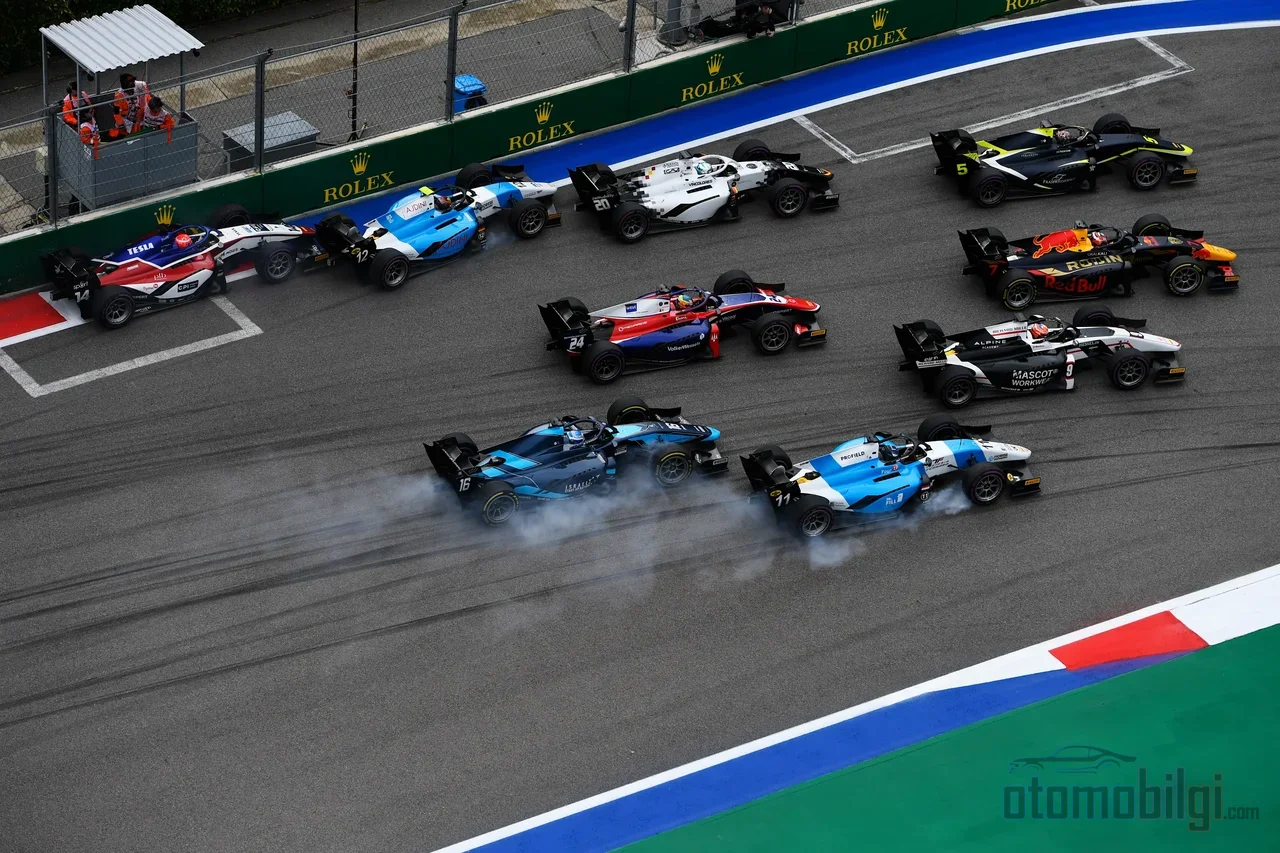
So where does this money go? This is where the technology side comes in. In F2, everyone uses the same Dallara chassis and Mecachrome engine, the operating crew per car is limited to 12 people, official testing is kept to a minimum, and private testing is completely banned. These restrictions both keep the series competitive and keep costs under control; in other words, teams cannot crush each other in a development race, but there is a fixed season cost, and most of this cost is covered by the money coming from the drivers.
The most striking aspect of all this is the total journey. The fact that analyses explain a driver's career, from starting karting to sitting in an F2 seat, with a total cost of 14.84 million euros is no coincidence. When you reach F2, you have one of the pinnacle machines of this ecosystem, a 620-horsepower car with DRS and pit stops; but the total amount of money spent to reach that car can even surpass the seat's own price.
Where Do Drivers Really Get the Money From?
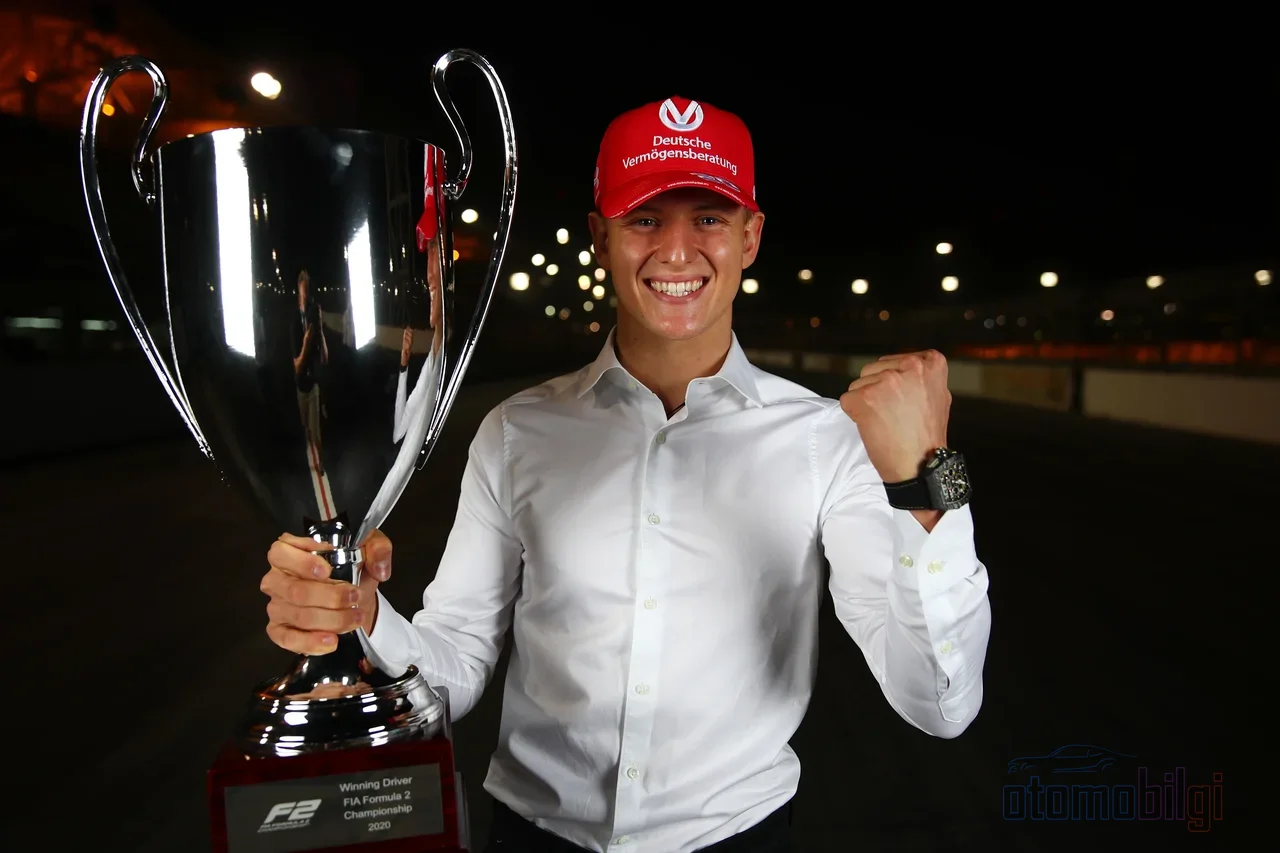
Here lies the series' least discussed yet most decisive truth. The budget is usually fed from three sources: family support, sponsors, and connections to F1 driver academies. Without the combination of these three, securing a seat in F2 or F3 today is nearly impossible. A single source is not enough; as series CEO Bruno Michel has also said, even academies usually do not cover the driver's entire budget, and the driver has to find other income streams.
The teams' own side is also interesting. If the budget coming from a driver does not fully cover the shortfall, the team makes up the difference by selling the other car at a higher price, finding additional sponsors, or contributing the team owner's own money. In other words, while the team races on one hand, on the other it becomes a financial institution that assembles each car's budget piece by piece. Just imagine, you need to turn someone who even gets their sandwich at the school canteen with a friend's money into a businessperson managing a two-million-dollar budget here.
How Much Are Sponsorship Packages? Here Are the Price Steps
Drivers bring part of the money themselves by gathering sponsors. Sponsorship packages start more affordably than you might think but work like a climbing ladder. The following table can be drawn as guiding industry estimates:
| Package | F2 | F3 |
|---|---|---|
| Title (lead sponsor) | Starts from around $50,000 | $20,000-400,000 |
| Primary (main position) | $30,000-400,000 | $15,000-150,000 |
| Official partner | $15,000-150,000 | - |
| Brand placements | Can be acquired for tens of thousands of dollars | Starts from around $20,000 |
| Full race seat | Millions of dollars, largely driver-funded | Roughly half of an F2 season |
The most crucial row in this table is the last one: while the cost of a seat in F2 runs into millions, sponsorship packages start at the level of tens of thousands of dollars. What bridges this enormous gap is not sponsors but family money and academy support. In other words, even if a driver sells all their sponsorship packages, they often cannot reach even half the budget. Compared with the F1 side, the scale becomes clearer: there, title sponsorships run at $75-110 million per year, and the championship has roughly 1.6 billion cumulative TV viewers annually. F2 and F3's sponsorship market is small by comparison, so the financial burden shifts to the driver.
Are F2 and F3 Drivers Paid a Salary?
The honest answer: usually no. In these series, drivers do not receive a salary from the team in the classical sense; on the contrary, in most cases they bring money to the team. That said, the picture is not entirely bleak. According to estimates circulating within the industry, F2 drivers in championship-contending positions can earn up to $300,000 per year in income, while there are sources pointing to over $30,000 for others. For young drivers within academy structures, figures in the range of $225-500 per day are discussed. None of these are verified official figures and should be read as industry estimates.
Comparing it to the picture in F1 makes everything clear. In Formula 1, driver salaries are kept outside the budget cap; meaning teams actually pay their drivers salaries. In F2 and F3, the money side flips. On the lower rungs of the ladder, the driver is not an employee but a customer. Imagine that the moment you sit in the seat, some of the advertising boards on that car belong to you, while the rest are shared with your friend's sponsors; it is exactly such an arrangement.
Is the "Pay Driver" Label Fair, or Just the Reality of the System?
A driver who brings a budget is called a "pay driver" in English, and this label is far from flattering on track. When a fast but cash-strapped driver loses the seat to a wealthier rival, a storm breaks out on social media. But the systemic side of the matter is often overlooked: according to Bruno Michel, a driver who brings money is not only funding their own career but also keeping their teammate's seat alive. In other words, without that driver, the talented but penniless one might not have been able to sit in a seat either.
These drivers are financing not only their own careers but also their teammates' seats. In some cases, wealthy families support not just their own drivers but also drivers at other teams, even team owners.
This perspective changes things. Of course, there are drivers who sit there purely with money but cannot compete on track; they harm both their own careers and the credibility of the series. But in the overall balance, a driver who brings a budget is a necessary gear for the ecosystem to function. The system is not perfect, but it is the most workable model we currently have.
How Are F1 Academies Filling This Gap?
This is where the system's heroism begins. The driver academies of giants like Red Bull, Ferrari, McLaren, and Mercedes shoulder the budget burden of talented youngsters, preventing them from being eliminated due to lack of funding. An academy-backed driver finances the most critical years of their career on the path from karting to F4, then F3 and F2, not from their family's pocket but from the coffers of a giant F1 ecosystem. With the total cost from karting to an F2 seat being 14.84 million euros in a world, this means a bridge between talent and opportunity.
However, academies are not saviors but a selective filter. They usually do not fully cover their affiliated drivers' budgets; they may ask the driver to seek sponsors and expect contributions from their family. Also, getting into an academy is a competition in itself; not every talented youngster lands on the radar of the giant brands. That is why academies fix the system but do not change it. Names who cannot gather sponsors, cannot get into an academy, and whose families cannot put up millions are still left at the bottom of the ladder.
Will F3's 1 Million Euro Prize Fund Solve the Problem?
In 2025, F3 introduced an innovation that gave fans some reason to smile: a total prize fund of 1 million euros was established to be distributed to the first five drivers to move from the series to F2. The champion receives 300,000 euros and the amount decreases by 50,000 euros for each position down to the fifth. 100,000 euros goes down to. For the prize to be paid in full, the driver must complete the entire season. When combined with Pirelli's current 300,000-euro championship prize, the F3 champion can have 600,000 euros saved up when moving up to F2.
Let's be realistic: Michel himself says this fund will not finance a full F2 season, only contribute to it. Criticism of the fund was also not long in coming. The fact that all five drivers who benefited in 2025 are affiliated with major team academies - including names within Red Bull, Ferrari, McLaren, and Aston Martin - has fueled the "fund that enriches the rich" debate. Another criticism is more targeted: if this 1 million euros had been spent directly on reducing the series' costs instead of being distributed as prizes to drivers, the root of the problem could have dried up.
When Does This Inverted Economy Become Relevant for Türkiye?
Very soon. Formula 1 is returning to Istanbul Park with a five-year agreement starting in 2027, and the first race will be held on October 1-3, 2027. Even better, as part of the F1 Türkiye GP, F2 and F3 races will also be held in Istanbul on the same weekend. So Turkish motorsport fans will have the chance to watch live, on our own soil, the young drivers who have managed to survive this inverted economy. TOSFED has also made statements about the arrival of F2-F3 and ticket prices; this also means a concrete goal for young Turkish drivers competing in the grassroots categories.
As a final word, I would like to say this: yes, the economics of F2 and F3 look absurd at first glance. A world where drivers bring money to their teams seems to shatter the fairy tale of "if you're fast, you win." But on the other side of the coin, there are teams that stay afloat thanks to this money, young drivers who get tested and developed for free, and a real door opening to F1. The system is flawed, but for those inside it, it is still the world's best ladder. Do you think this imbalance will be permanent, or will the academies eventually close the gap entirely? Let's meet in the comments.
Sources
- How F2 and F3 provide a pathway for the Formula 1 drivers of tomorrow
- F1 vs F2 vs F3 Sponsorship: Which Motorsport Fits Your Budget?
- Formula 2 CEO intends new prize fund to encourage drivers to complete season
- Michel: New F3 prize 'not going to finance a full season in F2'
- Is F2's $3 million admission price good value for aspiring F1 drivers?
- How Much Does a Season in Formula 2 Cost?
- The Real Cost of Reaching Formula 2: €14.84M
- What Is Formula 2 and Formula 3?
- After F1, F2 and F3 will also be held in Türkiye
- 2027 Formula 1 Türkiye Grand Prix