When Do Team Orders Come Into Play in F2?
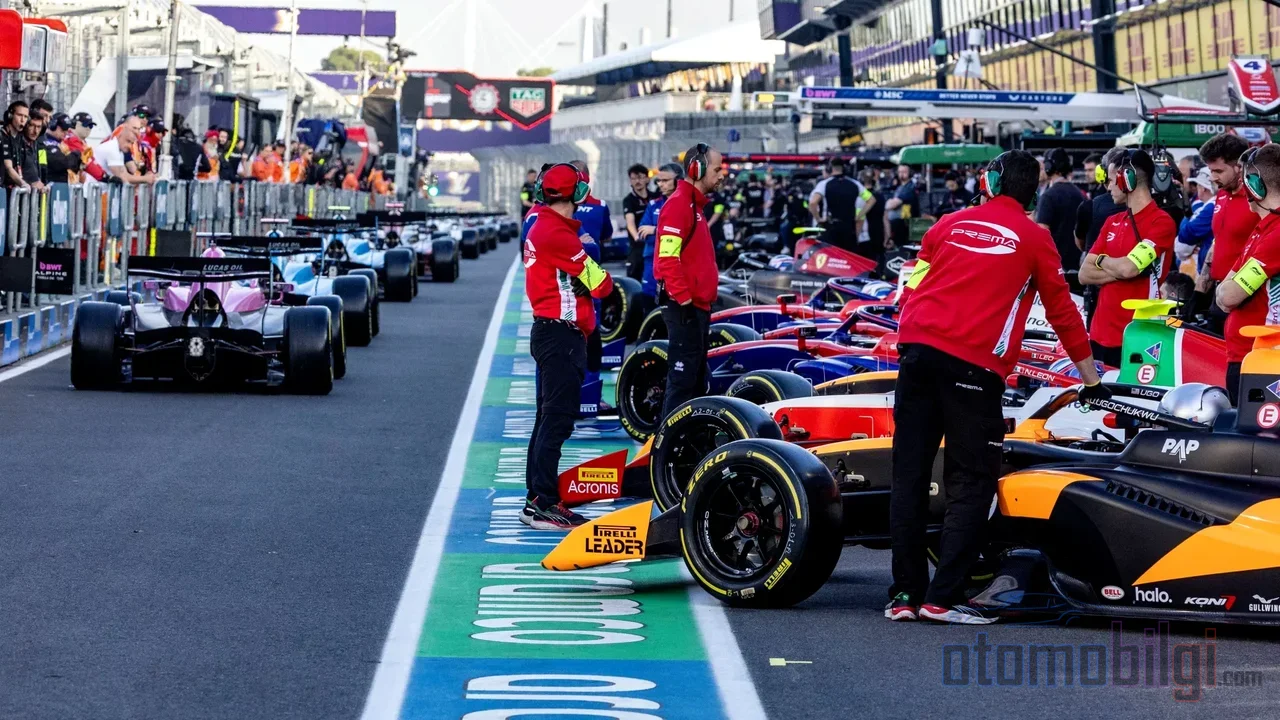
Can a single sentence over the radio change the fate of two teammates? In Formula 1, this question occupies the agenda every year: who will move ahead, who will give up points, and which driver will the team turn into a crutch? But the really interesting part is that the picture changes completely when we take the same question to Formula 2. Because in F2, the cars are identical, the grid rule is reversed, and the points math is entirely different. So exactly when and how do team orders come into play in F2? Let's take a look step by step.
What Exactly Is a Team Order?
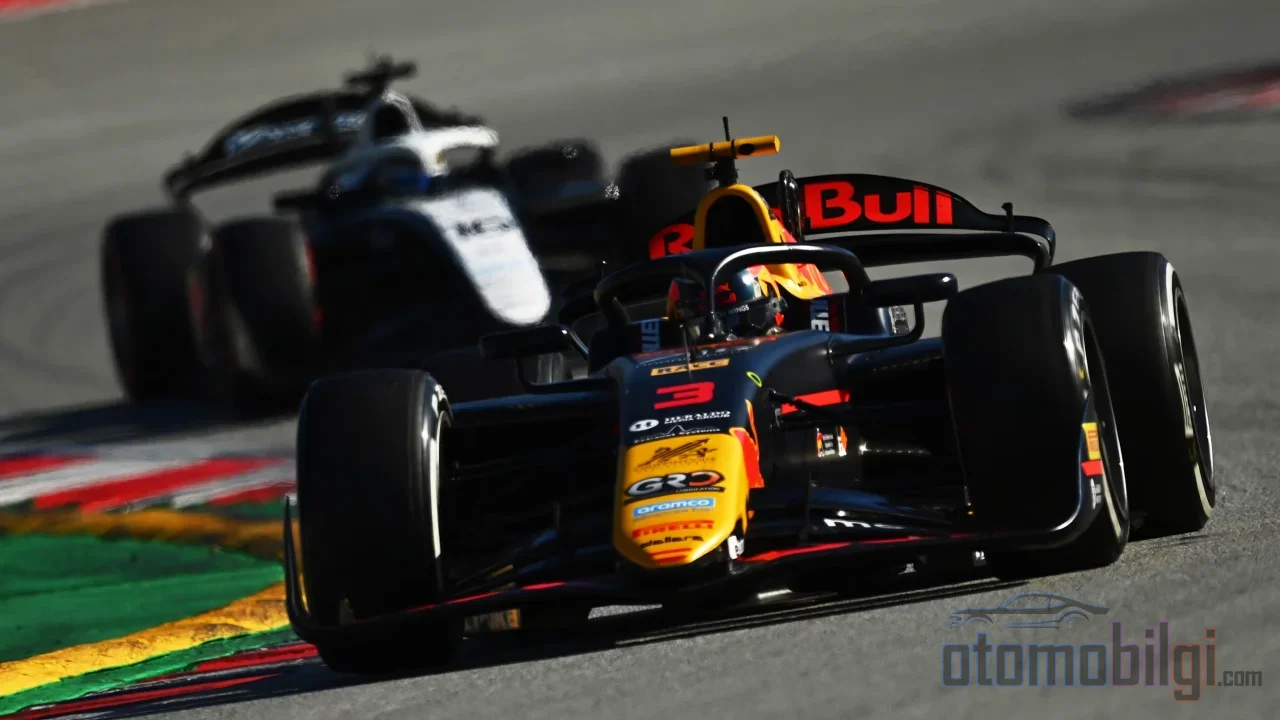
In its simplest definition, a team order means a team instructing its two drivers not to race where they would normally race each other. This can be a pre-established hierarchy, or it can be a permission to pass coming over the radio mid-race. The goal is usually the same: collecting maximum points for the leading driver in the championship, saving fuel and tires, and reducing the risk of mechanical failure and collisions. In other words, the logic of "you go up front, and you support from behind the scenes."
The history of this concept in F1 isn't full of bans as you might think - it's actually full of loopholes. For many years it was free; In 1955, Mercedes wanted Stirling Moss to win. The openly displayed position swap at the 2002 Austrian Grand Prix drew such a huge backlash that the FIA banned team orders affecting race results in 2003. The darkest moment of the ban era, however, was the deliberate crash scandal at the 2008 Singapore Grand Prix. But the rule didn't work: the famous coded radio message at the 2010 German Grand Prix showed how the ban could be circumvented, and the FIA lifted it completely from 2011 onward. Today, team orders are legal in F1 - as long as they don't lead to a rule violation.
Now let's return to the main question: What's the situation in F2? Well, the answer is more structural than you might think.
Key Takeaways
- In F2, all teams use the same chassis; individual development is forbidden, and spare parts are purchased from the championship's sole supplier.
- The sprint race grid is determined by reversing the top 10 of Friday qualifying.
- In F1, the team orders ban existed only between 2003-2010; it was lifted in 2011.
- An F1 superlicense requires a total of 40 points from the last three seasons; the F2 championship title is the most valuable item.
- In F1, a team can collect a maximum of 44 points in a single race.
The Single Chassis Rule Changes Everything
One reason team orders are talked about so much in F1 is that teams are in a technology race: the team with the bigger budget both develops a faster car and has to manage its two drivers. In F2, the picture is entirely different. The series is a single-make championship; all teams use the same car, individual development is not allowed, and all spare parts are purchased directly from the championship's sole supplier. So instead of trying to create a performance difference between teammates, both drivers have exactly the same car at their disposal.
What does this mean? In F2, the classic F1 justification for team orders - "my car is faster, so let me by" - simply doesn't exist. Since the cars are identical, only the pilot makes the difference, and the reversed grid rule reshuffles that difference every week. Also, in practice F2 doesn't have the engine allocation hassle found in F1; according to the series' technical regulations, all ECUs are set to "race off" mode at the end of every race and test, and engine revs are limited to 5,000 rpm. The off-track playing field is narrow, and on-track fairness is high.
How Does the Reversed Grid Rule Divide Teammates into Roles?
The rhythm of an F2 weekend goes like this: Friday practice and qualifying, Saturday the Sprint Race, Sunday the Feature Race. And here's the critical point: the grid for the sprint race is determined by reversing the top 10 finishers from Friday's qualifying. So the driver who qualifies 10th starts the sprint from the front, while the qualifying champion starts in 10th place. In F3, this rule applies to the top 12. Meanwhile, on the F1 side, doubling the number of sprints toward 2027 and the reversed grid idea are being negotiated with the teams - meaning F2's format is now on the big series' agenda.
So what does this rule do to team orders? It usually throws a team's two drivers to opposite ends of the grid. One starts the sprint at the front in defensive mode, the other from behind in attack mode. This creates a natural division of labor without any order being needed: instead of the team suggesting it, the rule already distributes the roles. But the other side of the coin is this: since the reversed grid turns a driver's own qualifying success into a penalty in the sprint, it requires the team to rebuild its calculation of "which driver to favor" from scratch every week. The faster a driver leading the championship is in Friday qualifying, the further back they start on Saturday - and this may not align exactly with their team's teams' championship math.
Points System: Two Different Championships, Two Different Goals
Here is the real transformation point for team orders in F2. In F1, every driver's points count toward both championships; the winner takes 25, the top 10 collect 18, 15, 12, 10, 8, 6, 4, 2, 1 points respectively, and a team can score a maximum of 44 points in a single race. In F2, too, the points are combined in the teams' standings; additionally, there is 1 extra point for the fastest lap of a driver finishing in the top 10 in each race. So while two drivers' points give the team a shared goal, the reversed-grid sprint can change the drivers' individual priorities. Sometimes the team says "let's both collect points for the team," sometimes it wants to protect a single driver's path to the individual championship (and superlicense points). These two goals rarely align at the same time.
Let's give a concrete example. In the battle between ART and PREMA in the Teams' Championship, ART's goal was to guarantee a one-two finish by outscoring PREMA by 26 points. What does 26 points mean? Roughly the margin of a single race win. In such a calculation, the team gives both of its drivers clear roles: one goes for the win, the other defends the podium and the points slice. Before calling this "team orders," one has to ask this: between two pilots driving the same car anyway, where does the team's sensible division of labor for point maximization end and where do orders begin?
| Feature | Formula 1 | Formula 2 |
|---|---|---|
| Car | Each team uses its own design | All teams use the same chassis |
| Development | Teams make their own upgrades | Individual development is banned, parts come from the championship |
| Sprint grid | Based on qualifying or the main race result | Reverse of the top 10 in qualifying |
| Team orders ban | Banned between 2003 and 2010, then lifted | No specific ban clause in the foreground |
| Engine limit | Per-driver allocation limits within the season | Post-race 5,000 rpm ECU limit, spec series |
Super License Math: Why Is One Driver Favored?
Now let's turn to the career side of things, because this is where the real driving force behind "team order-like" strategies in F2 lies. Every driver who wants a seat in F1 must obtain an FIA Super License, and for that they need to accumulate at least 40 super license points in total over the last three racing seasons. A driver can earn points from one or two series in a calendar year. The F2 championship is one of the most valuable items in this table - so a team's strategy of favoring one driver directly affects that driver's path to F1. So although a classic radio pass order is rarely heard in F2, a team steering its resources, development plans, and point opportunities toward one driver functionally amounts to the same thing.
Of course, this license also has a cost: For 2026, the base fee is €11,842, plus €2,392 added per championship point. In short, the super license is a career key measured both in points and in money. That's why F2 teams, when deciding which of their two drivers will move ahead in the championship, calculate not just that weekend but the driver's entire future. Do you think this is fair, or is it handing a young driver's career over to the team? I think that's exactly why this topic is debated anew every year.
PREMA and ART: The School of Constructors' Championship Strategy
Looking at the historical background of these strategies, two names stand out. PREMA Racing is an Italian team with roots going back to 1984 Italian F3, winning that championship in 1990; its international rise spread over the following 20 years. In the FIA F2 era it won the Teams' Championship in 2020 and 2021, took consecutive teams' titles in FIA F3, and in one season each of its three drivers won not just one race, but at least two races. ART, meanwhile, together with PREMA and Carlin, won all but two of the drivers' championships of the current F3 and its predecessor GP3.
What does this tell us? These teams have been experts at balancing two or three strong drivers under the same roof for years. In the system that combines the points of two cars in the team standings, winning the teams' championship requires both drivers to score regularly - a single star is not enough. This pushes teams toward role distribution and in-race prioritization without explicitly saying "move over." PREMA's partnership with Idra Group on the 2026 European tours also shows that the structural strength of these teams continues every year.
Radio and Technical Limits: The Practical Constraints of Enforcing Team Orders
You want to enforce a team order, so how do you communicate it? In F1, the FIA has restricted radio communication with technical directives; some race weekends saw teams given revised communication limits. The goal is for encrypted instructions and indirect messages on track to be auditable. In F2, a specific radio clause does not stand out; but the technical limits that come with being a spec series already narrow the playing field: programming the ECUs to "race off" at the end of races and tests, along with the 5,000 rpm limit, blocks any kind of technical trickery that could be tried off track.
In practice, this means: team orders in F2 are shaped not by big dramatic radio moments, but mostly by grid strategy, pit window planning, and pre-race role discussions. If we compare with NASCAR, the picture becomes clearer: there, race manipulation is officially banned, and after a scandal in 2013, comprehensive rules were introduced such as mandatory analog radios and spotter limits; in 2022, a driver received a points deduction and a fine. So the answer to the same question differs around the world: some series ban it, some leave it free, while F2 simplifies the matter from the start with structural rules.
So What Is the Answer? When Do Team Orders Come into Play in F2?
In summary: Team orders in F2 are rarely heard over the radio in the classic F1 sense; the moments they truly come into play are pre-race strategy meetings, the natural division of labor created by the reversed grid, and the prioritization of drivers by team championship and super license math. Since the single chassis rule eliminates the "move over for the faster car" logic, the team's hand is shown mostly through format and planning. While the two drivers' points combine in the team standings, the reversed grid reshuffles individual goals every Saturday. So a team order in F2 is not a radio sentence, but a design woven into the entire setup of the weekend. My take: this secretly solves the issue but doesn't end the debate - because the question of which driver's path to F1 will be opened always yields a result in one's favor and against the other. Do you think this system is fair, or the open radio orders in F1? Let's discuss in the comments.
Sources
- The Rules and Regulations - FIA Formula 2
- ART Grand Prix 'anticipating' Title double but PREMA Racing ready to spoil - FIA Formula 2
- 2026 Formula 2 Technical Regulations - FIA
- The beginner's guide to Formula 2 - Formula1.com
- Team orders - Wikipedia
- FIA removes ban on team orders from Formula One - The Guardian
- FAQ - FIA Formula 3
- What is an FIA Super Licence? - RacingNews365
- The beginner's guide to the F1 Super Licence - Formula1.com
- How much F1 drivers will pay for their 2026 Super Licence - Kym Illman