Where Do Drivers Leaving F2 Go?
Share This Page
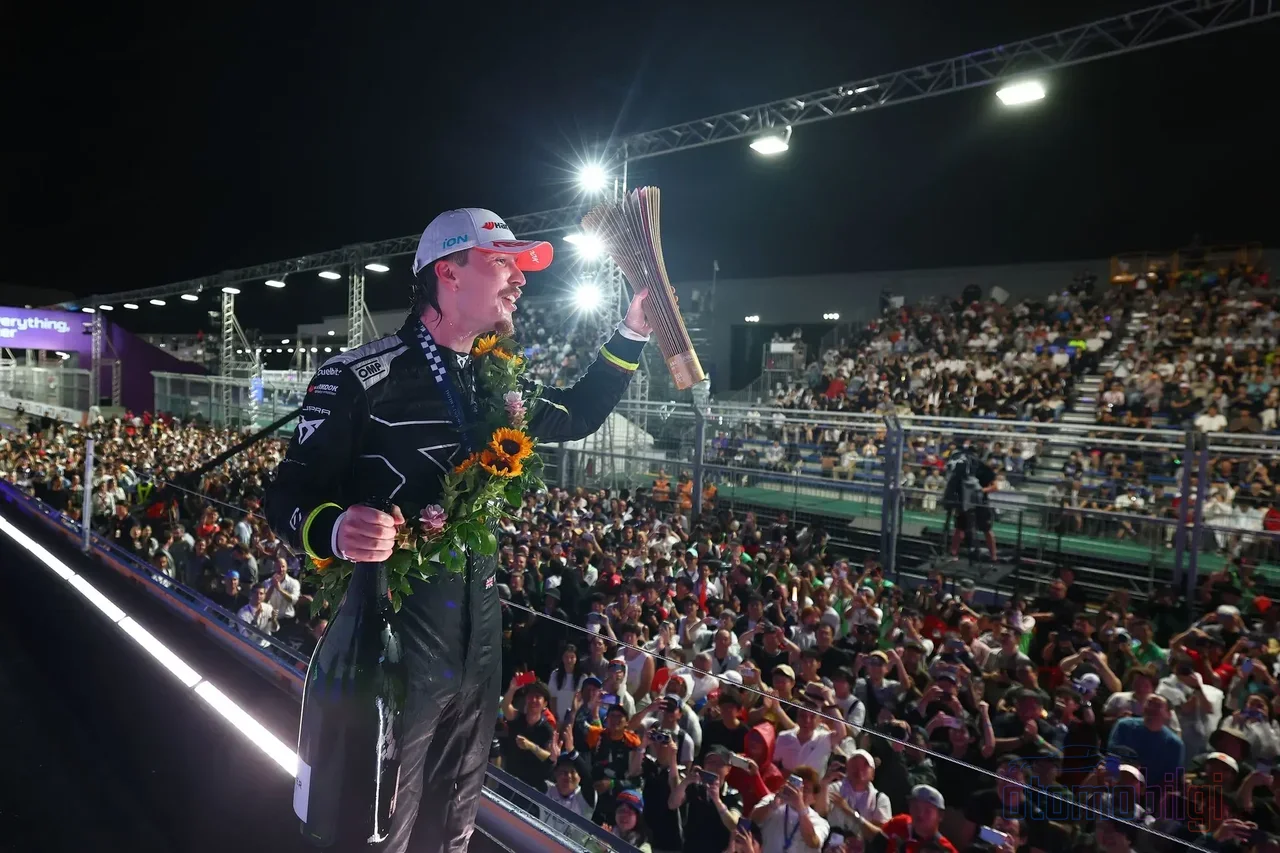
Most drivers who leave Formula 2 never make it to F1 and continue their careers in Formula E, WEC endurance racing, Super Formula, IndyCar or the GT scene. Each series offers a different level of competition, cost balance and career sustainability; switching to series that do not offer super license points can effectively shut the door on the F1 dream.
Highlights
- Since 2017, 22 drivers have moved from F2 to F1; four of F2's nine champions are racing in F1 today.
- There is a 40-point threshold for the F1 super license, and only championships in certain series award these points.
- Super Formula is considered the fastest single-seater series after F1; the gap around the Suzuka lap is only about 4 seconds.
- In IndyCar, the budget per car is around 10 million dollars.
- In Formula E, 89 different drivers have competed in at least one race since 2014.
Winning the F2 Championship Is Not Enough: The Super License Wall
Let's get one thing straight right away: The move from F2 to F1 is not like climbing a rung on a ladder; it is like squeezing through a narrow door. Each F1 season has only about twenty seats, and most of them are already filled. On top of that, there is the FIA's super license system. Every driver who wants to step into F1 must clear the 40-point threshold with the points collected in other series.
The critical detail here is this: with the FIA's updated points system, only a certain number of series' championships award the full 40 points. The super license rights of champions of series such as GP3 or Formula Renault 3.5 were affected by this change. So a driver may believe they are advancing their career by winning a low-points series, while unknowingly failing to open the door to F1. Super license penalty points also remain valid on the license for 12 months, which is an added risk for drivers with a strained relationship with the system.
The numbers are official: Since the first F2 season in 2017, 22 drivers have risen from F2 to F1. Four of F2's nine champions to date are still in F1: Charles Leclerc, George Russell, Oscar Piastri and Gabriel Bortoleto. So even the championship is not a hundred percent guarantee. Seat availability, lack of funding and a shortage of super license points are the three biggest obstacles young talents stumble over on the road to F1. So what do those who hit these obstacles do? This is where the rest of the career map begins.
Formula E: The New Favorite of F2 Drivers
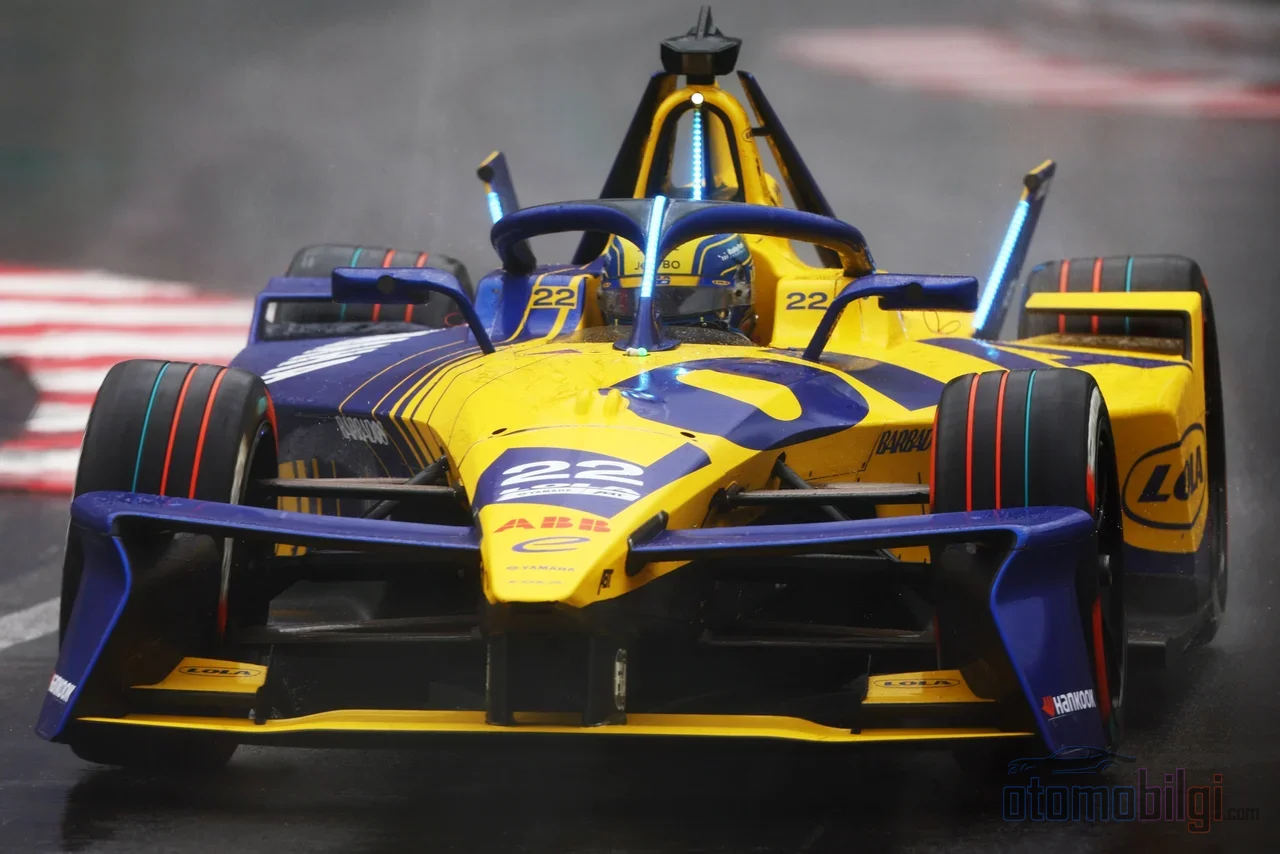
This is the path that has become one of the brightest stars in recent years. Formula E has held FIA world championship status since the 2020-21 season and attracts young drivers with three things: Limited seats in F1, growing budget difficulties, and a rapidly expanding championship. Moreover, the series is generous about giving youngsters a try; In the 2025 rookie test, 16 of the 22 drivers had raced in junior single-seaters within the past year. The names tested included familiar faces from F2 such as Jak Crawford, Alex Dunne, Leonardo Fornaroli, Dino Beganovic, Kush Maini, Gabriele Minì, and Zak O'Sullivan.
The examples are striking. Taylor Barnard left F2 midway through his debut season at Monza and moved into McLaren's Formula E seat, becoming the driver who scored points, took a podium and a pole position while making the series' youngest race start. Zane Maloney also said farewell early after finishing fourth in F2 in 2024 and joined Lola Yamaha ABT. These two names show that even in the middle of an F2 season, the Formula E offer can be dazzling.
The series' F2-rooted history goes back further. 2013 GP2 runner-up Sam Bird became one of the series' most successful drivers, taking 12 wins and 27 podiums in Formula E. Former F1 names are not absent from the group either: Felipe Massa took a podium at Monaco with Venturi in 2018/19, Brendon Hartley and Antonio Giovinazzi had short stints, and Jacques Villeneuve raced in Beijing in 2015 as the only Formula E competitor among F1 champions. Even Pierre Gasly took on a one-race Formula E duty after his GP2 title and before entering F1. Stoffel Vandoorne, Nelson Piquet Jr, and Lucas di Grassi are among those who went from former F1 drivers to Formula E champions.
The Pourchaire Example: When the Doors Close
The story of 2023 F2 champion Theo Pourchaire delivers the harshest lesson of this career map. The F1 door did not open; he parted ways with Sauber at the end of 2024 and moved to IndyCar with McLaren, but after a few races he lost his seat to Nolan Siegel. Then the IndyCar door narrowed too, and in 2025 he became a Mercedes development driver. An F2 champion having doors closed in two different series speaks volumes on its own about how tough this business is. The Mercedes development driver role, however, is an exceptional example showing that a return to F1 is not entirely impossible; but to be fair, returns of former F2 drivers to F1 are truly rare.
WEC and Endurance Racing: The Side That Pays
Endurance racing seems like the route not for those who cannot let go of the open-wheel world, but for those who think wisely. Here, two names sum it all up. Antonio Giovinazzi, after leaving F1, won the 2023 24 Hours of Le Mans with Ferrari's Hypercar squad and took the 2025 WEC title; moreover, he continues as Ferrari's F1 reserve driver. Brendon Hartley returned to the WEC after his Toro Rosso stint and has accumulated 4 WEC titles and 3 Le Mans wins. Two drivers who could not establish themselves in F1 built careers that went down in history in endurance racing.
The ladder is clear too. On the European side, the Ligier European Series is the entry step; from there they progress to junior prototype and GT categories, then toward Hypercar or LMGT3. In the USA, the path is as follows: From the VP Racing SportsCar Challenge to the Michelin Pilot Challenge, and from there to the GTP, LMP2, GTD PRO and GTD classes of the IMSA WeatherTech SportsCar Championship. The endurance scene being more affordable for a driver, with some seats even paying the driver, is the biggest factor that makes this route sustainable. And there is this, too: Robert Shwartzman's career is like a multi-road map stretching from junior series to F1, and from there to sportscars and IndyCar; meaning this scene can host different backgrounds side by side.
Super Formula: The Place Where You Prove Your Speed
Japan's Super Formula is regarded as the fastest single-seater series after F1 cars. The Dallara chassis produces 543 hp, and the gap to F1 is only about 4 seconds per lap at Suzuka. In the 2016 speed comparison, Super Formula ranked ahead of IndyCar and LMP1 in the index standings. If an F2 driver wants to prove their speed is still at the top, this is the place.
And the series doesn't just promise speed; it opens doors, too. Alex Palou, with a Super Formula background, became the 2021 and 2023 IndyCar champion. Liam Lawson finished Super Formula second in 2023 and then reached F1 with AlphaTauri. In the 2026 season, Ayumu Iwasa was second in qualifying at one round with Team Mugen, and Tadasuke Makino was third. An interesting move also went in the opposite direction: Ritomo Miyata and Colton Herta came to Europe with Hitech for the 2026 F2 season. Luke Browning, meanwhile, chose Super Formula instead of F2 while continuing as Williams' reserve driver; so returning to F2 should not even be seen as a conscious career choice - in reverse, staying away from it is one.
IndyCar: The Demanding But Alluring American Path
IndyCar, with its standard Dallara chassis, 2.2-liter turbo V6 engine, 550-700 hp of power and top speed reaching 240 mph, is one of the most prestigious open-wheel levels just below F1. The budget per car is around 10 million dollars. Oval tracks, high speeds and the low budget cap make it both dangerous and very alluring. The examples of Alex Palou and Colton Herta show that a path from IndyCar to F1 exists, but that it is quite difficult.
GT Racing and Academy Routes
For those who don't want to give up single-seaters, the fourth door is an entirely different world: GT racing. The SRO GT Academy offers a structured route to the summit of international GT racing across six series and four continents. This seems to prove that a sustainable career in motorsport is a separate planning job beyond seat availability and funding; in the long run, the winners are those who recognize the alternative series early.
Alternative Series Side by Side: What Does Each Promise?
| Series | Standout feature | A representable career example |
|---|---|---|
| Formula E | FIA world championship status, rookie tests for young drivers | Sam Bird, Taylor Barnard, Zane Maloney |
| WEC / Endurance | Affordable cost, the prestige of Le Mans | Antonio Giovinazzi, Brendon Hartley |
| Super Formula | The fastest single-seaters after F1 | Alex Palou, Liam Lawson |
| IndyCar | 550-700 hp, 240 mph top speed | Alex Palou, Colton Herta |
| GT / Academy | Structured development programs | SRO GT Academy route |
Each row in this table has its own story; but they all share one common denominator: talent locked out of F1 can build a brilliant career in another championship on the scene.
So Is the F1 Dream Really Over?
The honest answer is this: a driver who moves to alternative series doesn't see their F1 dream die completely, but it weakens. Super Formula and IndyCar are the series where the road back to F1 is still possible. On the WEC and Formula E side, comebacks are rare; Pourchaire's Mercedes development driver role is therefore considered an exception. Even so, the professional single-seater equipment access Formula E offers to young drivers is unprecedented in history; the women's test also returns to Valencia in October 2026 as a full day. The Formula E 2025-26 grid features a wide pool of names with F1/F2 backgrounds, such as Mitch Evans, Nick Cassidy, Pascal Wehrlein, Antonio Felix da Costa and Jean-Eric Vergne.
In my view, the most honest summary is this: F1 is no longer the only reality. Richard Verschoor, entering his fifth and final season in F2, announcing his departure, or Jak Crawford leaving F2 to become Aston Martin's third driver, shows that career planning is now multidimensional. Which do you think is the better choice: waiting at F1's door for years, or celebrating victories in other championships around the world? If you ask me, the latter; because the grids are many, the speed is high, and life is short.
Sources
- Why more and more F1 prospects are eyeing futures in Formula E
- Formula 1 drivers that also raced in Formula E
- Career Paths
- FIA Makes the Expected Change to the F1 Super Licence Points System
- How fast is F1 compared to IndyCar, WEC, Super Formula...
- Where this champion spurned by F1 and IndyCar could head next
- F2 champion Theo Pourchaire becomes Mercedes' development driver
- 8 drivers who enjoyed success after leaving F1
- 8 things to be excited about in Formula 2 in 2026
- Iwasa qualifies P2 as Makino and rookie Nomura join top 4
- Revealed: Full Formula E 2025 entry list
- Career-changing opportunities with expanded SRO GT Academy