How Did Formula Regional Transform F3?
Share This Page
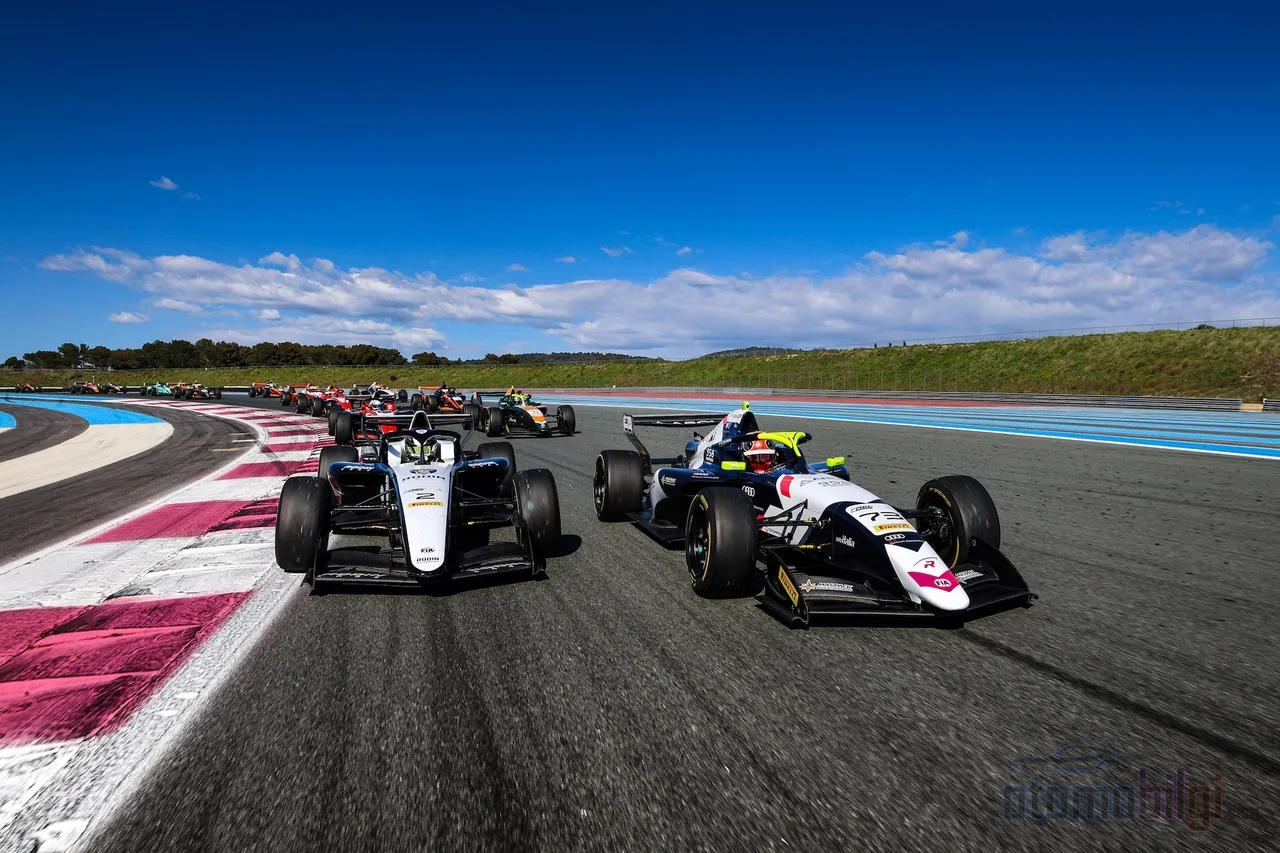
Formula Regional is the formula series that sits just below FIA Formula 3 and has in recent years become the first major rung of the ladder for young drivers on their way to F1. In the new order, drivers coming out of F4 no longer go straight to F3 but first try this series, a change that has radically reshaped both driver pathways and the positioning of the teams. This is the story of that structural transformation.
Highlights
- Formula Regional cars were designed as an intermediate performance point between F4 and FIA Formula 3.
- In 2026 the FRECA brand came to an end; it was replaced by the FIA's directly backed FIA Formula Regional European Championship took its place.
- For the F1 Super Licence, in the last 3 years at least 40 points and, at the time of the first race, 18 years of age are required.
- The new generation Tatuus T-326 chassis arrived along with a push-to-pass style "Race Mode" system.
- Turkish driver Alp Aksoy will race in Formula Regional Europe in 2027 with the support of the Ferrari academy.
Exactly Where Does Formula Regional Stand?
Think of the driver ladder like the stairs of an apartment building: at the very bottom is karting, then F4, with F3 and F2 on the upper floors and F1 at the very top. Formula Regional is exactly that intermediate floor between F4 and FIA F3. Its cars are more powerful than F4 but slower than the global F3 car. In other words, its name is not "F4," but it is regarded as the lower step of the F3 family. Although this naming may seem confusing, the logic is actually simple: the FIA wanted to bring these F3-like cars running at a regional level together under a single standard.
The main F1 feeder pathway today works like this: FIA Karting → F4 → Formula Regional Europe → F3 → F2 → F1. For drivers graduating from F4, the first stop is usually Formula Regional. Those who move up from there mostly advance to F3 and then F2; F2, in turn, is the final door that opens directly into F1. Names like Ollie Bearman and Théo Pourchaire are typical examples of this route.
Another interesting feature of the ladder is the seasons. While F2 and F3 have a winter break, the Formula Regional world has two separate winter series: FRMEC, run in the Middle East, and the series in New Zealand. So ambitious drivers do not spend the winter idle; they collect points and gain experience in the winter too, preparing for the F3 season. In my view, this is one of the smartest aspects of the series' rise.
From FRECA to FIA FREC: The Big Change of 2026
The Formula Regional series in Europe won over its fan base under the name FRECA, promoted by Alpine and ACI Sport since 2021. Over eight years, the abbreviation practically became the series' nickname. But in 2026 everything changed: Alpine and ACI Sport parted ways, and the FRECA brand was retired. In its place came the FIA Formula Regional European Championship, or FIA FREC for short, directly embraced by the FIA. The organization is now in the hands of the Automobile Club d'Italia.
The new order is ambitious even for its first season: running from April to September, with 8 race weekends-race calendar with 5 of them being tracks that are also raced on in the F1 World Championship. The season opens at the Red Bull Ring and passes through Zandvoort, Spa, Monza, Hungaroring and Paul Ricard; it wraps up at Imola and Hockenheim. Such a calendar for a junior series is truly preparation for the F1 atmosphere.
| 2026 Calendar | Date |
|---|---|
| Red Bull Ring | April 24–26 |
| Zandvoort | May 22–24 |
| Spa | May 29–31 |
| Monza | June 19–21 |
| Hungaroring | July 3–5 |
| Paul Ricard | July 17–19 |
| Imola | September 4–6 |
| Hockenheim | September 11–13 |
How Do the Race Format and Scoring Work?
There are three races every weekend. The first race on Saturday is run in the classic format, and the winner takes 25 points . The second race takes place on Sunday morning in reverse-grid order: the 12 fastest drivers from the qualifying round line up in reverse order on the grid, and the winner of this race collects 10 points . Pole position is worth 2 points, and the fastest lap is worth 1 point. The top 10 is scored as 25-18-15-12-10-8-6-4-2-1. The Driver, Team and Rookie titles are all awarded separately. The reverse-grid race is a formula F3 viewers know well; it guarantees chaos and attacking racing.
The grid itself is also healthy: 10 teams, 30 drivers, and all of them race with identical cars. Familiar junior series names such as ART Grand Prix, Prema, MP Motorsport, Trident, R-Ace GP, Rodin and Van Amersfoort are all in the series with Pirelli tires.
Tatuus T-326 and Race Mode: The Car's Technology
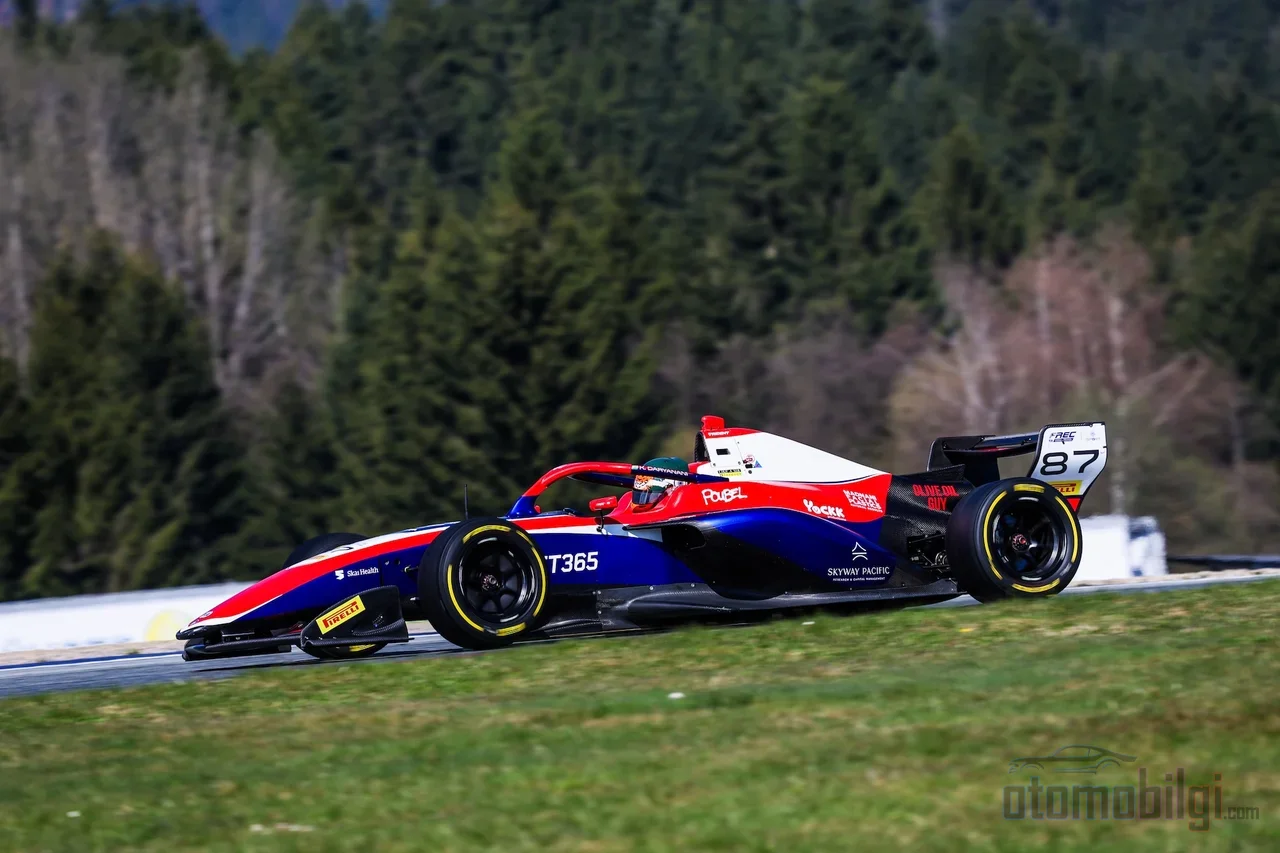
In 2026, the series' second-generation car, the Tatuus T-326 , was introduced. The chassis, developed together with the FIA, follows F1's recent aerodynamic philosophy: preventing the chasing car from losing the clean air of the car ahead and dropping out of the race. In other words, even the car design was conceived with "close and competitive racing" in mind. The power comes from a three-cylinder engine called ATM163T; this unit is a structure derived by Autotecnica Motori from Toyota's G16E engine.
The most eye-catching innovation, however, is the "Race Mode" system, which allows the driver to unlock full engine power for a limited time via a button in the cockpit. The idea is simple: bringing the push-to-pass logic to a junior series. The system can be tried in practice and testing, stays disabled in qualifying, and worked successfully in the Monza and Paul Ricard tests. For a 16-year-old driver coming out of F4, this counts as a first look at the overtake tools they will encounter in the future in F3 and F2.
Super License: The Key to the F1 Door
So why is there so much attention on the top of this ladder? The answer is one word: Super License. To race in F1, you need to collect at least 40 points from the series recognized by the FIA within the last 3 years, hold an International Grade A racing license, pass the FIA theory exam, and be at least 18 years old in your first F1 race. The points system is a rule in place since 2016; meaning how many points you can earn in which series now sits at the center of your career planning.
There's a story behind the age requirement too: after Max Verstappen entered F1 at 16, the rule was tightened and an 18-year-old limit was introduced. But in 2024 the FIA lowered the minimum age to 17 in exceptional cases. The subtle detail here is: you can get your license at 17, but you still can't enter your first official F1 event before turning 18. This flexibility paved the way for Kimi Antonelli's F1 debut in 2024. Critics, however, worry that it will also open the door for the next 16-year-olds. The debate continues, but one thing is clear: the age and points rules directly determine how many seasons drivers spend in which series. That's why Formula Regional being an FIA-certified series that awards Super Licence points made it indispensable to the ladder. For comparison: F1 Academy also began awarding Super Licence points from 2024 and introduced a two-season limit for drivers; on the other hand, series without FIA certification, such as Eurocup-3, award no points, which pushes sponsors and teams toward certified series.
How the Ecosystem Changed: Drivers, Teams, Academies
The rise of Formula Regional did not undermine F3; on the contrary, it repositioned it. F3 now sees a heavy wave of rookies from Formula Regional and F4 championships every season. In other words, F3 is no longer the "first formula experience," but has become a final step where experienced candidates take their exam before F2. Teams have also differentiated accordingly: some specialize in F2 and F3, some in Formula Regional; many maintain a presence in both series at once. The intense competition of McLaren, Red Bull, Ferrari, and Alpine academy drivers in European Formula Regional shows the series' weight in the F1 ecosystem.
The picture isn't always rosy. In 2024, the established name Arden Motorsport, despite being the team where Oscar Piastri's formula career began, left the series; Monolite also went through hard times. The emergence of Eurocup-3, backed by the Spanish Federation and lacking FIA certification, created an alternative for sponsors: some may prefer a chance at victory in a strong Eurocup-3 team for around 400,000 EUR instead of fighting for points in a small team in FRECA. Even so, the series managed to maintain its 30-car grid and continued to attract numerous F4 champions. This balance is a fine example of how fragile and at the same time how resilient a junior series can be.
Looking at the Ladder from Türkiye: Alp Aksoy and Cem Bölükbaşı
This ladder is now much more concrete for us as well. 16-year-old Alp Aksoy took 3 wins in Italian F4 and Euro4 with Prema Racing in 2026 and was selected for the Scuderia Ferrari Driver Academy's 2027 roster. In 2027, he will race in Formula Regional Europe with Ferrari's support; his goal is to be the first Turkish driver in F1 in 2030. Having a Turkish name right in the middle of this transformation of the ladder is, in my opinion, incredibly exciting.
Going a bit further back, Cem Bölükbaşı is also one of the names who has carried the Turkish flag in international formula series. In February, in the first round at Dubai Autodrome, he achieved successful results among 23 pilots and raced in the same team as Lorenzo Fluxa, Zdenek Chovanec, and Rafael Villagomez. Turkish drivers gaining experience on these rungs actually also charts the road ahead for young talents like Alp Aksoy.
Conclusion: The Ladder Is Now Longer But Clearer
The emergence of Formula Regional shows that the path to F1 has not been shortened, but rather better signposted. Instead of jumping from F4 to F3, drivers now learn both the car, the calendar, and the competition in an intermediate tier. The FIA taking the series over directly in 2026 formalized its description as "the final launch pad before F2 and F3." Your turn, reader: I believe that in this new structure we will watch the first Turkish F1 driver climb that very ladder. Do you think Alp Aksoy can complete this route?
Sources
- All-new FIA Formula Regional European Championship is go – RacingNewsWorldwide
- FIA Formula Regional European Championship (official event page)
- Formula Regional European Championship – fiafrec.com
- FRegional Europe: Who's going where in 2026? – Feeder Series
- From F4 to F1: The feeder series ladder explained – Feeder Series
- Why is FRECA losing teams and should it be cause for concern? – Feeder Series
- FIA lowers Super Licence minimum age to 17 in exceptional cases – Feeder Series
- FIA Super Licence – Wikipedia
- Formula Regional – Wikipedia
- 2026 Formula Regional European Championship – Wikipedia
- The beginner's guide to the F1 Super Licence – Formula1.com
- FIA lowers F1 superlicence age, paving way for Antonelli debut – Motorsport.com
- F1 Academy announces superlicence points and two-season limit – RaceFans
- How do the FIA single-seater championships compare? – Raceteq
- Teams and drivers – Van Amersfoort Racing
- Great opportunity from Ferrari for Turkish star hopeful Alp Aksoy – Hürriyet
- Turkish Driver Cem Bölükbaşı to Race in Formula 3 – TGA
- Big Success for Bölükbaşı in Formula 3 – TOSFED