Why Does Qualifying Determine Everything in F2?
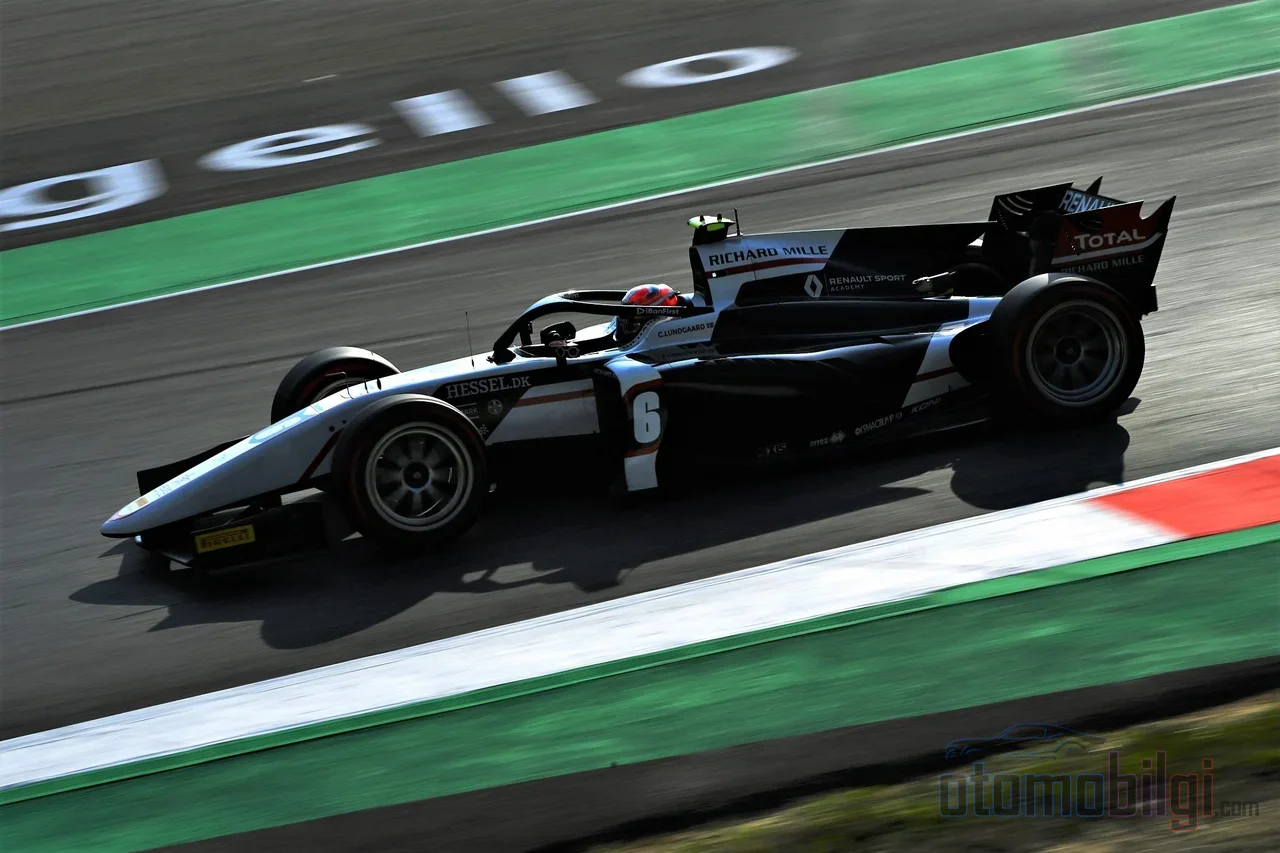
Friday afternoon, 30 minutes. That's how short the window is in which the fate of a Formula 2 weekend takes shape. Does that sound like an exaggeration? Let me walk you through a chain: the result of qualifying directly determines the starting grid for Sunday's Feature Race, and the same result sets the grid for Saturday's Sprint Race by reversing the top 10. So yes, a single lap holds the door to both races in its hands. But how can such a small time window affect the championship, and even a driver's path to F1? Let's get started.
How Does an F2 Weekend Work?
First, let's clarify the format, because that's exactly where the magic of qualifying comes from. A typical F2 weekend opens on Friday with a 45-minute free practice session followed by a 30-minute qualifying session. On Saturday, a 45-minute Sprint Race is run, and it does not include a mandatory pit stop. On Sunday, things get serious: the 60-minute Feature Race includes a mandatory pit stop and a change of all four tires. The season consists of 28 races, and each weekend takes place alongside a Formula 1 event.
And here is the critical point: The Feature Race grid is determined one-to-one according to Friday's qualifying results. The Sprint grid, on the other hand, is formed by the drivers who finished in the top 10 in qualifying lining up in reverse order. The driver who qualifies 10th starts Saturday's Sprint from first place, while the qualifying leader starts from 10th. This reversed-grid logic also exists in the sister series, Formula 3; there, the top 12 are reversed.
The Highlights
- The 30-minute qualifying session in F2, which directly determines the Feature Race grid, also sets the Sprint grid in reverse order
- A Feature Race win is worth 25 points; a Sprint win is worth 10 points
- Roughly 20 years of data, 7,800 driver-weekend observations: qualifying performance is the strongest predictor of race results
- The F2 champion earns the 40 points required for a super license in one go
- At Silverstone 2026 qualifying, the gap between the top two drivers was just 0.001 seconds
Why Is Qualifying So Decisive?

The Chain Effect: One Lap, Two Grids
Now stop and think: In F2, a driver's qualifying result shapes not only their own starting position, but the strategy of two races, tire management, and even the points mathematics all at once. If you qualify up front, you start Sunday's Feature Race, where the big points are handed out, at the front. If you qualify 10th, you claim the reward of starting Saturday's Sprint from first place. In other words, every second gained in qualifying is spread across two separate races. You can think of it with an exam analogy: you take a single test, but your grade is distributed across two different subjects.
Clean Air and the DRS Advantage
The most tangible advantage of starting up front is clean air. In the turbulent airflow disturbed by the cars ahead, the tires heat up faster and lose performance; the driver in front, meanwhile, keeps their tires in the ideal window in smooth, "clean" air. In the DRS and clean-air era, there is a strong correlation between pole position and winning. On tracks like Spielberg, we often see DRS trains directly affecting the race result. The driver behind closes in with DRS but can't pass, while the driver ahead preserves their tires in clean air and manages the gap. Frustrating, isn't it? But that's exactly where Formula 2's tension comes from.
Points Math: Why Is the Feature Race Sweeter?
Pay close attention here: In the Sprint Race, the top 8 drivers receive 10, 8, 6, 5, 4, 3, 2, and 1 points. In the Feature Race, meanwhile, the top 10 drivers are rewarded with 25, 18, 15, 12, 10, 8, 6, 4, 2, and 1 points; and in both races, the driver who sets the fastest lap among those finishing in the top 10 earns an extra +1 point. Additionally, the Feature Race awards 2 points to its pole position holder. The Sprint's reversed-grid pole position, on the other hand, brings no extra points - because that position is a product of the format, not of qualifying success.
| Achievement | Point Value |
|---|---|
| Feature Race win | 25 points |
| Sprint Race win | 10 points |
| Feature Race pole position | 2 points |
| Fastest lap (within the top 10) | +1 point |
You've seen the math, right? The Feature Race carries far more points, and the grid is determined directly by qualifying. That's why the quickest route to moving forward in the championship battle is hidden in those 30 minutes on Friday.
What Do the Data Say?
Of course, when we talk, we all "feel" certain things, but once the numbers come in, the game changes. A comprehensive analysis spanning roughly 20 years and based on 7,800 driver-weekend observations shows that qualifying performance is the strongest determinant of final race position. Qualifying performance even outranks race starting position and practice results. In other words, the qualifying session is, in a sense, the summary - and the fate - of the weekend.
Street Circuits: Where Overtaking Is Almost Impossible
But is qualifying position equally important everywhere? No - track type changes the character of the game. On street circuits, the roads are narrow, lined with barriers, and there is almost no clean space to make a pass. The Baku City Circuit fits this description exactly: a narrow, barrier-lined street track that, in the strategists' words, has historically favored qualifying, with overtaking being difficult. In the 2026 season, F2 tried two qualifying sessions and a three-race format at Baku for the first time - meaning even the series has been searching for format solutions to balance the weight of qualifying.
On these circuits, starting at the front of the grid means winning half the race. Just imagine: no one behind you, only corners ahead, and you're passing the barriers by mere millimeters. On street circuits, qualifying position determines the race result far more strongly than on permanent tracks. The reversed-grid rule is the one thing that breathes within this balance - on Saturday, those ahead move to the back and those behind move up, giving everyone a chance. But on Sunday? Sunday is once again qualifying's day.
The Super License Connection: One Lap, One Career
Now let's get to the emotional part of the matter. To move up to F1, drivers must accumulate a minimum of 40 super license points over the last three seasons. And here's the striking fact: The F2 champion earns these 40 points in one go, exactly. So the single season carrying the championship becomes the key that opens the F1 door. Those finishing F2 in the top 3 also earn direct super license eligibility with these 40 points. Points are distributed by category, and the driver's FIA classification also comes into play: Drivers in the Platinum and Gold classes receive the full points, while Silver class drivers receive 75% of them.
Put the chain together: strong qualifying sessions → good grid positions → Feature Race points → championship → super license. Qualifying may seem like just "a fast lap" at first, but it is actually the first line drawn on a driver's career map. That's why no one in F2 takes Friday afternoon lightly.
How to Improve Single-Lap Speed?
The Educational Side of the Reverse Grid
So does F2 really prepare drivers better with this system? According to advocates of the reverse grid format, yes: Sprint races build adaptation, fast decision-making, making clean overtakes in tight traffic, and overall race craft - valuable in terms of preparation for the higher tiers, namely F3, F2 and F1. It also balances the field, gives everyone a chance to score points, and makes the championship unpredictable. A similar practice exists in F1 Academy as well: the top 8 of qualifying are reversed for the Reverse Grid Race, while drivers from 9 to 18 keep their own positions.
Is Single-Lap Ability the Same Thing as Race Pace?
Let's be honest here: single-lap speed and race pace are different skills. In almost every generation, a distinction is made between "the best over one lap" and "the best at race pace"; one demands limitless sharpness and perfection, while the other demands consistency and tire management. F1's own Sprint format also did not adopt the reverse grid idea and uses a separate Sprint Qualifying - meaning this debate continues at the top level too. But in a development series like F2, the goal is to sharpen the driver in both directions.
Evidence from the 2026 Season
The theory sounds nice, but what does the field say? In Silverstone 2026 qualifying, Rafael Camara took pole position with a 1:39.690; Kush Maini finished second just 0.001 seconds behind. One thousandth of a second! Living proof of just how tight F2 qualifying sessions are. At Baku 2026, Rodin Motorsport's Martinius Stenshorne took pole position, with teammate Alexander Dunne second. In another F2 qualifying session, three separate red flags were seen, with Dino Beganovic, Stenshorne and Dunne completing the top three. Red flags, traffic, last-gasp laps - the qualifying session is a mini race in its own right.
Conclusion: The Weight of 30 Minutes
So, returning to the original question: Why does qualifying in F2 determine everything? Because the qualifying result both directly forms the grid for the points-rich Feature Race on Sunday and affects the Sprint grid by reversing it; starting from the front provides clean air and a DRS advantage, the weight of the starting position increases as overtaking opportunities diminish on street circuits, and this chain extends from championship points all the way to the super licence, shaping a driver's F1 career. Think of it like a whirlpool: that 30 minutes on Friday, spinning round and round, touches every moment of the weekend. Don't ignore Friday afternoon at the next F2 weekend - there, before anyone has scored a point, everything has already begun to be decided.
Sources
- The Rules and Regulations - Formula 2
- Recapping F2's new-points system and overhauled weekend format
- The beginner's guide to Formula 2
- The beginner's guide to the F1 Super Licence
- The risk perspective: Baku City Circuit
- Qualifying Classification | FIA
- Evaluating the Predictive Power of Qualifying Performance
- How Reverse Grid Races Work
- FAQ - Formula 3
- Two qualifying sessions and three races in Baku