How Is the Team Championship Determined in F2 and F3?
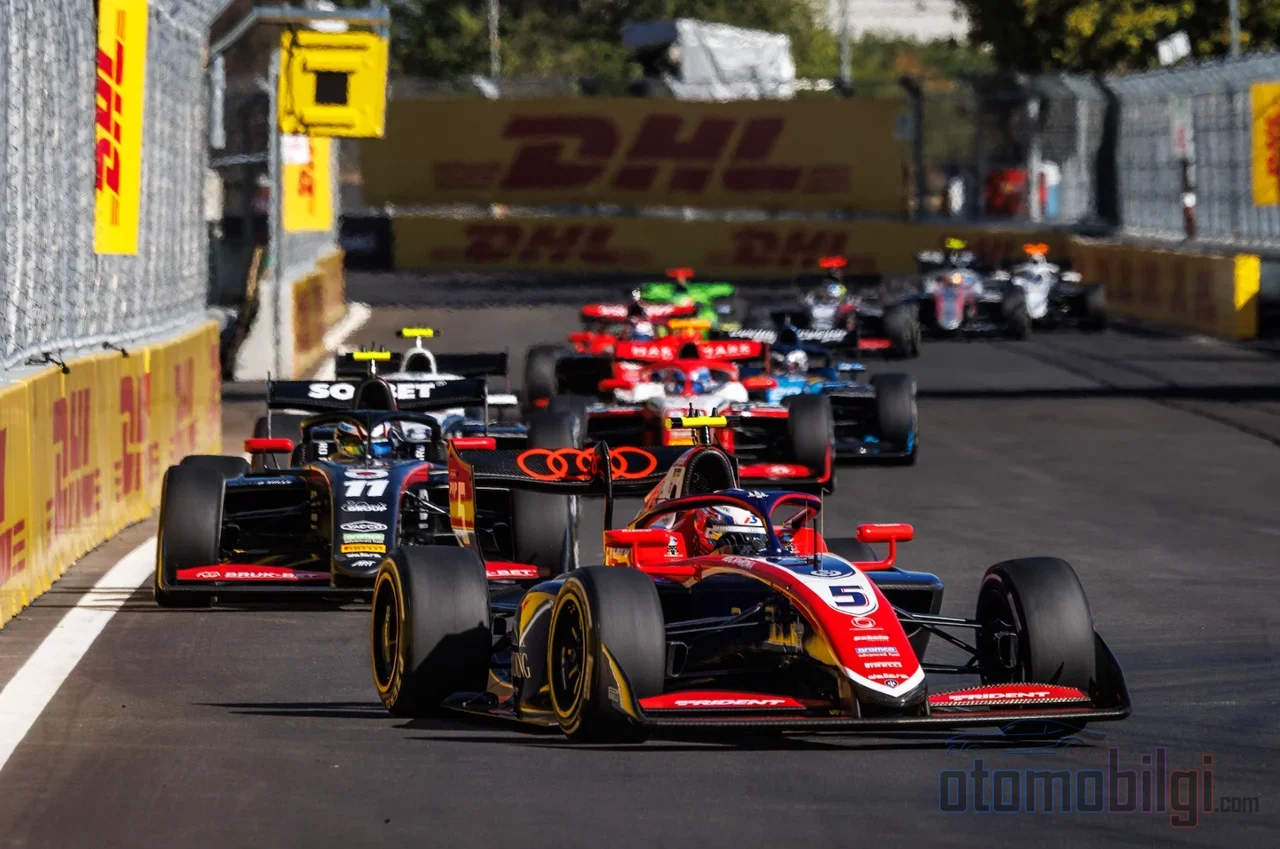
If you have ever watched an F2 or F3 weekend, you have probably noticed two separate tables spinning in the corner of the screen: the drivers' championship and the teams' championship. The drivers' side is clear - whoever has collected the most points is ranked accordingly. But how exactly does the teams' table work? How do the points of two drivers, or even three drivers in F3, come together under a single multiplier, and why do some teams take this table as seriously as the drivers' title? The answer is a far more corporate story than one might think.
Let's think of it this way: while the drivers' championship may look like an individual sport's table, the teams' championship behind it is like a company's performance report. This table is decisive in sponsorship negotiations, in new drivers' team choices, and even in the cost balance of the series. In other words, that last-lap battle at Monza is written not only into a trophy, but also into an economy worth millions of euros.
The Points System: The Raw Material of the F2 and F3 Teams' Table
Let's start with the basics, because the teams' championship is a structure built on top of drivers' points. A Formula 2 weekend consists of two races: the Sprint Race and the 180-kilometer Feature Race. each team races with two cars and two drivers, and the two drivers' points are added together to form the team's total. In the Feature race, the top ten are awarded 25, 18, 15, 12, 10, 8, 6, 4, 2 and 1 points. Drivers finishing the Feature race inside the top 10 get an extra 2 points for the fastest lap, while additional points under certain conditions are also in play.
F3 has a similar points architecture; the grid is set by 45-minute qualifying sessions after Friday practice, and the points system works together with the updated weekend format. So how do these points transfer to the teams' table? This is where the character of the two series diverges: In F2, each team races with two cars, while in F3 ten teams race with three cars each. The F2 grid consists of 13 teams, the F3 grid of 10 teams. The teams' standings are formed by adding up all the points collected by the competing cars in the team's name; in other words, every point a driver earns is also credited to the account of the team in their garage.
Highlights
- In F2, 13 teams race with two cars each, while in F3, 10 teams race with three cars each.
- In the F2 Sprint Race, the top eight are awarded points from 10 down to 1, and in the Feature race the top ten are awarded points from 25 down to 1.
- PREMA won the F3 teams' championship with 429.5 points; Trident finished second with 217.5 points.
- In both series, the team entry fee is 60,000 euros per team per year.
- Invicta Racing won the F2 teams' championship twice in a row.
How Do Two Drivers' Points Turn Into a Single Team Account?
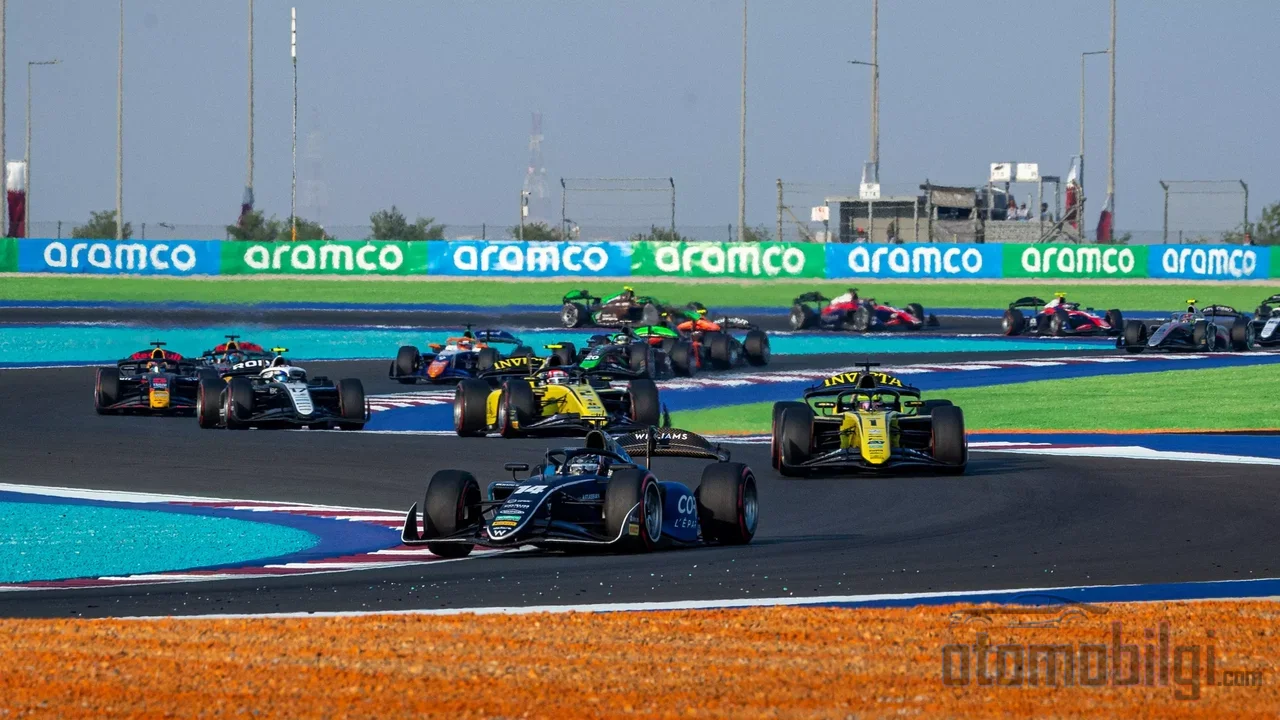
Formula 1's reference model is a good starting point here: each team races with two cars and two drivers, and the drivers' points are added together to form the team's total. If the championship leader takes 25 points and their teammate adds 10, the team leaves that race with 35 points. F2 carries this logic over exactly; in F3, a third car joins the same total.
There is an interesting historical detail here. In the Formula 1 team championship, awarded since 1958, for most years until 1979 only the result of each team's highest-scoring driver counted. So no matter what the teammate did, the second car's points went to waste. Today's model, however, counts the points of both cars. F2 and F3 are precisely the reflection of this modern approach in the junior series: rather than leaning on a single star, the consistency of all cars determines the team standings.
What Happens If There's a Tie?
For teams or drivers finishing the season on equal points, the system has a resolution mechanism. In FIA Formula 2, in the event of equal points, a countback system is applied: the standings are determined by looking backward at the best results. This aligns with the logic of the dead heat approach in the F1 sporting regulations; the number of wins, i.e. the ranking of victory, second place and similar results, is used as the criterion that breaks the points tie. In short, between two sides on equal points, the one with more wins moves ahead.
When Does the Drivers' Championship Change the Team Standings?
The two tables are connected but not the same thing. The drivers' championship measures individual ranking, while the team standings measure the overall strength of an organization. Still, the drivers' weekend performance directly moves the team standings; every point is recorded into both tables at once.
One of the most striking examples of this was an F3 weekend at Monza: when a driver starting from ninth place won, the drivers' championship lead changed hands, and in the same race the team's title mathematically became certain. While the drivers' title changed hands three times within two laps, the team title was sealed. So an individual driver's breakthrough can at the same time complete the team's season goal.
Conversely, individual success does not always equal team success. If one team's single driver has an incredible season while the other cannot score points, the team's position in the standings takes shape accordingly. From this, another inference can be drawn: the three-car format in F3, compared to the two-car F2, gives a single strong team wider room to dominate the standings; because the total pool of points that can be collected is larger.
PREMA, ART and Invicta: The Masters of Consistency in the Team Standings
When you look at the teams' championship, some names always stand out. PREMA is the most successful team of both series in the era of F2 running since 2017 and F3 since 2019; it won the 2020 and 2021 F2 teams' championships back to back. On the F3 side, it once again closed the season as teams' champion with 429.5 points at Monza; second place went to Trident with 217.5 points, while ART Grand Prix finished third and Hitech fourth.
The secret of PREMA's F3 success that season was not based on a single star, but on balance: all three of the team's drivers had won at least two races each, and this was an internal balance that no rival team could show. This is precisely what the team championship rewards. Teams shining with a single car can create surprises, but it is consistency that settles at the top of the table.
On the F2 side, the story of the recent period is Invicta Racing: the team won the F2 Teams' Championship for the second consecutive time and attributed this success to teamwork sustained throughout the season. ART Grand Prix, meanwhile, was one of the standout names in a battle where championship calculations were made with a double-title goal and PREMA was ready to step in at any moment. The entrenched teams' positions in the table are no coincidence: infrastructure, engineering depth and accuracy in driver selection are written into the season-end points total.
The Money Side of the Team Championship: The Cost and Sponsorship Balance
So why is this table so valuable? Because F2 and F3 are businesses, and the bills run on serious figures. According to the figure published by the two series, the team license and registration fee is 60,000 euros per team per year, not per driver. On top of that come vehicle, personnel, travel and testing costs; the total cost of a junior career up to the F2 gate has increased significantly in recent years. Against this backdrop, the series management announced a package of cost-reduction measures aimed at making both championships more sustainable. In other words, the teams' table also sits at the center of an ecosystem's effort to preserve competitive balance under cost pressure.
Why Does Sponsorship Look at the Team Standings?
An interesting model operates on the sponsorship side: F2 sponsorship is priced at the series level but sold at the team level. Moreover, a sponsor backing one F2 team usually extends to the same organization's F3 presence as well. So the two series are marketed as a package under the same roof, and the teams' championship position is the showcase of this package. In junior series, sponsorship value is marketed directly through the team's position in the championship; the fact that F2, with its 620-horsepower cars, is the final step to F1 forms the dazzling side of this marketing. In the F1 world, sponsorship is discussed on a scale ranging from $100,000 to over $100 million per year; although the calculations in the junior series are smaller, the logic is the same: the position in the table is the very story being sold.
New Teams and the Table's Effect at the Door
On the Formula 1 side, new teams are applying to the FIA for a license, and these applications are evaluated on the basis of strict financial and technical analysis; it is also stated that entry is tied to a fee of $200 million. The new team entry process specific to F2 and F3 is not documented in the same detail publicly; the framework here can be compared with F1's financial rigor criteria. What is clear is this: in these series, which are being made sustainable through cost-reduction measures, success in the teams' championship is one of the factors determining both the sponsorship appeal of existing teams and the series' attractiveness for new entrants.
The Short Answer: How Is the Team Championship Determined?
Let's wrap it up. In F2 and F3, the teams' championship is determined by combining all the points a team's cars have accumulated throughout the season in a single standings table. In F2, the points of two cars, and in F3 of three cars, count toward the team's total; in the event of a tie, the countback system breaks the ranking by looking at best finishes. While the drivers' championship determines an individual career (and, in F2, the value of the 40 super licence points for finishing in the top three), the teams' standings measure the overall strength of an organization and directly reflect its commercial value. The teams' championship is like a season-long performance report for a garage: drivers come and go, but the table remains. That is exactly why names like PREMA, ART and Invicta are always at the top of this table.