Three Cars in F3: More Data, Cheaper Seats
Suppose you have two identical bikes and you test both on the same road. One is set up stiff, the other soft. You learn what lies where along the road from the two bikes. Now add a third bike and imagine you are collecting information from three different points on the same lap, not just over two laps. This is exactly what Formula 3 teams experience every weekend: three cars on track at the same time, three different experiments. While each team races with two cars in Formula 2, in F3 that number is three. So is this extra car just a simple difference on paper, or an advantage that changes the championship math from top to bottom? The answer is not as simple as you might think; it has both bright and shadowy sides.
What is F3's three-car structure, and how does it differ from F2?
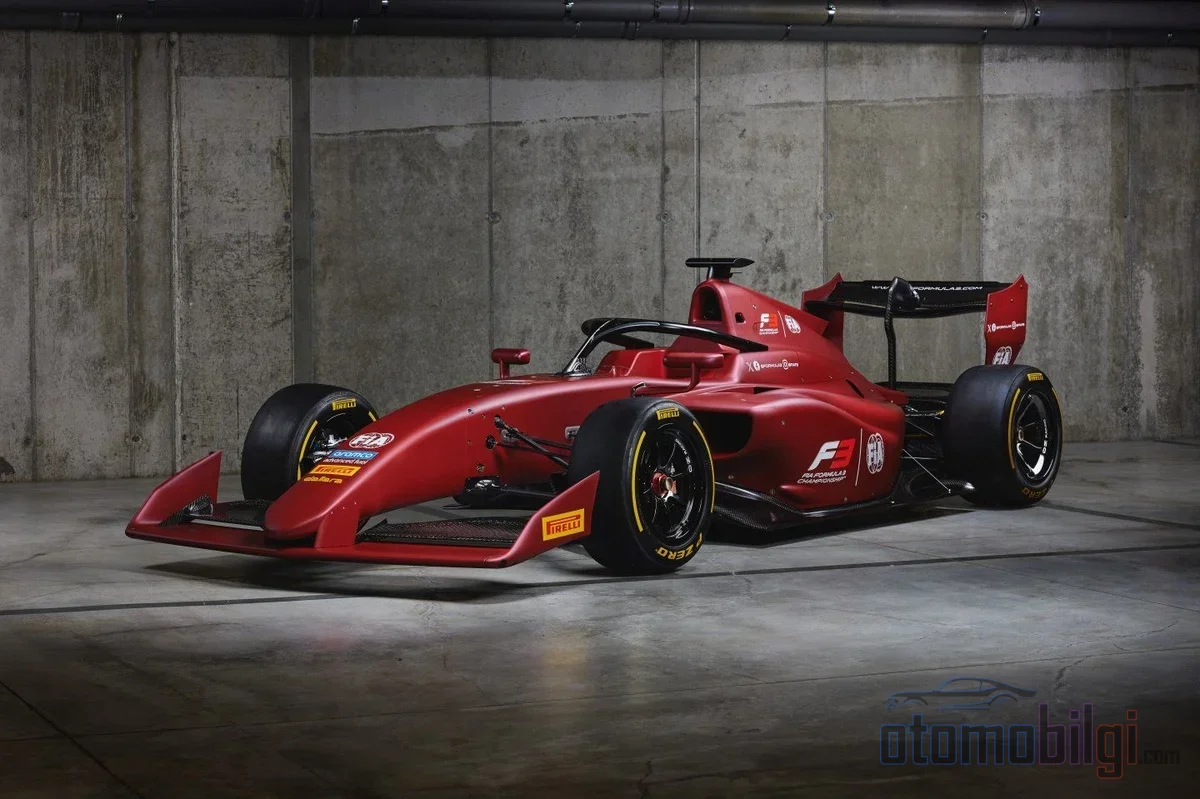
Let's clarify the format first. FIA Formula 3 was founded in 2019 to replace the GP3 Series, and sits on the F1 ladder below F2 and above F4 and the regional F3 series. The series is a true one-make (spec) championship: every team uses the same Dallara chassis, and a completely new machine was introduced in 2025. The grid structure is clearly written in the FIA Sporting Regulations: a maximum of 30 cars is admitted to the championship, and each team has three cars on track. So 10 teams times 3 cars makes a 30-car field.
In Formula 2, things are different: each team fields only two cars there. Interestingly, there are even organizations that compete in both series. As of 2026, 10 of the 11 F2 teams also race in F3: Campos Racing, PREMA, Trident, ART Grand Prix, MP Motorsport, Rodin, Hitech, DAMS Lucas Oil, AIX Racing and Van Amersfoort. Only Invicta Racing stays exclusive to F2. These teams running double entries operate a total of five cars on shared race weekends. Two different logics run in the same garage, so to speak: on one side a two-car F2 operation, on the other a three-car F3 team.
Highlights
- In F3, each team races with three cars on track; in F2 that number is two, while the grid reaches a total of 30 cars.
- Three cars mean more data and faster setup iteration in every practice session compared to a two-car structure.
- The season entry fee is EUR 60,000 per team; with three cars, the cost per car drops to around EUR 20,000.
- In the teams' championship, only the best three drivers count in each race; if a team sweeps the top three, it can collect 27+ points in a single race.
- Campos Racing won the teams' championship back to back in 2025 and 2026: in 2025 with 334 points it overtook Trident (217).
How does a third car turn into a data and setup advantage?
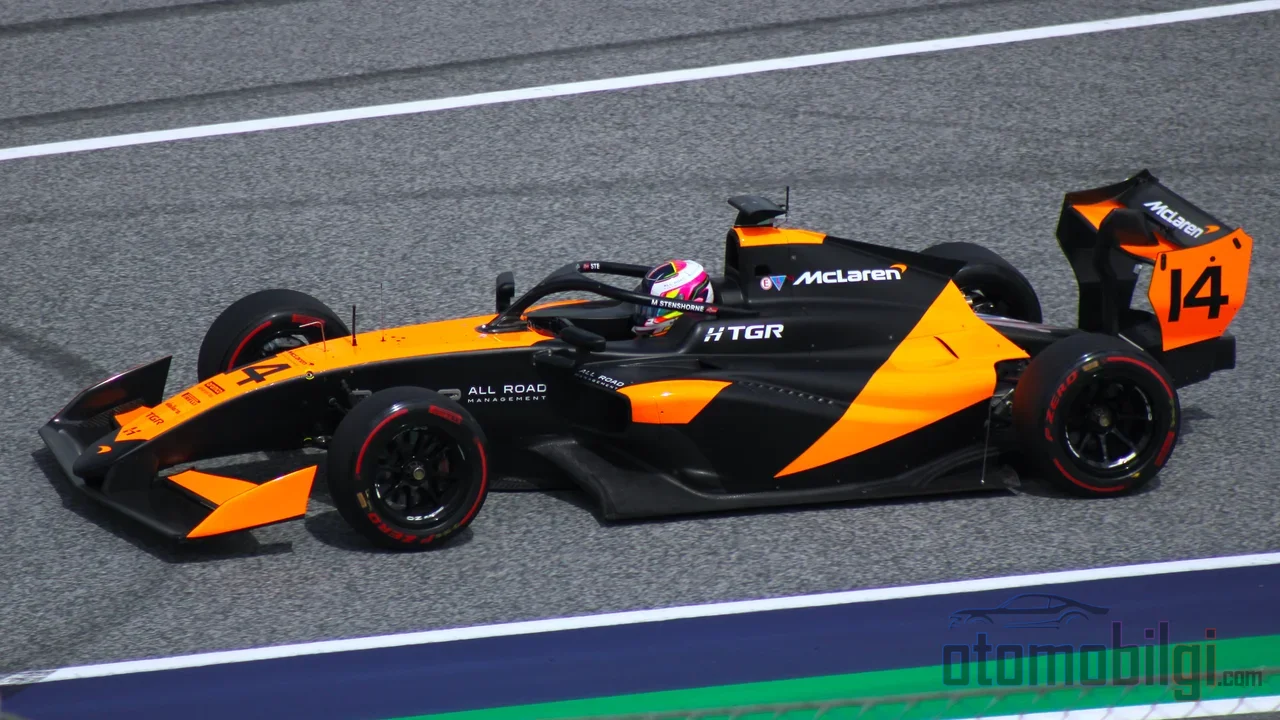
Here comes the fun part. In Formula 3, since everyone uses the same car, the path to winning runs not through the car itself but through setting it up correctly. Imagine a practice session: within 30 minutes, how are the tires behaving, how much wing should be run, how many clicks stiff should the front suspension be? A two-car team searches for answers to these questions based on two different experiments. A team with three cars produces three separate sets of data in every session. This directly feeds engineering analysis and allows faster setup iterations throughout the session.
Think of it this way: like three friends studying different topics before an exam and sharing their notes. While one person works on tire wear, another can test high-speed balance, and the other the braking zones. When the garage is returned to in the evening, there are three times the amount of information on the table. Moreover, this is not only about fast laps; the drivers themselves benefit too. Feedback from many drivers improves one driver's ability to identify setup deficiencies, explain them clearly to their engineer, and establish consistency between sessions. This is exactly where the technical feedback ability that Formula 1 teams demand from drivers takes shape.
Pirelli tires as a shared learning field
Tire management is the clearest example of this shared learning. In tests, drivers learn by comparing the wear pattern we call graining on the tires with what their teammates experience. The solution to a problem one driver experiences is usually hidden in another's experience. Three cars widen this pool of experience by one more car.
On the cost side: why does a third car lower the price?
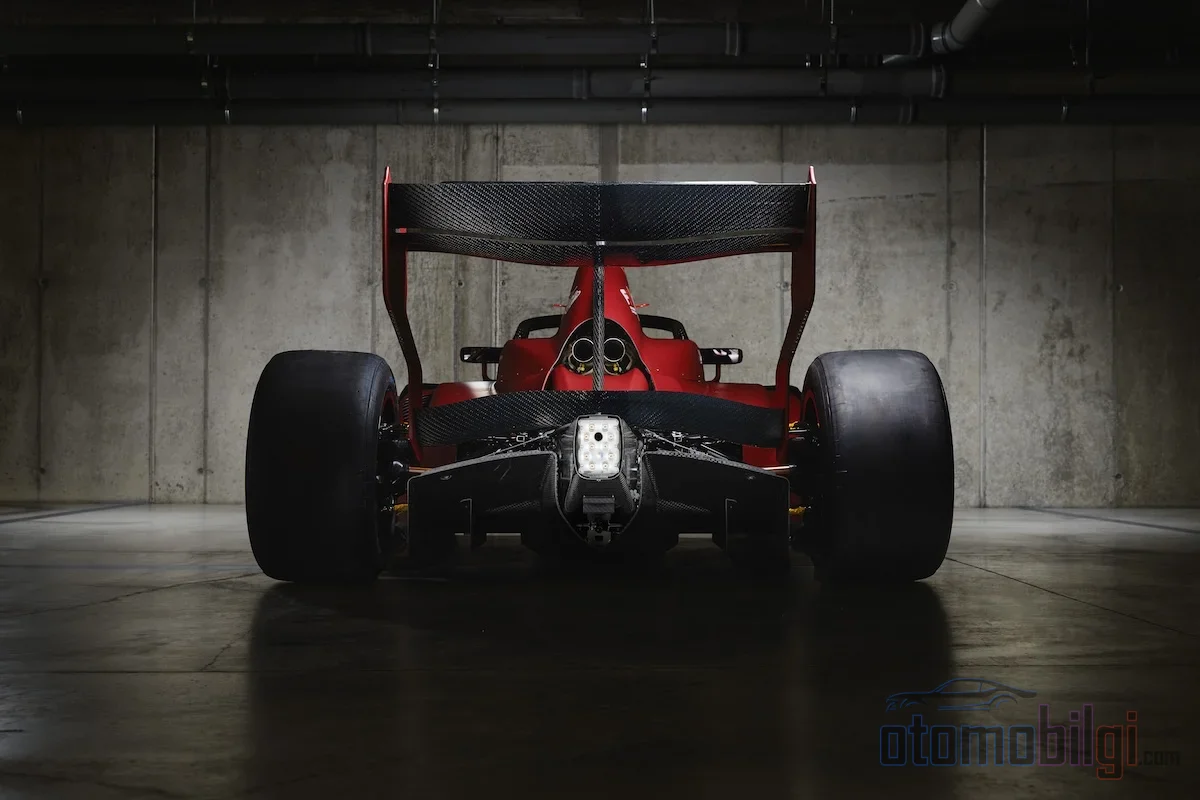
There is a seemingly contradictory situation here: more cars, more expense, right? Technically yes, but the business model works elsewhere. F3 teams usually run two or three drivers per season, and most prefer three drivers. The reason is simple: to maximize revenue from driver fees and to spread the fixed costs of the program across more paying entries. Items such as staff, logistics, and garage infrastructure are independent of the number of cars; the third car shares them out.
The history of this model is also interesting. In 2018, Charlie Whiting, the FIA's race director at the time, described the three-car model as a good business model while evaluating the international F3 plan, noting that it made lowering the price of the third car possible. Looking at the numbers, this logic makes sense: in F3, the season entry fee is 60,000 EUR per team per year, and this fee is charged for the team, not per driver. With three cars it amounts to roughly 20,000 EUR per car, while in two-car F2 the same fee equates to roughly 30,000 EUR per car.
The overall budget table also shows the series' position. A full F3 season, varying by team, roughly runs between 800,000 and 1.5 million dollars; a broader estimate gives a range of 1 million to 2.4 million dollars. An F3 season, at roughly 1.2 million dollars, is about half of F2; an F2 seat is at a level of roughly 3 million dollars. Since Dallara's centralized leasing structure also keeps costs under control, even small teams can run three cars. The 1 million euro prize fund distributed to the top five drivers from 2025 onwards balances the financial picture a little further. Still, an extra car does not always mean extra value: In terms of broadcast visibility per car, F3 lags behind F2, and in the sponsorship math, that's a bargaining chip.
How does the points system turn three cars into a numerical advantage?
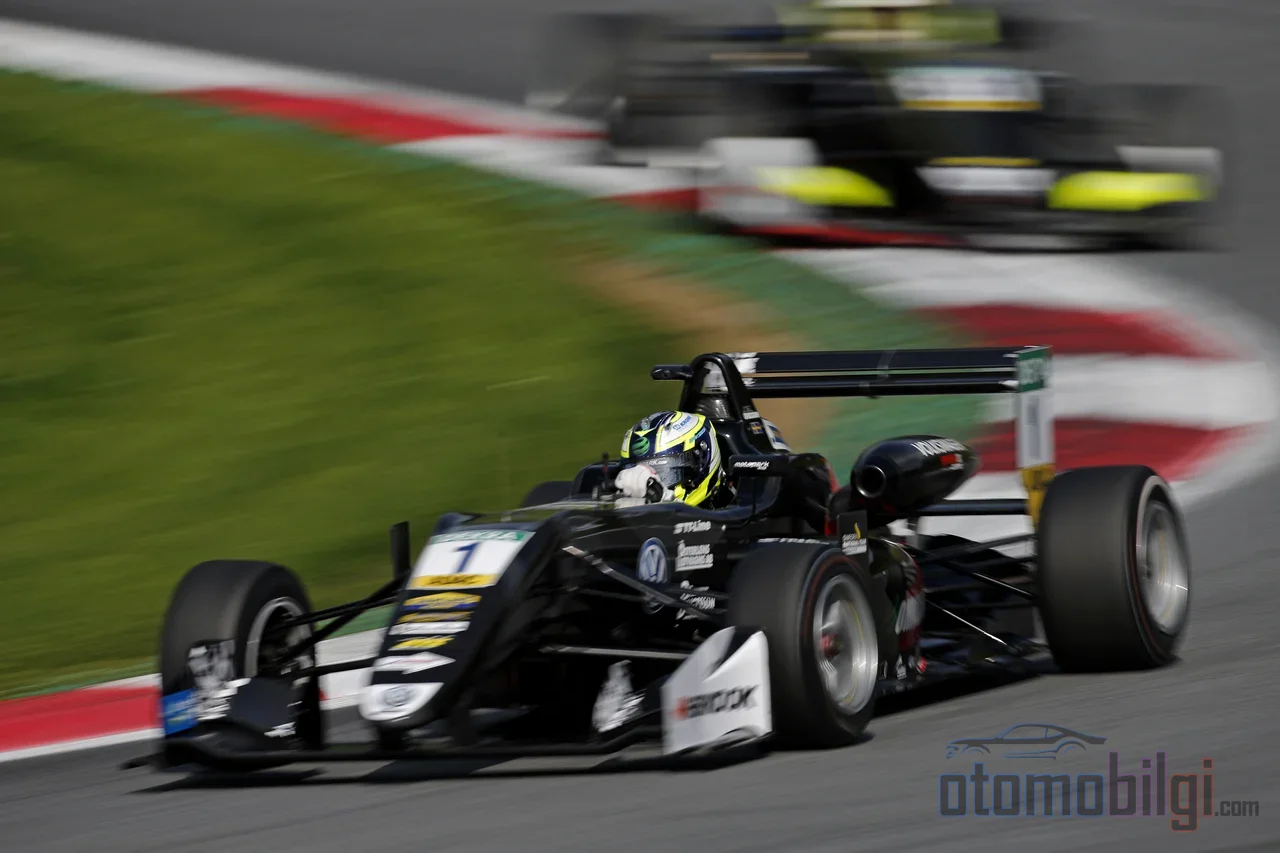
Now let's get to the championship calculation, because that's where the three cars have their most tangible payoff. In the Teams' Championship, the three best-classified drivers of each race count toward the points calculation; this practice has been in place since the GP3 era. The points system works like this: each race distributes 25-18-15-12-10-8-6-4-2-1 points to the top 10 respectively, with 4 points for pole position in Race 1 and 2 points for the fastest lap among drivers finishing in the top 10.
| Feature | Formula 3 | Formula 2 |
|---|---|---|
| Cars per team | 3 | 2 |
| Grid size | 30 cars (10 teams) | 22 cars (11 teams) |
| Engine | Mecachrome V6, ~380 hp | Mecachrome 3.4 L V6 turbo, 620 hp |
| 0-100 km/h | 3.0 s | 2.9 s |
| 0-200 km/h | 7.7 s | 6.6 s |
| Top speed zone | ~275 km/h on fast tracks | 335 km/h at Monza with DRS |
| Season seat cost (approx.) | ~$1.2 million USD | ~$3 million USD |
In this system, three cars work like a coin flip. In the Sprint and Feature format, if a team sweeps the top three, it can collect 10+9+8 points from a single race alone; if eligible, the fastest lap point is added on top of that. While a two-car team can score at most two layers of points in the same race, a three-car team's ceiling is higher. Over the course of a season, this difference accumulates. The middle portion of the 2026 season is a good example of this: in the Silverstone-Spa-Budapest stretch, Campos collected 113 points, Trident 93, ART 72, and MP 70, while Rodin stayed at 42 and Van Amersfoort at 23 points. This is exactly where the gap opens up between teams that use all three cars efficiently and those that can only get one or two cars into points-scoring form.
The shadow side of three cars: hierarchy and strategy sharing
Let's also honestly look at the other side of the coin, because three cars don't smile on everyone equally. Three cars can create a kind of ranking hierarchy within a team; decisions like which driver pits on which lap take shape according to this hierarchy, and a driver can miss out on the strategy they wanted. That's why managing intra-team dynamics is a skill in its own right. PREMA boss René Rosin's approach sums up this balance: he tells his drivers they need to think about themselves but also about the team at the same time; he believes team thinking delivers results.
Let's also note the contradiction on the engineering side. There are two different definitions circulating about the F3 engine: on one hand it's said to be a 3.4-liter naturally aspirated V6 with roughly 380 hp, on the other hand a 3.2-liter turbocharged unit with a similar power figure is mentioned. It wouldn't be right to speak definitively without confirmation from the official technical regulations; however, what's critical for the purposes of this page isn't the power, but the ability to develop the same car three times over simultaneously.
The format itself also shapes strategy. There is no mandatory pit stop in F3; tire strategy management, fuel saving and drafting. Most configurations run three races over the weekend, and the Race 2 grid is formed by reversing the top 10. The three-race format was introduced in 2021 due to COVID cost cuts, and it returned to the stage at the 2026 Madrid finale.
How can small teams break this balance?
So, is there a chance in this system for teams with limited budgets? The 2025 and 2026 seasons seem to give a clear answer to that. Campos Racing won its first teams' championship in 2025: it collected 334 points in Madrid, leaving behind Trident (217) and MP Motorsport (208). In 2026, it repeated the same success at home, in Madrid, and reached its second consecutive teams' championship; over the final weekend, all three of its drivers scored points in Feature Race 1. PREMA, a classic powerhouse, dropping to the bottom half in 2025 after its 2024 championship is part of the same story.
The interpretation is this: in a spec series, what matters is not budget but quality of operations. When everyone uses the same car, how well you read the data of three cars, how you manage the tires, and how you plan the weekend bring the championship. The grid's appeal is also high: it was reported that 18 teams applied for 2022, and F2/F3 management did not hide its disappointment that Motopark was left out of the grid; the possibility of increasing the number of teams is also on the table.
Conclusion: is the third car really an advantage?
Let's give the short answer: yes, but with its price. In F3, a three-car structure generates three times the data in the same session, speeding up setup development, spreads fixed costs across three entries to lower the price of the third car, and offers a three-layer points potential in the teams' championship. In return, intra-team hierarchy tension, the risk of inequality in strategy sharing, and reduced visibility per car are the costly sides of the model. While F2's two-car structure offers a leaner operation, F3's trio raises the ceiling of knowledge and points. The Campos example of 2025-2026 also shows that a team that knows how to use that ceiling can surpass the giants. The next question might be: if it were you, which car would you sit in, the first, the second, or the third at the end of that strategy queue?
Sources
- Formula 3: The Complete Guide
- F3 2026 Teams' Championship analysis
- F2 and F3 Teams, Prices and Cars
- 2026 FIA F3 Sporting Regulations
- Comparing F2 and F3 racing cars in 2025
- Campos Racing's back-to-back F3 championships
- What Is F3?
- Junior Formula Racing Cost 2026
- Whiting: Three car teams would work in Formula 1
- How PREMA boss Rosin managed a triple title tilt