Two Different Worlds on the Same Track: F1 and F2 Lap Times
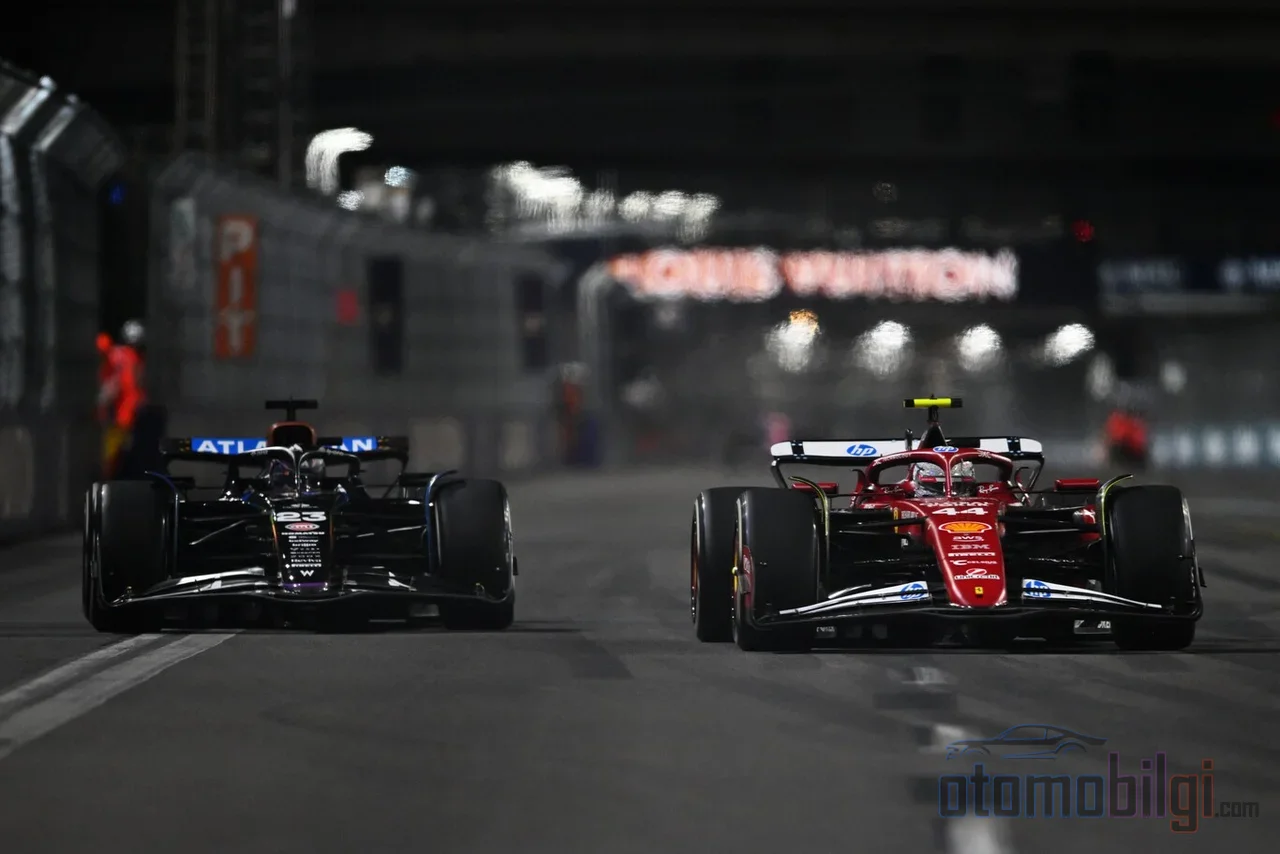
Imagine a qualifying session in Barcelona: same asphalt, same day, almost the same hour, even. On one side, an F1 car dips into the 1:11s; on the other, the fastest F2 car can only manage a 1:24. The gap is more than 13 seconds, and that is a far bigger chasm than most motorsport fans would guess. So where does this gap come from, is it the same at every circuit, and did F1's new 2026 regulations really narrow it? Let's measure it.
On this page, we look at where the F2 car stands against F1 in terms of lap time, speed and technology, with concrete figures. We talked about the difference between F2 and F3 before; now we put the top two rungs of the ladder on the same scale.
Is the F2 Car Slower Than F1: The Short Answer
Absolutely slower, and by a serious margin. It is widely accepted that F1 cars are 12-15 seconds faster per lap than F2. The concrete example is the 2024 Spanish Grand Prix weekend: the fastest F1 qualifying lap was set at 1:11.383, while the fastest F2 qualifying lap stayed at 1:24.766. In other words, on the same circuit, F2 cars lap roughly 18% slower. The picture at Monza is similar: F1 laps are around 1:20, F2 laps in the 1:32-1:35 range. The gap grows on long, twisty circuits and shrinks somewhat on short, straight ones.
Highlights
- F1 cars are 12-15 seconds faster per lap than F2; in the Barcelona 2024 example, the gap was 13.4 seconds.
- Power difference: around 1000 hp in F1, 620 hp in F2.
- Top speed: F1 ~375 km/h, F2 ~335 km/h.
- The 2026 rule change slowed the F1 cars down; on circuits run in both seasons, the loss averaged ~3%.
Where the Seconds Pile Up: Engine, Aerodynamics, Weight and Tires
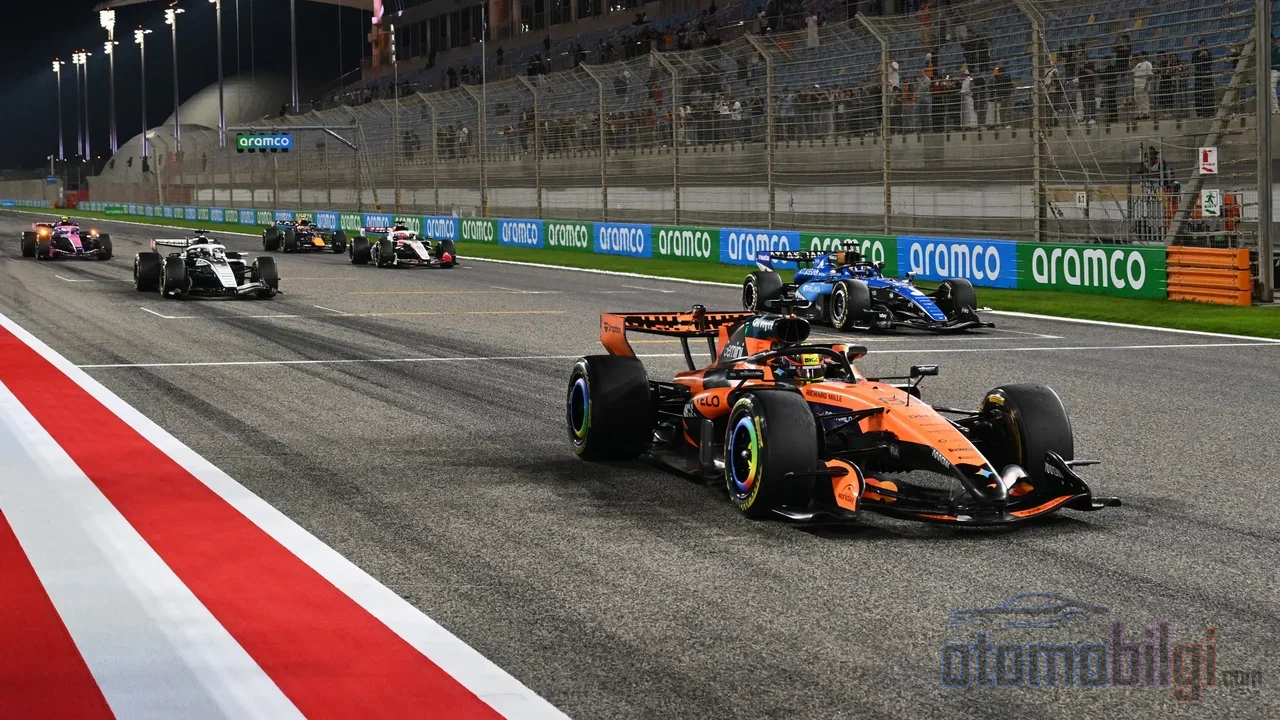
The 15-second gap doesn't come from a single cause; it accumulates from four major branches. Let's look at each one, because to understand the total you need to see the parts.
Engine power: 620 horsepower versus 1000 horsepower
At the heart of F2 sits a Mecachrome -built 3.4-liter V6, single-turbo engine with a fly-by-wire throttle; it produces 620 HP at 8750 rpm. On the F1 side, 1.6-liter hybrid power units are in play, at roughly the 1000 hp level. The interesting paradox here is this: the F1 engine is half the displacement of the F2 engine, yet thanks to high boost pressure and far higher-quality components, it produces roughly twice the power. Imagine, a half-displacement engine producing twice the power; that's what pushing the boundaries of engineering is all about.
Aerodynamic load: the invisible hand
The power difference alone wouldn't create such a gap; the real magic is aerodynamics. The downforce on F1 cars is so immense that they can take corners at over 190 mph (about 305 km/h). F2 cars, on the other hand, have simpler lines and more basic aerodynamic elements; the series aims for a balanced and predictable driving experience. Moreover, F1 teams develop their own chassis and aero packages and can introduce mid-season upgrades. In F2, everyone races with the same Dallara chassis, the same Mecachrome engine, and the same Pirelli tires; no mid-season development. So F1 is a constantly accelerating arms race, while F2 is a locked field of competition.
Weight: a small surprise
There's a detail here that most people don't expect: the F2 car is actually lighter. With the driver, the F1 car is around 798 kg, the F2 car around 755 kg. So the reason F2 falls behind isn't weight; even its lightness isn't enough to close the power and aero deficit. This shows how deep the technological difference behind the gap really is.
Tires: the limits of strategy
In F1, Pirelli has been the sole supplier since 2011; from C1 to C5, three of the five dry compounds are selected for each race, and the teams choose the compounds themselves. Tire strategy is a central player in F1. In F2, there are only two dry compounds per weekend and all teams receive the same compounds; apart from the requirement to use both dry compounds in the Feature Race, the strategic room is narrow. Even pit stop times are a different world: in F2, stops typically last 4-7 seconds, and the reason isn't the mechanics' lack of skill, but differences in rules and equipment.
F2 and F1 in numbers: Speed Comparison
Let's gather the main differences in a single table so the overall picture is clear:
| Feature | Formula 1 | Formula 2 |
|---|---|---|
| Engine | 1.6 L hybrid power unit | 3.4 L V6 turbo Mecachrome |
| Power | ~1000 hp | 620 HP (8750 rpm) |
| Weight (with driver) | ~798 kg | ~755 kg |
| Top speed | ~375 km/h | ~335 km/h |
| Chassis | Teams' own design | Common Dallara chassis |
| Dry tire compounds | 3 compounds per weekend, team chooses | 2 compounds per weekend, same for everyone |
| Race distance | At least 190 miles (except Monaco) | 1 hour or ~105 miles |
What the table shows is this: F2 isn't hopeless in individual categories, but it's slightly behind in each one, and these small deficits stack up over a lap to become those 12-15 seconds. Also, the gap is small on a pit straight but compounds in the corners; because the downforce difference pays off exactly there.
Has the Gap Really Narrowed in 2026?
Now for the most current part of the story. 2026 brought one of the biggest regulatory transformations in F1 history, and the new cars are clearly slower. In the new generation of F1 cars, drivers have to go about 50 km/h slower in high-speed corners for the best lap. Analyses show slowdowns on all ten circuits where both seasons have been run: an average loss of 3%, meaning about 2.7 seconds over a 90-second lap.
So, did this reduce the gap between F1 and F2 from 12-15 seconds to 10 seconds? There are estimates claiming so, but they are still based on season observations rather than solid data. In tone, two different views are circulating as well: Lewis Hamilton says the new cars feel like an F2 car to him, while other assessments point out that the 2026 cars are significantly slower than previous F1 cars but not as slow as F2. What can safely be said for now is this: the gap has narrowed, but F2 is still clearly behind.
There is also the other side of the coin: budget. In F1, annual spending per team exceeds 140 million dollars despite the cost cap; the cap was 153 million dollars in 2021, 151 million dollars between 2023-2025, and stands at around 212 million dollars in 2026. F2 operates at a cost far below these figures. So F2 offers serious speed for a tiny fraction of F1's cost - not trillions, but serious nonetheless.
What Does an F2 Champion Do in Their First Days in F1?
So how do these seconds translate into real life? The move from F2 to F1 may look like a simple promotion in theory, but in practice it is a harsh adaptation process. Recent examples are familiar: 2024 F2 champion Gabriel Bortoleto moved to Sauber in 2025, and the runner-up of the same season, Isack Hadjar, went to Racing Bulls. Kimi Antonelli finished sixth in 2024 F2 and then went straight to Mercedes; Oliver Bearman landed at Haas, Jack Doohan at Alpine, and Franco Colapinto at Williams. Names like Charles Leclerc, George Russell and Oscar Piastri are also proof of the road leading from a GP2/F2 title to F1.
When these drivers step into F1, things are not easy: the car is both faster and more demanding; hybrid energy recovery and advanced aerodynamic systems are a completely new learning area. F2 cars are difficult machines to drive in their own right, without power steering, but F1 is overall a tougher exam. Also, while F1 cars reach up to ~375 km/h at top speed, F2 stays at around ~335 km/h; in average race speed too, F1 cars are typically 10-15 mph faster. The championship does not automatically bring an F1 seat, but it greatly increases the chances; it is also worth remembering that Max Verstappen reached F1 without ever racing in F2, so this is not the only path up the ladder.
The Clear Picture: How Close Is F2 to F1, and How Far?
The clear answer we promised: An F2 car is on average 12-15 seconds slower per lap than an F1 car on the same track; in the 2024 Barcelona example the gap was 13.4 seconds, or roughly 18%. About half of this gap comes from the lack of power, with the rest coming mainly from aerodynamic load; the narrowness of tire options and the shared chassis also take their share. The 2026 rule change slowed F1 by an average of 3%, narrowing the gap somewhat, but the technology and budget gap between the two series remains wide.
Let's put this into everyday terms: F2 is a cheap but genuine reflection of F1. Much like the same course having both a preparatory and a licensed version; the subject is the same, but in one the questions are much harder and the time much shorter. That is why F2 is a great talent filter: it looks for, alongside a driver's speed, learning ability, tire management and perseverance. And yes, one day most of the names who closed that 13-second gap were first turning laps right here, on the F2 grid.