Why Is Car Development Frozen in Formula 2?
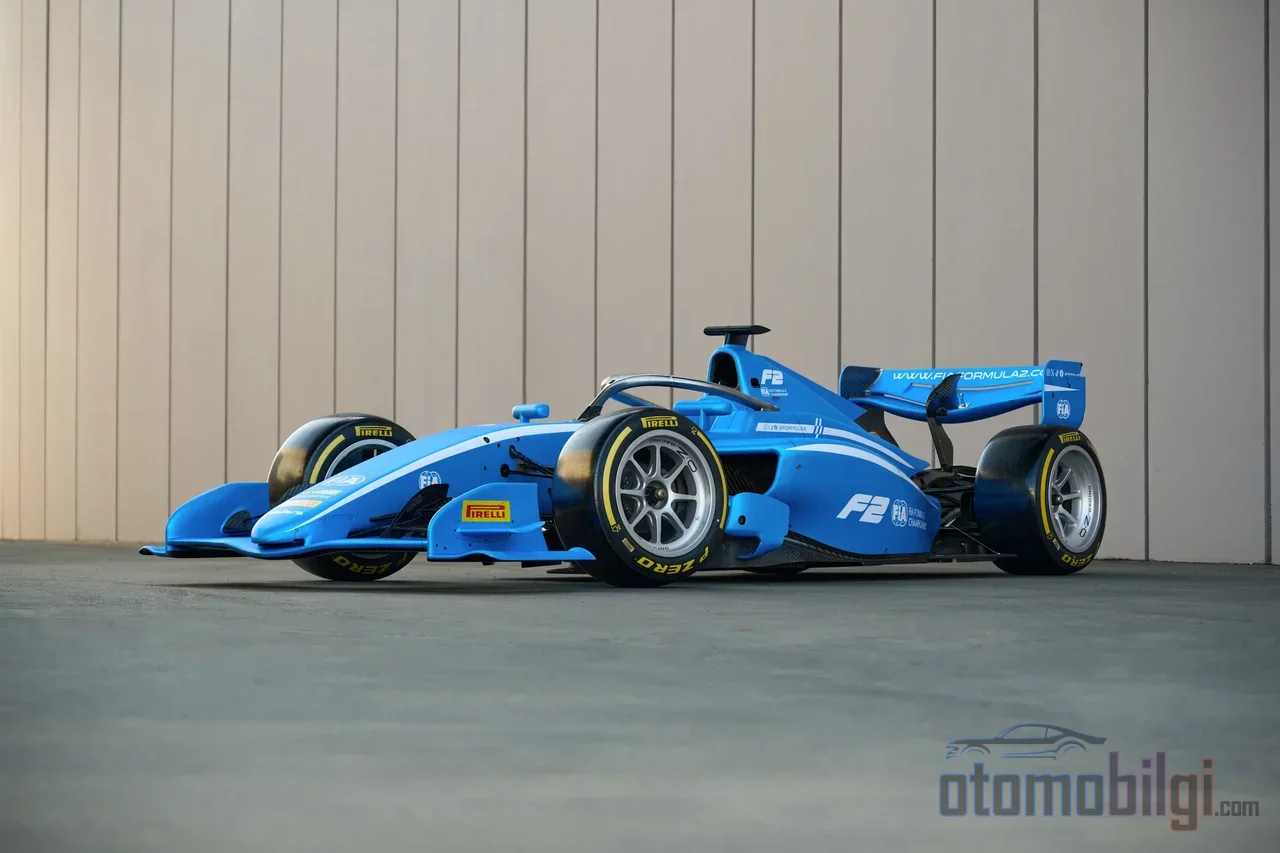
Same chassis, same engine, same tires... one team on the podium, the other at the bottom of the standings. With 22 cars in Formula 2 being exact copies of each other, results varying this much is truly confusing, isn't it? The answer usually isn't hidden in a secret development budget or a special part, as we might think. Because in F2 there's no such thing: the cars are homologated at the start of the season, the development window closes, and no one can bring a new wing or part mid-season. So why does this freeze exist, what exactly does the rule prohibit, and how does it differ from F1's never-ending development race? Let's take a look with cool, mechanic-style logic.
What Does a Spec Series Mean: Everyone Drives the Same Car
F2 and F3 are defined in motorsport language as "spec series," meaning single-make series. The current F2 grid has 22 identical cars, and the rules clearly allow no individual development or upgrades. All spare parts are purchased from the organization itself; repair of structural components is also done at the chassis manufacturer Dallara to guarantee integrity. In other words, a team cannot secretly produce even a new diffuser in its garage overnight, and even if it did, it couldn't fit it.
The current generation is the F2 2024 chassis designed by Dallara. On the engine side there's a 3.4-liter turbo V6 assembled by Mecachrome, and the package completed with a Hewland gearbox and Pirelli tires is exactly the same in every car. The F3 side is no different: all teams use the same car coming from the same supplier, Dallara.
Highlights
- In F2, 22 identical cars race; individual development and upgrades are banned by the rules.
- The current chassis is the Dallara F2 2024, the engine is a 3.4L turbo Mecachrome V6.
- The teams' setup freedom: suspension, ride height, wing angles, and tire pressures.
- In the new 2027-2029 car, the chassis is retained; the rationale for the decision is clearly cost control.
- Operational headcount limit: 12 personnel per team.
Why Is Development Frozen: Cost, Equality, Preparation
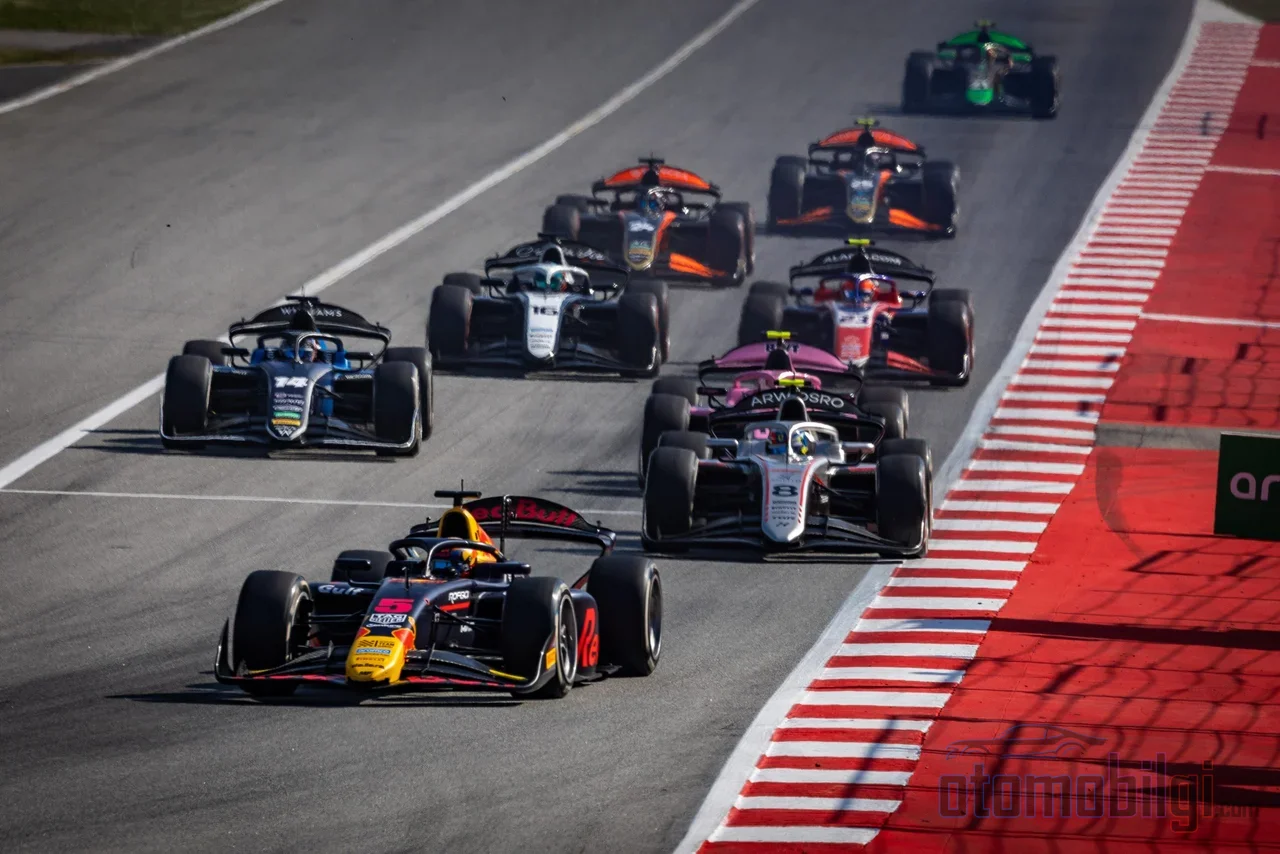
The logic here can actually be thought of as a rule of a game. Let's say you and your friend are given the same bicycle and you're going to race. If one of you can go buy lighter wheels, the wallet wins the race, not pedaling skill. F2's founding philosophy is exactly this: since GP2's birth in 2005, the goal has been to offer an experience close to F1 at a much lower cost and to remove the technology race from the table.
The freeze does three things. First, it controls cost: the price of an F2 chassis was around 500,000 euros for the 2018 generation, and no official figure has been announced for the current generation; but the main idea is clear - with a car this expensive, it's both risky and wallet-burning for teams to do trial-and-error development during the season. While the price of a wrong development is enormous, a similar mistake in F1 can be tolerated relatively. Second, equality: when everyone goes out with the same equipment, the winner is determined not by budget but by garage work. The third point is the character of the series: F2 is a stepping stone for preparing drivers for F1, and basing the championship on driving, preparation and strategy is among the series' openly declared values.
What Does the Rule Prohibit, and Where Is There Flexibility?
What is frozen is the core hardware: chassis, engine, gearbox, aerodynamic parts. In contrast, the teams' hands are not completely tied. Adjustable parameters include suspension, ride height, wing angles and tire pressures. So shaping the car's character according to the track and conditions is free; changing the machine is forbidden.
There is also a strategic side to it. Each driver is allocated 5 sets of dry tires (3 primes, 2 options) and 3 sets of wet tires for the weekend. In the Feature Race, a mandatory pit stop requires changing all four tires and using at least one set of each dry compound. In the Sprint, there is a reversed grid formed by inverting the top 10. All of this creates a formula where, even if you drive the same car, the race is never decided on paper. And let's add a parenthesis: the teams' crew for setup, modification and repair is limited to 12 operational personnel. Even if you find a spare chassis, the crew is limited too.
Comparison with F1: A Frozen Package Versus an Open Development Race
F1 lives in a completely opposite world. Teams design their cars themselves, produce them with massive budgets and bring new parts to every race throughout the season. While F1 engines produce about 1000 hp, F2 engines are at the 620 hp level; there is as much of a difference in organization as there is in power.
| Subject | Formula 2 | Formula 1 |
|---|---|---|
| Car source | Single supplier: Dallara | Each team's own design |
| In-season development | None, frozen | Free, constant race |
| Engine | Mecachrome 3.4L turbo V6, ~620 hp | ~1000 hp |
| Budget logic | Parts come from the organization | Budget cap of 145 million dollars (from 2020) |
| What determines the winner | Driving, preparation, strategy | Design + driving + strategy |
The interesting thing is: Even F1 has become acquainted with the concept of freezing. The FIA incorporated the homologated components approach into its technical rules; even after freezing, components can only be updated through a limited token system, and changes are mostly permitted on grounds of safety, reliability or cost. So the freezing idea has become part of F1's effort to rein in its cost monster; in F2, this idea has been in the series' DNA since its founding.
How Serious Is F1's Production Pressure?
In F1, a chassis consists of thousands of parts and takes months to produce. Teams prefer to freeze the design as late as possible to maximize aerodynamic development time; this creates serious production pressure. A team being unable to find a spare chassis after a crash in Melbourne 2024 is one of the examples showing how real this pressure is. F2's single-supplier model comes into play exactly at this point: everyone buys the same parts from the same place, no one races in the production queue.
The 2027 Car and the "Keep the Chassis as Is" Decision
The FIA unveiled the new F2 car for the 2027-2029 seasons at Monza on September 5, 2026, and this announcement reads like current proof of the freeze logic. The new car is specified with a 3.4L turbo Mecachrome V6 producing 620 hp at 8,750 rpm and 570 Nm of torque; while the Hewland 6-speed gearbox has evolved and an on-board starter has also been added to the car. The front and rear wings have been redesigned.
But the decision that really stands out is this: to keep costs under control, the 2026 Dallara chassis is being retained as is. Series manager Bruno Michel explicitly cited cost control as the reason for this decision. The 2027 car also features Aramco sustainable fuel (in the series since 2025) and a 125-liter tank; meanwhile, Pirelli has been the series' exclusive tire supplier since 2017. The first team kits are planned to be delivered in December 2026 and January 2027. In short, even the generational change is carried out within a classic cost-balancing act: neither winning a war nor burning a budget.
Why Do Teams Riding the Same Car Get Different Results?
Now let's return to the initial question and give a clear answer. Being fast in F2 comes not from a better base or a hidden engine mode, but directly from the driver themselves and their team's weekend management; that's why the freeze rule exists, because hardware doesn't determine the winner, people do. Setup choices, tire management, pit strategy, parc fermé rules, and the window in which the driver can keep the car are the real differences that carry one person's car to the front row and another's to the back.
Since the cars are identical, the perspective also becomes clear: because the front wing design in F2 is much simpler and the same on all cars, teams prepare their cars very similarly to one another. The shared Mecachrome V6 turbo engine, being identical on all 22 cars, turns the championship into a stage where skill, not wealth, determines success. The champion automatically earning the 40 points required for the FIA Super Licence is also the pinnacle of this philosophy: the pilot who drives the best and races the smartest, not the one who develops the fastest, moves up to the next level.
Is Freezing a Constraint or the Series' Identity?
Let's conclude with a brief honest assessment. Yes, freezing is a constraint from a technological standpoint; unlike in F1, we don't get to see the car evolve during the season, or those "how did they get so fast with such a wing" moments in these series. But this constraint is also the very reason F2 and F3 exist. Budgets stay reasonable, small teams can win too, and the viewer can try to guess which driver is genuinely fast. F1 represents a contest of brilliance, F2 a contest of skill; the two are different rungs of the same ladder. The freezing of development is not a rule technique, but a decree that defines the entire character of the series. And we have proof: According to the first weekend's data, the lap time gap between F1 cars and F2 cars has dropped to around 4 seconds in the 2026 season. A frozen series can also be a fast and competitive series.
Sources
- The Rules and Regulations - FIA Formula 2
- FIA Formula 2 unveils its new car for the 2027-2029 seasons
- 2026 Formula 2 Technical Regulations (FIA PDF)
- Formula 2: Your Guide to the FIA F2 Championship
- How do you build a Formula 1 chassis?
- Six key questions about F1's new token system answered
- How development freeze will save F1 teams money
- The beginner's guide to Formula 3
- How do the FIA single-seater championships compare?
- Bearman explained the key differences between F1 and F2 cars