Charles Leclerc: Star Rise from F2 to F1
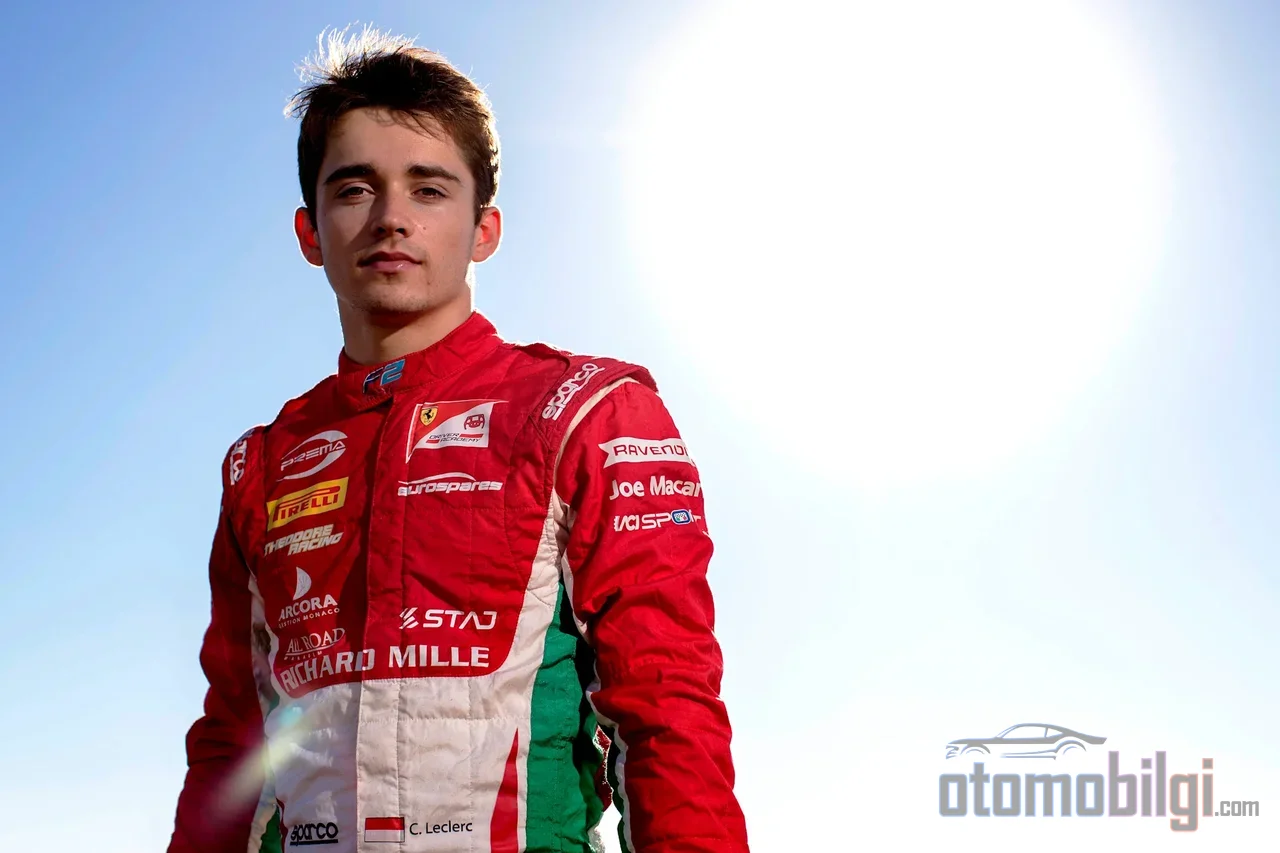
Imagine a 19-year-old young man taking pole position in Baku on a Sunday morning; he dedicated that pole to his father, whom he had lost four days earlier, and two days later he won the feature race. They say you only see scenes like this in scripts, but this story is real: Charles Leclerc's 2017 Formula 2 season became one of the most dominant campaigns the series had seen in its inaugural year. So how did this kid follow up his GP3 championship with such an F2 season, and how did he knock on Ferrari's door? Let's take a look step by step.
From Monte Carlo to the Track: Karting and the Jules Bianchi Legacy
Charles Marc Hervé Perceval Leclerc was born on October 16, 1997, in Monaco. Motorsport was in his blood: his father Hervé Leclerc was a driver who raced in Formula 3 in the 1980s. Young Charles first gripped a steering wheel at the kart track of his godfather Jules Bianchi's father in Brignoles. During his karting years, a Junior World Cup victory in 2011 and the CIK-FIA Karting Academy Trophy championship came his way; in the 2013 KZ World Championship, he finished second behind Max Verstappen. In other words, before ever setting foot in a single-seater formula car, he was already one of the fastest young drivers in the world.
His formula career progressed quickly too: In 2014, he closed out his rookie year in Formula Renault 2.0 Alps with Fortec, finishing second behind Nyck de Vries. In 2015, he moved up to FIA European F3, where with Van Amersfoort he took 4 wins and 13 podiums to become rookie champion; he also finished second at the Macau GP behind Rosenqvist. Behind that year, of course, there was a dark shadow: he had lost his godfather Jules Bianchi. Charles turned this loss into a source of inspiration.
2016, Two Big Steps: GP3 Championship and the Ferrari Driver Academy
For Leclerc's career, 2016 was less a year than a springboard. In the GP3 Championship, racing with ART, he won the title with 3 wins and 8 podiums, announcing that he dedicated the crown to Jules Bianchi. But the real news went beyond the kart: that same year, before the season began, he joined the Ferrari Driver Academy and signed as a development driver with Haas and Ferrari. After completing his first F1 test at Fiorano, the young driver was now on Maranello's radar.
Think of it this way: joining the Ferrari Driver Academy is like signing a contract with a major label in the music world. They invest in you, but in return there is only one thing you must deliver: winning. For a young driver who had won GP3, the next step was clear - Formula 2. 2017 was the inaugural season in which GP2 changed its name to FIA Formula 2, and Leclerc would step onto this new stage with Prema.
The 2017 F2 Season: The Overwhelming Champion of the Inaugural Year
Sharing the same garage at the Prema team with Antonio Fuoco, another member of the Ferrari academy, Leclerc started the season in Sakhir by already showing what he was made of: third in the feature race, and in the sprint race, after a mid-race pit stop, he overtook 13 drivers in the final 9 laps to take his first F2 victory. From that day on, the campaign turned into practically a record hunt.
Highlights
- In 2017, Leclerc became the first champion of FIA Formula 2; he sealed the title with three races to spare.
- He finished the season with 7 wins and 272 points, 72 points ahead of his closest rival Artem Markelov.
- He became the fourth driver to win GP2/F2 in his rookie season; he claimed back-to-back titles with the 2016 GP3 and 2017 F2 championships.
- He was recruited to the Ferrari Driver Academy in 2016; he entered F1 in 2018 with Sauber and in 2019 with Ferrari.
A Campaign That Dominated by the Numbers
At the end of the season, the tally looked like this:
| Metric | 2017 Season |
|---|---|
| Wins | 7 |
| Pole positions | 7 (some sources count 8) |
| Points | 272 |
| Gap to second place (Artem Markelov) | 72 points |
| Date the title was clinched | October 7, 2017, with three races to spare |
As for why the pole count is disputed: while the official Hall of Fame record says 7 poles, the series' social media posts go up to 8; such small discrepancies usually arise from rules about which races are counted as poles. The figure that really deserves emphasis is that gap anyway: 72 points. It is not easy to break up points in F2; opening up a season by this margin in a series where even a teammate can win races counts among those once-in-a-generation performances. Moreover, he did it in the series' very first, inaugural season - going down in history as the first name in FIA F2 history.
The Bitter and Tough Moments of the Season: Baku, Monaco, Spa
Telling this season through numbers alone would do it an injustice. Heading into Baku, Leclerc was a young man shaken by the death of his father Hervé: Hervé, 54 years old, passed away after a long illness four days before the Baku race. Charles dedicated the pole position to his father and won the feature race. The boy who would years later claim his first F1 victory at Spa got through his hardest week with his strongest result.
The picture was not always this inspiring, though. In Monaco, at his home race, he took pole but failed to finish either race: first a suspension failure, then a collision with Nato. At Silverstone he reached a sixth consecutive pole and took the feature win despite brake and exhaust fires. In Budapest he was disqualified after taking pole due to a technical infringement; at Spa his victory with a 25-second margin was annulled due to excessive skid block wear. In other words, this championship came with an overwhelming margin in the middle of a season of deleted points, burning cars, and a broken heart. That is exactly why he is considered a legend.
How the F1 Door Opened: The Super License and the Sauber Leap
So does an F2 champion go straight into F1? Technically, there is a system for that: drivers need an FIA Super License to race in F1, and this license has a points system. As F2 champion, you pocket a specific points package; alternatively, you need to accumulate enough points from eligible championships within the last three years, or complete a sufficient number of F2 races. The F2 championship is one of the fastest tickets through this system.
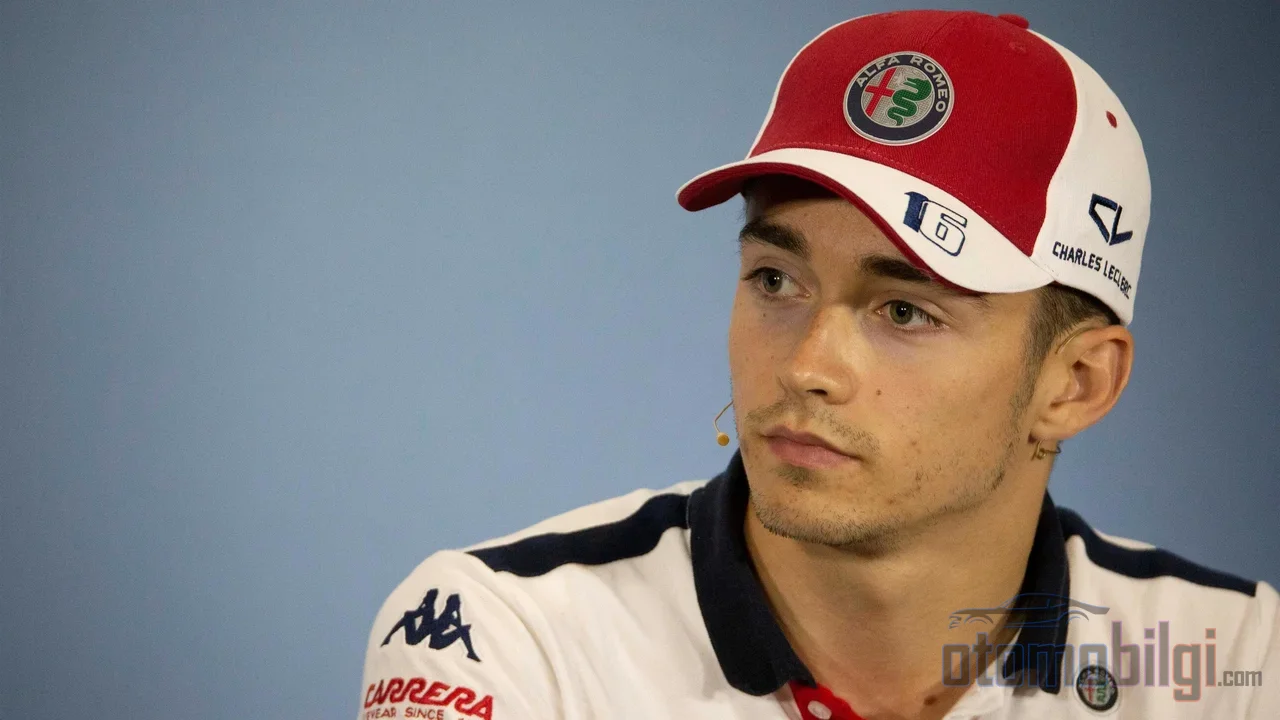
And that is exactly how Leclerc got his ticket punched. The seat within the Ferrari academy turned into a deal with Alfa Romeo Sauber for 2018, and Leclerc stepped into F1 at the 2018 Australian GP; he finished his first race in 13th place. His rookie season was not smooth: spins and crashes marked the first three races, and he was also outperformed by his experienced teammate. But he recovered from mid-season lows, was voted Driver of the Day in Azerbaijan, and closed the season 13th with 39 points. place. A thoroughly solid year for a Sauber; and that is exactly what Ferrari was watching.
In the Red Team: The Ferrari Years, 2019 to 2026
In 2019, Leclerc moved to Ferrari alongside Vettel, and the expectations evaporated in the first months of the season: in Bahrain, he became the second-youngest pole sitter in F1 history. He took his first win at the 2019 Belgian GP - again at Spa; the most fitting venue in memory of Jules Bianchi - and then, with the Italian GP, ended Ferrari's nine-year win drought at Monza. The Italian press soon gave him a nickname: il Predestinato, meaning the child destined by fate.
Looking at today, the statistics speak for themselves: as of the 2026 Mexican GP, his career includes 9 wins, 15 fastest laps, 56 podiums and 27 pole positions - the highest pole count ever achieved by a driver who has not become champion. In 2022, he finished the championship second behind Verstappen. And in 2024, a historic day arrived: by winning the Monaco GP, he became the first Monegasque driver to win the race in 93 years; in the same season he added wins at the Italian and US GPs and closed the championship third. From 2025 onward, Lewis Hamilton is now at his side; Leclerc is contracted with Ferrari until at least the end of the 2028 season. In the 2026 season, after 18 races, he has amassed 199 points with 1 win and 6 podiums - and that win was a stylish one: the British GP on July 5, 2026, carried Ferrari back to the top after a 62-race winless streak.
His life off the track is colorful too: his "Dreamers" EP, made with pianist Sofiane Pamart in 2024, climbed to number two on the Billboard Classical Albums chart, and in 2026 he married Alexandra Saint Mleux. If you ask what any of this has to do with the Formula 2 page - this is exactly where the bridge is built.
Why Is the 2017 Season Still a Benchmark?
To sum up: Charles Leclerc won GP3 in 2016 and was taken into Ferrari's academy; in 2017, he wrapped up the inaugural FIA Formula 2 season with 7 wins, roughly 7-8 poles and a 72-point margin over his closest rival, sealing the title with three races to spare, and knocked on F1's door. As the fourth name to win GP2/F2 in his rookie year, he offered one of the cleanest proofs of the GP3-then-F2 formula. Today, in 2026, in Ferrari's red suit, he shares the same garage with Hamilton and is still showing what he showed in F2 seven years ago: speed is a talent, but speed under pressure - that is the real deal. Do you think this young driver will add that missing championship to his career by the end of it? I will definitely keep watching.
Sources
- Charles Leclerc - 2017 Champion (FIA Formula 2 Hall of Fame)
- Charles Leclerc - Wikipedia
- Charles Leclerc | Formula1.com
- Charles Leclerc: Ferrari driver signs long-term contract - BBC
- FIA Super Licence - Wikipedia
- F1 2018: Charles Leclerc confirmed at Sauber - Sky Sports
- Melbourne 2018: Charles Leclerc's Formula 1 debut - AutoHebdo
- Dre's 2018 F1 Season Reviews - Motorsport101