Mick Schumacher's Road from the F2 Championship to F1
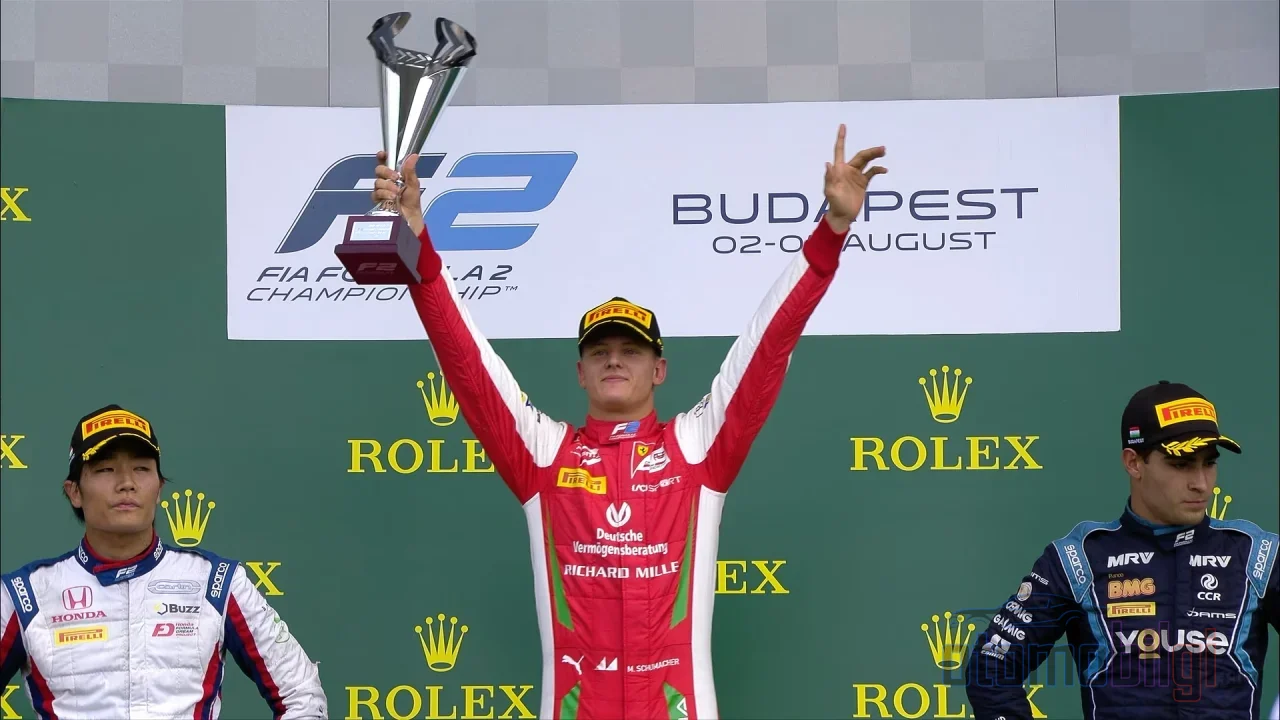
Say you're P18 in a qualifying session, the championship is at stake by a hair's breadth, the tires are slowly giving up, and the family surname sits on your shoulders like a mountain. you're in P18, the championship is at stake by a hair's breadth, the tires are slowly giving up, and your family's surname sits on your shoulders like a mountain. On the Sakhir night of December 2020, Mick Schumacher lived exactly this - and that night he became Formula 2 champion without even scoring a point. Yes, you read that right: champion without scoring a point. Let's start from the beginning. A Young Man in the Shadow of a Surname:
From Karting to the F3 Title From Karting to the F3 Championship
Mick Schumacher was born on March 22, 1999 in the town of Vufflens-le-Château... actually, in Genolier, Switzerland; In other words, he carries one of the heaviest surnames in motorsport. So much so that, during his karting years, he raced under pseudonyms like Betsch and Junior to escape his father's fame. Even his first name has a story of its own: Even his name alone has its own story: He comes from legendary motorcycle champion Mick Doohan.
In 2016 he moved to Prema and that same year finished runner-up in both ADAC F4 and Italian F4. The 2017 European F3 season went poorly - 12th in the overall standings, with a best result of third place at Monza. But in 2018 everything changed: He won the European F3 championship with Prema with 8 wins, 14 podiums and 7 pole positions; left his closest rival Daniel Ticktum 57 points behind. The next rung of the ladder was clear: 2019:
2019: A Year of Learning and a Difficult Start
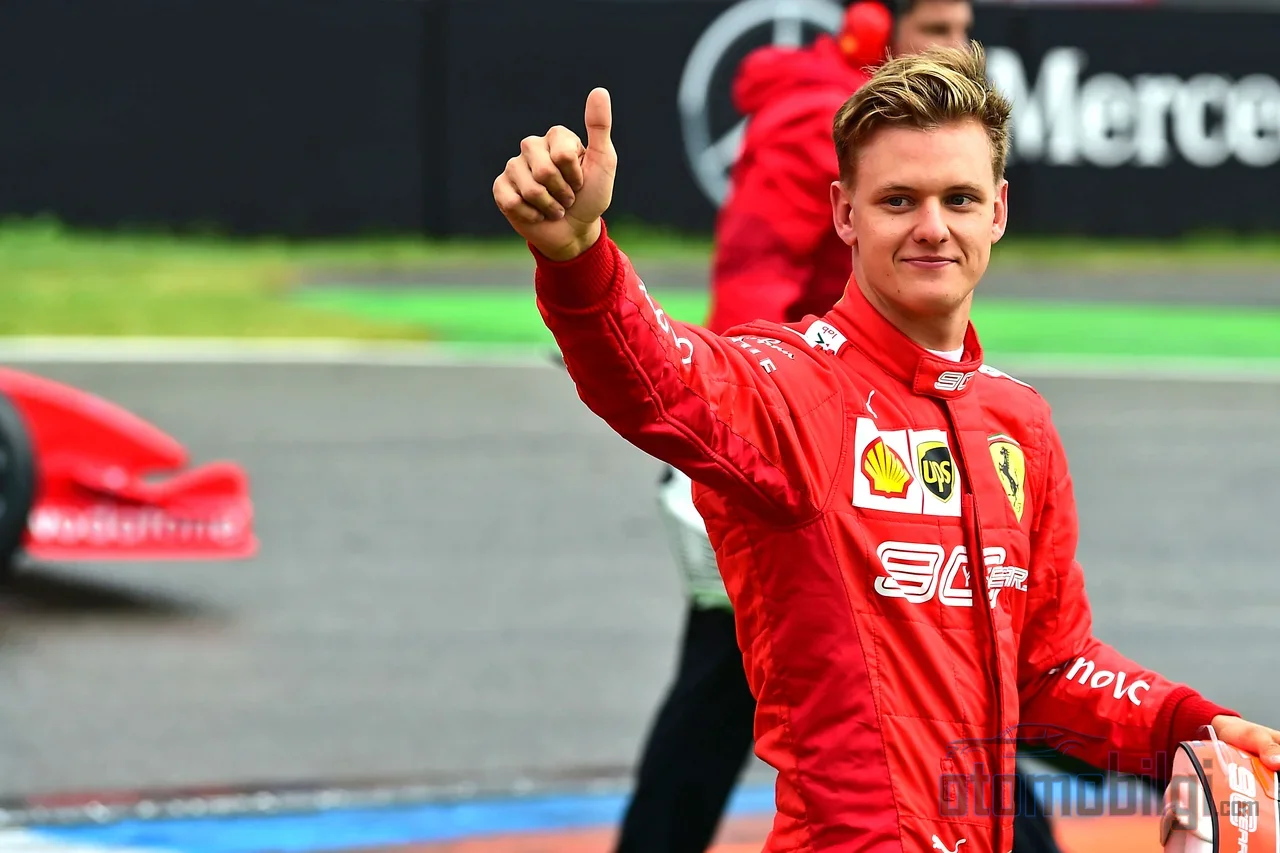
In 2019 he stepped up to F2 with Prema; his teammate was Sean Gelael. His only win in his first season came from the Hungary sprint race, and he closed the season 12th with 53 points. A detail that goes unnoticed under the spotlight: The races at Spa had been cancelled during that black weekend marred by Anthoine Hubert's death - a trauma that shook the balance of the paddock. Later that same year, he drove 56 laps in Bahrain with the Ferrari SF90, testing a modern F1 car for the first time. In January 2019, he also joined the Ferrari Driver Academy; his family's historic tie with Ferrari was the architect of that decision. Let's not forget: Charles Leclerc had also come through the same academy.
Highlights
- The 2020 F2 title was sealed in the final race without scoring a point.
- In 2020, Prema kept two champions - Schumacher and Shwartzman - in the same squad.
- In 2020 he gathered 70 super licence points; Two seasons at Haas:
- Two seasons at Haas: 43 starts, 12 points, then a parting of ways.
- 2026: Indianapolis 500 Rookie of the Year award in IndyCar.
The 2020 F2 Season: How Was the Championship Won?
In 2020 he stayed at Prema, but the line-up was no longer ordinary: his teammate was Robert Shwartzman, the first F3 champion and a Ferrari academy member. Two champion drivers at a team like Prema working out of the same garage was like a billboard before the season had even started. So how did the season unfold?
- A collision with Callum Ilott while battling for the lead in Austria - a bad start.
- A double podium in Hungary.
- From Spain to Monza, five consecutive podiums; Including the Monza feature race victory.
- He took over the championship lead at Mugello.
- He won the feature race in Russia and held the gap.
Midway through the season, the picture was becoming clear: Schumacher led with 191 points, ahead of Ilott on 169 points. But everything was suspended going into the final weekend. In Bahrain, Ilott cut the gap to 14 points. In Sakhir, meanwhile, Schumacher started 18th - the worst grid position of his career after an incident with Nissany. Then came that patient drive: he climbed from 18th to 6th and pocketed 2 points with the fastest lap.
The Incredible Scenario of the Final Night
The real drama unfolded in the sprint race. When Schumacher's tires faded, he pitted and dropped out of the points. The championship was now in Ilott's hands: at that moment the Briton was in the podium zone, and if he finished the race in P2 and took the fastest lap, the title was his. But Ilott's tires could not hold out either; he too missed out on the points. In the end, Schumacher was declared champion despite the risk of finishing the race in 20th in which the race finished, he was declared champion. In other words, not a BBC drama series, but a real race weekend.
The Key to the Championship: Consistency
Two views stand out in assessments of that season. One argues that both Schumacher and Ilott succumbed to the pressure in Bahrain and that it was not the title contenders who truly shone. The other - the one I find more accurate - emphasizes that consistency won: Ilott had the speed but not the stability; the fastest driver of the season, Yuki Tsunoda, missed out on the title; and early favorite Shwartzman's campaign did not deliver what he had hoped for. In F2, instead of shining just once, you need to score points every week and not run the marathon like a sprint. Schumacher did exactly that.
Super License and the Ferrari Academy: The Mechanism of the Move to F1
So is there a button that says "win the F2 championship"? No. The mechanical part of it is super license points: 40 points are required to reach F1. Looking at the drivers of the 2020 season, Schumacher had accumulated 70 points - meaning he cleared the threshold comfortably. An interesting detail: his teammate Shwartzman was higher than both of them with 90 points and already had enough points. So there was no obstacle on the points front; what remained was a seat opening up and the right timing.
Ferrari Driver Academy provided that timing. Schumacher, who had been in the academy since January 2019, served as a test driver for Alfa Romeo and Haas throughout 2020; he got his first FP1 experience with Haas in place of Kevin Magnussen at the 2020 Abu Dhabi GP. As soon as he put on the championship crown, Haas announced his 2021 seat. Team boss Mattia Binotto added that the first season would be very tough but that Schumacher could continue within Ferrari's fold until 2023 - we shall see what kind of prophecy that was.
The Haas Years: From the Quiet Pain of 2021 to the Breakthrough of 2022
In 2021 he moved to Haas on a multi-year contract; his teammate was Nikita Mazepin, whom he knew from karting. He chose the number 47 and asked for MSC, his father's code, as his TV abbreviation - seeing those three letters on screen again felt strange to many fans. His first race was the 2021 Bahrain GP; he finished 16th. That season Haas's car was frozen for development, and the best result of the season was a 12th place in Hungary with no points: finishing 19th in the championship, with a Q2 appearance in Turkiye earning 14th on the grid - a small but real bright spot.
In 2022 Kevin Magnussen arrived and the car improved. Schumacher scored his first points at the British GP, and in Austria he achieved 6th place, the best result of his career. But mid-season, the picture darkened. That crash in Monaco where he hit the barriers and split the car in two, followed by a chain of high-profile incidents… The result: at the end of the season, Haas announced they were parting ways. Two seasons, 43 starts, 12 points - and a pink slip. Let's be honest at this point: the 2022 Haas was not a terrible car, but the bill for broken parts burned through both the team's and the driver's budget.
Does an F2 Championship Guarantee Success in F1?
Here is where the article's main question gets answered: An F2 championship opens the door to F1 but does not guarantee lasting success once you're inside. Leclerc in 2017, Russell in 2018, and later Piastri and Bortoleto all won their titles on their first attempts and built solid careers in F1. The overall picture isn't bad either: Drivers who moved from F2 to F1 have achieved a combined 33 Grand Prix victories and 150 podiums, and among them emerged an F1 world champion. But the Mick Schumacher case is the other side of the coin: just two seasons after wearing the championship crown, he was out of the paddock with only a handful of points-scoring results. Moreover, since the rules bar an F2/GP2 champion from returning to the series for the following two championships, the door back was closed too - on the ladder you can only move up or sideways.
For names like Leclerc, Russell, and Piastri, the championship was a starting point; Schumacher's championship, however, remained the peak of his career. The difference comes down to the car, the team, and luck spread over time, combined with consistent performance every race weekend. In short, a championship is like a visa: it lets you cross the border, but not to hold your ground there.
Where Is Schumacher Today? A New Route Beyond F1
In 2023 he served as a reserve driver for Mercedes and McLaren; Toto Wolff believed he was still a developing driver. In 2024 he left both roles and turned to endurance racing with Alpine in the WEC: his first podium came at the 2024 6 Hours of Fuji, followed by podiums at Imola and Spa in 2025; his best result at the 24 Hours of Le Mans was 10th place. Then came the big jump: In 2026 he moved to IndyCar, completing his first full season with Rahal Letterman Lanigan Racing's No. 47 Honda and winning Rookie of the Year at the Indianapolis 500. For 2027, he signed with Meyer Shank Racing in the No. 66 Dallara-Honda.
Is the F1 door still ajar? Schumacher said in 2026 that he kept his hope of returning to Formula 1 alive; but he also admitted that if a return did not happen, he might have to think about a Plan B. Had he returned, he would have been away from Grands Prix for four years. Today, IndyCar is at the center of his agenda.
Conclusion: Crown Worn, Route Changed
Mick Schumacher's story shows us how tough a school F2 is and at the same time how merciless a lottery it can be. In 2020, consistency - clinched with Ilott's collapse in the final race - carried the title to him and on to Haas; the superlicense points and the backing of the Ferrari academy were mechanically flawless. But in F1 not everything is mechanical. Two seasons, a handful of points, a string of crashes, and a new continent. Now there is the number 47 Honda on the fast ovals of Indianapolis - and maybe one day that MSC abbreviation will appear on F1 screens again. I'm still voting for that; what about you?