Rising from F2: How Many Names Managed to Stay in F1 Permanently?
Share This Page
The F2 championship is not an automatic ticket to F1; since 2017, while some of the crowned names have settled into Ferrari and Mercedes seats, some champions never even made it to an F1 race. So the second tier is not a guarantee but a de facto exam: there is no rule saying that whoever wins on paper also grabs one of the 22 seats on the grid.
Highlights
- Since 2017 21 drivers have moved from F2 to F1; in 2025, the record of 5 rookies in a single season was broken.
- Leclerc, Russell, Piastri and Bortoleto, F2 champions still holding an F1 seat in 2026.
- Felipe Drugovich and Théo Pourchaire, the two names who became champions but never saw an F1 seat.
- In F2, the top three places alone are worth 40 superlicence points ; in other words, the podium guarantees the licence instantly.
- Lando Norris became the first driver to win the F1 championship in 2025 as an F2 graduate.
What Exactly Is F2 and Why Does It Matter So Much?
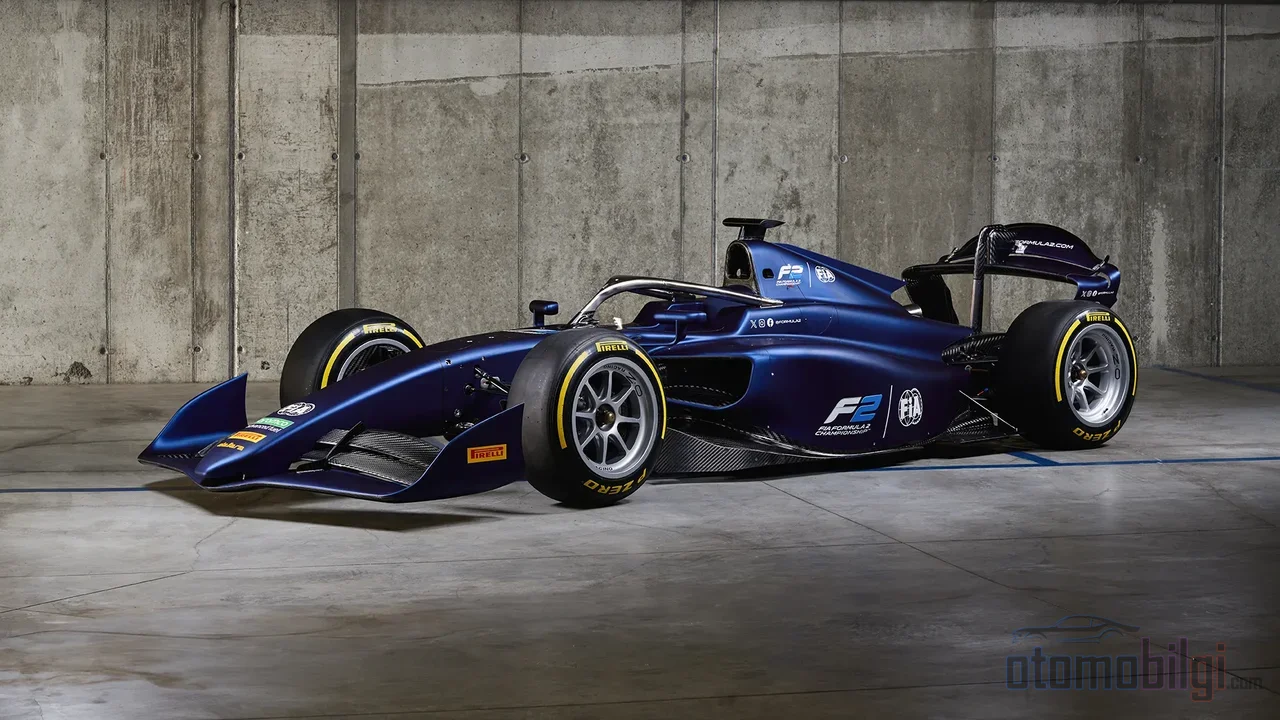
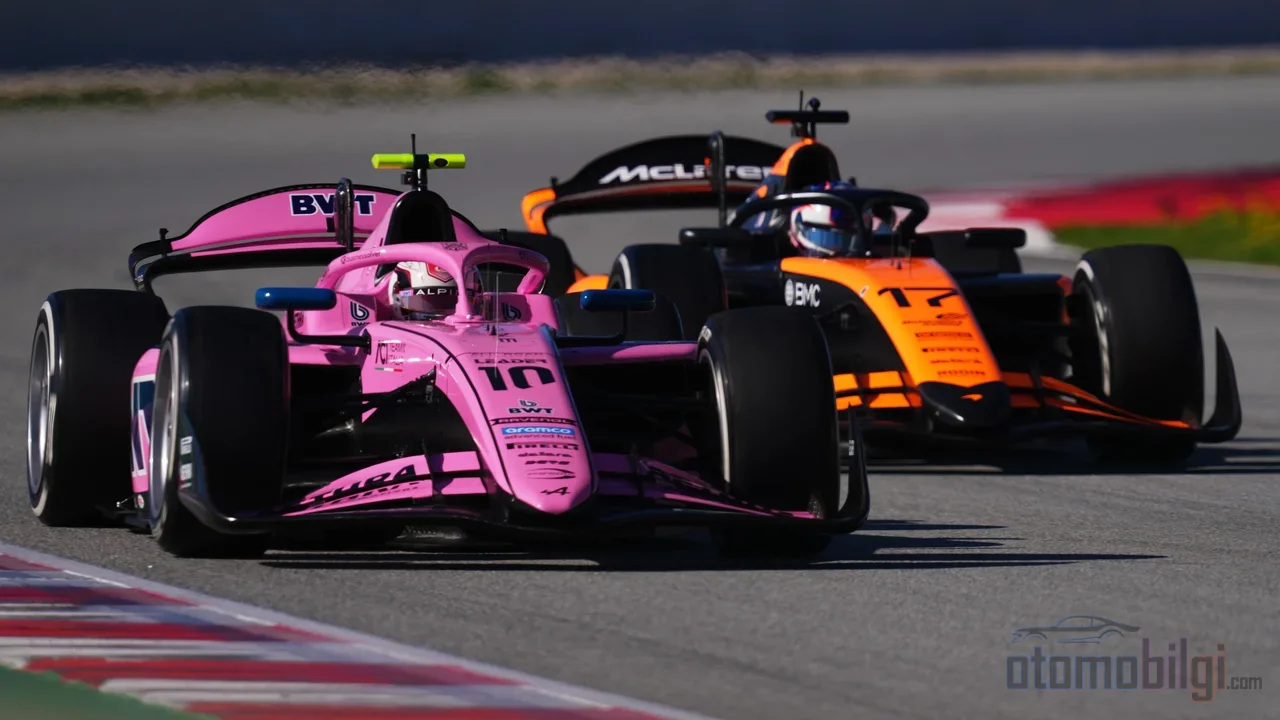
FIA Formula 2 was born in 2017 with the rebranding of the GP2 Series, and it has a single purpose: to be the final step just below Formula 1. The series operates on a one-make logic; that is, every team uses the same Dallara chassis and the same Mecachrome 3.4-litre V6 turbo engine. Even the fuel is standard, and it is a fuel developed according to a 100% sustainable fuel standard. In short, there is no car advantage; only the driver is on the table. This makes the championship truly the driver's own doing.
Let me explain the logic with an analogy from daily life: F2 is like the hardest of the practice exams before the real test. The questions are almost identical to F1's real exam, and the environment is the same too: race weekends are embedded within F1 events, and the season features 14 rounds and 28 races across 13 countries. The Sprint race is 120 kilometres, while the Feature race is 170 kilometres. In the Sprint, the top 8 score points, while in the Feature, the same 25-18-15 point system as in F1 applies; 2 points are added for pole and 1 for the fastest lap.
Let's also give a figure to clarify the seriousness of the matter: in F2's first 8 seasons, 122 drivers took a start, and exactly half of them managed to win at least one F2 race. In other words, everyone in the class counts as successful, but the number of those who leave the classroom and move up to the next floor is a completely different story.
The Champions' Fate: Who Held On and Who Vanished?
Here is the heart of the question. In the list stretching from the first champions of the modern F2 era to today, we see two different career paths: those who settled at the summit and one-season guests. Let's take a quick look with a table:
| Champion | Year | Summary of F1 Career |
|---|---|---|
| Charles Leclerc | 2017 | 8th season at Ferrari; 8 wins, 27 poles |
| George Russell | 2018 | At Mercedes; 5 wins, finished 2025 in P4 |
| Nyck de Vries | 2019 | Lost his seat after 10 full-time races |
| Mick Schumacher | 2020 | 2 seasons at Haas; moved to IndyCar in 2026 |
| Oscar Piastri | 2021 | One of the strongest drivers on the grid with McLaren |
| Felipe Drugovich | 2022 | Never found an F1 seat |
| Théo Pourchaire | 2023 | Never found an F1 seat |
| Gabriel Bortoleto | 2024 | Entered F1 in 2025 with Sauber |
Those Who Reached the Top: Leclerc, Russell and Piastri
Charles Leclerc's 2017 season is still talked about today: 7 wins, 7 poles and a 72-point gap to his closest rival in his rookie year. In 2018 he stepped into F1 with Alfa Romeo Sauber, and a year later he walked through Ferrari's door, becoming the first name the academy promoted to the main team. Entering his 8th season at Ferrari in 2026, his tally reads: 171 GPs in 9 years, 1672 points, 8 wins, 50 podiums, 27 poles. In 2022 he fought Verstappen for the championship but finished second, 146 points behind. Let's add one more side: winning both Monaco and Monza in 2024 made him the only Monegasque to win Monaco in the modern era.
George Russell's story is like patience rewarded. In 2018 he became champion with a then-record 287 points, crushing Norris by 68; 7 wins, 6 poles, 6 fastest laps. Then he waited three years at Williams. His substitution for Hamilton at the 2020 Sakhir GP is still legendary: he entered the race from pole position in effect and missed the podium due to a mechanical issue, but everyone saw what he did. In 2022 he moved to Mercedes, took his first win in Brazil and beat Hamilton by 35 points. He closed 2025 in P4 with 319 points; now he is in his 5th season at Mercedes alongside rookie Kimi Antonelli.
There is a special reason behind Oscar Piastri's situation: winning F3 and F2 back-to-back in his rookie year had historically been granted only to Leclerc and Russell, and Piastri joined that club as the third name. Today he sits in McLaren's leading seat, and this trio is living proof of why F2 should be taken seriously. Let's not forget Gabriel Bortoleto to complete the picture of the top five: he too did the F3-F2 double and was in F1 with Sauber in 2025.
Those Who Shone for a Season and Faded: de Vries and Schumacher
Nyck de Vries's story is perhaps the most heartbreaking. On his third attempt, he was crowned by sealing the championship with three races to spare. When the F1 door didn't open, he went to Formula E and became the series' first FIA-sanctioned champion in 2021. Then came that famous 2022 Italian GP: he raced in place of Albon, took P9 on debut and scored points in his first attempt. Everyone said "the man is ready," and a full-time contract was signed with AlphaTauri for 2023. After ten races, his seat was handed over to Ricciardo ahead of the Hungarian GP. Today he races in Formula E with Mahindra and in the endurance world with Toyota, and in his first WEC season he even finished 2nd at Le Mans; he also does test and simulator work at McLaren. A perfectly bright career outside F1, but he didn't get the time he wanted in F1.
Mick Schumacher became champion in 2020, finishing 14 points ahead of Callum Ilott despite taking P18 in the final race. His two seasons at Haas, however, drew a reversed graph: he scored no points in 2021, finished 16th with 12 points in 2022, showed promise with P6 in Austria and P8 at Silverstone, but when costly crashes combined with performance, his seat went to Hülkenberg. In 2023-24 he was Mercedes' reserve driver but never entered a GP session. He now races in the WEC with Alpine and even saw a podium at Fuji; when the 2026 Cadillac seat went to Bottas and Pérez, he will continue his path in IndyCar with the RLL team.
Are There Any F2 Champions Who Couldn't Find an F1 Seat?
There are, and this question carries the real answer in its title. Felipe Drugovich (2022) and Théo Pourchaire (2023) are the two names who became champions in the modern F2 era but never reached an F1 seat. Pourchaire's own words summarize just how fragile his situation was:
I am quite sure that even if I win the F2 championship, I will not have a seat in F1 for 2023.
Similar stories played out in the GP2 era as well. Fabio Leimer, despite becoming GP2 champion, couldn't knock on any F1 team's door because he couldn't bring sufficient budget contributions, and didn't even get to start a single GP. On the other side of the picture stand the giants of the GP2 legacy: Nico Rosberg became champion in 2005 and entered F1 with Williams in 2006, and names like Hamilton and Gasly also came down the same path. In career wins, Hamilton's 105 victories far ahead of Rosberg's 23; there is no other F2/GP2 champion who has reached this level.
Super License and Money: Who Opens the Door, and How?
Anyone who wants to race in F1 needs an FIA Super License, and this license is generally obtained by collecting at least 40 points from approved series over a two-to-three-year period. F2 is one step ahead here: the champion alone receives a maximum of 25 points, but the top three positions together add up to a full 40 points. In other words, a pilot who reaches the podium in F2 puts the license right in his pocket instantly. The system is logical; the problem is not in finding the license but in finding the seat.
Because F2 is one of the most expensive rungs below F1, and the cost of a season is measured in millions. This has an interesting domino effect: while drivers pay big money in F2, they sometimes start getting paid in F1. Returning to F2 after a bad F1 season is practically almost impossible, because if you return, you have to race for free again. Economics affects career decisions as much as track performance.
There is also the seat math. F1 teams tie up their drivers early for the next season, and the number of truly 'vulnerable,' vacant seats is very small. That's why the debates continue; one suggestion is to establish a system that guarantees the F2 champion an F1 seat for two years. The idea is nice, but making room without enlarging the grid isn't easy. Also, the F2 car is brutal to drive; there is no hydraulic steering assistance, so it's physically demanding as well. But the speed of F1 cars requires different training, so rookies need to be given time.
What's the Situation in 2026? New Champion Fornaroli at the Door
The current picture is both optimistic and cautious. Leonardo Fornaroli became the 2025 F2 champion and was counted as the fifth member of the 'won the championship on his first attempt' club, alongside Leclerc, Russell, Piastri, and Bortoleto. The 20-year-old Italian was included in McLaren's driver development program; so not a key in the door, but a nail has been driven in. On the 2026 F2 grid, Nikola Tsolov from the Red Bull junior program is being shown among the championship contenders with his 2025 F3 runner-up finish; names like Ryo Miyata and Colton Herta at Hitech, and R. Câmara and J. Dürksen at Invicta, are also filling out the pool.
The door has opened a bit on the F1 side too: with Cadillac joining as the 11th team in 2026, the grid rises to 11 teams and 22 drivers; the seats were given to Bottas and Perez. Along with the new regulations, a revised power unit, active aerodynamics, and an 'Overtake' mode that makes passing easier are in effect. Moreover, in 2025 Lando Norris once again proved the series' point by becoming the first F2 graduate to win an F1 championship. The youngest name on the grid is Arvid Lindblad, racing for Racing Bulls.
So What Does an F2 Championship Really Tell Us?
In my view the answer is clear: an F2 championship is a diploma for talent, while an F1 seat is a hiring decision. Not everyone with a diploma finds a job, but it is far harder for someone without one to get hired. Leclerc and Russell represent the best side of this, Drugovich and Pourchaire the most painful side, and de Vries and Schumacher the gray area in between. The fact that four champions still hold F1 seats in 2026 is encouraging; but don't forget, there are also the stories of names who won the championship on that same grid yet were turned away at the door. Do you think the next F2 champion will be able to break this twist of fate? I think Fornaroli is a good candidate - we'll see what cards McLaren plays.
Sources
- F2 Champions 2017-2024: Where Are They Now? Part I - The Paddock Chronicle
- What is F2? - FIA Formula 2
- The beginner's guide to Formula 2 - Formula 1
- FIA Formula 2 celebrates a decade of success - FIA Formula 2
- Leclerc and Russell show what F1's losing with Piastri snub - The Race
- What became of all the Formula 2 champions? - AutoHebdo
- The Formula 2 drivers who were expected to get to F1 (but never did) - Dive-bomb
- Pourchaire: Even if I had become F2 champion, I was sure I wouldn't be in F1 in 2023 - Motorsport.com TR
- Fabio Leimer: The lost GP2 champion - Feeder Series
- The beginner's guide to the F1 Super Licence - Formula 1
- Formula 2 2026 season preview: A guide to all 22 drivers - Formula Scout
- 2026 Formula 1 season - Wikipedia (TR)
- 2026 Formula 1 Grid | Drivers' Ages - Race Result