Why Couldn't Felipe Drugovich Get an F1 Seat?
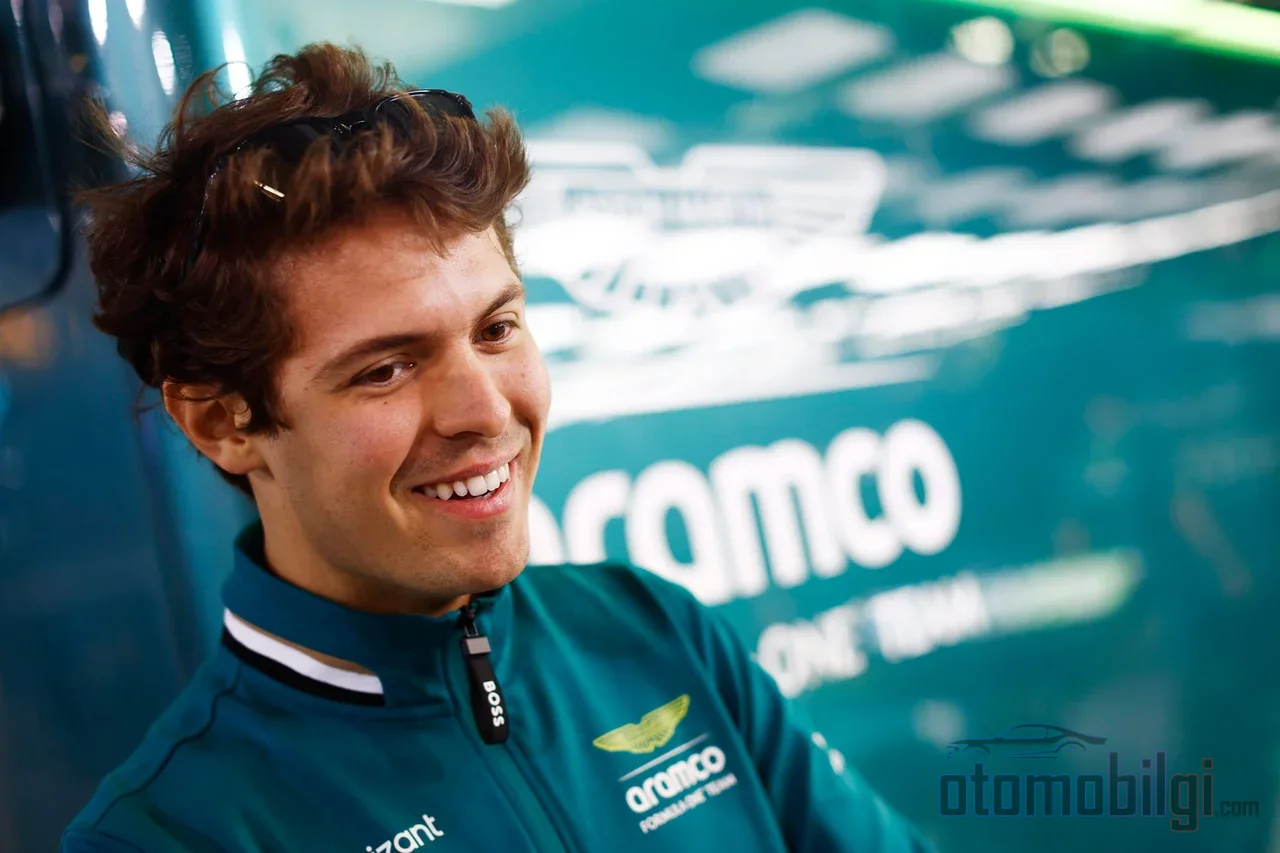
Monza, September 2022. The final lap of the sprint race is ending, and Felipe Drugovich is sealing the Formula 2 championship before the season is even over. He has opened up a full 101-point gap over Théo Pourchaire, become the first driver to win both the Sprint and the Feature on the same weekend in Barcelona, and completed his superlicense early. In short, he was standing at F1's door with a diploma, a passport, and a suitcase. So why did that door never open? Well, on this page we're going to do exactly the opposite of the usual champion-to-promotion story: we'll examine one by one why a successful F2 champion still doesn't have an F1 seat.
Who Is Felipe Drugovich?
The Brazilian driver, born in 2000, stepped into single-seater series in 2016 with ADAC Formula 4. In 2017 he finished third in the same series, losing to Juri Vips by 9 points, and in 2018 in the Euroformula Open he practically became a storm: 14 wins, podiums in every race, and a championship announced with two weekends still remaining at Monza. In other words, even before reaching F2, he was already painting the picture of a finished businessman.
But the road was not smooth. His first Formula 3 season in 2019 was a disappointment: only 8 points with Carlin, 16th place. In 2020 he moved up to Formula 2 with MP Motorsport and, in his rookie season, finished 9th with 3 wins. That is. In 2021 he moved to UNI-Virtuosi; he didn't manage a win, but secured 8th place with 4 podiums. Then in 2022 he returned to MP, and that season everything changed.
Highlights
- 2022 F2 championship: 265 points, a 101-point gap over Pourchaire
- 2 days after the championship, became the first member of the Aston Martin development program
- Completed the superlicense requirements with test kilometers in 2022
- Served as reserve and test driver from 2022-2026, but no seat came
- In 2026 he left Aston Martin and moved to Formula E, joining Andretti
2022: The Season Where Everything Worked Like Clockwork
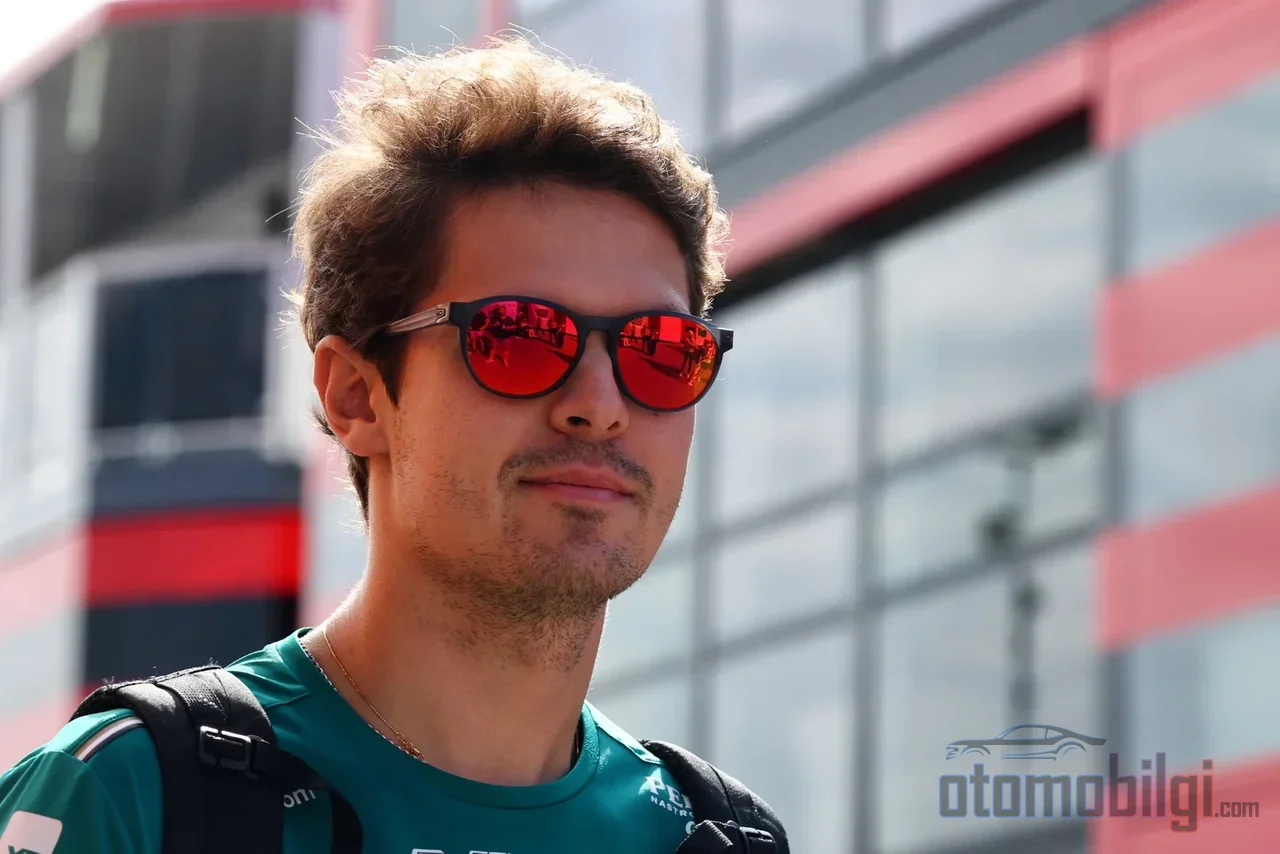
Statistically speaking, Drugovich's championship year was one of the most overwhelming seasons in F2 history. 5 wins, 4 pole positions, 11 podiums, and only four pointless races all season. He clinched the trophy with Saturday's sprint race at Monza, and headed into the Abu Dhabi season finale already as champion. Look at the names left behind him on the podium: Théo Pourchaire, Liam Lawson, Logan Sargeant. In other words, not a run-of-the-mill group of rivals, but names all on the F1 radar.
In Barcelona, he managed to become the first driver to win both races on the same weekend. Doing that in F2's Sprint + Feature format means passing two separate exams - tire management and mental - with the same grade. In short: everything that could be done on track was done. So where was the problem? The answer lay outside the track.
He Had the Superlicense, But No Seat
First, let's clarify one thing: Drugovich's problem wasn't superlicense points. Just two days after the championship, on September 12, 2022, he became the first member of the newly established Aston Martin driver development program. He completed his first F1 test laps at Silverstone in November 2022 in the AMR21, fulfilled the super license requirements the same year thanks to his testing kilometers, and earned the right to take part in free practice at the Abu Dhabi GP. The license was in his pocket, and the car was in the garage. But the car in that garage was not entrusted to him on race day.
The logic here is actually familiar from everyday life: even if you get the highest grade in class, you cannot expect a promotion if the company has no open position. While F1 produces roughly one F2 champion every year, only 1 to 3 seats genuinely open up on the grid. Of the F2 champions of the last nine seasons, 22 drivers managed to move up to F1. So the math is not smiling at you.
Reserve Driver Role: Visibility Yes, Seat No
The Aston Martin years
In 2023, following Lance Stroll's bicycle accident, Drugovich completed 117 laps in the AMR23 at the Bahrain pre-season test; in other words, he got the chance to drive an F1 car over a serious distance. The same year, he was also added to McLaren's reserve driver pool for the first 15 races. He took part in the FP1 sessions of the 2023 Italian GP and the Abu Dhabi GP; at Abu Dhabi, he accumulated 123 laps in the postseason test. In 2024, he finished 18th in Mexico City GP FP1 and 9th in Abu Dhabi, and drove another 146 laps in the Pirelli test. In September 2024, he took part in the 2026 prototype tire tests in Barcelona, and continued this role at the 2025 Bahrain FP1.
An impressive portrait on paper. But the bitter truth of being a reserve driver is this: no matter how fast your laps are, you do not own the seat on Sunday. Liam Lawson openly stated that he saw Drugovich being faster than Stroll in FP1 at the 2023 Abu Dhabi GP, and that he regarded him at that moment as one of the drivers who most deserved an F1 seat. Walls of praise, unfortunately, do not open seat doors.
2026: Parting and a new direction
The finale of the story came in 2026. Aston Martin confirmed that Drugovich left the team after the Las Vegas GP; the reserve driver role passed to Jak Crawford. Drugovich, far from shelving his F1 dream but with changed priorities, turned toward Formula E and the Andretti team. Even Max Verstappen commented that this move meant F1 had lost a talented driver. His Formula E record so far stands at 19 races, 1 pole position, 1 podium; his best season overall ranking is 14th in 2025-26. As a side career, he also tried the 24 Hours of Le Mans, finishing 15th with Cadillac in 2024. he did.
Why No Seat? Three Certain Obstacles
Three things are needed on the ladder to F1: speed, 40 super license points, and a budget or backer able to pay the bill. Nobody questioned Drugovich's speed or points. The remaining item is, in fact, the one that explains the whole story.
- Budget and academy dynamics: F1 seats mostly go to the pilots of teams' own academies or to names that bring in significant sponsor money. Drugovich had landed not on Aston Martin's academy seat but on its reserve seat.
- Timing: Other recent champions, Pourchaire and Piastri, also could not find a seat immediately after their titles; Piastri chose to wait in the reserves. Drugovich's championship year coincided with a year in which no suitable seat opened up on the grid.
- Scarcity of proving opportunities: Due to F1's testing ban, F2 champions have very limited chances to showcase themselves. Outside of FP1 sessions and Pirelli tests, Drugovich's chances of getting track time were close to zero.
And this is not just Drugovich's story. Past champions like Davide Valsecchi, Fabio Leimer, and Bruno Junqueira also failed to land an F1 seat after lifting the F2/F3000/GP2 trophy. Drugovich himself came to the championship with a concrete proposal: if the championship does not guarantee an F1 seat, then at least the winner should be allowed to return to F2. He also repeatedly stated that he had not given up on his F1 dream.
Does the F2 Championship Guarantee F1? The Straight Answer
No, it does not. The Felipe Drugovich case is the clearest proof of this: even a driver who did everything possible on track, collected his superlicense points in time, and lived within an F1 team for four years may still fail to reach a seat. The F2 championship does not grant entry to F1; it only gives you permission to knock on the door. The ones who open the door are off-track factors: being in the right year, being attached to the right academy, and holding the budget card in your hand. The rise stories of names like Russell, Leclerc, and Piastri show us that the ladder works; Drugovich's story shows that the last rung of the ladder sometimes hangs in the air.
And perhaps that is why there is a victory hidden in this story: instead of waiting forever in the reserve role, Drugovich chose to keep racing. His Formula E career has not yet turned into a bright page, but at least he is on the grid, racing, improving. For a driver, that is not a bad Plan B, but a classy Plan A alternative.