How Does a Driver Monitoring System Detect When You Fall Asleep?
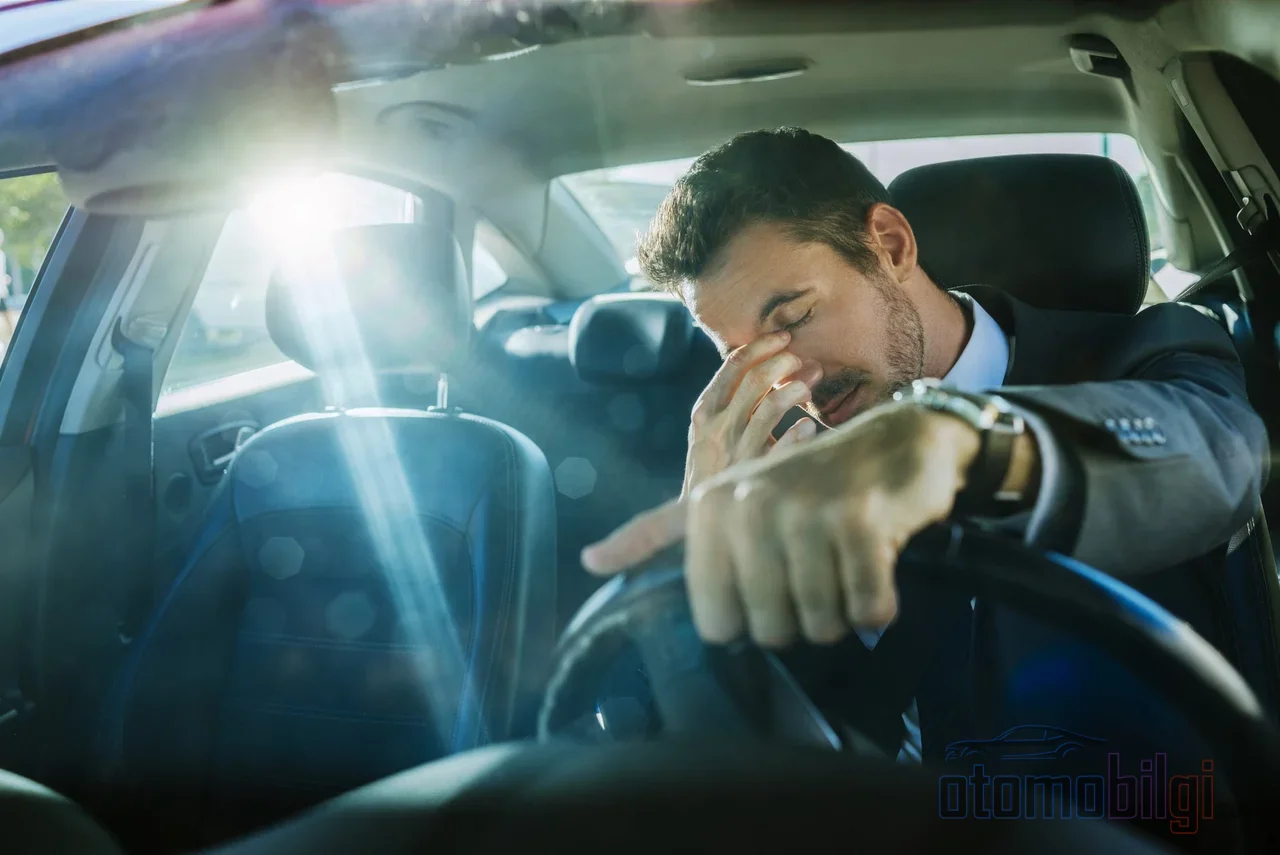
You're on the road, the car is going straight, but your eyes closed for two seconds and opened again. You didn't even notice. But that tiny camera behind the steering wheel noticed - and it's counting your blinks to tell you about it. So how can this system catch you before you fall asleep? Let's step inside and look at the engineering side, because the real story is hidden within the sensors and algorithms.
Interior Camera: How Does Invisible Infrared Light Work?
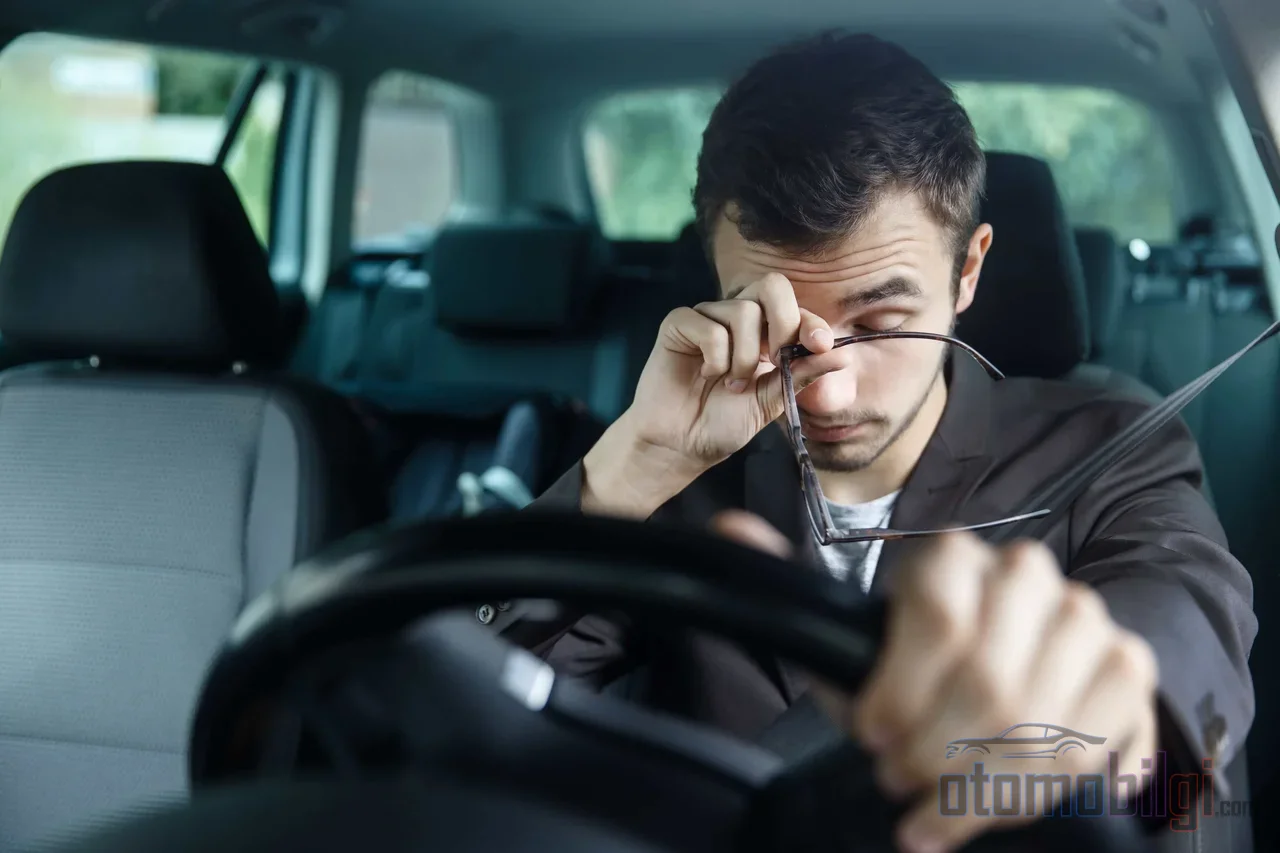
The heart of the driver monitoring system is a small camera hidden behind the steering column or in the dashboard. But this is not an ordinary camera: it sends the driver completely invisible infrared (IR) light. This light creates a small reflection on the cornea of the eye, and the camera captures images of the eyes, face and head from that reflection. Tracking continues even if you're wearing sunglasses - in darkness it makes no difference at all compared to daylight.
Think of it this way: it's like a cat's eyes glowing when you shine a flashlight on it in a dark room, but the light is at a wavelength you can't see and far more subtle. The system works day and night without disturbing you. The camera is also designed to be mounted at a distance of 40-120 cm from your eyes; for passenger vehicles there are 1 MP models adjusted for a focus distance of about 70 cm, while for trucks and buses there are 2 MP versions reaching up to 100 cm.
Highlights
- The system illuminates the eyes with invisible infrared light and calculates the direction of gaze from the corneal reflection
- In mobile applications, eye images are processed at a rate of 60 frames per second
- Steering angle data can predict fatigue-related lane violations 6 seconds before they occur
- Euro NCAP's new driver monitoring protocol came into force on January 1, 2026 and distributes a total of 25 points
- Video data is processed in the vehicle and is not stored on the device or in the cloud
Eye Tracking and Fatigue Algorithm: How Is Microsleep Caught?
The camera collects raw images, but the real intelligence lies in the software. In modern systems each eye is monitored separately: algorithms first detect the iris and pupil, then combine the data from both eyes into a single unified gaze direction. So the system doesn't just check "are the eyes open"; it also predicts where you are looking. You can think of it as mapping the cues coming from both eyes - no matter which way the head turns, the target of the gaze can be calculated.
AI-based algorithms analyze head, eye and facial movements together to make decisions about the level of attention. The signals tracked include eye movement, blink rate, gaze direction, head position and facial cues - such as yawning. This is exactly where what researchers call "microsleep" comes into play: involuntary eye closures lasting a few seconds. You can think of it like a day of desk work - when a person is tired, the blink pattern deteriorates, blink duration lengthens, and yawns become more frequent. When the algorithm reads this pattern, it concludes fatigue. Blink detection is still an active research area today; even in 2025, new methods were proposed based on low-power, event-driven blink trackers and eyelid aperture metrics. The system also checks whether the driver is actually in the seat.
Self-Calibrating Camera
The most elegant part of the job is symmetry: once the system is installed, it calibrates automatically. When the vehicle starts moving, in the first few minutes it analyzes the main focus area of the driver's gaze and defines it as the "line of sight on the road." This way, it quickly adapts to different vehicle types, different drivers, and different seating positions. When a short friend takes the wheel, the system finds its footing again, just like an eye doctor readjusting the focus point.
There is also a completely camera-free, indirect method: steering data. To clarify the difference between the two:
| Feature | Camera-Based DMS | Steering Data Based |
|---|---|---|
| Detection method | Direct: eye, head, and face tracking | Indirect: inference from behavior |
| Fatigue signal | Microsleep, blink pattern, yawning | Minimal steering input + sudden corrections |
| Distraction | Detected from gaze direction | Cannot actually be detected |
| Cost and installation | High hardware cost | Uses existing sensors |
| Privacy burden | Continuous driver image | No image |
Can Fatigue Be Read from Steering Movement?
Yes, and the most striking number here is this: steering angle data can predict a fatigue-related lane violation 6 seconds before it happens. How? A fatigued driver's steering pattern changes: first minimal input is given - the steering is almost untouched - then, as the vehicle starts to drift out of the lane, sudden, harsh corrections come. This "wavy" correction pattern is like a fingerprint of fatigue. In research, time-series analysis of steering angular velocity and algorithms based on steering movement-derived functions have been used for truck drivers for this detection. Systems working online in real driving conditions have also been developed.
Just like a friend who notices you are tired when you start dragging your feet while walking - the system also reads the change in your movement style. But it has limits: this method cannot actually see distraction, it only makes inferences from behavioral data. If a driver looking at their phone keeps the steering normal, the steering data alone stays silent.
Sensor Fusion: Is the System Really Looking at the Road?
The biggest weakness of the cabin camera is that it does not see what is happening on the road. The solution is to combine the driver camera with external ADAS sensors: gaze angle is cross-validated with real-time road hazards. This way, it can be understood whether the driver actually sees the pedestrian or the cyclist. This "gaze to road" approach has two gains: false alarms are reduced and warning timing is improved. Some manufacturers are combining DMS and ADAS on the same chip, that is, on a single SoC; it works with 60 frames-per-second infrared eye images, and all image processing is done inside the vehicle in real time.
On the research side, things have gone even further: multimodal approaches that combine biosignals (body data such as heartbeat) with image sensors aim to detect risky driver behaviors. So in the future, the system may look not only at your eyes but also at the signals of your body.
How Does Euro NCAP Test These Systems?
This is where marketing ends and standards begin. Euro NCAP's new driver monitoring protocol entered into force on January 1, 2026 and targets three basic behavioral states: distraction, fatigue, and "impairment," which is being assessed for the first time - that is, being under the influence. The total score distributed is 25: transient driver states carry 15 points, prolonged distraction 5 points, and short distraction 5 points.
The testing is taken seriously: Euro NCAP requires the manufacturer to submit a file containing sufficient technical detail for the full assessment of the system. In microsleep warning tests, the tolerance is 0.2 seconds - meaning the system must catch it within such a narrow window. An activation condition is also defined: the driver is continuously monitored, but before monitoring begins, driving is allowed for up to one minute at speeds of 10 km/h and above. For impairment assessment, the system must start working within the first 10 minutes of the journey at speeds of 50 km/h and above. Microsleep and drowsiness warnings must also be separate from other warnings. Vehicles receiving the highest ratings do not merely perform eye and head tracking; they tie driver state information to system sensitivity. And for the 2029 framework, work is underway on objective verification of sleep onset.
Warning Chain and Privacy: Where Is the Data Stored?
What happens when the system catches you drowsy? The warning chain operates in stages. One example: first a visual warning, then an audible warning and haptic vibration on the steering wheel; if there is no response, the driver assistance system temporarily shuts down and control returns entirely to the driver. In another implementation, seat vibration is added to the visual and audible warnings; if the driver still does not respond, the vehicle slowly comes to a safe stop. In a third model, the warnings escalate in intensity.
So where does the data go while this camera is watching you? In leading implementations, camera data is processed locally, inside the vehicle; images are sent only with the driver's explicit consent, usually for diagnostic purposes. Guidance documents also demand closed-loop operation: not recording more data than necessary, processing on the device, and minimal retention. It is also important to know the system's limits: these systems cannot detect alcohol or drug-induced impairment, nor can they guarantee that the driver is sufficiently awake.
The False Alarm Trap
There is another subtle side to this matter: a system that constantly gives false alerts can make the driver even more distracted and may ultimately lead to it being disabled entirely. Just like you eventually want to silence a noisy alarm - a system that talks too much ends up being ignored. That's why algorithm accuracy is critical: the system must both catch subtle fatigue signals and avoid creating unnecessary alert fatigue. The fusion of DMS with ADAS aims to strike exactly this balance by validating the alert in the context of danger.
In summary: How Does the Driver Monitoring System Detect Falling Asleep?
The answer lies not in a single sensor, but in the cooperation of two signal sources. A camera-based system, tracking your eyes and head with invisible infrared light, directly detects deterioration in blink rate, seconds-long microsleeps, yawning, and gaze deviation. In parallel, the irregular pattern in steering angle - long lapses and sudden corrections - signals fatigue up to 6 seconds before even a lane violation risk. When the two sources are combined and cross-validated with ADAS data, the system catches the signals heralding sleep before you even notice them and starts a graduated alert chain. In short, you have a road companion that watches your eyes - and this companion now goes through Euro NCAP's rigorous 25-point tests.
Sources
- Direct Driver Monitoring System – My Car Does What
- How Does an Advanced Fleet Driver Monitoring System Work? – Smart Eye
- The Complete Guide to Driver Monitoring System (DMS) 2025 – LiveViewGPS
- Driver Monitoring Systems in Electric Vehicles – Premium Autos Inc
- Euro NCAP Safe Driving Driver Engagement Protocol v1.1
- Euro NCAP Driver Monitoring Test Procedure SD 202 v1.2
- Euro NCAP Driver Monitoring Dossier Guidance SD 201
- Driver Monitoring 2.0: How Euro NCAP is Raising the Bar – Smart Eye
- Driver Drowsiness Detection Based on Steering Wheel Data – Arefnezhad et al., MDPI Sensors
- Presenting the Mobileye Driver Monitoring System – Mobileye