How Does Brake Assist Detect an Emergency, and Why Does It Multiply Pressure?
Share This Page
Brake assist (BAS/BA) is an active safety system that detects an emergency within milliseconds by monitoring the speed and force applied to the pedal during panic braking, and automatically raises the brake fluid pressure to maximum. It fills the gap when the driver presses the brake with insufficient force; it increases braking power but does not brake on its own - control always remains with the driver.
Highlights
- Mercedes-Benz's 1992 simulator research showed that more than 90% of drivers could not brake with sufficient force in an emergency.
- The system was first introduced in December 1996 in the Mercedes-Benz S-Class and SL-Class; it became standard on all models in 1998.
- In the EU, as of November 24, 2009, brake assist has been mandatory on all new vehicle types; it has been standard on all new cars since 2011.
- The gain in stopping distance varies between sources and conditions from 20% to 30%. varies.
- BA requires driver pedal input; it differs from AEB, which brakes on its own independently of radar.
How Brake Assist Detects an Emergency: Pedal Speed and Force
Unfortunately, the human foot in a moment of panic is not as strong as engineering would like. When Mercedes-Benz tested this in 1992 in a driving simulator in Berlin, a striking picture emerged: more than 90% of the participants could not apply sufficient force to the pedal during emergency braking. So the problem is often not in the braking system, but in the person using the brakes. Brake assist was born precisely to close this gap.
The system's detection logic is simple but clever: it continuously monitors the speed and force of pedal application. In normal driving you press the pedal gently; in a moment of panic, your foot comes down reflexively much faster. When pedal speed is recorded as unusually high, the system concludes that an emergency braking situation is occurring and automatically increases the hydraulic pressure at the wheel brakes. Some systems go one step further: they also look at how quickly the accelerator is released. If the driver stamps on the gas with a "panic" motion and lifts off suddenly, the brakes are pre-filled before the pedal is even touched - that is, the system gets ready for the scene before you even make your move.
This detection is truly fast. It detects an emergency "panic stop" and applies maximum braking power within milliseconds; no matter whose foot it is, the system can start full braking earlier than any driver. In one study, only half of the drivers actually braked hard - meaning reaching the correct braking force without an assistant is not that easy for everyone.
Why is driver behavior so important?
It has been measured time and again that inexperienced drivers are particularly poor at applying sufficient force to the pedal in an emergency. Another interesting finding is this: as the urgency of the collision increases, brake reaction time shortens, but maximum deceleration and the rate of deceleration buildup also increase. In other words, panic speeds up the reflex; yet despite that speed, most feet still fall short. This is the brake assistant's true superpower: serving as an aid that reads your reflex and physically completes your intent.
How Pressure Is Multiplied: The Vacuum Booster's Shift
So where does the system multiply the pressure from after it detects the situation? In a conventional vehicle, the brake pedal works through a chain: pedal arm, vacuum booster, master cylinder and hydraulic lines. The vacuum booster sits right between the pedal and the master cylinder, and using vacuum from the engine's intake side, it multiplies the force your foot applies. When the brake assistant kicks in, the booster's support is suddenly pulled to full power; all the reserve force on top of the force you're applying is transferred to the hydraulic line in an instant.
There is an important difference between mechanical and electronic systems. The mechanical brake assistant uses a preset threshold value: when the pedal is pressed fast and hard enough to exceed this threshold, the system activates instantly. It is effective, but it applies the same template to everyone - it cannot adapt to individual driving styles. The electronic brake assistant, on the other hand, analyzes braking patterns with an ECU and determines a more precise activation threshold based on each driver's behavior profile. The basic components are similar in both approaches:
- Brake pressure sensors: monitor how fast and hard the pedal is pressed.
- Electronic control unit: analyzes sensor data in real time and makes the emergency decision.
- Brake booster: when the decision is made, multiplies the braking force and pumps it into the hydraulics.
So do you feel it? Most drivers don't notice the activation. An experience described by the owner of a 2012 Prius summarizes it nicely: an disproportionately large brake response was felt compared to what the pedal position would normally require - as if the pedal had been pushed in like a cushion from the floor. More precisely, you haven't applied full pedal force, but the vehicle behaves as if the brake had been stomped on with full commitment. Also, that famous "buzzing" vibration in the pedal while ABS is active may surprise some drivers; that sound is not a malfunction, it is proof that the system is doing its job.
Working with ABS: After the Pressure Is Handed Over
The brake assistant is not a hero on its own; the real show begins when it works together with ABS. After maximum braking is applied, the system hands over control and ABS prevents the wheels from locking. The logic is this: the assistant carries the pressure to the ceiling, while ABS ensures that even under this enormous pressure, every wheel maintains its grip on the surface. When ESC and traction control are added to the mix, anti-slip, vehicle control and minimum stopping distance are all achieved together.
When the driver stops pressing the brake, the system automatically disengages and control instantly returns to the driver. In other words, the assistant is not a supervisor but a gatekeeper: it opens the door in an emergency and quietly steps back once the job is done. For those wondering which system does what in traffic, this distinction is critical - the brake assist supports your braking, but when there is no braking from you, it does nothing at all.
What Is the Difference Between Brake Assist and AEB?
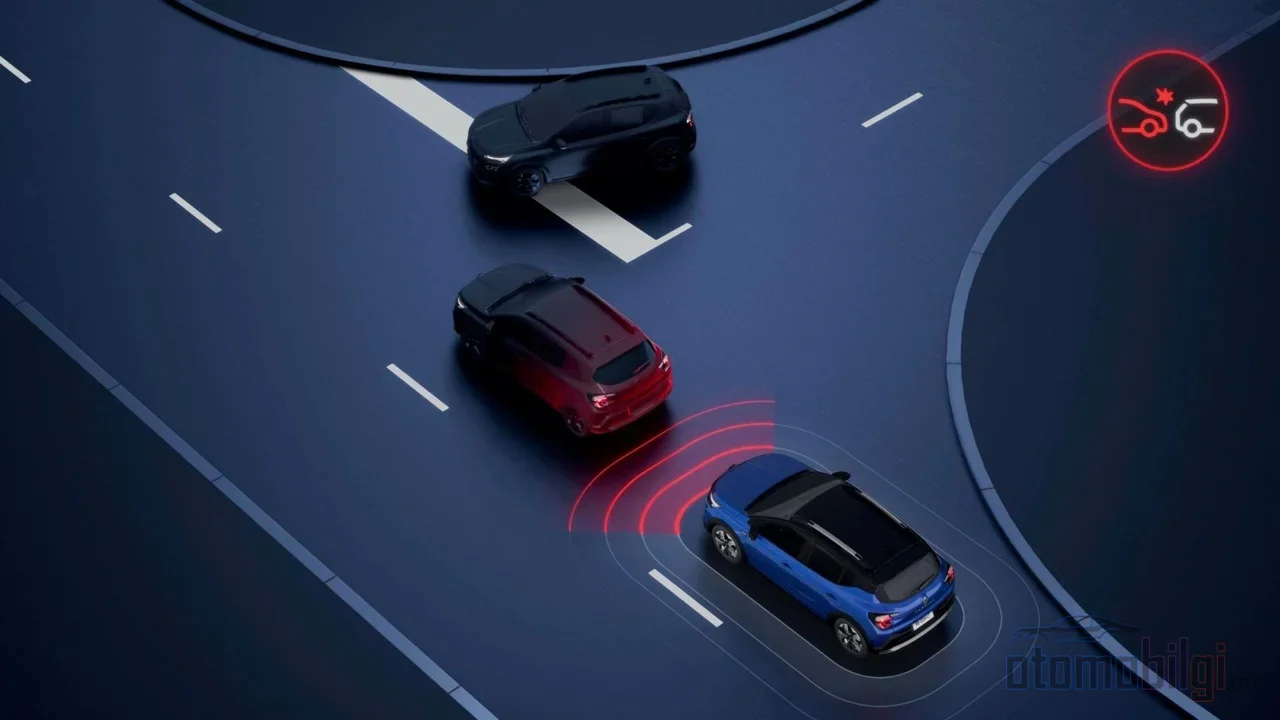
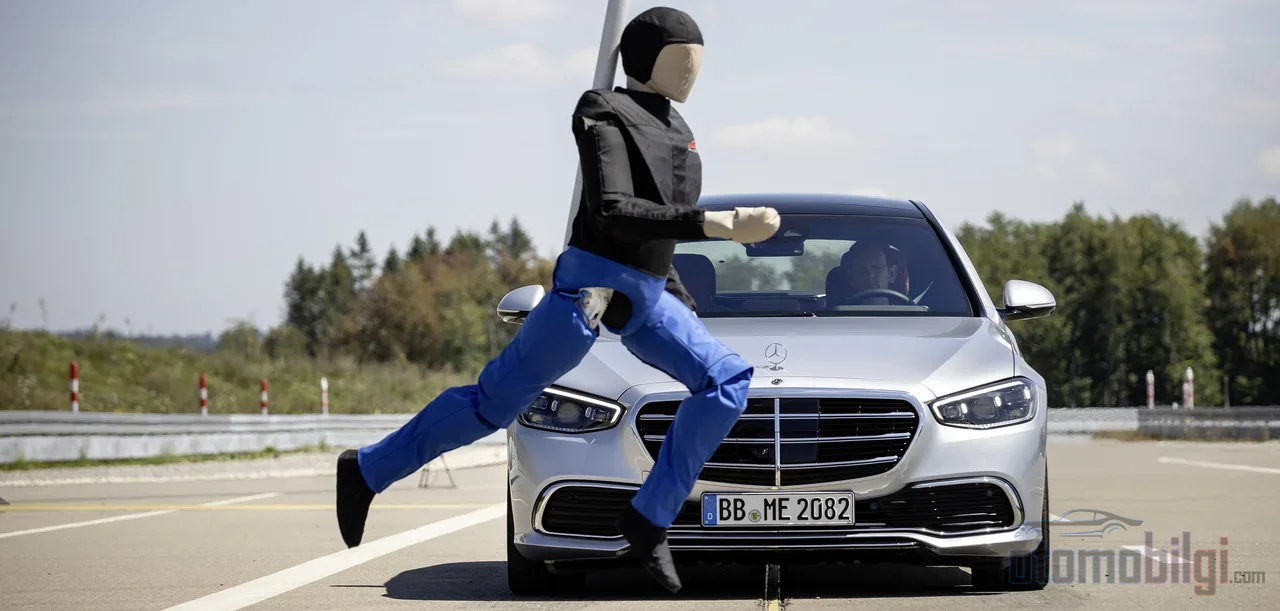
These two are often confused with each other. Brake assist (BA/BAS/EBA) is based on driver input: you must press the brake, and it merely amplifies your force. AEB, on the other hand, detects collision risk on its own using radar and cameras; if the driver gives no response, it brakes by itself. In modern vehicles, the two usually work together - AEB sees a collision risk in advance and pre-fills the brakes, and if the driver touches the pedal, brake assist takes that pedal force to the maximum.
One of the best-known examples of this cooperation is Volvo's CWAB system: it detects collision risk with radar, pre-fills the brakes and applies full braking no matter how lightly the driver presses; if necessary, it can even brake fully automatically. This is why regulations place it in the "advanced emergency braking" category. The real-world impact of AEB has also been measured: low-speed AEB technology has achieved a 38% real-world reduction in rear-end collisions. If the speed difference between two vehicles is below 10 mph, the collision can be completely avoided; even when it is above, the collision speed drops significantly.
How much does it really affect braking distance?
This is the most frequently asked question about the matter, and the answer cannot be reduced to a single figure. In emergency scenarios, the brake assist's effect on reducing stopping distance varies depending on conditions and measurement method. While some studies show reductions of up to 20%, Toyota announced when introducing its system in 1997 that emergency braking distance could be reduced by approximately 30% and that any driver could stop within the same distance as an expert driver. The difference here comes from the definition: 20% is a figure close to the averages of independent studies, while 30% is a claim from the manufacturer's own tests and a historical press release. The overall picture can be summarized as: a few meters in good conditions - inevitably, a few meters that save lives.
Its History and Role in Euro NCAP
The journey of brake assist began with the joint development by Daimler-Benz and TRW/LucasVarity. BAS first appeared in the world in December 1996 on the Mercedes-Benz S-Class and SL-Class models; in 1998, Mercedes-Benz became the first brand to make this system standard across all its models, and Volvo and BMW quickly followed. In the same years, Toyota also developed its own brake assist and carried it to most of the world's best-selling passenger cars - including the Corolla, Camry and Yaris. Mercedes introduced BAS Plus, a more advanced version, first as standard after 2006 in the W221 S-Class; this version issues a warning and pre-fills the brakes but does not brake by itself in place of the driver.
Then it was time for regulations. In October 2007, the European Commission announced that it wanted brake assist to become standard on all new models sold in the EU by 2009. The result: from November 24, 2009, all new passenger and light commercial vehicle types, and from February 24, 2011, all new vehicles had to be equipped with brake assist as standard. UN Regulation No. 139 also clarified the definition: brake assist is a function of the braking system that infers an emergency braking event from a characteristic of the driver's braking demand and either helps the driver achieve the maximum achievable deceleration rate or applies enough pressure to trigger full ABS cycling. This original version entered into force on January 22, 2017. A notable detail: since the US does not use UNECE regulations, this mandate does not exist in the US; there, AEB spread on a voluntary basis, and through voluntary commitments manufacturers brought FCW and AEB as standard to nearly all new passenger vehicles by September 2022.
The system also has a seat at the Euro NCAP table. Star ratings come with strict minimum safety requirements for every star, and the tests evaluate AEB and ISA directly. For five stars, not only structural protection but also the ability to actively avoid a collision is required. Brake assist alone is not a star-earning unit, but it is the mechanical backbone that keeps AEB from crashing into the wall; without it, the braking half of the active avoidance story remains incomplete.
Mechanical or Electronic: Which System Is Needed When?
| Feature | Mechanical brake assist | Electronic brake assist |
|---|---|---|
| Detection method | Pre-set pedal threshold | Braking pattern analysis with ECU |
| Adaptation to the driver | Fixed, does not fit personal style | Adapted to each driver's behavior |
| Activation sensitivity | Triggers when the threshold is exceeded | More sensitive and context-aware |
| Throttle pedal data | Not used | Some systems monitor panic throttle release |
| Typical era | Early implementations (after 1996) | Standard on modern vehicles |
One technical note about the booster itself: not every vehicle uses vacuum. Hydro-Boost type systems provide assist using hydraulic pressure from the power steering pump or a separate brake pump, and can deliver full power-assisted braking even when the engine has completely stalled. Whichever assist type it is, the logic is the same: an intermediate mechanism that converts the force from the driver's foot into the hydraulic pressure the system needs. Brake assist is like a button that raises this intermediary to its maximum ceiling in an emergency.
What You Should Know as a Driver
The most frequently asked questions about this system can be briefly answered as follows:
- Does the car brake by itself? No - Brake Assist requires driver input; it only amplifies the braking force you apply.
- Will I feel the activation? Mostly no; but the vibration in the pedal while ABS is working may surprise some drivers.
- What happens if I don't apply full pedal force? The system engages and supports the braking power; you feel a much greater braking response than your pedal position requires.
- When is the system off? It automatically disengages the moment you lift your foot off the pedal, and control returns to you.
One final warning about AEB: fully automatic braking systems have experienced "phantom braking" complaints, i.e. stopping at unexpected moments; some manufacturers have had to issue software updates and recalls due to unexpected braking. This discussion concerns radar-camera AEB systems, not the pedal-linked brake assist - but knowing the difference between the two also helps you correctly predict which system will kick in and when. The single thing you still need to do in a moment of panic remains the same: press the brake as quickly and firmly as possible. The rest is handled by this silent assistant that reads the intent you put into the pedal.
Sources
- What is Brake Assist?
- Emergency brake assist
- Toyota Develops Brake Assist Safety Technology (1997 press release)
- Real world safety benefits of brake assistance systems (NHTSA ESV, Breuer)
- ADAS and Roadmap - NHTSA regulations document
- What makes a car safer? | Euro NCAP
- How is Emergency Braking Assist implemented?
- Hydro-Boost Brake System
- Low speed AEB effectiveness (Fildes 2015)
- Guide to Automatic Emergency Braking