What Replaced the ABS Locking Brake, and What Does It Save?
Share This Page
ABS's job is not to shorten stopping distance on every surface; it is to prevent the wheels from locking during hard braking, allowing the driver to keep steering control in hand. On high-grip surfaces the distance may shorten or stay the same; on loose gravel, sand and deep snow, ABS can actually extend the stopping distance. So ABS is not really a distance system, but a control system.
Highlights
- ABS keeps the wheels rotating when you brake, leaving steering authority in the driver's hands.
- On loose gravel, the stopping distance with ABS can in some cases extend by more than 25%.
- EBD redistributes front and rear braking force according to the weight that shifts forward during braking.
- Brake assist reads the speed of pedal application on the gas and brake to detect panic braking and adds extra pressure to the pedal.
- The vibration and clicking felt in the pedal are signs that the system is working; they are not a malfunction.
Why Is a Locked Wheel a Problem? A Sliding Tire Cannot Be Steered
Let's first clarify a simple physical fact: a locked wheel is a sliding wheel. And a sliding tire has no grip whatsoever in the direction you are pointing. You can think of it as if it were empty inside. The moment the wheel locks, the car begins to slide straight in the direction of its momentum; no matter which way you turn the steering wheel, the car does not care. In contrast, a tire that is still rotating responds instantly to steering input.
This is exactly the distinction on which all of ABS's engineering logic is built. The goal is to keep the wheels turning while you hold your foot on the brake. This way, even while braking continues, you can give a second command not to the gas but to the steering: such as steering around the obstacle. That is why the statement "with ABS we stop without locking" is a wrong summary; the system prevents locking, but it does not do so with a promise of shorter stops.
How Does ABS Work? Pressure Management in Fractions of a Second
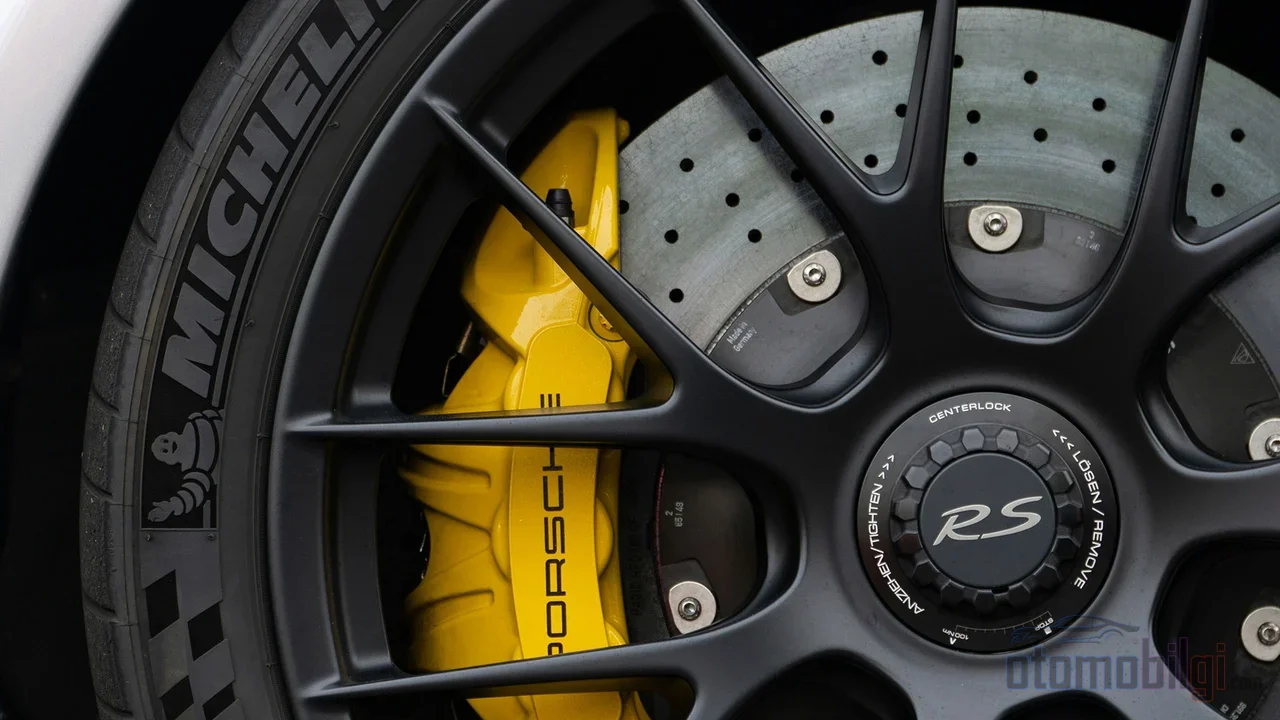
The system has four basic parts, and they are all interlocked:
- Wheel speed sensors: Located on each wheel, they detect sudden deceleration when lockup is imminent.
- ABS controller: The brain that reads the data from the sensors and manages the hydraulic valves.
- Valves: They open, close or restrict the brake pressure.
- Pump: When the valve releases pressure, it pumps the brake fluid back into the system.
The logic is very clever: if one wheel is decelerating noticeably faster than the others, it is approaching lockup. The sensor reports this to the controller, and the controller releases and reapplies the pressure to that wheel. The vibration you feel under the pedal and the clicking sound you hear are exactly this: the system is pressing and releasing on your behalf at a speed your foot could never achieve. It is not a malfunction; on the contrary, it is proof that the system is on the job.
The system architecture varies from vehicle to vehicle. Most cars and SUVs have a four-channel, four-sensor setup; each wheel is monitored individually, and this arrangement provides the best control. Mid-size pickups feature three-channel, three-sensor versions; in older designs, a single channel with a single sensor controls the two wheels on the rear axle together.
A historical note for the curious: the earliest applications of ABS appear in aircraft landing systems in the 1920s, and begin to trickle into cars and motorcycles in the 1950s-60s. Its standardization in modern vehicles accelerated with its adoption by Mercedes-Benz and Bosch between the late 1970s and the early 1980s.
Does ABS Always Stop You Shorter on Every Surface? No, the Surface Decides
This is where marketing language causes the most confusion. On hard-surfaced asphalt, ABS truly does its job: in test track measurements, the stopping distances of four-wheel ABS vehicles either stayed the same or got shorter. In other words, on wet or dry asphalt you reduce the risk of lockup without sacrificing stopping power. Since braking distance on wet surfaces can already be 1.5-2 times longer than on dry road, every advantage gained is valuable.
But on loose surfaces, the picture reverses. Test reports have measured that in some cases the stopping distance on loose gravel extended by more than 25%; a study conducted on gravel reported an average distance increase of 27.2%. To understand why, pause and think for a moment: on loose surfaces like gravel, sand, or deep snow, material builds up in front of the locked wheel, and this pile actually stops the vehicle faster through a wedge effect. It scoops up material ahead of it like a bulldozer. Since ABS keeps the wheel rotating, it deliberately prevents this wedge; the result is a longer braking distance.
| Surface | Effect of ABS on stopping distance | Other gain |
|---|---|---|
| Dry asphalt | Same or shorter | Steering remains possible |
| Wet surface | Shorter or the same | Lockup risk is reduced |
| Loose gravel | In some cases extends by more than 25% | Steering control is still maintained |
| Sand and deep snow | The wedge effect of the locked wheel is lost, distance may increase | Steering control is maintained |
Notice that every row in the table has a common gain: even on gravel, ABS keeps steering control in hand. So the hesitation of some drivers who see the disadvantage in terms of distance off-road is not unfounded; but in return, the vehicle keeps changing direction. It is about knowing correctly what to expect from a system.
What Is EBD? Who Distributes Braking Power When Weight Shifts Forward?
The second main character is EBD, or electronic brakeforce distribution. The problem here is very concrete: a vehicle's weight does not rest equally on all four wheels, and the moment you brake hard, weight transfer puts a significant portion of the load on the front. The front tires get pressed, the rear tires lighten. These balances change every time the vehicle is empty, fully loaded with luggage, or carrying passengers in the back.
EBD gets to work at the very start of the braking event, before this weight transfer becomes noticeable, applying more pressure to the rear brakes depending on the situation. In Honda's official 1997 announcement, the essence of the system was defined as follows: improving overall braking performance by changing the front and rear brake pressure distribution according to the load condition. The system continuously monitors weight, speed, and grip; using the same hydraulic modulator, it shifts braking force to the wheel that needs it.
Its kinship with ABS is also clear: EBD uses ABS's wheel speed sensors to detect rear wheel lockup, reduces rear braking force by controlling the ABS solenoids, and leaves maximum braking force to the front. A marketing narrative says EBD "prevents skidding," but the engineering statement is this: adjusting force distribution according to dynamic axle load. The difference is not small; the first promises magic, the second describes the real work.
What Does the Brake Assistant Do? The Pressure That Presses for You at the Moment of Panic
The third component is the brake assistant (BA/BAS). Imagine the scenario: Something appears at an intersection, your foot goes to the brake, but in panic, you pressed gradually and hesitantly. Normally braking force is limited by your pedal pressure. The brake assistant steps in here; by monitoring how quickly you press the gas and brake, it interprets your intent. A sudden, rapid pedal movement is a panic braking signal, and if it exceeds a certain trigger threshold, the system, without you noticing, applies a slight pre-braking pressure and prepares the vehicle for a sudden stop.
The threshold logic is interesting: The brake controller must generate approximately 3 bar of pressure to take up the gap between the brake pad and the disc; it is precisely this "close the gap" move that shortens the response at the critical moment. In other words, the brake assistant is a helper that amplifies the pressure you apply and reads the scenario in advance. In hybrid systems, if the ABS hydraulic unit cannot generate pressure, your pedal pressure goes directly to the calipers; the driver is always there as the last backup.
How Does the Trio Work? Not After Passive Safety, But Before the Accident
ABS, EBD, and the brake assistant all fall into the active safety class; that is, systems that manage vehicle dynamics and try to prevent accidents or reduce the impact of an emergency. In contrast, systems such as the seat belt and airbag are passive safety: they activate after a collision and try to protect the occupant. The difference is that clear; one takes the stage before the accident, the other after. Systems like ESC are also members of the active side; the braking force correctly distributed by EBD facilitates the effective operation of ESC.
I can summarize the division of labor among the trio as follows: EBD gives the right force to the right wheel, ABS prevents that wheel from locking, and the brake assistant compensates for the driver's inability to produce sufficient pressure at the moment of panic. They are all systems that share the same hydraulic infrastructure and sensor data, leaning on each other's shoulders.
Frequently Asked Questions
- The pedal vibrates when I brake with ABS, is it a malfunction? No; it is a normal sign of the pressure cycling, indicating that the system is working.
- Should you pump the brakes in a vehicle with ABS? No. The system modulates several times per second, much faster than your foot can; pumping cuts this cycle short and extends the stop. Just hold it down.
- Does ABS always shorten stopping distance? No; on hard pavement it shortens it or keeps it the same, but on loose gravel, sand, and deep snow it can lengthen it.
- What happens if the ABS light is on? The normal brakes keep working, but the anti-lock function and, with it, steering control during hard braking may be disabled; servicing is required as soon as possible.
- Can I still skid with an ABS-equipped vehicle? Yes. Excessive speed, worn tires, or a low-grip surface can overpower any system.
Conclusion: Is ABS for Distance or for Control?
In short: keep your distance from every sentence that presents ABS as a "magic brake that stops you shorter." The system's real contribution is letting you keep hold of the steering wheel while braking hard; on hard pavement shorter distance is a bonus, while on loose surfaces it chooses control at the cost of distance. EBD distributes force according to weight transfer, and brake assist completes the missing pressure in a moment of panic. All three are active safety players, not passive safety; they take the stage before the crash. Making their job easier is up to you too: appropriate speed, solid tires, and pressing the pedal without letting go or pumping. So, in an emergency braking situation, can you hold the pedal down, or do you pump it by reflex? I'd say give your answer some thought.
Sources
- A Test Track Study of Light Vehicle ABS Performance Over Off-Road Surfaces (NHTSA)
- What is ABS and what does it do?
- Do ABS Brakes Let You Stop Without Skidding?
- Braking on Dry Pavement and Gravel With and Without ABS
- Honda Announces the Development of a New Braking System (EBD)
- Electronic Brake Distribution (EBD)
- Electronic brakeforce distribution
- How Electronic Brake Force Distribution Works
- How Brake Assist Works
- What are Anti-Lock Brakes & ABS
- What is braking distance
- Active safety systems