How Does Traction Control Detect Wheel Slip, and How Does It Limit Power?
Share This Page
Traction control (TCS) detects that a wheel is spinning freely and slipping during acceleration using data from the wheel speed sensors, and it regains lost grip by intervening with braking or engine torque reduction. ESC aims to prevent the car from skidding while cornering; traction control, on the contrary, manages the slip at the moment power is being transferred to the road. The two share the same sensor network, but their jobs are completely different.
Highlights
- TCS detects slip via wheel speed sensors from the measured slip percentage
- Bosch brought ABS to production vehicles in 1978and traction control in 1985 carried it over to production vehicles
- Intervention is done in three ways: brake pressure, engine torque reduction, active differential
- TCS actually lives inside the same module as a secondary function of ESC
- The system should remain on in almost all conditions; turning it off only helps in a narrow set of exceptions
Think of it this way: It's a winter morning, you're turning at an intersection, you press the gas, and the tires suddenly put on a symphony of slipping instead of moving you forward. The system that kicks in at that exact moment is traction control - known in English as Traction Control System, and on some manufacturers it appears under the name ASR (Anti-Slip Regulation). ABS prevents the wheel from locking during braking, while TCS works in the opposite direction: it prevents the wheel from spinning freely without transferring power to the road during acceleration. The two are often mentioned together because they truly do share the same nervous system. But how does this system know about wheelspin? Let's unravel the chain from sensor to actuator step by step.
How is wheelspin detected: wheel speed sensors and slip percentage
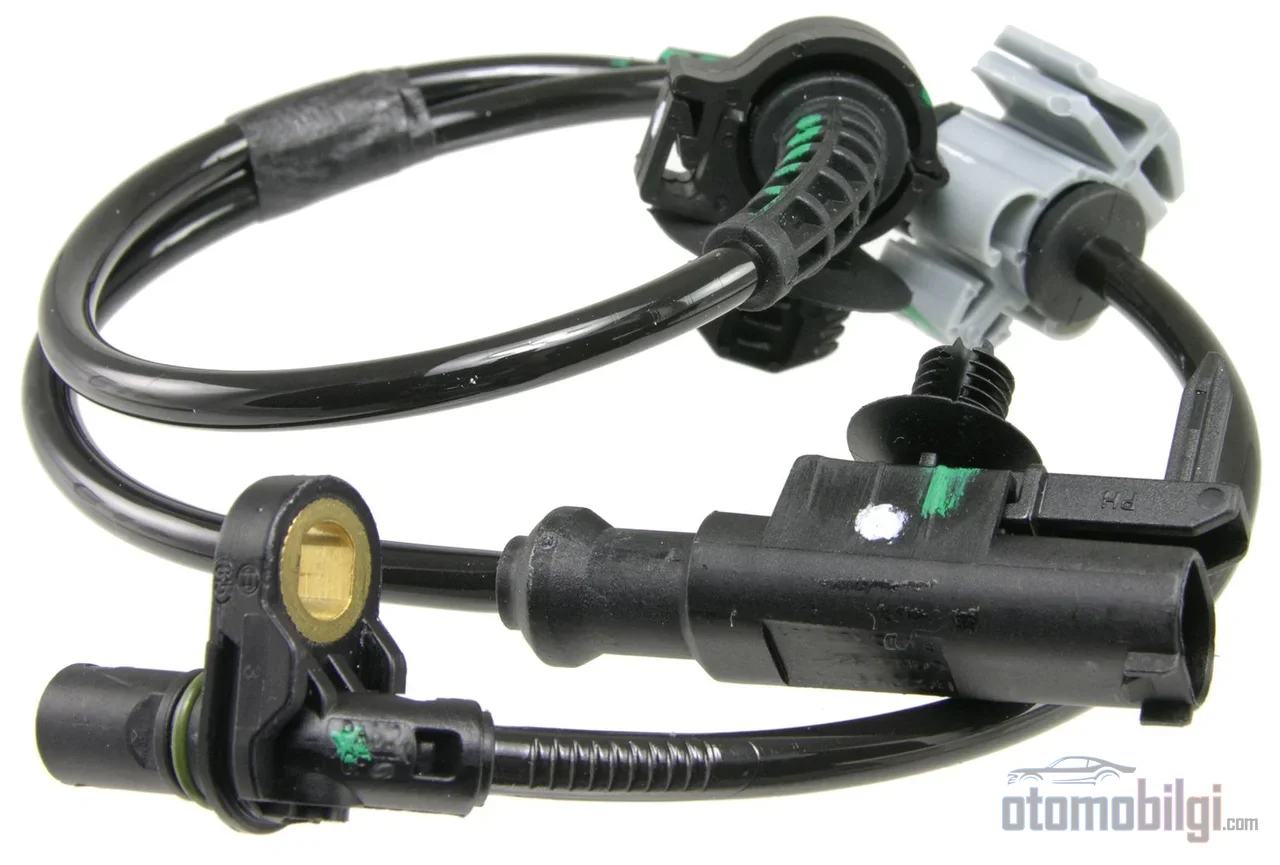
The primary sense organ of traction control is the wheel speed sensors. The rotational speed of each wheel is continuously monitored and the data flows to the ABS/TCS control unit (ECU). The system compares two things: the actual speed of the vehicle and the rotational speed of the driven wheels. If the driven wheels are rotating noticeably faster than the speed the vehicle is traveling, there is slip between the tire and the road. The ratio calculated from this difference is called the slip percentage and it is the fundamental value that determines how much TCS will intervene.
Where are the sensors hidden? In factory vehicles, the most common speed measurement point is the transmission output, i.e. the output shaft speed; also, having a sensor at each wheel hub usually indicates that the vehicle has ABS. In terms of sensor technology there are four main types: Hall Effect based digital sensors, interrupt-style digital sensors, passive magnetic inductive sensors, and active magnetoresistive sensors. They all do the same job - counting the passage of teeth of a gear-like ring (the tone ring) and calculating speed - but their resolutions and electrical behaviors differ.
There is also a subtle aspect to calculating the slip percentage: in the ideal setup, a sensor is placed first on the driven wheel and then a second sensor on the non-driven wheel; the speed difference between the two wheels gives the slip percentage. In racing and retrofit applications, a GPS speed module can also be used instead of the non-driven wheel sensor. Additionally, some systems use accelerometer data in addition to wheel speeds and adjust the driver's reference from the accelerator pedal accordingly. In other words, the system asks not only "is the wheel spinning?" but also "is the car actually accelerating?"
There is a practical conclusion to be drawn from this: a faulty sensor reporting impossible speeds prevents the module from determining which wheel is slipping. The result? Both TCS and stability control can be disabled. That orange light flashing on the dashboard is, most of the time, actually the rebellion of a wheel sensor.
How it limits power: three intervention methods
Detecting wheelspin is half the job; the real engineering lies in how to calm down the spinning wheel. TCS has three main tools for this, and most modern vehicles use two or all three together.
Brake intervention
The fastest and most common method: brake pressure is directed to the spinning wheel via the ABS pump and modulator. There is an additional solenoid valve in the ABS modulator for each driven wheel; the system can instantly select which wheel to slow down. The slowed wheel gains grip, and torque is transferred through the differential to the opposite wheel with better traction. In other words, the brake is not used here "to stop," but to channel torque to the right wheel - to me it feels like closing one tap and redirecting the water to another pipe, every single time.
But this method has a price: the brake pads heat up. That is why TCS automatically disables itself after a certain period of time to prevent the brake pads from overheating. This is precisely the engineering answer to the question "does continuous use harm the brakes?": the design is limited in a way that protects itself.
Engine torque reduction
If both driven wheels are slipping, braking alone is not enough; the system sends a signal to the Powertrain Control Module (PCM) and reduces the torque produced by the engine. This reduction can be done in different ways: some systems cut the injectors, while others reduce torque solely by closing the throttle without touching the injectors. The logic, as Wikipedia also summarizes, is this: TCS kicks in when throttle input, engine power, and torque transfer do not match with each other, and slows the spinning wheel with short brake applications. Beyond internal combustion vehicles, engine torque-based systems (engine traction control) that detect general wheel overspin and cut the throttle to restore traction are classified as a separate category. A more advanced approach appears in the SAE literature: an adaptive control scheme that measures traction loss directly using a torque sensor and adjusts engine torque via the throttle.
Active differential and torque vectoring
The third method is the most elegant: directing power to the right wheel without ever cutting it. Torque vectoring is the technology that allows the torque the differential transfers to each half-shaft to be altered electronically. These differentials control the power going to each wheel on the axle with hydraulic or electric solenoids. Active differentials fall into two groups: active limited-slip differentials (ALSD) and torque vectoring differentials (TVD). Let's also clarify the difference between a classic LSD and TCS: an LSD can transmit power to both wheels without using the brakes or cutting engine torque; TCS, on the other hand, suppresses wheel spin by braking or cutting torque. In other words, one shares the power, the other reduces it.
| Method | How it works | Point to note |
|---|---|---|
| Brake intervention | Pressure is sent to the slipping wheel from the ABS modulator | The system shuts itself down when it overheats |
| Engine torque cut | Signal to the PCM; injector cut or throttle restriction | The inevitable solution in dual-spin situations |
| Active differential | Torque is distributed to the half-shafts via solenoid/hydraulics | Works without cutting power, but is costly |
| LSD (passive/active) | Continues transmitting power to both wheels | Unlike TCS, it does not cut torque |
Are TCS and ESC the same? Sensor logic and division of duties
This is one of the most frequently asked questions: "Are they the same thing?" The short answer is no, but they share the same body. Traction control typically lives as a secondary function of ESC in production vehicles - not mandatory, but in practice almost always so. ESC components are: wheel speed sensors, control module, steering angle sensor, yaw rate sensor and accelerometer. TCS uses the same wheel speed sensors; in other words, the sensors are shared, but the decision logic is separate.
The difference in decision logic is, in my view, the most enjoyable part of the whole affair. ESC's sole concern is following the path the driver intends: the steering angle sensor reports the driver's intent, the yaw sensor communicates the vehicle's actual yaw rate, and if the two do not overlap - that is, if the car is understeering or oversteering - the system, working in coordination with ABS, brakes individual wheels to rescue the car from spinning. ESC initiates the event with the steering sensor input, then the yaw sensor data reaches the ABS control unit. This is why the steering angle and yaw/deceleration sensors are critical and must be reset after any work involving the wheels. As for TCS: ESC says "prevent the car from spinning," TCS says "prevent the wheel from spinning freely." One talks about the route, the other about speed. They can work at the same time, but while one accelerates, the other prevents an accident.
Should traction control be on or off in snow?
This is the question on everyone's mind when winter arrives. The answer surprises most drivers: Traction control should stay on in nearly all snow conditions - specifically 99% of them. As long as the system detects wheel slip, it protects you and works to regain the grip you've lost. The claim "turn off TCS when it snows" is regarded as a common myth; most systems already work by reducing engine power, and turning it off gives you no advantage at all.
But there is one exception, and understanding the logic requires looking at the nature of the tire. At low speeds on surfaces like snow, ice, and mud, some wheel spin is normal and even necessary for forward motion - snow tires, with their soft structure and snow-evacuation mechanism, benefit precisely from this spinning. TCS can conflict with this mechanism: it cuts power without letting the wheel spin to move forward forty centimeters. That's why on low-traction solid surfaces at low speed, especially when you're stuck in mud or snow, it can make sense to temporarily disable TCS. The practical advice in owner's manuals points the same way: hold down the TCS button to turn the system off completely, then turn it back on once you're out.
There's also "snow mode": as its name suggests, this mode reduces stability control intervention while increasing traction intervention, and it is designed for environments like snow, rain, and gravel. Also, drivers' complaint that "the car feels weak when TCS is on" is mostly a matter of perception; the system really does reduce engine power, but this reduction means recovering energy the wheel was wasting on the road. What seems like a power loss is actually a power gain.
Frequently asked practical questions
- Are TCS and ESC sensors the same? Yes, TCS generally uses the ABS wheel speed sensors; ESC adds steering angle and yaw sensors on top of that.
- Does TCS slow the car down? Its purpose is not to slow the car but to slow the slipping wheel. It can balance acceleration by throttling engine power.
- What does a sensor failure affect? A faulty wheel speed sensor can cause both TCS and ESC to become disabled together.
- Does TCS harm the brakes? The system automatically shuts itself off after a certain period to prevent the brake pads from overheating.
Ultimately, traction control is a far more elegant balancing art than it appears: it reads the data flowing from the wheel speed sensors, catches slip within fractions of a second, and puts the power back on the road through braking, torque reduction, or an active differential. While ESC focuses on preventing accidents, TCS's real job is, at every moment you press the gas, not breaking the delicate bond between tire and road. The next time that orange light flashes, don't get angry - the system is finding a path for your tire so you can stay in place. Have you ever gotten stuck in mud and had to turn off TCS? Tell us in the comments, I'm curious!
Sources
- Traction Control System - Clemson Vehicular Electronics Laboratory
- Traction control system - Wikipedia
- Torque vectoring - Wikipedia
- Sensing The Speed - How Wheel Speed Sensors Work - Haltech
- Traction Control System Using a Torque Sensor for Adaptive Engine Throttle Control - SAE
- Traction Control System - Altair simulation documentation
- Brake traction control vs electronic stability control vs engine traction control
- Steering Position and Yaw - UnderhoodService
- ESCape Route - MOTOR Information Systems
- Understanding Yaw Rate and the Steering Angle Sensor - AutoBodyNews
- Torque Vectoring Differentials - Brake & Front End
- Modeling of Active Differential Dynamics - FSZ Zagreb
- Traction Control vs. Stability Control - MotorTrend
- Traction Control: When It Can and Cannot Save Your Life - NAPA
- When to Deactivate Traction Control - NAPA
- Should Traction Control Be On or Off in Snow? - KBB
- Snow & ice driving myths - drivingfast.net
- Does a Failing Wheel Speed Sensor Affect More Than ABS? - R&M Auto
- Traction Control vs Limited Slip - BlueOvalForums
- Traction Control Myth? - CarTalk Community