How Does Adaptive Cruise Control Maintain Distance with Radar?
Share This Page
Adaptive cruise control (ACC) is a driver assistance system that not only maintains the speed you set, but also monitors the vehicle ahead using radar and a camera, keeping the distance between you through automatic throttle and braking interventions. In other words, you could call it the smart version of classic cruise control. So how does a car 'see' the car in front and calculate the distance? Let's take a look step by step.
Highlights
- ACC maintains distance not in meters but as a time gap: distance = speed × selected gap
- Radar measures range and closing speed, the camera measures lane and vehicle classification; fusion combines the two
- ACC on its own is SAE Level 1; together with lane centering it is Level 2; the person responsible is always the driver
- As of 2023, more than 60% of new vehicles had ACC
- A dirty radar sensor or rain can temporarily disable the system
What Exactly Does Adaptive Cruise Control Do?
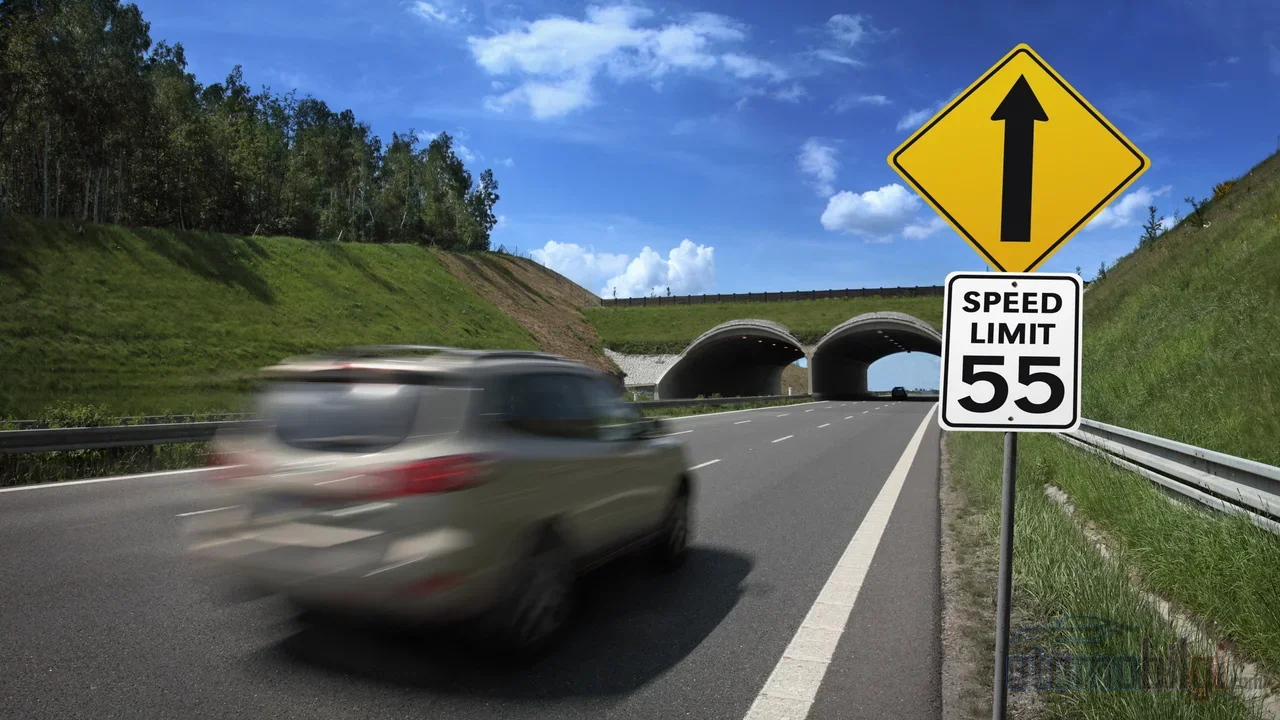
With classic cruise control, you tell it the speed and it presses the gas for you. When a car pulls in ahead, you step in and brake. ACC takes this one step further: it continuously monitors the vehicle ahead, slows down when it slows down, and returns to the set speed once the road clears. That is exactly NHTSA's definition: the system automatically adjusts the vehicle's speed to maintain a preset distance from the vehicle ahead.
You can think of the process as a feedback loop - just like staying balanced on a bicycle, you constantly measure and constantly correct. The loop consists of four steps:
- Detection: Radar and camera measure the distance, direction, and closing speed of the vehicle ahead.
- Decision: The system determines the target speed; this is the lower of the set speed and the speed needed to maintain the time gap you selected.
- Control: The throttle and braking system are modulated accordingly.
- Return: Once the road clears, the system smoothly returns to the set speed.
There is a subtle point to be aware of: for ACC to work correctly, the vehicle must know how its own lane curves and correctly identify the 'lead car', i.e. the closest vehicle ahead in the same lane. Otherwise, it may target a car in the adjacent lane on a curve and brake for no reason. That's why lane information is so critical that this doesn't fully work without sensor fusion.
Why Do Radar and Camera Work Together?
Both sensors have strengths and weaknesses. Radar is a sensor operating in the millimeter wave band; it is usually hidden behind the front bumper or grille. It is very strong at measuring distance and closing speed, and works day and night. But because its field of view is narrow, it can miss targets on curves and slopes. The camera, on the other hand, is mounted near the mirror; it finds the lane lines, classifies whether the object it sees is a vehicle, and its lateral position measurement is more accurate than radar's. In return, it is vulnerable to problems such as darkness, glare, and a dirty lens. Lidar provides very precise distance data but its performance drops in rain, fog, and snow; it appears less often than radar in mass-production ACC systems.
That's exactly why most modern systems use sensor fusion does: the radar provides solid range and speed measurement, while the camera classifies the object and tells which lane it is in. Since two different measurement principles confirm the same object, both measurement reliability and range accuracy improve. Two particular gains of the fusion can be counted: the camera's strength in lateral position/speed information combining with the radar's range and closing speed information; and the camera detecting lanes and positioning vehicles relative to our own lane. This combination also improves 'cut-in' detection, that is, noticing a vehicle that suddenly cuts into your lane.
And that's not all: ACC does not work on its own. Along with the front radar and camera, engine control, brake control, transmission control, steering angle data, wheel speeds and the main ADAS module all talk over the same data line. On the radar side, the physical basis is usually the FMCW (frequency modulated continuous wave) technique; the radar continuously estimates the distance between your own vehicle and the vehicle ahead, and can also take measurements such as relative speed between vehicles.
How Is the Following Distance Calculated: The Time Gap Logic
Here's a question that concerns you: Does ACC leave a fixed number of meters behind you? No! It maintains the distance not in car lengths but with a time gap (time gap). The formula is simple: following distance = speed x the time gap you choose. So at 120 km/h your chosen gap gives you a long cushion, while in city driving at 50 km/h the same setting corresponds to a much shorter distance. This is essentially an automated version of the '3-second rule' taught in driving courses.
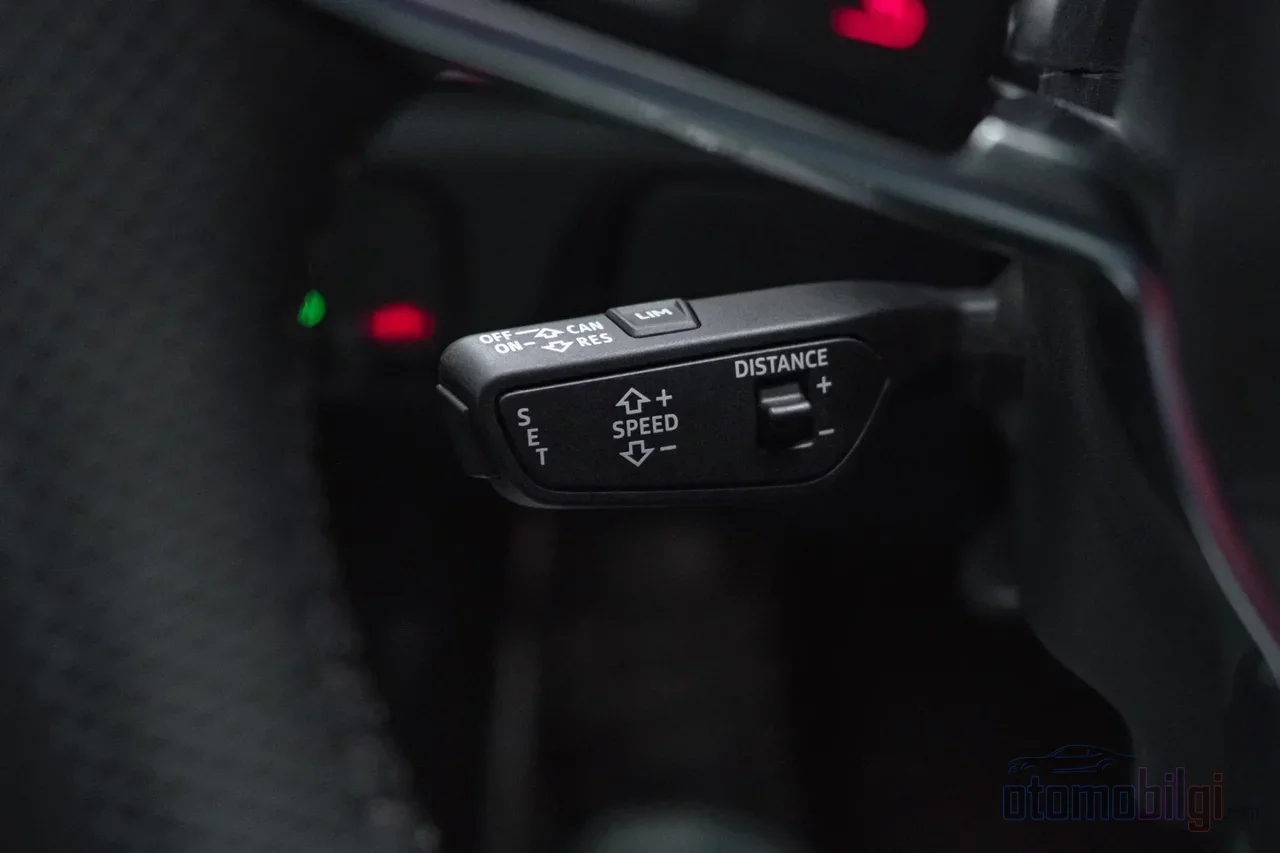
Systems usually offer short, medium and long gap settings; the long setting is recommended for most driving. In some vehicles it is not possible to make this setting a permanent default - one brand's user manual explicitly states that it cannot be adjusted; you have to select it again every time you use it. Actually this makes sense for safety: the driver is expected to consciously choose the gap each time.
An interesting detail for the curious: in the engineering world, whether the time gap should be fixed or variable is still being debated. While classic designs use a fixed gap, one recent academic study suggests that a variable gap strategy, in which the time gap itself is used as the control signal, could yield better results with a nonlinear H-infinity control technique. Another study shows that the reaction times of ACC vehicles are comparable to human drivers, but the time gap the controller uses is larger than a human's; that is, the system follows a bit more 'cautiously' than we do.
Where Are the Limits of Speed and Braking Intervention?
Now for the most critical part: ACC's power is limited. The system maintains the time gap with throttle and light braking, protects; in a situation requiring emergency intervention, it gives visual and audible warnings. In other words, ACC is not an emergency braking system - that's where AEB comes into play. The roles are distributed as follows: ACC manages longitudinal control (speed and distance), lane centering provides light steering support, and AEB applies harder braking when the collision risk rises. During cut-ins and sudden stops, ACC slows down first; if the closing speed spikes, AEB can engage with strong braking.
Some systems deactivate below about 40 km/h or ask you to press the RESUME button or touch the accelerator after coming to a stop. Stop-and-go capability varies by model; some systems can be activated from 0 km/h. Also, remember: the driver always has priority. The moment you press the brake or the accelerator, ACC deactivates instantly.
In terms of SAE levels, here's the situation: ACC alone counts as Level 1 because it only manages longitudinal control; combined with lane centering, it becomes Level 2 'partial automation'. In both cases, the steering wheel and the responsibility are in your hands. That's why there is a strong view that partial automation should be seen as a comfort feature and that it offers no collision prevention guarantee.
| System | Task | What does it do? |
|---|---|---|
| ACC | Speed and distance management | Maintains the time gap with throttle and light braking |
| Lane centering | Lateral control | Provides light steering support |
| AEB | Emergency braking backup | Brakes hard if the collision risk rises |
Why Does ACC Deactivate on Its Own?
If you've encountered an 'ACC not available' warning at the wheel in the rain, you're not alone, and there are entirely technical reasons for it. In heavy rain, the radar signal may sense signal blockage due to water density in the air; the system shuts itself down or switches to degraded mode. The same happens on the camera side if the windshield area is blocked. In short, rain, snow, dense fog, and bright direct light can block or confuse the sensors the vehicle relies on to understand its surroundings.
Sensor blockage and calibration
The radar sensor can be blocked not only by rain but also by dirt, snow, bumper coatings, license plate brackets, or impact damage. When you go to the service with this warning, the first thing checked is the physical condition of the radar behind the front grille - often the problem is solved with a cloth and five minutes.
A lesser-known but important issue: calibration. If you replace the windshield, the camera's position is affected; if you replace the front bumper or grille, the radar's position is affected; even suspension and alignment adjustments can disrupt the sensor's aim. After these procedures, calibration according to the OEM procedure is essential. If the direction the sensors are 'looking' is wrong, the system's entire calculations go awry.
Physical limits of the field of view
No matter how clear the air is, the radar's field of view is limited. In curves, it may include a vehicle in the adjacent lane as a target or miss the actual lead car; over a hilltop, the traffic ahead stays 'below its sightline' for the radar. That's why ACC behaves much less predictably on curved and hilly roads than on the straight roads where it works best - you may experience unexpected slowdowns or accelerations.
Frequently Asked Questions About ACC
Why does it lose the target in the rain? Due to the sensor blockage I described above; the radar signal weakens in the rain, and the camera struggles with a wet lens and glare. When the system doesn't feel safe, it shuts itself down - this is not a fault, it's a precaution by design.
Does ACC take over the entire drive? Absolutely not. ACC takes over longitudinal control; you hold the steering wheel, and the system is never autonomous. After long stops, it may not always resume automatically either - which is why it's important not to fall into the 'false trust' trap.
Can I choose the shortest gap everywhere? Technically yes, but in practice this is one of the most common mistakes. Using it with dirty sensors, over-trusting it in corners and on slopes, and being caught unprepared by a cut-in vehicle are also among the frequently encountered mistakes.
How much does it cost? The basic ACC option starts at around 500 USD while fully equipped driver assistance suites can reach the 2,000-2,500 USD range. As for prevalence, the picture is changing fast: as of 2023, more than 60% of vehicles had ACC; that's almost a threefold increase compared to 2017, and 89% of model lines offered the system.
How Do You Get the Best Out of ACC as a Driver?
ACC, when used correctly, is a system that significantly reduces fatigue, especially in heavy highway traffic. But it's not a magical chauffeur, it's an assistant. Choose the long gap setting for most drives, make sure your sensors (the radar in the bumper and the camera in the windshield) are clean, accept that the system may shut down in rain and snow conditions, and never hit the road without being ready to react in time to a cut-in vehicle. In short: get to know the system, know its limits, and never forget that the person truly in charge behind the wheel is still you. Do you think this technology will become standard in all vehicles within a few years? I think it's very close.
Sources
- What Is Adaptive Cruise Control? How It Works, Pros & Cons
- Sensor data fusion
- Adaptive Cruise Control with Sensor Fusion
- Automotive Adaptive Cruise Control Using FMCW Technology
- Driver Assistance Technologies
- Different Types of Cruise Control
- Will Your Driver Assistance Systems Fail in the Rain?
- Comparative Analysis of Following Distances in Different Driving Conditions
- A variable time gap strategy for Adaptive Cruise Control
- Adaptive cruise control radar-based positioning in GNSS-challenged environments
- ACC Warning: Radar, Camera, Or Calibration
- How to Use Honda ACC: 2026 Guide
- AAA's Guide to Advanced Auto Safety Features