Does the Lane Keeping System Really Take Over the Steering?
Share This Page
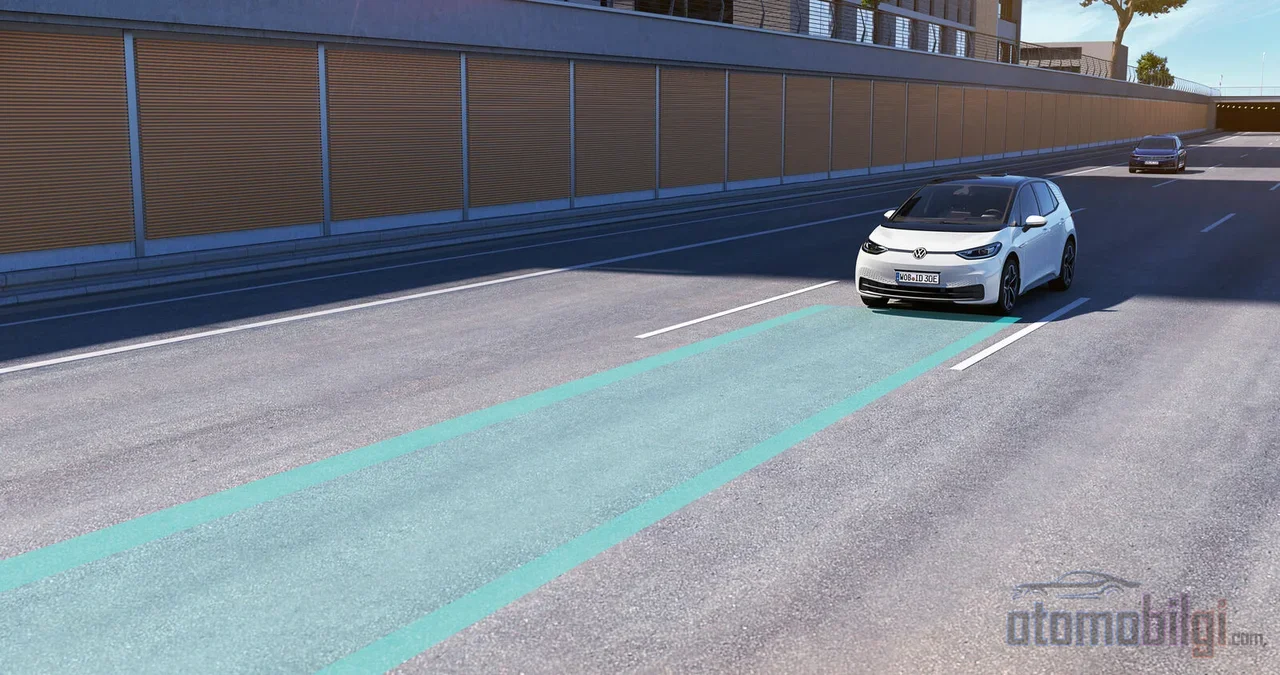
Yes, it really takes hold of the wheel - but not literally. The Lane Keeping Assist (LKA) system is an active safety system that, if you drift out of the lane lines it reads with a front camera, applies torque to the steering wheel via an electric motor and steers the car back inside the line. So unlike ESC or AEB, it doesn't just look from afar and only brake; it physically touches the steering wheel. But it doesn't drive for you - and the engineering behind this distinction is far more interesting than you'd think. If you're ready, let's unravel the hidden hand behind the steering wheel!
Highlights
- LKA is the only active lane system that applies torque to the steering at the moment of deviation; LDW only warns
- Honda's LKAS in the Inspire was one of the first production systems capable of providing up to 80% of steering torque
- The UN R79 regulation mandates a mechanism that detects when hands leave the steering wheel
- If the lines disappear due to snow, rain, or construction zones, the system cannot read the lane
- The first mass-production lane keeping system was used in Mercedes Actros trucks in 2000
Does the Lane Keeping System Really Take Hold of the Steering Wheel?
The answer: yes, but partially. The system applies real torque to the steering - commanding the electric power steering (EPS) motor and pushing the wheel in a certain direction - but this intervention is always under your command. If you turn the wheel in the opposite direction, you can override it; that's why engineers call it "assistance," not "driving." It behaves like a friend gently straightening your bicycle's handlebars: they indicate the direction, but you're the one pedaling.
There's also a confusing point: lane keeping and lane centering are not the same thing. The lane keeping assist (LKA) intervenes when you start to leave your lane and then goes silent. The lane centering assist (LCA), on the other hand, tries to continuously keep the car in the middle of the lane - meaning it manages the steering with micro-corrections without ever stopping. If you notice the steering wheel moving slightly left and right on its own on the highway, you're most likely in a centering system. They are different levels of automation, and because they are often used interchangeably, drivers develop the misconception that "this car is already driving itself." That's not the case; you are always the supervisor.
How Does the Camera Read the Lane Line?
The system's eye is a video camera, usually mounted on the windshield right next to the interior mirror. This camera continuously captures the road, and the data goes to the vehicle's electronic control unit (ECU). The ECU extracts the lane lines from the image and calculates the vehicle's position relative to the lane. If a deviation begins, a correction signal is sent to the steering actuators. This entire chain is completed in fractions of a second.
So how does a camera "understand" a white line on flat asphalt? This is where image processing comes into play. Classic lane detection algorithms use a Canny edge detector to find contrast transitions in the image, then use the Hough transform to filter out straight line candidates among those edges. In other words, the camera doesn't "see" a line; it finds edges in the pixels and mathematically fits them to a line. An everyday analogy: it's like searching for a crack the thickness of a pencil on a wall in a dark room with a flashlight - first you find the edge, then you work out the direction of the crack.
The camera isn't always the only one
A video camera is the most common solution but not the only option. Some systems use laser sensors mounted at the front, while others use infrared sensors placed behind the windshield or under the vehicle. One early infrared-based example, on a 2005 model Hatchback, combined infrared detection with a seat vibration warning - imagine a system that alerts the driver by shaking them in their seat when they cross the line! In Honda's LKAS, the camera at the top of the windshield scans the road within a field of about 40 degrees ; the computer recognizes the lane the driver has "locked onto" and calculates the required steering input using the yaw angle along with the sharpness of the curve and the vehicle's speed. It can detect both solid and dashed lines.
From Warning to Intervention: How Is Torque Applied?
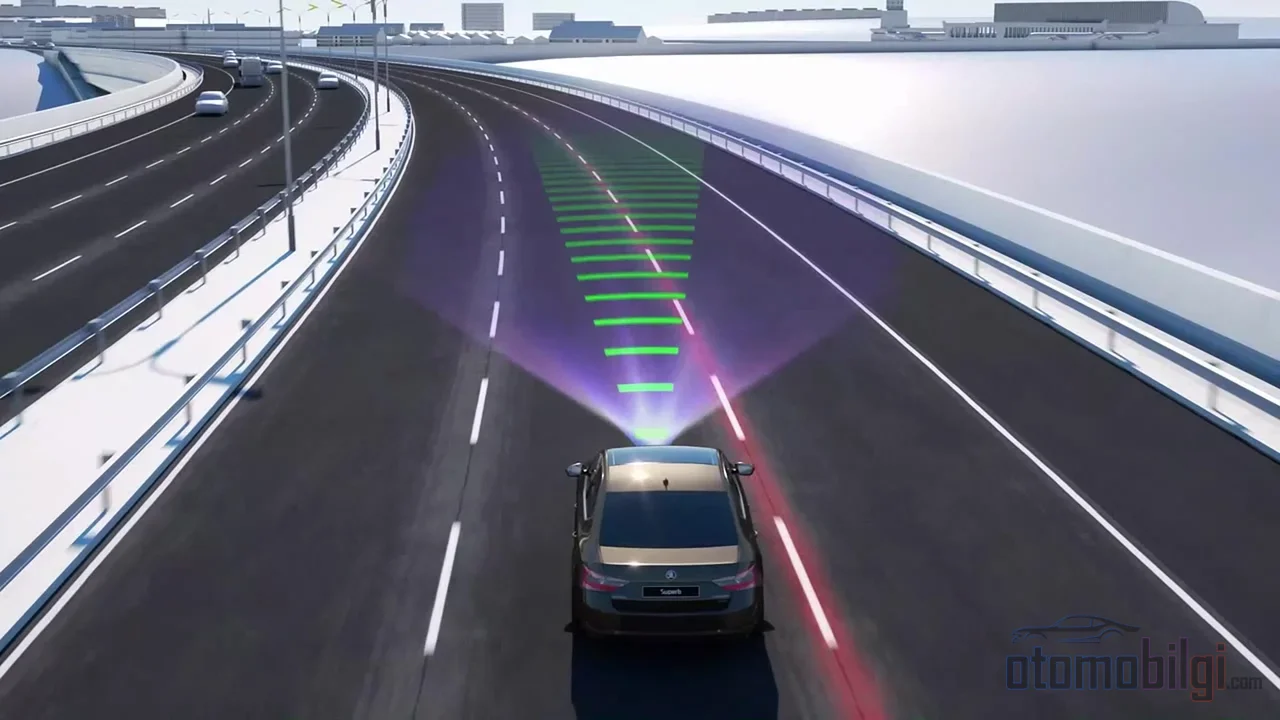
The system works through gradual stages. First comes the warning: an alert on the instrument panel, an audible warning, or a vibration in the steering wheel. If the driver doesn't respond, it's time for physical intervention. In many systems, the first intervention stage is the steering pushing you back into the lane (pushback) - the EPS motor applies torque so that the wheel turns back toward the inside of the lane. When torque is active, the LKA icon on the display usually turns amber/yellow, meaning the system is telling you "I'm at the wheel right now, buddy."
So how strong is this torque? Honda's first LKAS on the Inspire could provide up to 80% of the steering torque needed to stay in the lane on the highway - although it sounds scary, that's enough to prevent drift on a straight road, not to enter a curve. Lexus's multi-mode system, meanwhile, works with stereo cameras and, via the EPS, both applies torque that holds the lane and applies counter-torque to prevent overcorrection - the sawing left and right between the lines.
Steering torque isn't the only means of intervention either. Infiniti, with the Lane Departure Prevention (LDP) system it introduced in 2007, used the stability control system to maintain lane position, applying light braking to the wheels. In other words, brake-based intervention and steering-based intervention are different architectures: one slows the vehicle and bends its direction, the other directly touches the wheel. Euro NCAP's current collision avoidance protocol also has a clear preference: the vehicle's correction should be controlled through the steering system, not differential braking.
A note from history: this idea came from trucks
The first production lane-keeping system didn't debut in a passenger car, but in a truck: LDWS, developed by Iteris, was used in Mercedes Actros trucks in 2000. It actually makes sense - a fatigued truck driver on kilometers of straight road is the most likely candidate for unintentional lane departure. Fatigue and distraction are still cited today as among the most common causes of unintentional lane departures. On the Fiat side, the Lancia Delta arrived in 2008 with a system that integrated the camera with electric power steering, applying gentle torque on unintentional drift; that solution won that year's Italian automotive innovation award.
What Happens If You Let Go? Hands-Off Detection
Here is the system's most important safety tentacle. The UN R79 regulation requires vehicles with LKA to have a method that detects whether the driver is holding the steering wheel. In other words, the vehicle must constantly know whether the steering wheel is "in your hands" or in the air. This is called hands-off detection (HOD) and has become an area offering precise monitoring for SAE Level 2+ assisted driving.
Detection is done in two main ways:
- Capacitive touch sensors: Sensors embedded in the rim of the steering wheel sense the electrical presence of your hand - like touching a phone screen. If you hold the lower part of the steering wheel very lightly, the sensor may not detect touch in those regions and the system may issue a warning.
- Steering column torque sensor: It measures the torque change in the column while you hold the steering wheel and make tiny corrections. If there is no torque, there are no hands.
When the system cannot see you, it warns you gradually: first the "Hold the Steering Wheel" message, then audible alerts. Euro NCAP's assisted driving approach overlaps with this exactly: the driver must keep their hands on the wheel - "hands-on, eyes-on." Think of it as if a strict father is sitting in the back seat of the car: he constantly watches you, but only intervenes as long as your eyes are off the road.
There is also an interesting user experience detail: the rule that the system is temporarily deactivated for intentional lane changes when the turn signal is activated. But some Mercedes owners complain that Active Lane Keeping Assist can occasionally apply a correction during intentional lane changes even after signaling. So the friction between theory and everyday experience is still being debated. On the other hand, the literature identifies two separate interaction models for torque applied to the steering wheel - one that the driver can override and one that can be followed - you always have the final say.
The System's Blind Spots: When Can It Not Read?
Like every camera-based system, LKA has its bad days. When it cannot read the line, it stops intervening or never starts. The most common blind spots are:
- Faded, worn, or completely missing lane markings
- Heavy rain, snow, and fog - if snow covers the lines, the road literally becomes unreadable
- Sun glare and a dirty windshield or sensor
- Sharp curves and temporary line changes in construction zones
Turning the system off in bad weather is the most sensible thing. There's also the reverse problem: false alarms. Sensors can mistake shadows, road debris, or unusual line patterns for lane markings and make sudden, unnecessary corrections. Some drivers complain that active lane centering makes the car "bounce" between the lines - the most frustrating form of a system that doesn't leave the fine-tuning to the driver. And the real danger: IIHS had worried that drivers who put too much trust in automatic systems may become less alert. Nobody is surprised when the system loses the line; the real issue is whether the system can wake you up when you've drifted off.
Frequently Asked Questions
Does the system deactivate when you use the turn signal?
The general rule is yes: the signal tells the system "I intend to change lanes" and the intervention is temporarily cancelled. Still, as we mentioned above, there are user reports of corrections happening even after signaling in some models - it's a good idea to test your car's behavior in a safe area.
At what speed does it work?
Systems engage above a certain speed threshold. For example, one Model S implementation offered an audible warning and steering vibration when crossing a lane without signaling above 48 km/h (30 mph). The exact threshold varies by model; the instrument panel also indicates which lines it is tracking.
Should I use it in bad weather?
No. If the lines are covered by rain, snow, or fog, the system cannot read them; it is recommended to turn it off in these conditions. The safety the system offers you on a sunny day with high-quality asphalt disappears on a foggy night.
So Is Taking Over the Driving with Torq a Myth?
I'd say no - but the nuance matters. The system genuinely touches the steering wheel, nobody denies that: up to 80 percent torque share means physical intervention via the EPS. The hands-off detection mandated by UN R79, Euro NCAP's "hands-on" requirement, and the driver's ability to override the torque at any moment complete the full picture: not a system that takes over the steering wheel, but one that reaches out to it. Today, though, the scene is changing: Mercedes-Benz has announced steer-by-wire with variable steering ratio for the EQS facelift it will launch in 2026, the lock-to-lock steering angle on Lexus's steer-by-wire can be set to ±200 degrees, and GM Super Cruise offers Hands-On Steering Assist on select vehicles. Thanks to sensor fusion and machine learning, it has become possible to maintain lane position even when the lane markings are hard to see. According to Bosch's calculation based on GIDAS data, LKA can prevent 26 percent of relevant injury and fatal accidents in passenger cars. So that hidden hand really is saving lives - as long as you don't take your hands off the wheel. Would you trust the steering wheel to touch you? Let's meet in the comments!
Sources
- Lane keeping assist - Bosch Mobility
- Lane departure warning system - Wikipedia
- Lane Keeping Assist System (LKAS) - Honda Technology
- How do I use the Lane-Keeping system? - Ford Support
- Lane Keep Assist: A Helpful Intervention - TechConnect Canada
- Guide to Lane Departure Warning & Lane Keeping Assist - Consumer Reports
- Hands Off Detection (HOD) - IEE Sensing
- Hands Off Detection Requirements for UN R79 - TRID/TRB
- Hands-off warning - Kia Owners Manual
- Hands-Off Detection - Nexteer
- Crash Avoidance Lane Departure Collisions - Euro NCAP Protocol
- Assisted Driving gradings - Euro NCAP
- Euro NCAP launches ratings for ADAS - ETSC
- Research on Reliability of Vehicle Line Detection and Lane Keeping - MDPI, Surblys 2025
- Haptic Lane-Keeping Assistance for Truck Driving - NIH/PMC, Roozendaal 2020
- Lane Departure vs. Lane Keeping vs. Lane Centering - JD Power
- Lexus Steer-by-Wire - Lexus Newsroom
- Steer-by-wire becomes reality at Mercedes-Benz - Mercedes-Benz Media
- How to Use Super Cruise - Chevrolet
- How Does 2026 Kia Highway Driving Assist Work? - Kia of Lincoln
- Ultimate Guide to Lane Keeping Technology - Premium Autos Inc
- The Complete Guide to Lane Keep Assist - iDriveCertified
- Lane-Keep Assist Failures - Clean Fleet Report
- Lane Departure Warning: What Is It - Swansway Garages
- Lane Departure Warning - MyCarDoesWhat
- Active Lane Keeping Assist steering intervention - MBWorld forum
- Anyone else fighting your lane assist? - Reddit r/XVcrosstrek