How Does Intelligent Speed Assistance (ISA) Read Speed Limit Signs?
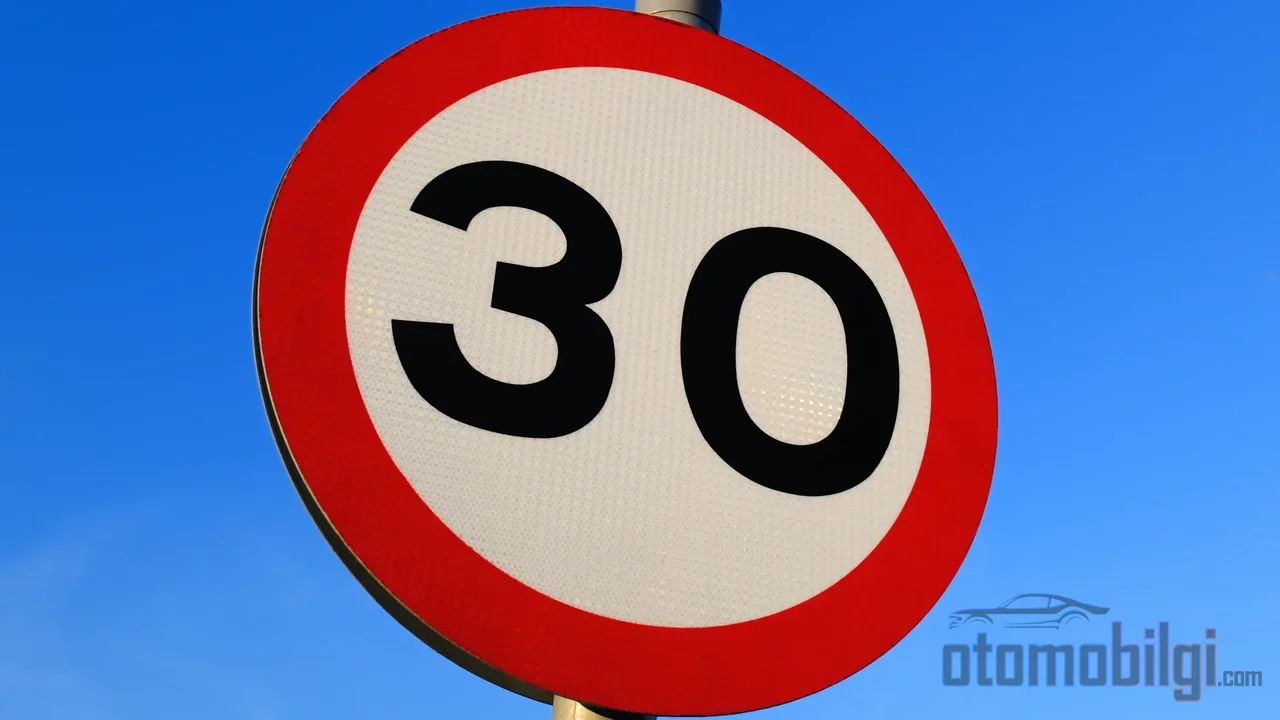
You take the wheel, follow the signs, and then suddenly notice the dashboard says 50 - a limit you had already passed long before. It feels as if there is a hidden watcher posted for every roadside sign. So who is this watcher, how does it work, and why will you never be able to turn it off one day? Intelligent Speed Assistance, or ISA, has become an indispensable part of every new car sold in Europe over the last two years; yet most drivers do not know how the system reads, when it errs and when it is accurate. That is exactly where we step in: camera, map, warnings, forced deceleration, and of course the system's famous "shut-off" issue.
What Exactly Is ISA, and What Is It Not?
ISA is not a speed limiter; it is an information and warning system. Its task has three layers: informing the driver about the current speed limit, warning when the limit is exceeded, and discouraging that excess when necessary. Speed is one of the most critical variables in road safety; according to the assessment of the European Traffic Safety Council, speed management is cited among the leading causes of fatal accidents. A 2014 Norwegian study, meanwhile, identified ISA as the driver assistance system with the greatest life-saving potential. So this is not just another deceleration phase - it is engineering's systematic answer to the speed problem.
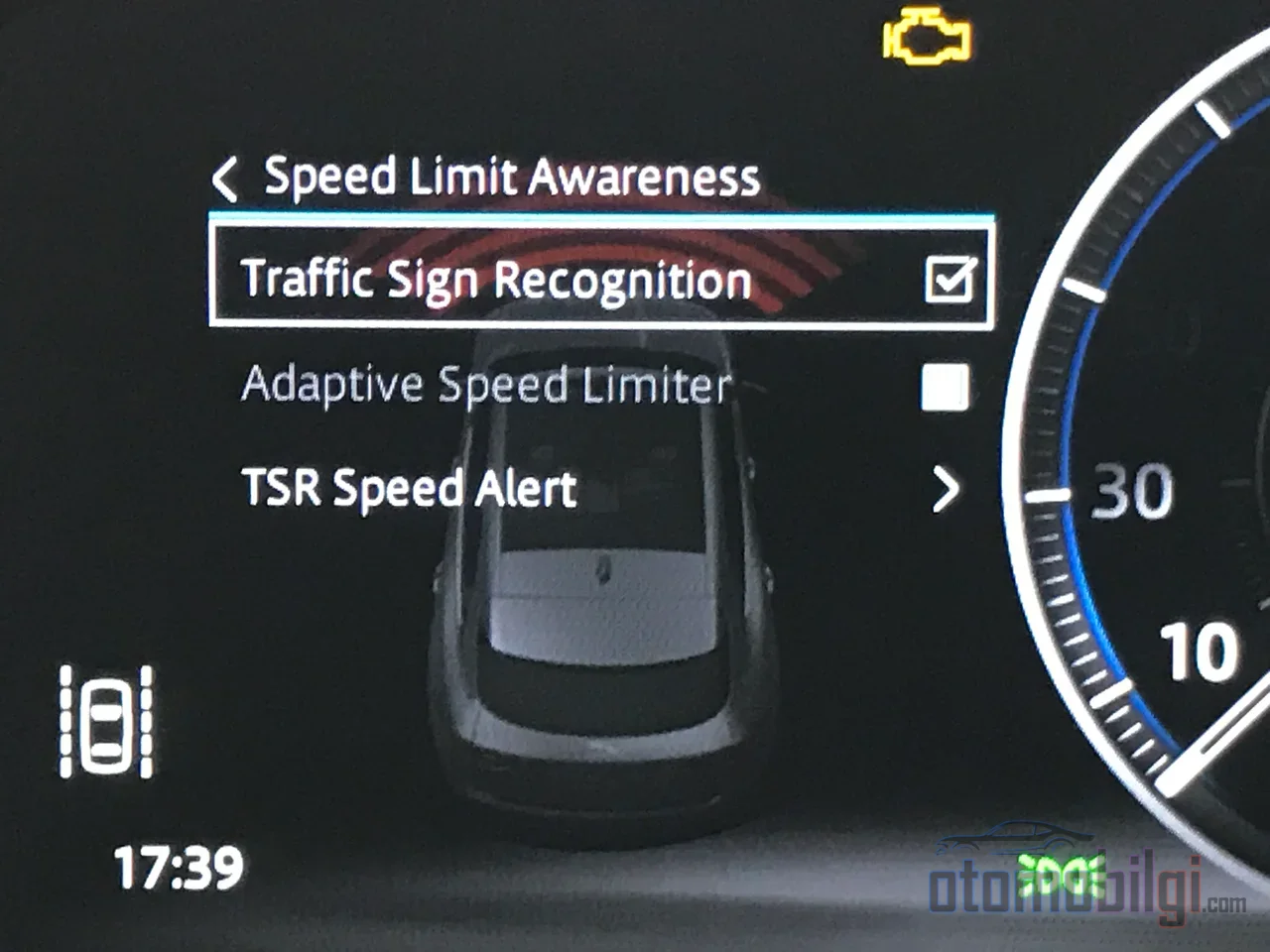
Here we need to distinguish two concepts that are often confused: the Traffic Sign Recognition (TSR) system and ISA are not the same thing. TSR focuses on reading the shape, symbol and text of signs with the forward camera and displaying them. ISA, on the other hand, combines this sign information with GPS location data and the speed limit data in digital maps, cross-checks them and arrives at a single result. In other words, TSR is the eye and ISA is the brain; one sees, the other interprets. The confusing part is that this distinction is usually hidden.
How Does the System Read the Speed Limit?
Traffic Sign Recognition via Camera
The first source of information is a forward-facing video camera mounted at windshield level. Using image processing algorithms, this camera decodes geometric shapes such as circles, triangles and squares, along with the numbers on them; it distinguishes whether it is a round sign, a speed limit plate, or a temporary warning. However, the camera also has clear limitations. Its range is limited; it cannot yet read a distant sign. Rain and snow reduce visibility, and accuracy drops significantly on blurry or partially obscured signs. Research literature shows that recognition performance drops noticeably when a sign is too far away, blurry, or only partially visible. Then there are conditional speed limits that vary depending on weather or vehicle type - the camera alone struggles to tell these apart.
Cross-Verification with GPS and Digital Maps
Our second source is GPS-based speed limit data. The vehicle matches its instantaneous position with the verified speed limit data in the digital map. Its biggest advantage is that the camera can "see" beyond its range and works in every weather condition: even if it is snowing, the map data is right where it should be. When the map data is combined with the vehicle's ADAS functions, the system knows both today and tomorrow. The most effective ISA implementations do exactly this: they combine the two sources and, if necessary, physically prevent the vehicle from exceeding the speed limit by limiting engine power. Systems that use only the camera or only the map are more fragile than those using both sources.
Highlights
- ISA determines the speed limit by cross-validating camera-based sign recognition and GPS map data.
- ISA is mandatory for new vehicle types from July 6, 2022, and for all new cars sold in the EU from July 7, 2024.
- The mandatory version is "overridable": the driver can disable the system, but it is standard equipment.
- In field tests, intelligent speed assistance systems failed to read signs 25% of the time.
- Euro NCAP evaluates speed assist in the Vehicle Assistance category out of 20 points.
What Happens When the Limit Is Exceeded? Warning Types and Speed Limiting
ISA's intervention with the driver increases step by step. According to officially published specifications, the simplest permitted system is merely an audible warning that starts shortly after the vehicle exceeds the limit and lasts for a limited time. According to EU requirements, the warnings come into effect six seconds after the vehicle speed equals the speed limit, and 1.5 seconds after the limit is exceeded. In other words, the system is not in a hurry; it informs first, then insists.
The next level up is soft speed limiting: the system does not allow you to exceed the speed limit and physically limits the vehicle by restricting engine power. If necessary, the car will not accelerate even when you press the gas pedal. Here is the difference: systems that merely give warnings, meeting only the minimum requirements, have a limited potential to prevent deaths and injuries compared to systems that physically prevent the driver from speeding above the limit. That sounds harsh, doesn't it? But remember, the version made mandatory in the EU is an overridable ISA: the system is installed as standard, but the driver can override it if they insist. By NHTSA's definition, the system is similar to Cruise Control, except that it is not the driver but the speed limit that sets the speed.
Detection Errors and Edge Cases: When Does the System Get It Wrong?
But is it flawless? Definitely not, and this needs to be said honestly. In one test, intelligent speed assistance systems failed to read road signs 25% of the time. That is one in four signs! This figure stems not from the system being a flawed technology, but from the nature of the task: if there is no sign, the system cannot read it. Especially when exiting a side road onto a main road, while the sign indicating the speed limit on the main road has not yet come into view, the system can proceed blindly on the data it has.
The typical causes of these errors fall into a few categories. First, database issues: the authority may never have reflected a changed speed limit in the map data, and the system keeps displaying the old limit. Second, camera errors: the vehicle's camera may misread signs; complaints on forums from owners of the electric Ford Mustang Mach-E document such cases. And third, speed confusion: In examples reported on forums by Mercedes EQ owners, the system mistook a wrong speed for the speed limit and passed it on to Cruise Control. Fortunately, such erroneous speed limit information can be reported and corrected through navigation-supported feedback mechanisms.
How Did It Become Mandatory? The GSR Timeline and the Story of Its Spread
ISA did not become mandatory overnight; the story is rooted in Euro NCAP's test protocols. Since 2009, Euro NCAP had been rewarding manual speed limiters (SLD) that met the basic requirements of UN/ECE R89 and offered additional functions. To earn full speed support points, the system had to meet both the warning function and the speed adjustment requirements. This is precisely one of the reasons why ISA-equipped vehicles have been on sale for several years: manufacturers began adding ISA to their vehicles to earn Euro NCAP points.
The real turning point, however, was the European General Safety Regulation (GSR). With Regulation (EU) 2019/2144 adopted in 2019, the EU made the overridable version of ISA mandatory along with other safety measures. The timeline is clear: From 6 July 2022, all newly type-approved vehicle models, and from 7 July 2024, all new cars including models in production, must be equipped with ISA. The German Federal Ministry of Transport's schedule also marks one final stage on 7 January 2026. The scope of the mandate matters too: the fleet of vehicles already registered and on the road is outside this regulation; in other words, there is no retrofit requirement imposed on your older car. Let's not forget the context either: in 2019, around 23,000 fatal accidents occurred on EU roads alone, and the GSR was designed to change that picture.
On the Euro NCAP side, the scoring is still evolving. In the overall assessment protocol, Vehicle Support totals 40 points; 20 of those points are allocated to speed assistance, 15 to Adaptive Cruise Control performance, and 5 to steering support. In the 2023 Safety Assist protocol, speed accuracy earns better points: a system that activates after two minutes of driving can score 8 points, and a visual warning adds 2 more. There was also a requirement that the system be offered on a certain percentage of vehicle sales in order to be recognized; this threshold was raised to 100% in 2016. And the latest development: According to the protocol changes announced in January 2026, from 2028 a passenger car will need at least 80% points in every area to earn five stars. In other words, ISA is no longer a reward but an entry ticket.
Can ISA Be Turned Off? The Override Debate
This is probably the most frequently asked question. Short answer: ISA, which is mandatory in the EU, is an overridable system; if the driver presses firmly or disables the system, the car does not resist, but the system is standard equipment and is active from scratch on every new drive. Some aftermarket devices have no off switch at all, only an override button. On the driver front, things are a bit more complicated: some users are sharing on forums that they have permanently disabled the warning from reactivating on every ignition cycle using OBD tools. This could be read as a kind of digital resistance against the system's design.
There is no shortage of debate on the acceptance side either. Studies in Europe show that ISA can reduce speeding violations; however, driver resistance, overreliance on the system, and an interesting finding called compensatory behavior persist: some drivers try to win back lost time by driving faster on road sections where ISA is not active. In contrast, in countries that have tested ISA in the field, the majority of drivers come to appreciate the technology after a short adjustment period. The counterargument from the industry side is also noteworthy: the umbrella organization of European car manufacturers had pointed out the limits of a system based on sign-recognition cameras and GPS databases, arguing that ISA cannot be made mandatory today. In the US, the approach is more passive: existing ISA programs mostly target a limited driver audience, such as driving above 100 mph.
In summary: How Does ISA Read, How Reliable Is It?
In our view, the question has a clear answer: ISA determines the speed limit by reading signs with a forward-facing camera and matching GPS location with digital map data; the most advanced systems combine these two sources, limit engine power, and do not keep the car above the limit, while minimum systems only provide visual and audible warnings. Mandatory in all new cars with new type approval since July 6, 2022, and sold in the EU since July 7, 2024, at the center of Euro NCAP's speed assistance scoring, and an overridable piece of hardware. It is not perfect: cases where it fails to read a quarter of the signs, database errors, and conditional speed limits are still the system's weak points. But cross-validation is getting better every year, and the 2028 star rating rules with the 80% threshold will force manufacturers to take this seriously. The observer at the steering wheel is looking with increasingly sharp eyes; getting used to this will be part of the driving culture of the coming years.
Sources
- Intelligent Speed Assistance (ISA) - ETSC
- Intelligent Speed Assistance - TomTom
- Intelligent Speed Assistance - NHTSA
- Active Intelligent Speed Assistance - NCSL
- Why ISA cannot become mandatory today - ACEA
- What Is Intelligent Speed Assist? - Synergy Car Leasing
- Utilizing Intelligent Speed Assistance - American Bar Association