Why Can't Euro NCAP Stars Be Compared with Older Tests?
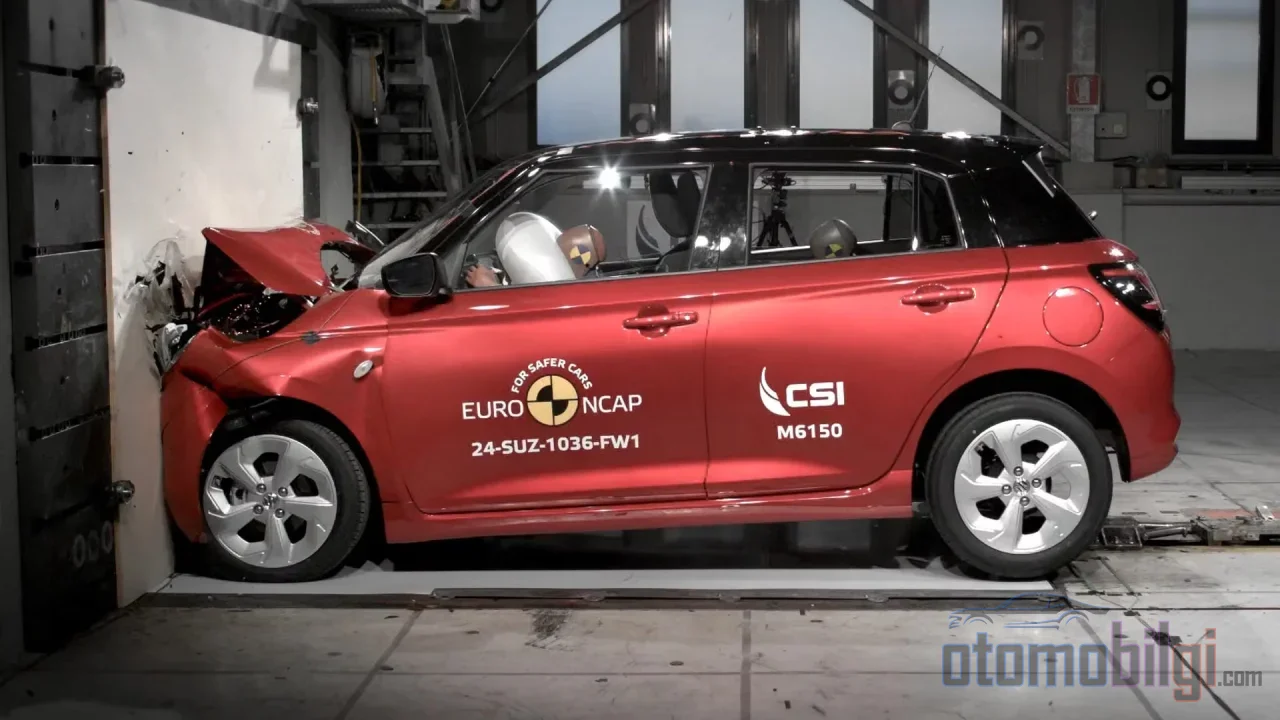
Say you're shopping for a used car and you see "5 stars" in the listings. Sounds great, right? But hold on a second: were those stars awarded in 2015 or 2026? This is where the whole issue begins. Because Euro NCAP stars are not some kind of frozen photograph; they are certificates that carry the difficulty standard of the year they were tested and fade over time like a document that "ages". Last year's 5-star car might come out of today's test with perhaps 3 stars - without a single bolt changing on its bodywork. How does this happen? The answer lies on the engineering side: test protocols are continuously being tightened.
On this page we will not question how the star is awarded, but the star's value over time. If you're ready, let's figure out together why comparisons are so risky.
Why Is the Lifespan of Euro NCAP Stars Limited?
Euro NCAP is a non-profit assessment program based in Leuven, founded in December 1996 and announced its first results in February 1997. Today it has tested more than 1,800 new vehicles and published more than 600 ratings; it is estimated to have saved around 78,000 lives in Europe. So the system works. But its operation has a rule that most people skip over.
The rule is: A vehicle's star rating is valid for a maximum of 6 years from the date it was awarded. Once six years pass, the rating becomes invalid - not because the vehicle got worse, but quite the opposite, because safety standards evolved. Think of it like an exam: if you answered last year's math questions this year you'd score high, but if the questions get harder every year, last year's grade doesn't mean the same thing as this year's grade.
There is also an update cycle: the criteria have been raised incrementally over the last thirty years and are now updated every three years. If a vehicle undergoes a facelift or receives a significant update during this period, Euro NCAP reassesses the validity of the existing rating. In the program's own words, comparing ratings from different years is meaningful only if the changes in the scoring system are small; the general rule, however, is clear: safety ratings cannot be compared across different years.
Highlights
- The star rating is valid for a maximum of 6 years from the date it was awarded.
- Test protocols are updated every three years and become harder each time.
- In 2020, the moving barrier (MPDB) and the THOR dummy were introduced to the frontal test.
- The 2026 protocol is the biggest revision since 2009: four safety stages, each worth 100 points.
- When shopping, you should look at the test year before the stars.
What Changed as the Protocol Tightened? Concrete Examples
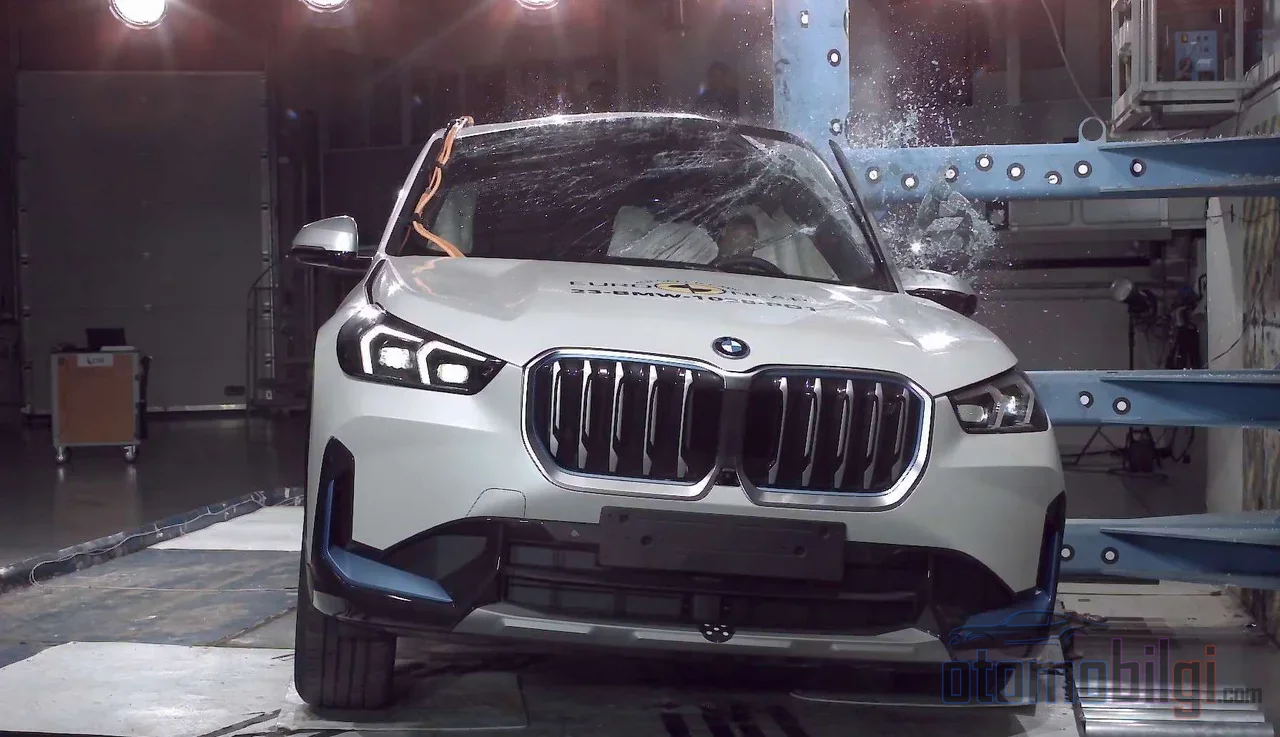
So what is meant by "tightened"? Changes that look small on paper mean completely different vehicles in the engineering world. Let's take a journey through time.
2009: The Single Rating System
Until 2009, Euro NCAP published three separate ratings: adult occupant, child occupant and pedestrian protection. In 2009 these were merged into a single overall safety rating (maximum 5 stars). This was a big step for comparability, but it was also the beginning of the question of "which standard the star was awarded according to" - because the overall rating system was also overhauled many times over the years.
2016: The Dual Rating Era
From 2016 onwards, some vehicles could receive two ratings: one based on the equipment standard in every version sold in Europe, and a second, higher rating achieved with the optional safety package. The subtlety here is that the package rating must be accessible to everyone: the manufacturer is required to meet a certain minimum sales rate (fitment rate). So the "5 stars" label may sometimes describe the standard equipment and sometimes the package bought with extra money - distinguishing between the two should be the label's job, not the reader's.
2019-2020: ADAS, the THOR Dummy and the Moving Barrier
The real big leap came here. From 2019/2020 onwards, driver assistance systems are required to be on by default every time the vehicle is started; additionally, driver monitoring and lane keeping systems were made so that they cannot be switched off instantly with a single press. The logic is simple but clever: a system you can switch off is a system most drivers switch off - and a switched-off system protects no one.
In the same period, the test setup also changed. With the change announced in 2015, the classic offset deformable barrier (ODB) test and the old Hybrid III dummy were retired in 2020. In their place came the MPDB (Mobile Progressive Deformable Barrier) frontal test: with 50% overlap, both collision partners moving at 50 km/h - a realistic head-on car-to-car crash scenario. What does this mean? In the old test, the car hit a fixed barrier; in the new test, a mass coming at 50 km/h confronts it. Also, the car must now avoid "crushing" not only its own occupants but also the occupants of the vehicle it collides with - heavier and stiffer structures lose points for this reason.
There is also a revolution on the dummy side: THOR (Test Device for Human Occupant Restraint), the world's most advanced crash test dummy, entered Euro NCAP for the first time in 2020 with the far-side impact test. THOR can detect injury modes that older dummies cannot see; more precise measurement means a better tool for earning a higher score. the 20th in 2017. anniversary celebrations in 2017, the 1997 Rover 100 and the 2017 Honda Jazz were tested under the same frontal conditions - the difference between them was living proof that the star system really works.
2026: The Biggest Revision Since 2009
And now we come to the current standard. The 2026 protocol is described as the biggest revision since the overall rating system of 2009, and it restructures the scoring around four safety stages: Safe Driving, Crash Avoidance, Crash Protection and Post-Crash Safety - each scored out of 100 points, based on the principles of the Haddon Matrix. So from now on, the star; it evaluates what happens before, during, and after a crash together.
And what's new, you ask? Let's list them briefly:
- Collision avoidance protocols combine in three integrated areas: frontal collisions (motorcyclist and intersection scenarios, steering-assisted emergency maneuvers), lane departure (test speeds of 130 km/s for the vehicle and 140 km/s for the target vehicle; robustness tests under night conditions and lane marking variations), and low-speed collisions (cyclist door-opening warning, reverse maneuver tests).
- The new 100-point Safe Driving category: driver monitoring, eye and head tracking, detection of alcohol/drug impairment, accurate detection of seatbelt use. The speed limit information function is verified through 2,000 km of real road testing.
- Post-Crash Safety is scored for the first time: electric door handles that remain functional after a collision, EV battery isolation, eCall that reports the number of people in the vehicle, ISO 17840-compliant rescue sheets, and multi-collision braking.
- Virtual testing is officially accepted: the manufacturer's simulation files are compared against physical tests within specified tolerances (±1.0 KPI deviation).
- For time-critical tasks, physical buttons are mandatory; functions like volume and settings can remain on touchscreens.
- Full-scale crash tests now use a wider range of dummies, from small children to tall adults, supported by sled tests and advanced simulations. The far-side test, meanwhile, focuses on occupant-to-occupant interaction and center airbag performance.
Let's continue with the exam analogy: a student who scored 90 with the 2016 exam paper might score 60 on the 2026 paper. The student hasn't changed; the exam has gotten harder. Euro NCAP's response to consumer criticism follows this same spirit: systems will now be evaluated not only on the test track but in the real world as well - the aim is to reduce safety systems that are switched off due to annoying interventions.
Same Car, Different Year, Different Stars
The heart of the matter is in this sentence: a 5-star rating earned a few years ago doesn't guarantee the same result today. A car that earned 5 stars in 2015 may not match one that earned 4 stars in 2024 - and in most cases, it won't. This has nothing to do with defects or poor engineering; it's entirely about the criteria changing.
Let's think concretely. A car rated before 2020 is considered never to have undergone the MPDB moving barrier test, the THOR dummy's precise measurements, the default-on ADAS requirement, or the far-side test. A car rated before 2026, meanwhile, has never experienced the Safe Driving or Post-Crash Safety categories at all. If the same car were tested today, it would have to score across all four stages - and that is more than enough for the rating to drop even though the car's body remains the same.
One more example related to mass: since vehicle masses have changed considerably, even revising the mass of the MPDB moving barrier came up for discussion. Rating organizations keep raising the minimum requirements; meaning the "bar" rises a little higher with every cycle.
So Are the Stars Meaningless Then?
Quite the opposite - if you look through the right window. Among vehicles tested within the same year, the star rating is a strong and genuine signal. There is a striking finding that proves this: according to a study examining real-world crashes, 5-star Euro NCAP vehicles have roughly a 10% (± 2.5%) lower risk of injury compared to 2-star ones. So the star rating carries some seriously meaningful predictive power on its own year's scale. The problem is not with the star, but with the habit of carrying star ratings across the years.
Of course, the criticisms are not nonexistent either. Some think the 5-star system falls short and prefer other testing organizations; others argue that the 2026 protocol is a step forward, but that a single 5-star rating can hide vehicles of differing performance under the same label. These are points worth debating - but one thing is clear so far: the system is constantly tightening, and this tightening benefits the buyer.
Rule for the Buyer: Check the Test Year First
So what should you do in practice? The short answer is this: if you are shopping, look not at the vehicle's star rating, but at which protocol year that rating was awarded under. Compare vehicles rated under the same criteria; don't make your decision by putting stars from different years side by side. The relevant safety assessment organizations explicitly recommend checking the test year stamp next to the star and comparing only vehicles rated from the same year.
Also watch out for this two-rating situation: the standard equipment rating and the optional package rating can get mixed together as "5 stars" in the same listing. Trusting the star rating without clarifying which equipment it was earned with is like forgetting that the exam "also has an oral component."
And remember the details that will leave their mark on 2026: mandatory physical buttons, systems verified with real road kilometers, post-crash safety. These will once again change what the star rating means in the years to come. So this story has no end - and as a car enthusiast, I see that as a good thing for me: because what changes every time is a slightly higher standard for our lives on the road.
Sources
- The stars explained | Euro NCAP
- Euro NCAP announces 2026 protocol changes
- Car safety protocols 2026-2028 | Euro NCAP
- Best in Class cars | Euro NCAP
- Crash-test dummies | Euro NCAP
- Euro NCAP 2026: What's Changing - AVL
- ESV 2023 - MPDB/ODB Frontal Impact Working Group
- Euro NCAP - Wikipedia
- The European New Car Assessment Programme - PMC
- Kullgren et al., 2010 - Euro NCAP test results and real-world outcomes