Why Does the IIHS Give Different Results Than Euro NCAP?
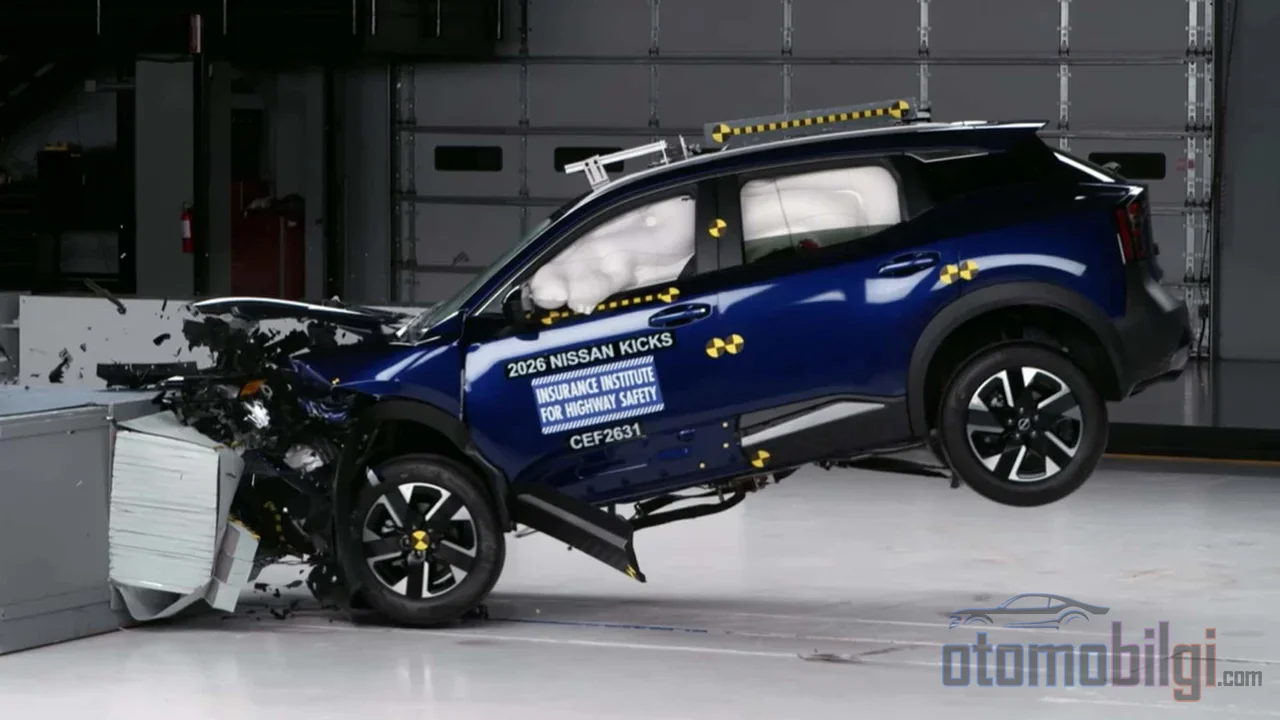
Same car, same body, same airbags... One gives it 5 stars, the other gives it Top Safety Pick. Both are "good" results, but the scores don't match. So how can a car get full marks in Europe yet narrowly miss out on an award across the ocean? The answer doesn't lie in the car's quality, but in the two organizations asking completely different questions. If you're ready, let's put these two testing regimes side by side through an engineer's eyes - no spoilers, but let me say this: the issue isn't "which one is harder," it's "which one measures what."
First, let's clarify the roles. IIHS (Insurance Institute for Highway Safety) is a US-based organization supported by the insurance industry; it has been awarding its flagship title, Top Safety Pick, since the 2006 model year. Euro NCAP, on the other hand, is a Europe-based assessment program funded by its member organizations, and it uses a star scale from zero to five. Both are honest organizations; they just ask different questions.
Two Different Questions: What Does IIHS Ask, What Does Euro NCAP Ask?
IIHS examines collision types one by one in each test and grades each vehicle as Good, Acceptable, Marginal or Poor. No stars, no composite score; each scenario is evaluated on its own. The award logic is tied to this as well: you need to get "Good" in a certain number of main tests and pass certain thresholds. In other words, IIHS's logic isn't "be good on average," it's "be bad nowhere critical."
Euro NCAP has a completely different philosophy: four main areas - adult occupant protection, child protection, pedestrian protection (vulnerable road users) and crash prevention/safety assist - turn into a weighted total score. Each star level has minimum requirements, and the Best in Class ranking is calculated based on this weighted average. Additionally, only standard equipment is evaluated; a safety package that's optional in Europe won't save you.
That's exactly why the comparison turns into "comparing apples to oranges": one is a teacher who gives a separate grade in every category, the other is a teacher who gives a weighted overall average. It's perfectly normal for the same student's report card results to differ.
Differences Between Scales and Titles
| Feature | IIHS | Euro NCAP |
|---|---|---|
| Rating scale | Good → Poor (test by test) | 0-5 stars (weighted total) |
| Highest title | Top Safety Pick / TSP+ | 5 stars |
| Focus | Crashworthiness + crash avoidance | Weighted average of 4 areas |
| Pedestrian protection | Not a main category in the same way | Weighted main category |
| Institutional structure | Supported by the insurance industry | Sponsored by member organizations |
Highlights
- IIHS doesn't use stars; it grades test by test on the Good-Acceptable-Marginal-Poor scale.
- Euro NCAP scores from 0-5 stars using the weighted average of four areas.
- Since 2025, IIHS has required rear seat protection for Top Safety Pick.
- In Euro NCAP's 2026 protocol, driver monitoring carries up to 25 points.
- Euro NCAP keeps 5 stars as the highest level and does not increase the star count above it.
Crash Scenarios: Small Overlap, Offset and Speeds
The two organizations' test courses bear no resemblance to each other at all. Euro NCAP classically applies 50 km/h full-overlap and 64 km/h offset frontal crash tests; in the second test, the vehicle is crashed into a deformable barrier mounted on a 1,400 kg car. IIHS's signature scenario is the small overlap test: only part of the vehicle hits the barrier, and this is applied to the passenger side as well as the driver's side. IIHS's moderate overlap frontal test is also at roughly the 64 km/h level.
Why is small overlap so devastating? Because the impact lands completely outside the main crash structures that are supposed to absorb the crash energy; the source of the difficulty is the scenario itself. Euro NCAP historically focuses on full and offset overlap; it handles the small overlap scenario differently from IIHS. In other words, a vehicle may struggle in IIHS's small overlap test while passing Euro NCAP's scenarios comfortably - or vice versa.
Different Barrier, Different Dummies in Side Impact
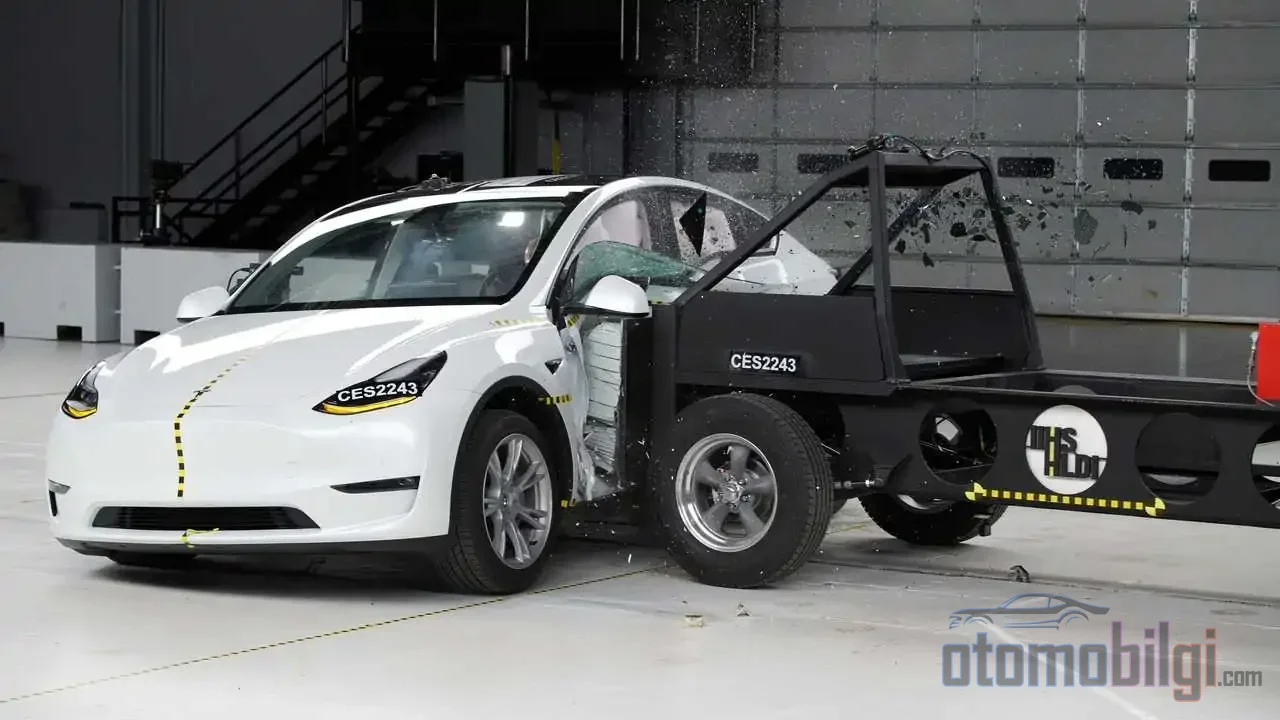
IIHS's reinforced side impact test is also much discussed: the moving barrier of approximately 1,900 kg was redesigned with a softer center and strikes the vehicle at a speed of around 60 km/h. Things have changed inside the vehicle too: two SID-IIs dummies, representing a 5th percentile small female and a ~12-year-old child, are placed in the driver's seat and the left rear seat. percentile small female and a ~12-year-old child size, representing two SID-IIs dummies are placed. In other words, IIHS now measures not only the loads a average adult male is exposed to, but also those experienced by smaller bodies. On the Euro NCAP side, from 2026 onward the test dummies are evolving to reflect population diversity - including women and different body types. Both organizations are moving away from the "average person" assumption, but in different ways.
2025-2026 Updates: Rear Seat and Driver Monitoring
Both organizations have significantly tightened their protocols over the last two years, and the updates are producing the most concrete examples of divergence.
IIHS: Rear Seat Requirement Since 2025
As of 2025, IIHS has made stronger protection for rear seat passengers a requirement for Top Safety Pick. An additional dummy representing a small female or a 12-year-old child was added behind the driver in the updated moderate overlap test. The results shook manufacturers: only 4 of 13 mid-size SUVs could get a "Good" rating in the rear seat test. Even if the driver measurements are "Good", vehicles whose rear chest measurement and rear belt/kinematics measurements remain low can miss out on the award. A concrete example: the redesigned 2026 Nissan Leaf went unrewarded because it received "Acceptable" in the updated moderate overlap test; the 2026 BMW X1, however, managed to secure Top Safety Pick with "Good" ratings in all three basic crashes. The effect of the tightening criteria was also significant: in 2023, only 48 models had managed to earn an award - 28 of them TSP+, 20 of them TSP.
Euro NCAP: 2026 Protocol and the Era of Physical Buttons
On the Euro NCAP side, starting from 2026, a physical button requirement began to be enforced for critical, time-sensitive functions. "Driving Engagement" became a full scoring category, and while driver monitoring systems gained a value of up to 25 points, the tests focus on the reliability and user acceptance of these systems. The protocol also introduces robustness testing under real-world variability, full ISO compliance, systems continuing to operate after a crash, and an eCall data requirement. As part of the post-crash assessment, door opening performance, high-voltage battery safety, and submersion behavior are also measured. Considering that rescue teams need to know the locations of the high-voltage battery, fuel tank, airbag inflators, and seatbelt pretensioners, these items turn out not to be empty luxury.
Pedestrian Protection: Euro NCAP's Weighted Trump Card
Pedestrian-vehicle accidents are responsible for more than a third of traffic-related deaths worldwide. Euro NCAP has built this reality directly into its protocol: pedestrian protection is evaluated as a separate main category through headform, upper legform, and lower legform component tests along with AEB data; the impact forces and decelerations in the head, pelvis, and leg regions of the front-end design are measured. In IIHS protocols, pedestrian protection does not appear as a weighted main category in this way - and this is precisely one of the main sources of the same vehicle receiving different results from the two organizations. A vehicle whose front-end structure is not pedestrian-friendly may lose stars in Euro NCAP, while this item may never even come up in the IIHS assessment.
This effect has also spilled over into US regulation: With its final rule announcement published in November 2024, NHTSA announced that it would adopt most of Euro NCAP's pedestrian protection test and assessment methodology - including the injury limits for each region. In other words, the European approach is not limited to its own continent.
Why Does the Same Car Receive Different Scores? Four Real Reasons
Now that we have put the pieces on the table, the skeleton of the answer emerges on its own. The main mechanisms that cause the same model to receive different ratings from the two organizations are as follows:
- Different scenarios: IIHS focuses on small overlap; Euro NCAP spreads across full/offset overlap, pedestrian, child, and post-crash categories.
- Different scales: IIHS uses a Good-Poor rating per test and TSP/TSP+ designations; Euro NCAP uses a weighted overall score between 0-5 stars.
- Different scoring philosophy: At IIHS, meeting separate thresholds for each test is essential; At Euro NCAP, the weighted overall score is decisive.
- Market differences: Although the body/platform (global architectures like TNGA, MQB, CLAR) is largely the same, standard equipment differs - AEB is mandatory in the EU, but not in the US; airbag calibration and headlight arrangements also vary by market.
Then there is the choice of test vehicle: For Euro NCAP tests, the best-equipped, top-selling version offered as standard across the EU is used; manufacturers can submit their own models, but the procedure is the same regardless of who sponsors it. So even the "test car" may come with different equipment depending on the continent.
What Does Each Score Tell You?
So if the two systems are so different, how does real-world correlation look? The available data is striking: Euro NCAP 5-star vehicles were found to carry a lower injury risk than 2-star ones - in 5-star vehicles the risk is 10% ± 2.5 lower. A comparative study shows that EU vehicles likely have a lower risk of severe injury (MAIS3+F) in frontal/side impacts, while US vehicles have a lower rollover injury risk. This once again shows that the two systems have been shaped according to the typical crash types of the two continents.
The conclusion is clear from this: The difference between IIHS and Euro NCAP stems not from the same car being different, but from two different sets of questions; while IIHS looks for a separate threshold in each critical scenario, Euro NCAP awards stars based on a weighted average of four areas - so 5 stars and Top Safety Pick are not equivalent to each other. Look according to where you will drive your car: In the US, IIHS and NHTSA; in the EU, Euro NCAP results are your real reference. On global platforms, structural results are largely transferable; but additionally factor in equipment and calibration differences.
The next time you see two different report cards of a vehicle side by side, first look at which institution asked which question. Stars and titles speak different languages - and now you can translate both.
Sources
- Vehicle ratings - IIHS
- Passenger vehicle test protocols and technical information - IIHS
- IIHS makes stronger protection for back seat passengers a must for 2025 - IIHS
- Car safety testing - Euro NCAP
- The stars explained - Euro NCAP
- What's new from 2026 - Euro NCAP
- New Car Assessment Program Final Decision Notice - Federal Register
- IIHS vs Euro NCAP vs ANCAP - Informed for Life
- Comparison Between Euro NCAP Test Results and Real-World Crash Data