How Do Collapsible Brake Pedals Protect Your Legs in a Crash?
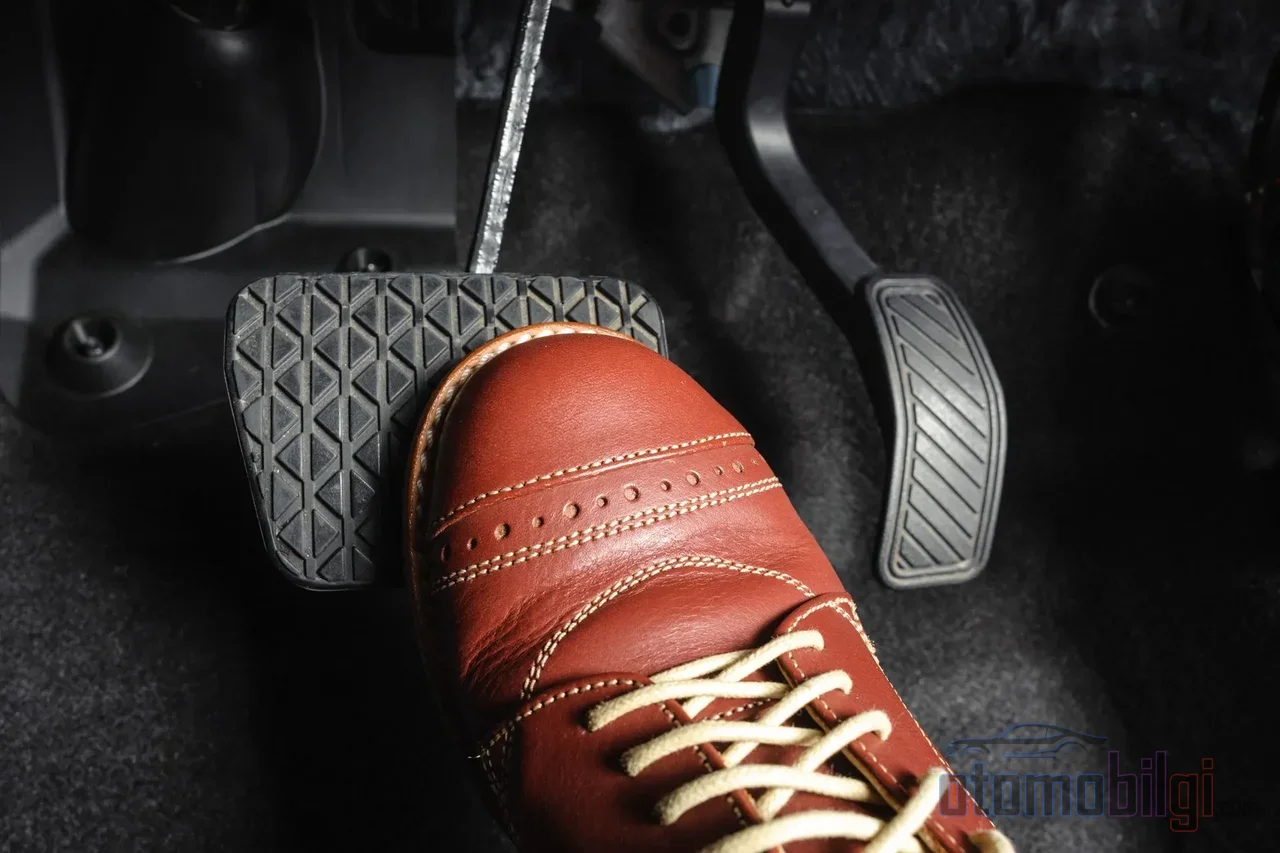
Think about this: in a severe frontal crash, you have fully pressed the brake, your foot is tense, your whole body is strained. The engine bay is crushed, the engine is pushed backward, the dashboard bulges into the cabin, and that rigid brake pedal starts coming toward your foot. Sounds terrifying, doesn't it? This is exactly why engineers developed a system most drivers have never even heard the name of: brake pedal retraction and deformation mechanisms. Most people know that the steering column folds away from the driver in a crash; but very few know that the same philosophy also works at the footwell bulkhead. In this article, we will talk about that overlooked second part.
Why Does the Brake Pedal Move Toward the Driver in a Crash?
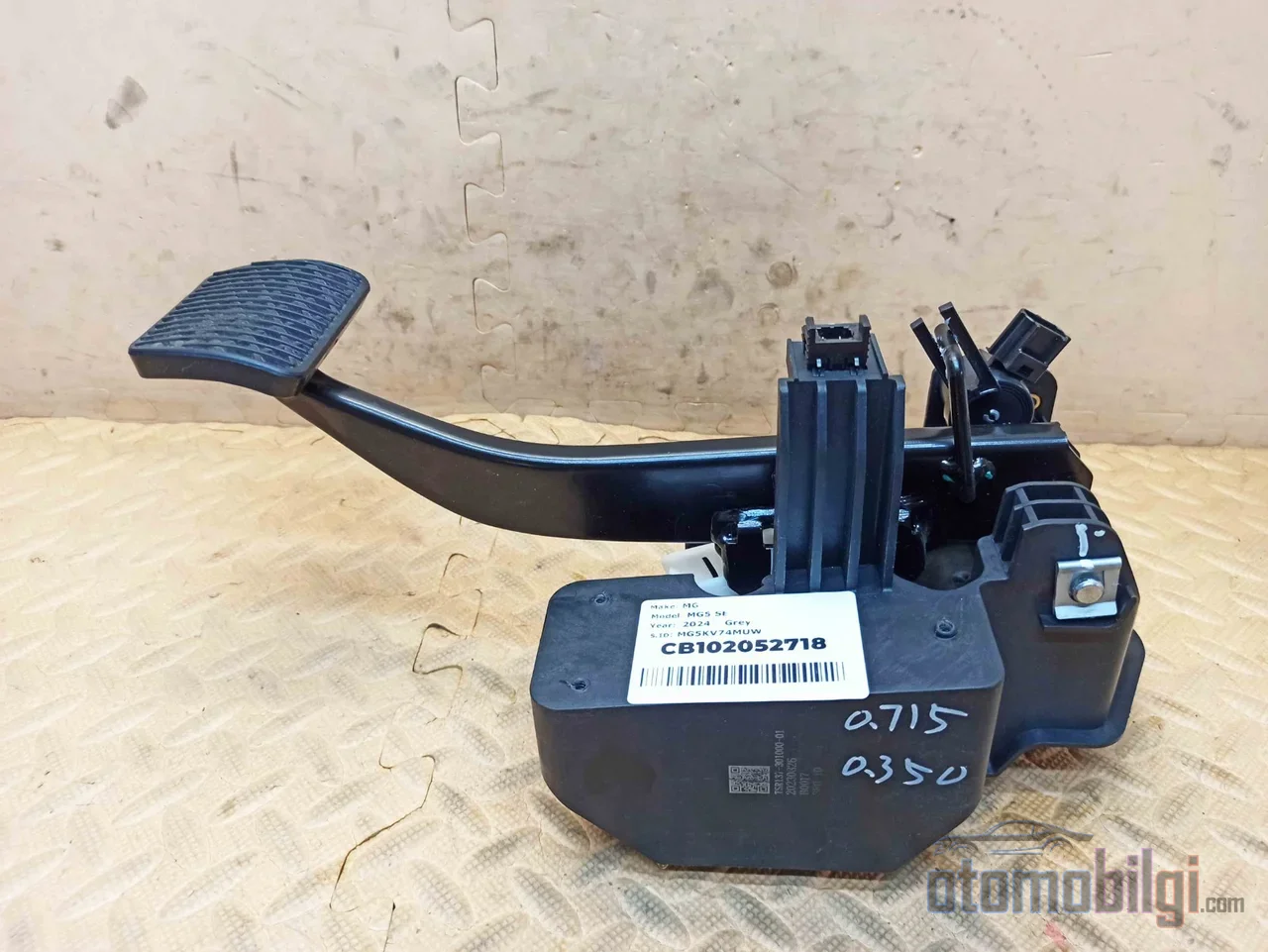
First, let's clarify the source of the problem. Suspended-type brake pedals are mounted on a bracket on the bulkhead that separates the cabin from the engine bay. In a frontal crash, the engine is pushed backward, deforming the bulkhead into the cabin, and the brake pedal can move toward the driver along with this movement.
But the real issue is locked in the chain mechanism: in a crash, the drivetrain hits the brake booster and pushes it backward. The booster, in turn, is connected to the pedal arm via a pushrod. If the pushrod travels backward more than the pedal's central movement, the pedal pad moves backward much more than the upper part of the pedal arm, and this motion is typically amplified by a factor of about 1/4. In other words, a small backward kick in the booster turns into a serious push on the lower leg of a driver bracing their foot against the pedal.
There is also an asymmetric scenario: if the booster is hit from one side, one side intrudes more, and the pedal box and pedal arm tilt. This tilt can also lead to lower leg injuries. The pedal arm is deliberately designed to be very rigid for normal braking; because a pedal that flexes under braking is out of the question. But in a crash, that same rigidity turns into serious injury potential when it contacts the human body. In short, the engineer faces two opposing demands: the pedal must be rock hard, yet release that hardness at the moment of a crash.
Highlights
- The backward movement in the brake booster is amplified by a ratio of approximately 4:1 in the pedal arm and transmitted to the driver.
- In Euro NCAP, if the backward displacement of a blocked pedal exceeds the threshold, 1 point is deducted from the driver's ankle score.
- The crushable pedal mount patented as US7775555B2 can be reset by replacing the shear pin.
- Tata Motors developed a collapsible brake pedal that deforms in a crash to prevent intrusion.
The Mechanics of Foot and Leg Injuries
So what happens in our body when the pedal comes backward? When the brake pedal is pushed backward, the angle between the instep and the leg narrows; this creates a risk of injury on the ankle joint. Studies examining crash data show that brake pedals that intrude rapidly may contribute to a higher frequency of right foot and ankle injuries among drivers. Why the right foot? Because most drivers press the brake with their right foot, and at that moment the foot is directly on top of the pedal.
Another interesting detail uncovered by researchers: braking positions in which the knees are more bent are associated with higher ankle forces in a crash, with a fixed seat position. In other words, pressing the pedal all the way down in a panic stop can geometrically increase the load on your ankle. One of Volvo's crash safety studies defines a pedal position that keeps the heel close to the floor plate (toe pan) as the best way to limit the foot's effect. The main idea is this: the more the foot gets trapped as things enter the cabin, and the chain of injury begins at the point where the foot locks.
Engineering Solutions: How Do They Tame the Pedal?
Okay, the problem is clear. But what's the solution? There are multiple engineering schools of thought here, and all of them head toward the same goal via different paths. Let's take a look at the most important ones.
Breakable Pedal Mount with a Shear Pin
One of the most elegant solutions is to deliberately weaken the linkage that carries the brake pedal. In the breakable pedal mount described in patent US7775555B2, the linkage is provided by a shear pin: when the crash load reaches a certain level, the pin shears, the linkage is physically destroyed, and the pedal is set free. You know what the best part is? The system can be reset by replacing the pin. So this is not a single-use, scrap-after-crash design, but a repairable one.
The shear pin concept itself is well known in general engineering: the element is sized so that it will break at a specific load. In industrial safety couplings, factory-set pins are adjusted to break at specific pressure levels and can be upgraded with stronger pins. The same logic is used here to disable a pedal arm coming toward your feet.
Dual-Arm Swing System: First Generation
In an older approach, the pedal arm is split into two parts: a primary and a secondary arm, connected to each other by a pivot. The two arms wait in a clamped state with a catching element. In a crash, the deformable element in the vehicle's crossbeam contacts this catcher, rotating it around the pivot shaft and releasing the primary arm. Since the pivot is located beneath the servo's pushrod, the freed arm rotates away from the driver's lower leg. Makes sense, doesn't it? But there is a snag: at the moment of release, the angle between the pedal plate and the foot changes suddenly, and this abrupt change can impose unwanted extra stress on the leg and foot.
Interlocking System: Release the Pedal, Then Secure It
This angle problem of the swing system gave rise to a newer interlocking approach. This design adds a first locking element to the pedal arm, in the shape of a circular sector whose center of rotation is at its geometric center. The second element is mounted on a body part that moves rearward at a different speed in a collision, for example the vehicle's crossbeam. Between the two elements, a fixed, pre-calculated gap is left for all normal positions of the pedal. In everyday driving, this gap does not interfere with anything; but the collision force closes the gap no matter what pedal position you are in, and the two elements interlock, preventing the pedal arm from rotating further.
The locking surfaces can be shaped to be aggressive in the design: sawtooth surfaces and protrusions like knife edges mesh together as they interlock into each other's teeth. In an alternative arrangement, the second element is U-shaped and the circular sector enters into this U; this way the lateral gap is also closed and twisting of the pedal arm is prevented.
Another critical detail of this system is the pushrod itself: the pushrod is designed to comfortably carry all the pedal forces a driver can generate, but is dimensioned to break and collapse if this force is exceeded. After the locking elements interlock, the pushrod collapses and can no longer transmit any significant force to the pedal. In addition, the lower connection of the pedal box is positioned at a height between the servo connection and the pedal plate; this way, if the servo enters early, the pedal plate collapses downward. The net result: the pedal drops somewhat toward the floor at the start of the collision, then locks longitudinally and laterally, and the angle relative to the driver's foot does not change.
Collapsible Pedal and Programmed Deformation
Tata Motors also developed a collapsible brake pedal mechanism to reduce lower leg injuries in frontal collisions. This patented system includes a series of levers and linkages that are deactivated at the moment of impact; the pedal collapses and moves toward the footwell, preventing intrusion. SEAT, meanwhile, uses the concept of programmed deformation on its official technical terms page: in the event of a crash, the brake and clutch pedals are prevented from intruding further into the driver's footwell. So while the strategy varies from manufacturer to manufacturer, the goal is the same: at the moment of a crash, the pedal must stop acting like an extension of the occupant's body.
Comparison with Steering Column Collapse
Remember the steering column: in modern vehicles, collapsible columns absorb energy by telescoping or deforming in a collision, rather than being pushed toward the driver's chest. The column collapses at a predetermined force called the breakaway force; when the collision force reaches this threshold, the mechanism engages. The same philosophy as brake pedal systems: intentionally weakening a rigid component after a certain threshold.
But there are also differences, and they are not small:
| Feature | Steering Column | Brake Pedal |
|---|---|---|
| Protected region | Chest and head | Foot, ankle and lower leg |
| Mechanism logic | Folding, telescoping | Breaking, locking or collapsing |
| Regulatory framework | FMVSS 204 rear displacement limit | Euro NCAP blocked pedal and footwell assessment |
| Typical solution | A column that collapses at a specific force | Shear pin, locking bracket, collapsible column |
An interesting historical note: In the pre-standard era in the US, in only 3 percent of cases where drivers were seriously injured due to steering assembly issues had the steering column displaced upward or sideways. In short, even column collapse alone is not sufficient in every scenario; as for the brake pedal side, regulation has largely been left to the scoring mechanisms of testing organizations.
How Does Euro NCAP Score the Pedal?
So how are these systems evaluated in test laboratories? The Euro NCAP Adult Occupant Protection protocol takes steering wheel displacement and pedal issues into account when assessing structural performance. The critical rule is this: no foot-controlled pedal that has displaced rearward after the collision may be blocked. A blocked pedal means a rigid wall pushed backward; a pedal that is freed or collapsed acts as a buffer that absorbs energy.
On the scoring side, the rule is clear: if the rearward displacement of a blocked pedal exceeds a certain threshold, a 1-point deduction is applied to the driver's ankle assessment. Euro NCAP's assessment modifiers technical bulletin, in its current version dated January 1, 2026, explicitly states that blocked pedals represent a greater risk. The IIHS's Moderate Overlap Frontal 2.0 test protocol also includes the driver's footwell area in the assessment. So for manufacturers chasing five stars, the brake pedal's post-crash behavior is not marketing material, but a matter of points directly.
Are the Systems Perfect? Points of Controversy
Let's be honest: every solution has a trade-off. Release systems that completely free the pedal can put additional stress on the foot due to the change in pedal angle at the moment of release; that's why the locking approach was developed. Comparative test data on which of Tata's collapse strategy and the locking approach is superior in which crash scenario has not yet been collectively established.
There is another interesting finding: a 2026 study shows that even relatively small crash accelerations and durations can produce inertial pedal movement sufficient to activate the brake switch. So the systems need to account not only for large intrusions, but also for the pedal moving under its own inertia at small accelerations. The design of trigger thresholds is a more complex engineering problem than we think.
Short Answer: Why Does the Pedal Move, and How Is It Prevented?
Let's summarize. In a severe frontal crash, the engine is pushed backward, and the motion transmitted to the pedal via the brake booster and pushrod is amplified at a ratio of approximately 4:1, creating a push toward the driver's foot. To prevent this, engineers developed pedal assemblies that shear on a breakaway pin, are secured with locking elements, or collapse during a collision; Euro NCAP also audits this behavior with its blocker pedal penalty and footwell intrusion assessment. While steering column collapse is the half that protects the chest, brake pedal deformation mechanisms are the complementary other half that protects the feet and legs. While watching the next crash test video, shift your eyes straight to the footwell: there, in a place the cameras rarely show, a quiet engineering triumph is playing out.
Sources
- Vehicle Brake Pedal Crash Safety Device
- Break-away pedal assembly
- Design and Validation of a Collapsible Brake Pedal System
- Inertial Pedal Displacement and Brake Switch Activation
- Euro NCAP Assessment Protocol - AOP v9.3
- Euro NCAP Assessment Modifiers Technical Bulletin CP 007
- Euro NCAP AOP protocol v8.0.3
- IIHS Moderate Overlap Frontal Crashworthiness Evaluation 2.0
- Foot and Ankle Safety Evaluation in Real Life Crashes
- Pedals with Programmed Deformation