Load Chain Between the Door Beam and the B-Pillar
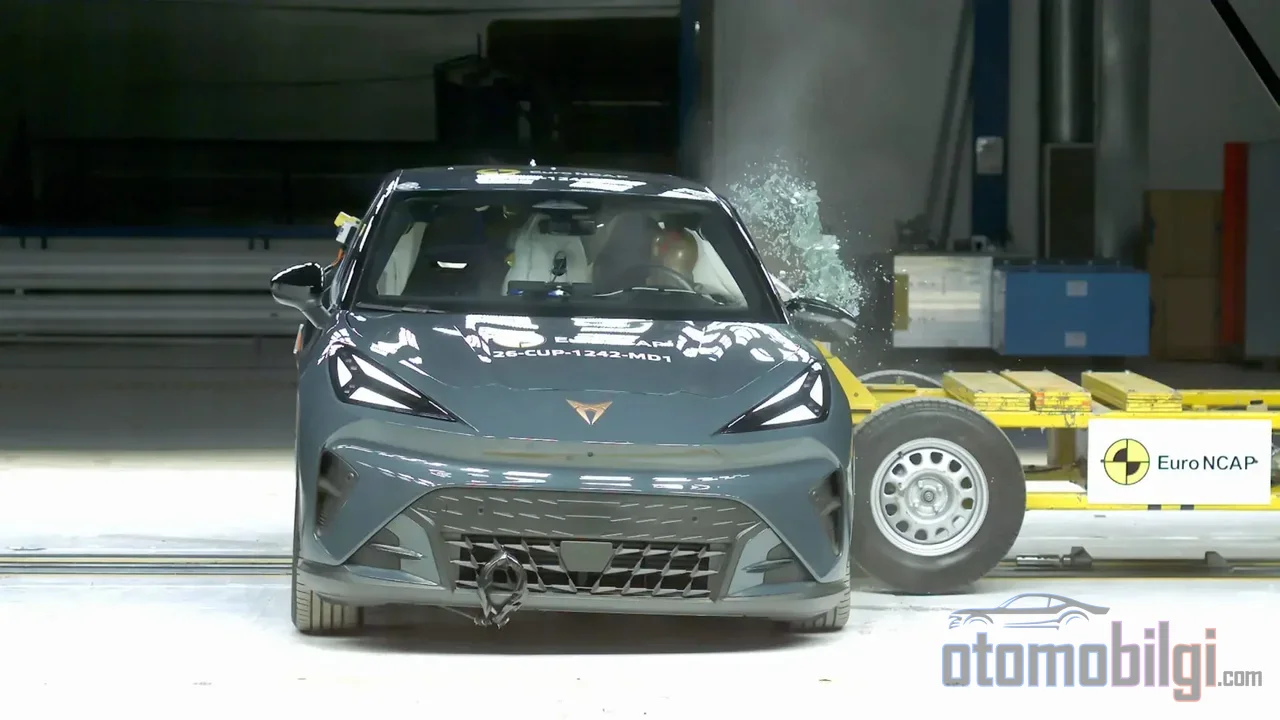
I want you to open the door carefully once and take a look inside. Behind the trim panel, there is a metal piece running along the length of the door: the side impact beam. For many of us, this part is invisible - we have not even heard its name - but it is a crucial component of the only structural line of defense between you and the door panel in a side impact. It always stays in the background in discussions about airbags and crash tests; so how much work is that quiet beam actually doing in Euro NCAP's side test? The answer involves more engineering than you might think.
On this page, I will walk you through, step by step, how the door beam manages crash energy, how material choice has evolved from steel to aluminum and composites, and how Euro NCAP assesses this part indirectly in its scoring. If you are ready, let's dive inside the door.
What Does a Side Impact Beam Do, and Where Does It Transfer Energy?
There is a harsh reality of side impacts: while the front has meters of deformation zone like a car's nose, on the side there is only the door, the B-pillar, and the body frame between you and the impact. The side impact beam placed inside the door (also known as an anti-intrusion bar in English literature) exists for this reason: to absorb the kinetic energy of the collision and reduce the amount and speed at which the impact pushes the door inward (intrusion).
The engineering balance here is like a delicate tightrope act: the beam must deform enough to absorb energy, but it must not crumple so much that it collapses far enough to encroach into the passenger cell beyond safe limits. In other words, neither rigid like concrete nor soft like cardboard; right in the middle. The beam also serves a dual role: while providing protection against side impacts, it also adds rigidity to the door and manages to transfer crash energy into the structure more effectively.
The B-Pillar and the Load Transfer Chain
The beam absorbs energy, but it cannot carry it alone. In a side impact, most of the load taken from the barrier must be carried through the bending of the B-pillar; the B-pillar's performance is decisive in reducing intrusion and limiting the energy transferred to the passenger cell. So the beam works like a bridge transferring this load from inside the door to the B-pillar and the body frame. When the chain breaks, even the highest quality beam becomes useless.
Key Highlights
- Side door beams are typically made of steel 2.0 mm or 3.0 mm thick.
- The first application area of hot-formed steel in the automotive industry was side door beams.
- In AHSS use, every 10% reduction in weight can increase energy absorption by up to 6%.
- Switching to aluminum in a door beam saves approximately 1 kg per door.
- The Euro NCAP side test includes a 60 km/h barrier and a 75° pole impact.
The Anatomy of the Beam: Cross-Section Profile and Manufacturing Method

There are two main design variables that define a door beam: the cross-section profile and the manufacturing method. Side door beams are categorized in three forms in the literature: tubular, panel, and belt type; tube applications with a 30 mm diameter are available.
The cross-section geometry is not chosen for nothing. Common beam cross-sections come as circular tubes, C-sections, and rectangular tubes, and each has a different resistance to deformation. The M-shaped profile has been considered optimal by some studies due to its balance between resistance force and energy absorption. Beams are produced by stamping, roll forming, tubing, or hot-stamping methods; surface treatments include e-coat, zinc plating, phosphate, and paint.
Materials Engineering: Steel, Aluminum, or Composite?
Here is where things really heat up. Material selection for the door beam is made within the triangle of strength, weight, and cost, and each material camp has strong arguments in hand.
High-Strength Steel: The Classic Champion
The first automotive application of hot-stamped steel was side door beams; today, cold-formed ultra-high-strength steels also provide an alternative. Let's look at concrete classes: The BR1200HS class, with 1,200 MPa tensile strength and over 850 MPa yield strength, is used in the mid-segment through hot forming and quenching. HC980DP is a dual-phase steel with 980 MPa tensile strength and is preferred in cost-sensitive models because it can be cold-formed. HC550DP, on the other hand, is at the 550 MPa level, a sufficient option for light-duty applications.
Here is the steel camp's favorite number: With AHSS, for every 10% weight reduction, energy absorption can be increased by up to 6%. Lightweight steel door studies show that mass and cost efficiency can be achieved together with optimized load path topology and local reinforcement beads. One more example: a waistline reinforcement beam with 700 MPa class HSLA steel can deliver five-star crash test performance; such roll-formed, laser-welded closed-profile designs offer better cost and energy efficiency than conventional cold stamping.
Aluminum: The Lightweight Camp
Aluminum's trump card is physics: its density is about one-third that of steel (2.7 g/cm³), meaning three times the thickness can be used compared to steel of the same weight. Extruded aluminum profiles can show superior energy absorption and deformation resistance compared to steel components. In mixed-material door development projects, moving the beam to aluminum saved about 1 kg per door; this solution has started to be applied in Europe and is also available in North America. High-strength aluminum alloy sheet can show tensile strength above 600 MPa in the rolling direction; the loss of properties in the transverse direction stays below 10%.
Composite: Still on the Borderline
Carbon fiber composites can be five times stronger than steel and noticeably lighter. Composite rail (rail structure) design is being researched as a potential application area for the B-pillar and door intrusion beam; simulation studies use elastic modulus values at the level of 70 GPa. But in the real world, composites are not yet mainstream in series-production door beams; cross-section analyses still concentrate on circular tubes, C-sections, and rectangular tubes.
| Material | Typical Strength | Standout Advantage |
|---|---|---|
| BR1200HS (hot-formed) | 1,200 MPa tensile | High strength, mid-segment experience |
| HC980DP (dual-phase) | 980 MPa tensile | Cold forming, cost advantage |
| HSLA 700 class | 700 MPa | 5-star performance in the beltline beam |
| High-strength aluminum sheet | Above 600 MPa (rolling direction) | Roughly 1 kg savings per door |
| Carbon fiber composite | 5 times stronger than steel | Lightweight; production side still developing |
Why Doesn't the Steel vs. Aluminum Debate Ever End?
Let's be honest: there is no clear winner in this debate. High-strength steel offers higher values in the strength/weight ratio compared to aluminum's typical 100-150 MPa/(kg/m³) range. In return, aluminum is a formidable rival with its three-times-thicker allowance and energy absorption in extruded profiles. Performance comparisons of classic and lightweight materials in energy-absorbing elements are still an active research topic; so which material wins is decided by the vehicle's holistic design and cost target.
The Beam's Role in the Euro NCAP Side Test and Its Share in Scoring
Now we come to the heart of our question. Euro NCAP's side collision assessment consists of two main scenarios: a collision with a moving deformable barrier (AE-MDB) at 60 km/h and a pole collision approaching at an angle of 75°. The test protocol measures intrusion from the marked line on the interior door panel to the maximum intrusion point after the test; the injury values of the dummy in the driver's seat are also evaluated along with these measurements.
The critical point is this: Euro NCAP does not have a separate item that scores the door beam on its own. The beam's contribution is assessed indirectly: the less intrusion the beam allows when the barrier strikes, the better the dummy measurements come out, the more controlled the B-pillar bends, and the more points the vehicle collects. Additionally, the assessment protocol applies a modifier, i.e. a penalty when necessary, to the side collision score for each door (including the tailgate). As for far-side scoring, it has been calculated since 2020 as the sum of points from two collision scenarios.
Since side collisions rank second in the frequency of death or serious injury, Euro NCAP extensively revised this area with safety assessment updates; the most current side impact protocol is the v11 version dated 2025. Therefore, when we speak of "the beam's share," the correct answer is not a single number, but an indirect yet decisive effect through intrusion measurements and dummy data.
New-Generation Designs: Curved Beams and B-Pillarless Structures
The subject doesn't end here. A study published in 2023 developed the concept of the arched door beam: the arch reduces the axial load generated during beam deformation, lowering the bending moment and thereby aiming to limit body deformation. Clever, isn't it? Instead of a straight rod, a slight arch changes the direction of the load, treating the structure more gently.
Another interesting approach involves structures with no visible B-pillar: it has been shown that energy transfer can be controlled laterally using horizontal arches and distributed into the side structure. Side pole collision simulations, on the other hand, reveal that structural weaknesses such as pronounced B-pillar deformation and extensive body frame damage are still serious problems; current work on side structure design and reinforcement is focused on closing these weak points. Among recent findings is also that the collision layer is the main energy-absorbing structure in the side test and can be analyzed by dividing it into six zones.
What Happens If the Door Beam Gets Damaged?
Let me leave you with a practical question: what if the beam takes a hit? On the repair side, patching or part replacement is critically important when the beam is damaged; because this part has to restore passenger protection in the next side collision. Brushing off a dent as "cosmetic" means weakening the car's most critical line of defense on its side.
Let's wrap up: In the Euro NCAP side test, the door beam is not an item scored on its own; it is an engineering part that indirectly but powerfully determines the score by limiting intrusion and transferring the load to the B-pillar and body frame, improving the dummy measurements. Three things make it good: the right cross-section profile, the right material (2-3 mm thick high-strength steel, or aluminum in weight-sensitive designs), and a load transfer chain compatible with the B-pillar. Next time you reach for the door handle, remember how much calculation that silent metal bar has done on your behalf against a barrier at 60 km/h.
Sources
- Euro NCAP Crash Protection Side Impact Protocol v11
- B-pillar Load Transfer Mechanism in Side Collision - Honda Technical Review
- New load transfer structure to reduce body deformation - Traffic Injury Prevention
- Side-impact car door beams in AHSS and UHSS grades - SSAB Docol
- High strength aluminum alloy door beam - Patent US11712948B2
- Door Co-Development Mixed Materials Solutions
- How Do Side Impact Beams Work?
- Evaluation of FMVSS 214 Side Impact Protection - NHTSA
- Back-To-Basics: Door Intrusion Beams - I-CAR RTS
- Enhanced Side Pole Impact Protection - MDPI Applied Sciences