Why Does the Fuel Pump Shut Off in a Collision?
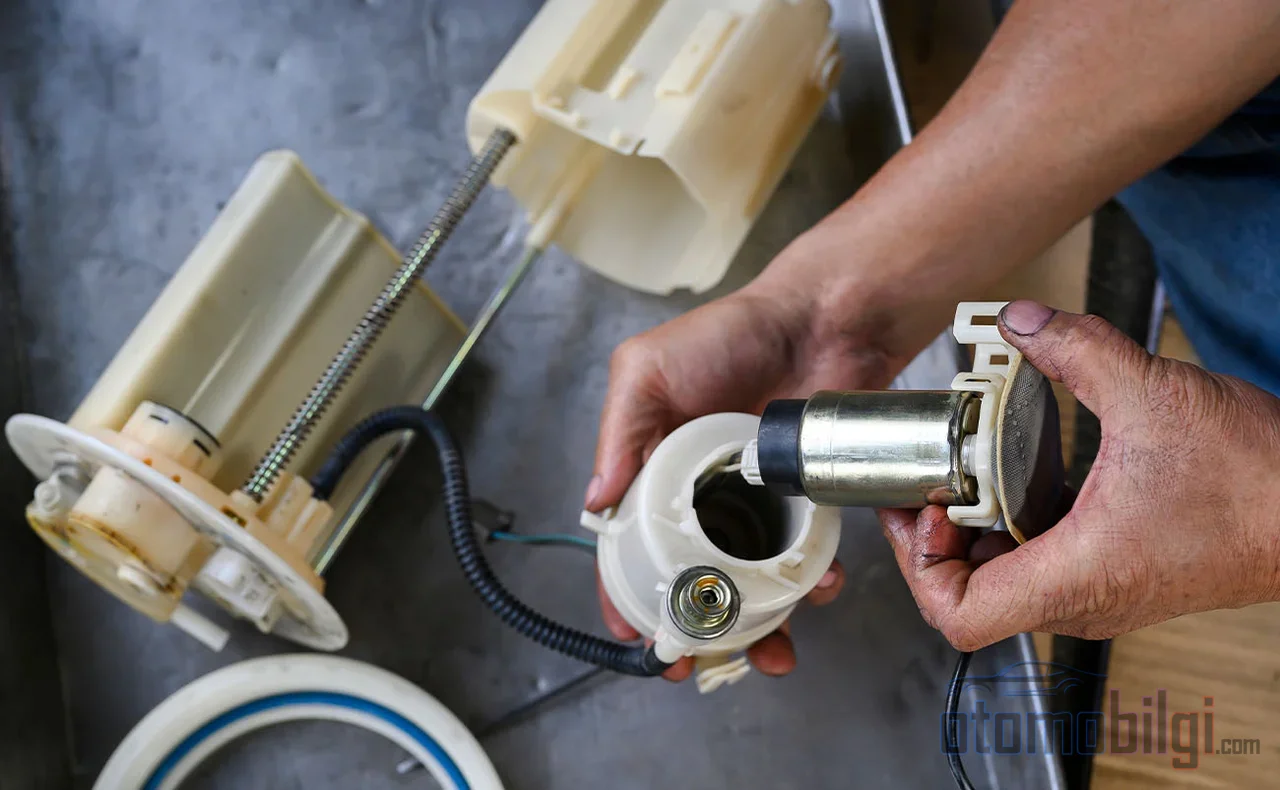
You know there's no one pressing a button at the moment of the crash, right? And yet, after the collision, the engine falls silent, the pump stops, and the hazard lights start flashing. So who made the call, and to whom, and exactly how? Here's that little-known second safety layer: the sensor network that decides to deploy the airbag also cuts the fuel supply in the very same second.
Why the Fuel Pump Stops in a Crash: The Decision Chain Works in Milliseconds
Think of the person first, then understand the system. A full airbag deployment takes about 30 milliseconds. In that short time, three things happen in a row: the crash sensor at the front of the vehicle, which is an accelerometer, detects the sudden deceleration; that signal goes to the airbag control unit; and the control unit triggers the gas generator, inflating the bag in stages. A blink is slower than that, seriously.
But the real story doesn't end there. While firing the airbag, the same control unit makes another decision: shutting the fuel pump out of the circuit. In a modern vehicle, when a crash is detected, this safety mechanism kicks in, the hazard lights usually come on, and the windows automatically open. In other words, the car is calling out to you in three different languages: "It's over, you're safe, the fuel isn't flowing."
Why such urgency? The answer is one word: fire. If there's a chance of a leak at the moment of impact, fuel that keeps flowing grows the risk with every second. Cutting the pump eliminates, at the root, the system's chance to play with fire. Keep this sentence in mind: while the airbag protects you from the impact, the fuel cut-off system then moves on to protecting you from fire.
Highlights
- The airbag detection and inflation process is completed in about 30 milliseconds.
- When the airbag deploys, the SRS also cuts the fuel pump to prevent the risk of fire.
- The inertia switch mechanically opens the circuit on impact and can be reset by hand.
- In electric vehicles, high-voltage contactors separate the battery from the rest of the car in a crash.
- Even if the battery is torn loose in an accident, capacitors hold the charge needed to deploy the airbag.
The Heart of the Circuit: How the Fuel Cut-Off Relay and ECU Work
Think of a typical fuel cut-off circuit in a simple sequence: 12V battery, fuse, relay, ECU, safety cut-off switch, and fuel pump. The relay works like a switch where a small control current from an electromagnet opens and closes a large current - like a tiny doorbell button opening a giant gate. The ECU controls this relay; when a crash is detected, it releases the relay and the pump's power line is cut.
We shouldn't miss the most critical detail here: we have no clear figure for how many milliseconds the ECU takes to release the relay. Our millisecond data concerns the airbag - the inflation process is completed in about 30 milliseconds, and the control unit triggers the whole chain within a few milliseconds. The fuel cut-off itself is applied instantly as part of that chain, but giving a separate millisecond figure would be misleading. That's what engineering honesty looks like: you don't make up a number you don't know.
There's also the starting side of things. The powertrain control module runs the pump briefly so the engine can receive fuel when the ignition is in the START position; once the engine comes to life, it takes over control completely. So the pump isn't always on - at every stage, it's clear who's in command.
What happens if the battery is severed?
Here's the detail that genuinely excites me: even if the battery is severed by the severity of a crash, the airbag can still deploy. Inside the control unit there are capacitors - components that act as small energy reserves - which hold the charge needed for that moment in advance. This shows that the entire safety decision doesn't depend on a single cable or a single point. The system carries its own energy backup with it. Isn't that clever?
The Inertia Switch: The Mechanical Guardian That Feels the Collision
Even before modern electronics, this idea had a mechanical ancestor: the inertia switch. Its job is very clear - to reduce the risk of fire in the event of a possible leak by preventing fuel from being pumped into the system when an impact occurs. But how does a metal box "feel" a collision?
There are two classic designs, and both are based on the principle of inertia you know from physics class. In the first, there's a linkage consisting of a long arm, a spring, and a short arm; in a major impact, the short arm moves away from the contact, the circuit opens, and the fuel pumps stop. In the second, the switch contains a magnet and a ball: the ball normally stays attached to the magnet and keeps the circuit closed; a hard enough impact dislodges the ball, and the circuit opens. So the ball reacts on your behalf. The magnet keeps the ball in place so the circuit doesn't open needlessly during everyday jolts - potholes, hard braking.
Let's make one more comparison, because the difference matters: in a fuel-injected vehicle without an inertia switch, the pump keeps pumping fuel as long as the ignition stays on. It doesn't stop on its own like in old systems with manual pumps. That's why switch-equipped systems are literally a safety layer for the aftermath of a crash.
What do you do if the switch has been triggered?
The good news: this switch isn't single-use. After it has been triggered, it can be reset by hand, and it's usually located in places like behind the glove compartment. If the car won't start for no apparent reason and the tires, battery, everything else is fine, the possibility that the inertia switch has been triggered should be taken seriously. Even without a hard collision, a major jolt can be enough to move the ball.
Why Does the Engine Shut Off by Itself When the Airbag Deploys?
Here's the question readers ask most, and its clear answer: yes, in modern vehicles, the engine shutting off when the airbag deploys is often part of the design. When the SRS - meaning the airbag system, with "supplementary" referring to the non-restraint parts - detects a collision and deploys the airbags, it also takes the fuel pump out of service to prevent a fire. In some applications this cut-off is implemented by directly short-circuiting the pump - meaning the pump is rendered ineffective enough that it can no longer operate.
Even when side airbags deploy, the safety system often triggers automatic engine shutdown; the goal is the same: to prevent additional damage and fire risk. In some vehicles, the fuel pump fuse can also kick in when a sufficiently hard impact is detected. In short, the vehicle says "I have stopped working" in the first seconds after the crash, and it can do so in more than one way - through a relay, a fuse, or a switch.
This situation also has a real-world side: airbags are designed for single use. Yet real accidents can involve multiple collisions. The fuel cut-off decision behaves as if it were made for a single collision scenario; this is still a debated point in the safety world. Engineering does not always make the easy choices.
The Parallel in Electric Vehicles: Opening of the High-Voltage Contactors
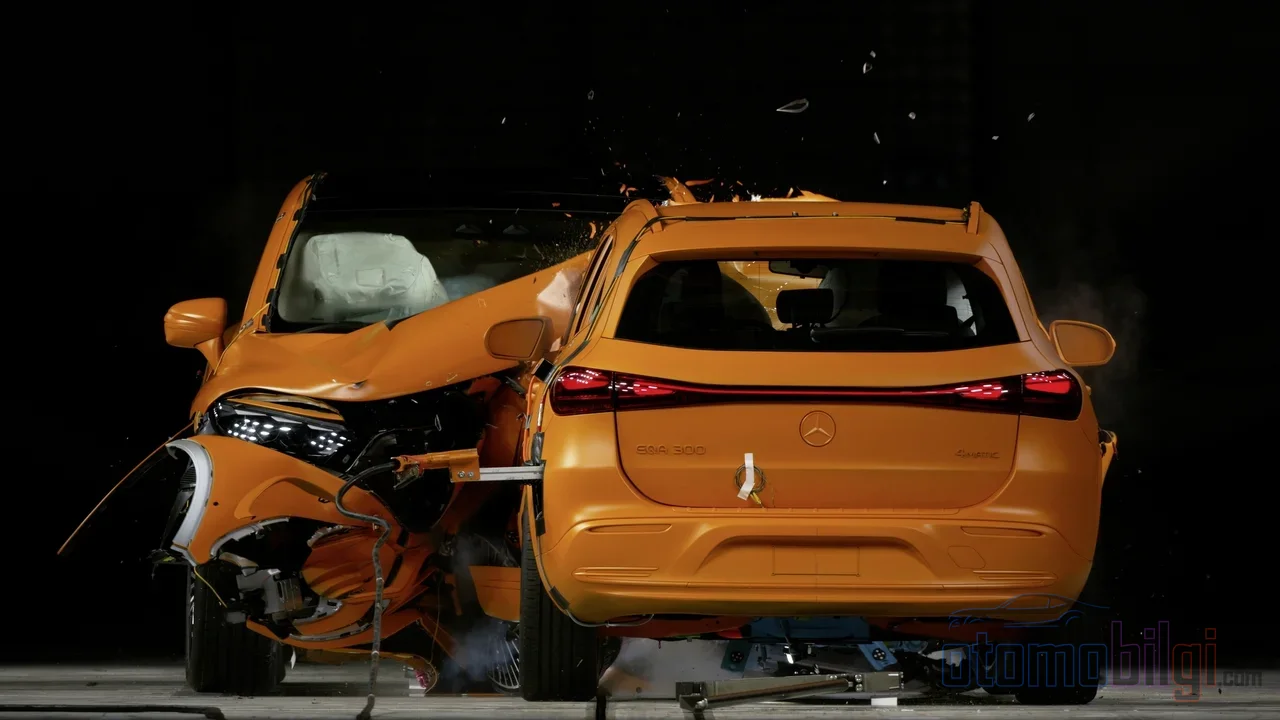
Now let's change the scene and move over to the side of electric vehicles, because there is a safety layer there that is completely different but identical in logic. What is cut off in a gasoline vehicle is the fuel flow; in an electric one, it is the high-voltage connection carrying hundreds of volts. When a collision is detected in an electric vehicle, the collision sensor triggers the switch that controls the main contactors of the high-voltage battery, and the battery supply is completely separated from the rest of the vehicle.
Think of the contactors as the gatekeepers of the high-voltage circuit. They ensure a safe connection during driving and charging; the moment a collision or fault is detected, they quickly disconnect the battery from the system. When the fuel relay is cut, the pump falls silent, and when the contactor opens, the heart of the high-voltage system is instantly silenced. Two technologies, one common reflex: detect danger, cut the energy.
And this decision is not forgotten either. In one example, the high-voltage battery contactors of a Tesla Model 3 involved in a crash refused to close due to a recorded collision event - meaning the event was written into the vehicle's memory and the high-voltage system remained deliberately blocked. The same idea is clearly described in the patent literature: systems have been established to separate battery power from the vehicle components when a collision occurs. Electric vehicles also come with similar safety features that shut down the electrical system when they detect a short circuit.
How Do Euro NCAP Tests Measure This Moment?
So what happens in the laboratory? In Euro NCAP's full-scale crash tests, internal combustion engine vehicles are required to meet the UN fuel leakage requirements; therefore, these vehicles are scored by default under the rescue and extrication, i.e. Rescue & Extrication, protocol. In other words, the question "do you leak fuel after a crash?" is an official part of the star rating.
The protocol's hazard detection items include fire, fuel and gas leaks, smoke, and thermal runaway of the battery. Rescue Sheet guides prepared for rescue teams include steps such as vehicle identification and stabilization. Additionally, in the frontal crash test, the current delivered to the battery throughout the impact must be monitored. The safety test doesn't end at the moment of collision; it also measures the minutes that follow.
Why the Car Doesn't Start After an Accident: The Answer Itself
Now let's put the clear answer to the question here, as a self-contained whole: In a collision, the fuel pump stops, because when the airbag control unit detects an impact hard enough, it doesn't just fire the airbag; the same signal chain also takes the fuel pump out of circuit via the ECU and relay to prevent the risk of fire. In older or simpler systems, this task is handled by a mechanical inertia switch; in electric vehicles, the same reflex opens the high-voltage contactors and disconnects the battery from the system. An engine that refuses to start is proof of protection rather than a fault.
So the next time a car falls silent after an accident, don't think that it has "broken down." It is behaving more like a system that has completed its duty: it protected you, prevented a fire, and moved to the waiting room with its flashing hazard lights. Fuel not flowing doesn't mean the system failed - on the contrary, it means it finished the job it was designed for within milliseconds. That's how quietly and how quickly this second layer of safety, which most drivers aren't even aware of, works.
Sources
- Airbag Deployment Systems (Clemson University CVE)
- How Bosch airbag control units work in a crash
- What Is an Inertia Switch? How It Works, Signs of Failure (CarParts.com)
- Collision warning with auto brake & complete high voltage disconnection (IEEE, Kumar 2017)
- Battery disconnection in electric vehicles (Patent US20110304202A1)
- 2022 Model 3 LR HV Battery contactors not closing due to crash event
- Euro NCAP RES Test and Assessment Protocol v2.3
- Rescue Sheet Guidelines v2.2 (Euro NCAP TB 030)